
Last updated November 18, 2026
 Wrought iron
 Wood & steel frame
 Farm & ranch
 Sliding driveway gates
 LiftMaster operators
Free on-site gate assessment - hinges, posts, and your LiftMaster or Nice gate operator checked before anything is quoted
The assessment is free and the quote is the invoice.
Get your free estimateSeasonal Gate Repair Care for Spring Valley: Year-Round Homeowner’s Guide
Everyone knows desert heat is hard on equipment, but the freeze-thaw cycles in January and February crack more gate post footings in this valley than the summer does, and almost nobody is thinking about their gate in February. That’s the counterintuitive part of living here. Spring Valley doesn’t get four equal seasons. It gets a brutal summer, a short and sometimes surprising winter, and two transition windows that are actually the smartest times to put hands on your gate. This guide maps real maintenance tasks to the actual Spring Valley calendar, so you know what to check in March, what to leave alone in July, and why a February walk-around can save you a full post replacement by spring.
Quick Answer
The best time to service a gate in Spring Valley is late March through April, right after the last freeze and before the summer heat locks in. That window catches footing cracks, loose hinges, and dried-out operators while they’re still cheap to fix. A second short window in October handles battery load tests, hinge re-torque, and weatherstrip checks before the temperature swings begin. Skip the national four-season template. Spring Valley’s calendar is closer to two hard seasons and two narrow repair windows, and the work you do in those windows is what keeps a gate standing for decades.
Styles & brands we work with
- Wrought iron
- Wood & steel frame
- Farm & ranch
- Sliding driveway gates
- LiftMaster operators
Table of Contents
- Why Spring Valley’s Climate Breaks the Standard Maintenance Calendar
- The March-April Window: Your Best Maintenance Opportunity
- Summer Tasks: Thermal Cutoffs and Steel Care in 110°F Heat
- The January Freeze-Thaw Inspection: Where Cracks Start
- Fall Tasks Before the Temperature Swings
- Your One-Page Spring Valley Seasonal Task Calendar
- Common Mistakes to Avoid
- When to Call a Professional
- Frequently Asked Questions
Why Spring Valley’s Climate Breaks the Standard Maintenance Calendar
Most gate maintenance advice you’ll find online was written for places with humid summers, wet falls, and long frozen winters. Spring Valley isn’t that. We sit in a high desert bowl where summer afternoons routinely push past 105°F and winter nights drop below freezing just often enough to matter. That combination does specific things to metal, concrete, and electronics that a generic guide won’t warn you about.
Here’s what actually happens to a gate in Spring Valley over a year:
- Summer heat expands steel panels and aluminum frames by a measurable fraction of an inch, which works hinges and weld joints loose over a few seasons.
- Winter freeze-thaw cycles push moisture into hairline cracks in concrete footings, then expand when it ices, widening those cracks a little more each time.
- Spring winds carry abrasive dust that works into operator tracks and hinge pins.
- The dry air pulls lubricant off exposed metal faster than humidity would, so black powder-coated steel needs attention more often than most owners expect.
None of this is catastrophic on its own. It becomes expensive when it stacks up untended for two or three years. A gate that gets a proper look in March and October lasts far longer than one that only gets attention when it stops working. In Spring Valley, the difference between a $150 adjustment and a $1,400 post replacement is usually a two-hour inspection done at the right time of year.
The March-April Window: Your Best Maintenance Opportunity
If you do one thing to your gate this year, do it in late March or April. The last freeze has passed, the ground is settling after a wet winter, and the brutal heat hasn’t arrived yet. This is the single best window in Spring Valley to catch problems while they’re still small.
What you’re looking for after a wet winter is movement. Water gets into footing cracks and welded joints, freezes, and pushes things apart. By March, that damage is visible but the metal hasn’t fully failed yet. Here’s what a proper spring walk-around covers:
- Inspect the concrete footings at the base of every post. Look for horizontal cracks, spalling concrete, or a visible gap between the post and the footing. Any of these means water has been working its way in.
- Check all welded joints and hinge connections for rust bloom, hairline cracks, or a joint that’s starting to separate. A weld that’s cracked now will fail completely by August.
- Test the gate by hand. Open and close it slowly. Listen for grinding, scraping, or a distinct clunk at any point in the swing. Those sounds tell you where the gate is binding.
- Look at the post, not the middle of the gate. A gate sags in the hinge post, not in the center, and that’s where inspection starts. If the post is loose, fixing the panel won’t hold.
- Run the operator through a full open-close cycle and watch the safety edges, photo eyes, and limit switches. Spring is when alignment issues from winter ground movement show up.
This is the kind of inspection that surfaces small repairs before summer stress turns them into failures. If you’d rather have a trained eye do it, that’s exactly the kind of job our Gate Repair in Spring Valley service is built around. A free second opinion on any written estimate makes the spring check low-risk even if you already have a quote from another company.
Summer Tasks: Thermal Cutoffs and Steel Care in 110°F Heat
Summer in Spring Valley is where operators fail and paint gives up. The heat is relentless and it exposes anything that wasn’t ready for it. Two tasks matter most: checking your operator’s thermal cutoff behavior and staying ahead of lubrication on powder-coated steel.
Thermal Cutoffs on Automatic Gate Operators
Most modern operators, including the LiftMaster, Elite, and Viking units we service and repair regularly, have a built-in thermal cutoff that shuts the motor down when it gets too hot. That’s a safety feature, not a fault. But if your gate starts refusing to open during the hottest part of the afternoon, the cutoff is telling you something: the motor is working harder than it should, which means friction, binding, or a weakening battery.
Before July, do this check:
- Run the gate through several full cycles in the morning, when it’s cool, and note whether it moves smoothly.
- Listen for strain or hesitation at the start of the open cycle.
- Feel the operator housing after a few cycles. It should be warm, not hot to the touch.
- Check the manual release. You should be able to disengage the gate by hand easily. If it’s stiff, the mechanism needs cleaning and lubrication.
If the gate is binding or the operator is straining, the thermal cutoff will trigger more often all summer. A pre-summer service call on your Gate Motor & Opener in Spring Valley keeps the motor from working overtime in the heat.
Lubrication for Black Powder-Coated Steel
Powder coating is tough, but it isn’t immune to the desert sun. In Spring Valley, black-coated steel absorbs heat all day and the coating micro-cracks over time. Dust works into those cracks, moisture follows, and rust starts underneath the coating where you can’t see it until it blisters.
The right schedule for our climate is a light application of a dry-film or silicone-based lubricant on hinge pins, latches, and moving parts every 60 to 90 days through the hot months. Skip the heavy grease. It collects dust here and turns into abrasive paste. Wipe down the coating itself a couple of times a summer with a damp cloth and inspect for blisters or chips, then touch up chips with matching paint before the next heat wave.
The January Freeze-Thaw Inspection: Where Cracks Start
February is the month nobody thinks about their gate, and that’s exactly why it matters. Spring Valley gets just enough hard freezes in January and February to do damage that shows up months later. Water sits in footing cracks, freezes overnight, expands, and pushes the crack wider. Repeat that ten or fifteen times across the winter and a small crack becomes a post failure by April.
Here’s exactly where to look:
- At the base of the concrete footing, where it meets the ground. That’s where frost heave does the most damage, and it’s usually hidden under a little dirt or gravel mulch that’s worth brushing aside.
- Along the vertical face of the footing, looking for horizontal cracks running around the post. Horizontal cracks mean the footing is failing structurally.
- At every welded joint on the gate frame, especially where horizontal rails meet verticals. Freeze-thaw doesn’t only crack concrete. It works on welds too, especially if moisture sits in them.
- At the hinge connections on the post, checking for a gap that’s opening up. If the hinge plate is pulling away from the post, the freeze cycle has been working on it all winter.
- Under automated slide gates, checking the track and concrete pad for cracks and settlement. A track that’s shifted by a quarter inch in February will bind a gate by June.
If you spot a crack in a footing or a welded joint, get it looked at before spring. A gate that’s starting to fail at the base is not a do-it-yourself fix. Welding on a stressed gate frame is an injury risk, and a collapsing post can drop the gate on a person or a vehicle. Our Gatewood Fence & Gate Spring Valley home page has the shop contact and address if you want a second opinion on a written estimate before committing to anything.
Fall Tasks Before the Temperature Swings
October is the second-best maintenance window in Spring Valley. Summer has done its damage, the cold hasn’t arrived, and there’s still time to correct everything that’s about to get worse. Three tasks matter most.
Battery Backup Load Test
Most gate operators run off regular power with a battery backup that kicks in during outages. Batteries lose capacity over time, and a summer of 110°F heat can kill a battery that would have lasted three more years in a cooler climate. Test the backup by cutting power to the operator and running the gate through several full cycles on battery alone. If the gate slows, hesitates, or won’t complete a full cycle, the battery has likely lost capacity and needs to be replaced before winter.
Hinge Re-Torque After Summer Expansion
Summer heat expands steel a fraction of an inch every day, and that daily expansion-and-contraction cycle slowly backs out hinge bolts and gate hardware. By October, the bolts that were tight in April might have lost 20 or 30 percent of their torque. Check every hinge bolt, latch bolt, and frame connection with a wrench. Snug them, don’t over-tighten them, and replace any hardware showing thread damage or rust.
Weatherstrip Inspection on Slide Gates
Automated slide gates often have rubber weatherstrip or edge protection on the leading edge. A summer of heat and UV exposure hardens the rubber and causes it to crack. Check that the weatherstrip is still pliable and attached. Cracked or peeling weatherstrip won’t stop the gate but it will allow dust, insects, and small animals in through the gap and it will eventually cause the safety edges to fail.
If your operator is a Ghost Controls or DoorKing unit and you’re not sure what your fall test should look like, our Gate Repair in Spring Valley team can walk you through it over the phone, or come out and do the test with you. Live person, no voicemail.
Your One-Page Spring Valley Seasonal Task Calendar
Here’s the short version, mapped to the actual Spring Valley calendar instead of a national four-season template:
- January: Freeze-thaw inspection of footings, welds, and hinge posts. Take photos of any crack you find so you can tell if it’s growing.
- February: Second freeze-thaw walk-around. Check the base of every post after the coldest nights of the year.
- March: Full spring service. Footings, welds, hinges, operator cycle test, safety edge alignment. This is the one window you should not skip.
- April: Any repairs identified in March. Touch up chipped paint on powder-coated steel before the heat arrives.
- May: Pre-summer lubrication on hinge pins, latches, and moving parts. Clean operator housing and vents of dust.
- June: Operator strain check. Watch for the thermal cutoff triggering in the afternoon. Test manual release.
- July: Mid-summer lubrication. Inspect painted steel for blisters or chips under the sun.
- August: Second mid-summer lubrication. Listen for grinding in the operator and check gate movement for binding.
- September: Post-summer walk-around. Check hardware torque, look for bolts backed off by expansion.
- October: Battery backup load test, hinge re-torque, weatherstrip inspection. Second-best window of the year.
- November: Any fall repairs completed. Seal footing cracks before the first hard freeze.
- December: Light walk-around. Note anything that needs attention for the January inspection.
Print it, tape it inside the garage door, and cross off what you’ve done. The gates that last in Spring Valley are the ones that get a couple of hours of attention in March and October, plus a quick February look. That’s it. No heroic effort required.
Common Mistakes to Avoid
- Waiting until the gate stops working. In Spring Valley, a gate that stops in July has usually been failing since March. Catch it in the spring window and the repair is a fraction of the cost.
- Fixing the panel without fixing the post. A gate sags from a failing hinge post. Replacing gate panels on a bad post is a waste of money. Fix the post, then the panel.
- Using heavy grease on hinges. Heavy grease collects desert dust and turns into abrasive paste. Use a dry-film or silicone lubricant, applied more often.
- Skipping the February inspection because it’s cold. February is the cheapest month to catch a footing crack. You’ll pay ten times as much for a post replacement in April.
- Ignoring a thermal cutoff warning. An operator that shuts down on hot afternoons is telling you it’s working too hard. Fix the cause, don’t wait for the motor to fail.
- Not testing the battery backup. A dead battery backup in a Spring Valley summer means your gate is completely out during a power outage. Test it in October, before the outages of winter.
- Hiring a company that can’t be found after the job. If the quote is verbal and the truck has no name on it, that’s not a repair, it’s a gamble. A written estimate and a published address matter.
When to Call a Professional
Some spring and fall tasks are fine to do yourself: wiping down the paint, checking hinge bolts, testing the battery. Others are genuinely dangerous. Any welding on a stressed gate frame is a serious injury risk, and a footing that’s cracking horizontally is holding up hundreds of pounds of steel. If your gate is binding, sagging, or shifting in the concrete, get a trained eye on it before you touch a wrench. Same goes for anything that involves opening the operator housing or adjusting the safety edges on an automated gate. Those circuits carry real current and the safety edges are what keep the gate from closing on a person.
Gatewood Fence & Gate Spring Valley offers free estimates in Spring Valley, call (888) 300-3906. A live person answers around the clock, not a voicemail or a call center. If you’ve got a written estimate from another company and you want a second opinion before you sign, that’s free too.
Frequently Asked Questions
Late March through April is the single best window. The last freeze has passed, winter ground movement has settled, and the summer heat hasn’t arrived. A spring service catches footing cracks, loose hinges, and operator issues while they’re still cheap to fix. October is the second-best window, for battery load tests and hinge re-torque before the temperature swings. Call (888) 300-3906 if you want a spring inspection scheduled, the estimate is free.
Because it freezes just enough. Spring Valley gets a handful of hard freezes each winter, which is exactly the right amount to push moisture into hairline footing cracks, expand overnight, and widen them over and over. Ten or fifteen freeze-thaw cycles across January and February do more footing damage than a whole summer of heat. The other factor is that dry desert soil settles unevenly when it does get wet, so a wet winter here puts real stress on concrete footings.
Every 60 to 90 days through the hot months, so roughly May, July, and August, plus a check in October. The dry air pulls lubricant off exposed metal faster than humidity would, and dust collects in any product that stays tacky. Use a dry-film or silicone-based lubricant on hinge pins and latches, and stay away from heavy grease. Wipe down powder-coated steel a couple of times a summer and touch up any chips before the next heat wave.
That’s almost always the operator’s thermal cutoff doing its job. The motor is overheating because it’s working harder than it should, usually from friction or binding on the gate itself. Before July, run the gate through several cycles in the morning and listen for strain or hesitation, and check that the manual release moves easily by hand. Call (888) 300-3906 and we’ll come out and find where it’s binding before the motor fails for good.
No. Welding on a stressed gate frame is a real injury risk. A gate is heavy steel under tension and it can shift or collapse without warning. A cracked joint in February is also usually a sign that moisture is sitting inside the weld, which means the repair needs to be prepped and re-welded properly, not just touched up. This is exactly the kind of job our on-site welding is built for, the gate stays in your driveway where we can see the whole frame.
A spring inspection is a walk-around to catch small problems before they get expensive. It covers footings, welds, hinges, operator cycle tests, and safety edge alignment. A repair call is when something’s already broken. Both are worth doing, but the inspection is where you save money. If you’ve got a written estimate from another Spring Valley company and you want a free second opinion before you commit, call (888) 300-3906 and we’ll take a look.
The Bottom Line
The takeaway is simple: Spring Valley doesn’t reward a four-season maintenance template. It rewards two focused windows, March and October, plus a quick February look at the footings that most homeowners forget. Spring catches winter damage before summer turns it expensive. Fall catches summer wear before winter locks it in. Everything else is a lubrication schedule and a battery test. Do the work in the right months and a good gate will outlive the fence around it. Skip the calendar for two or three years and you’ll replace a post instead of adjusting one. If you want the spring walk-around done right, our Gate Installation in Spring Valley team also handles service and repair, and the free estimate includes the whole picture, not just the one problem you called about. The 90-Day Done Right Promise is stamped in writing on every job.
Written by the team at Gatewood Fence & Gate Spring Valley.
See the difference
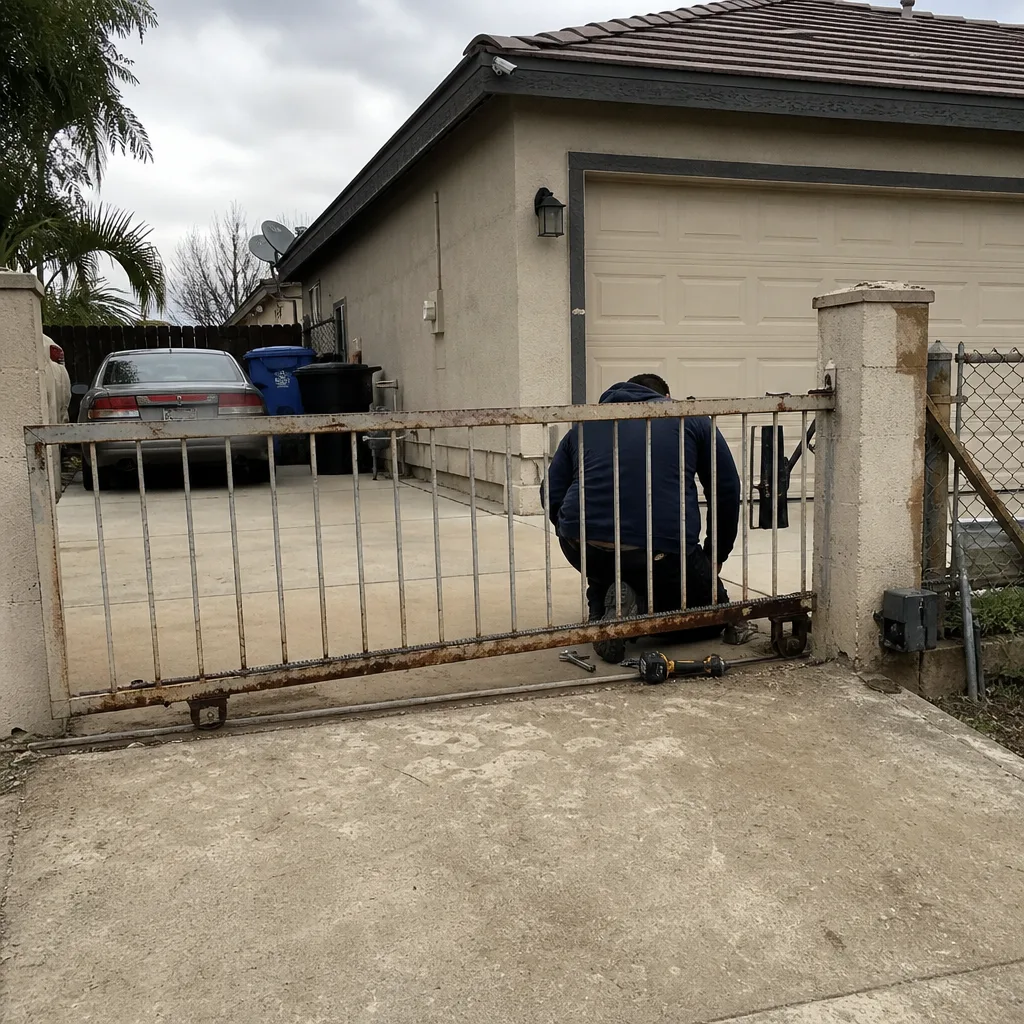
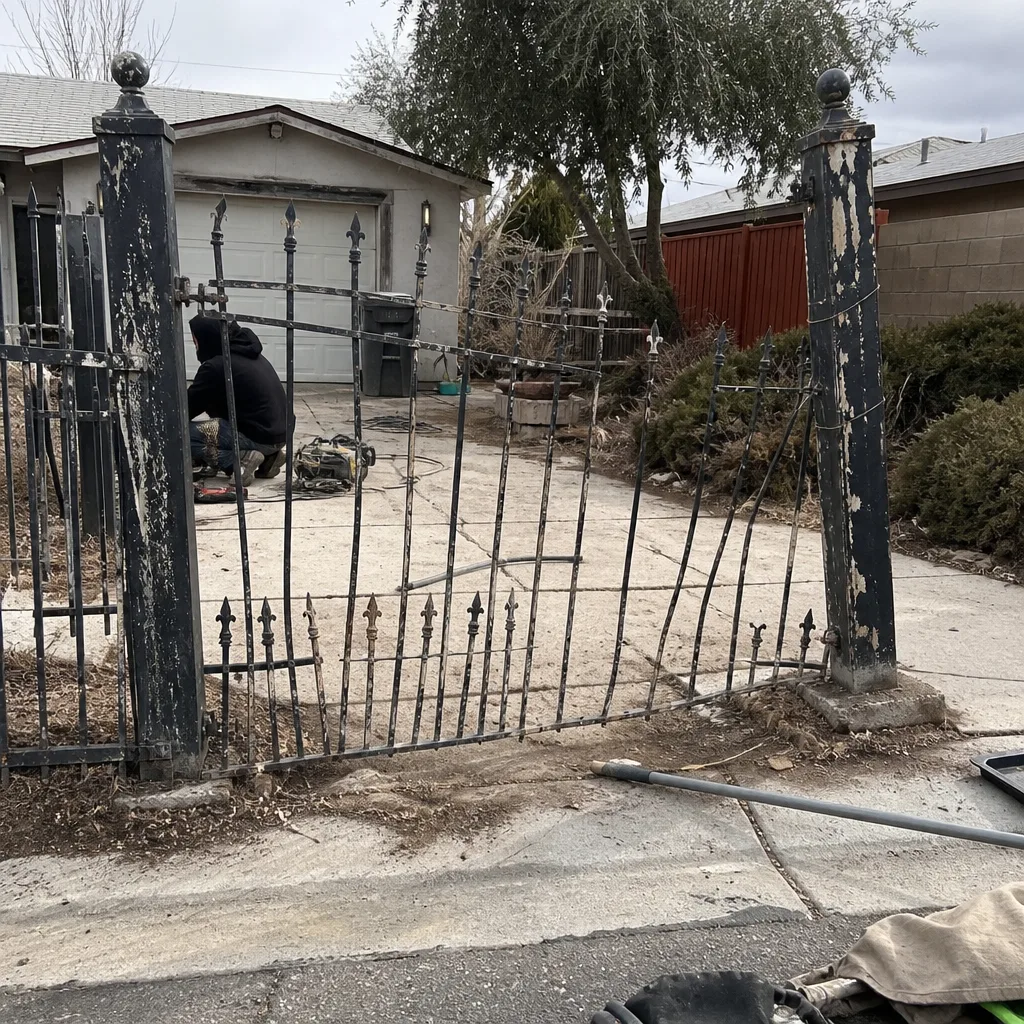 Before
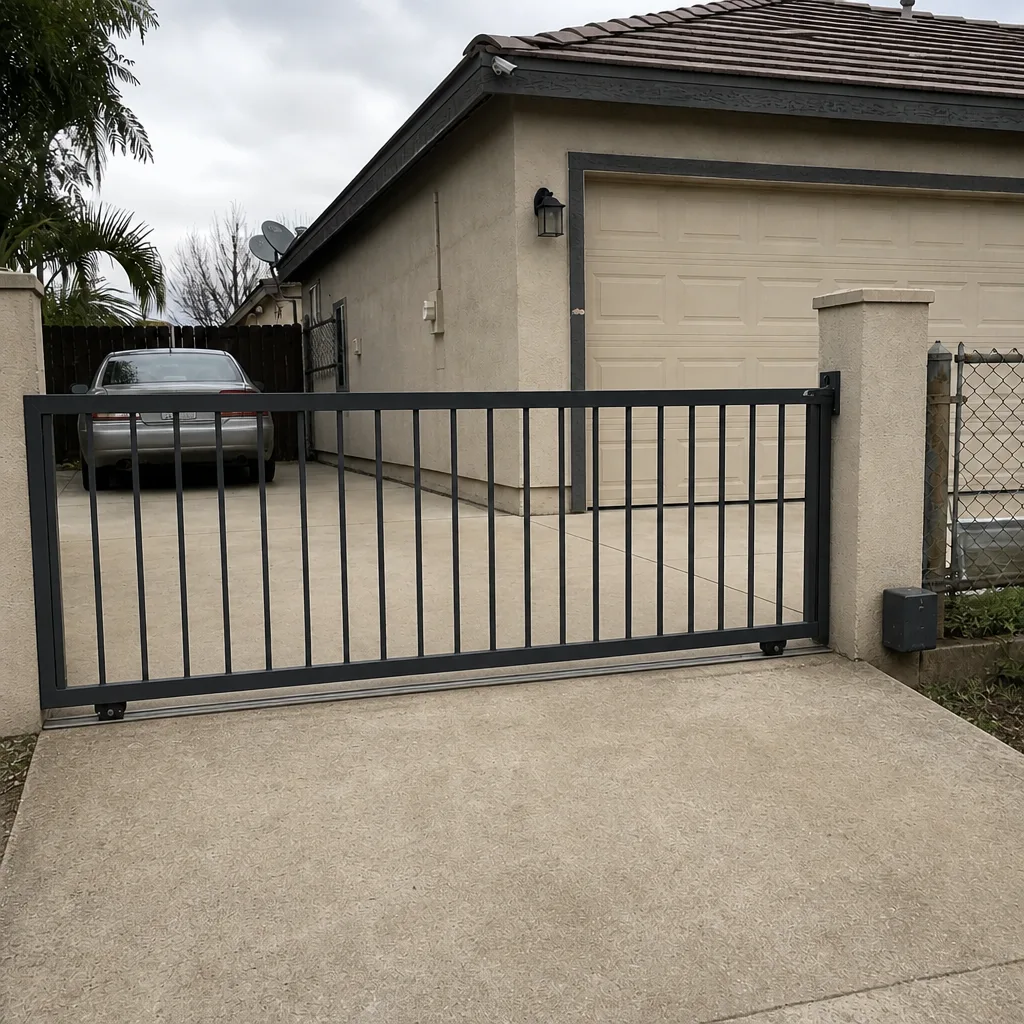
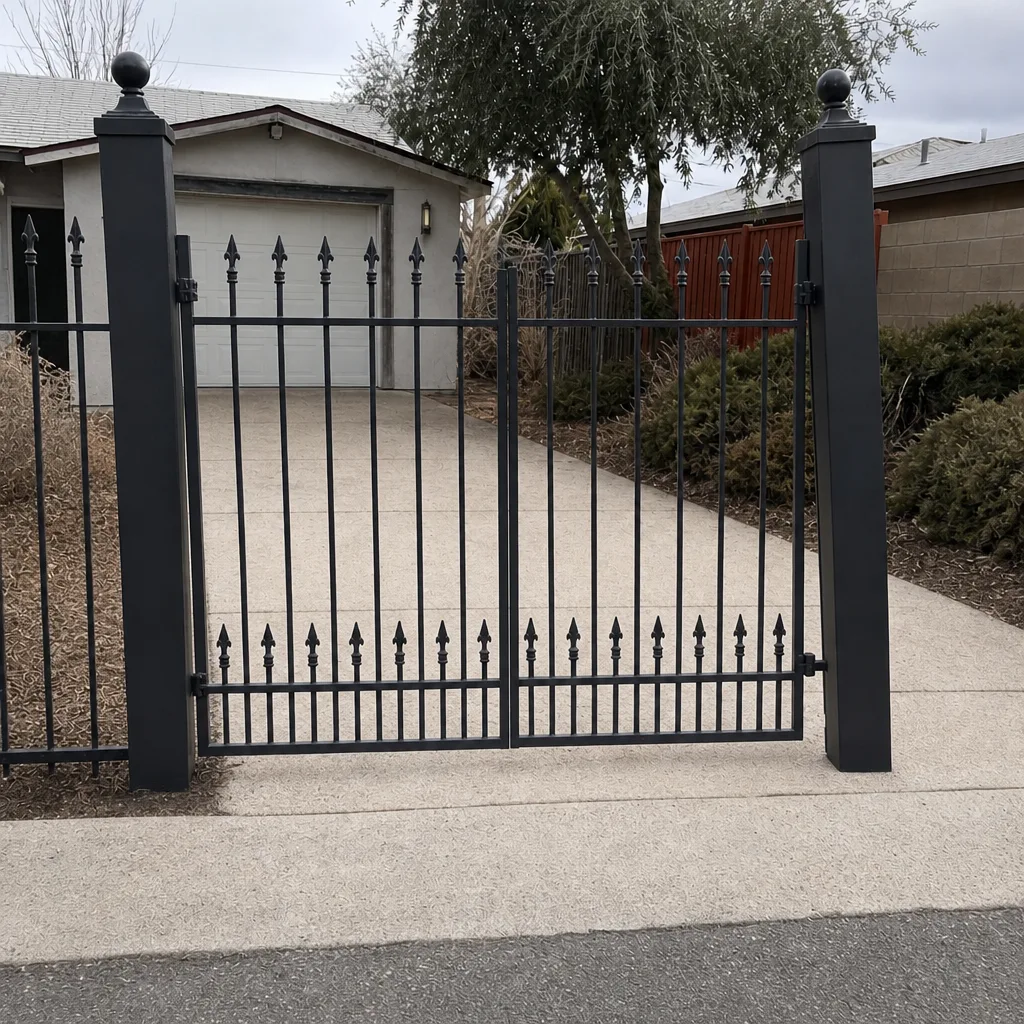 After
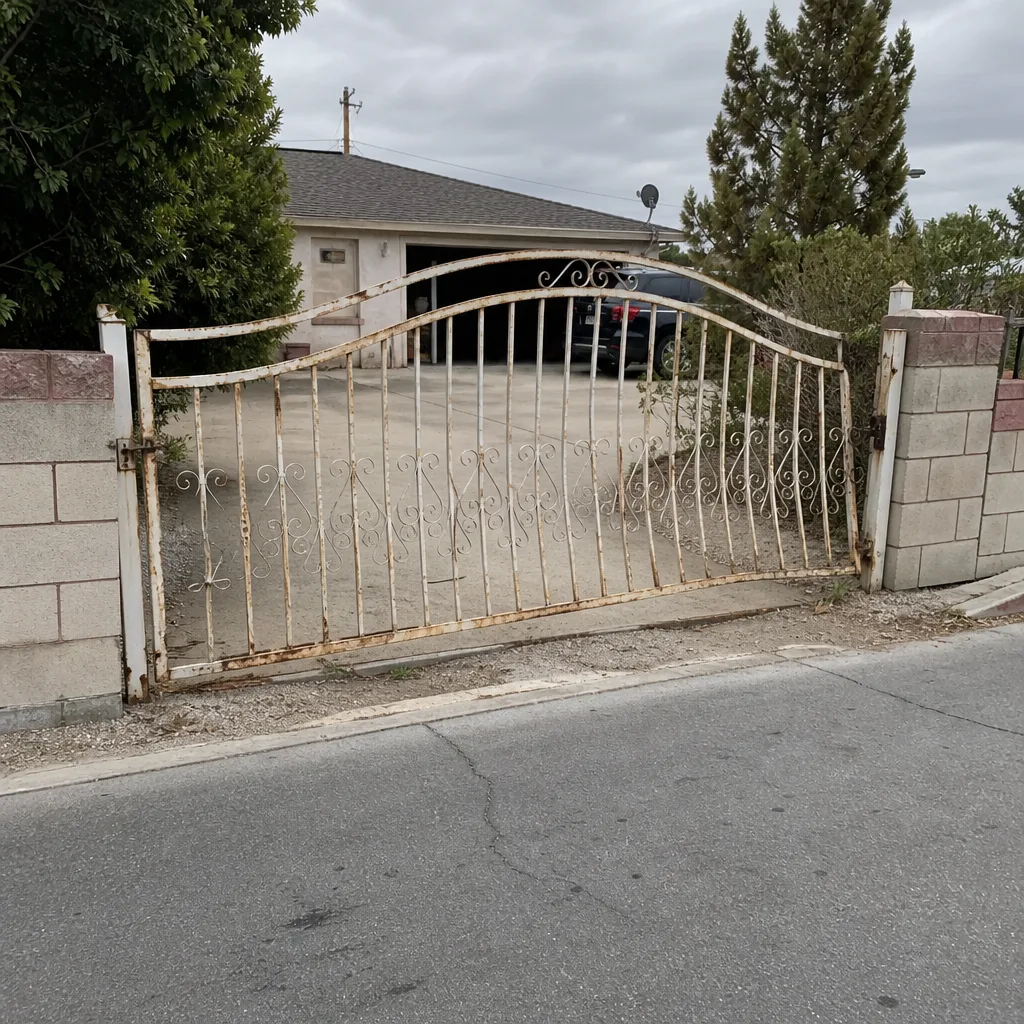 Before
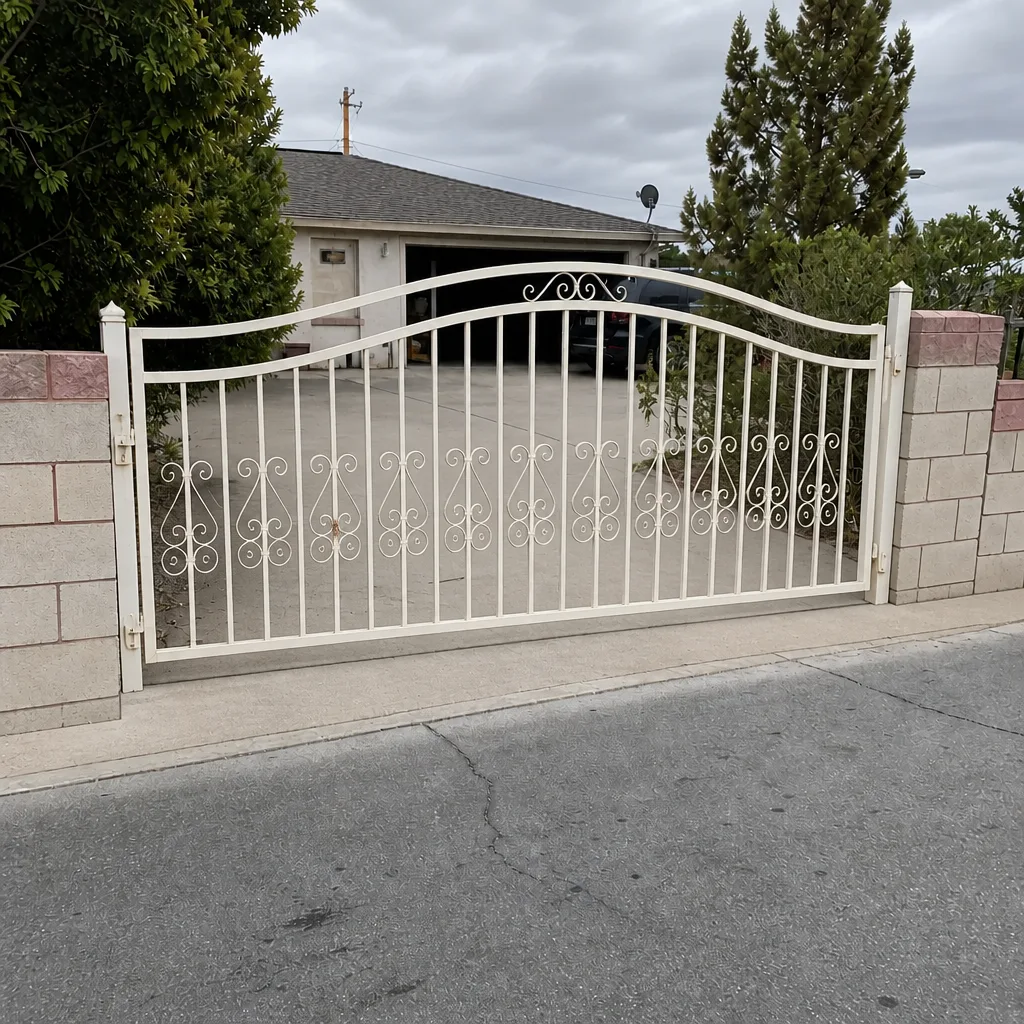 After
 Before
 After