
Last updated November 18, 2026
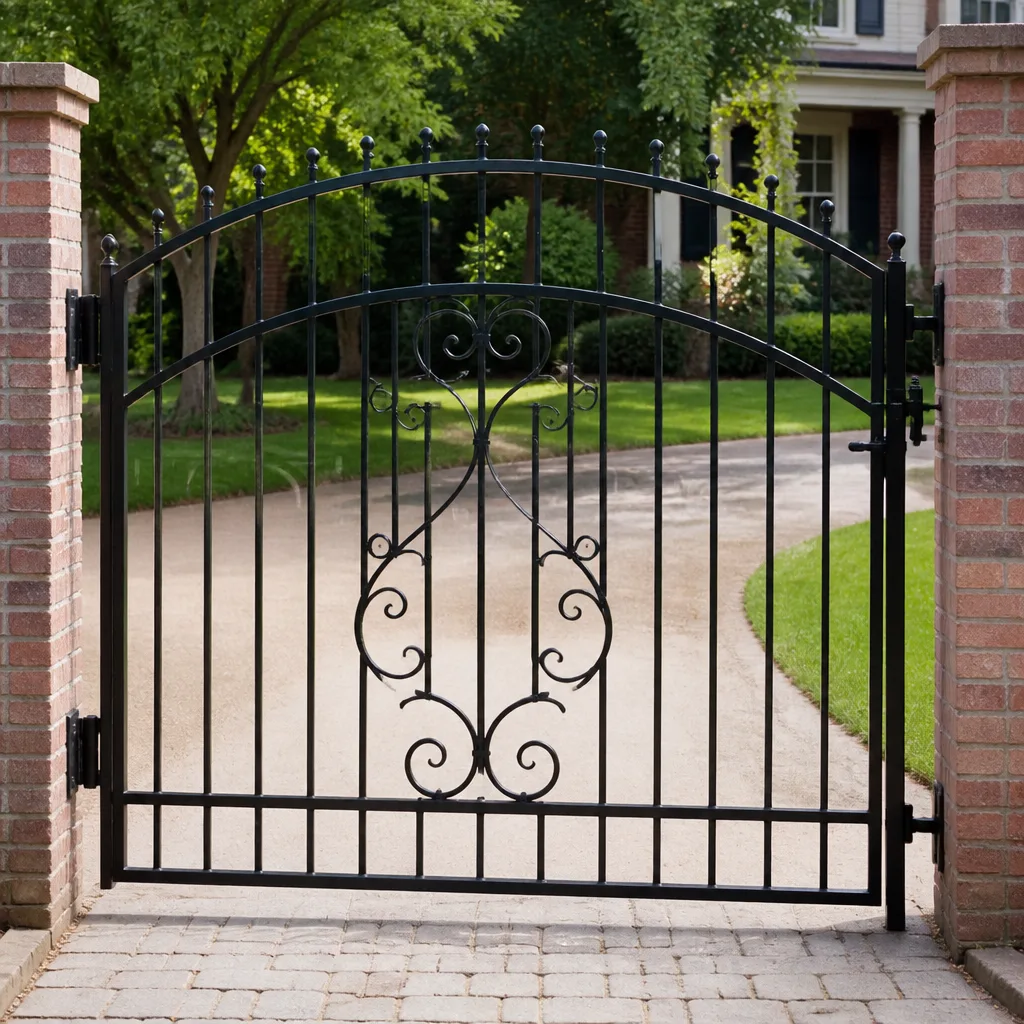 Wrought iron
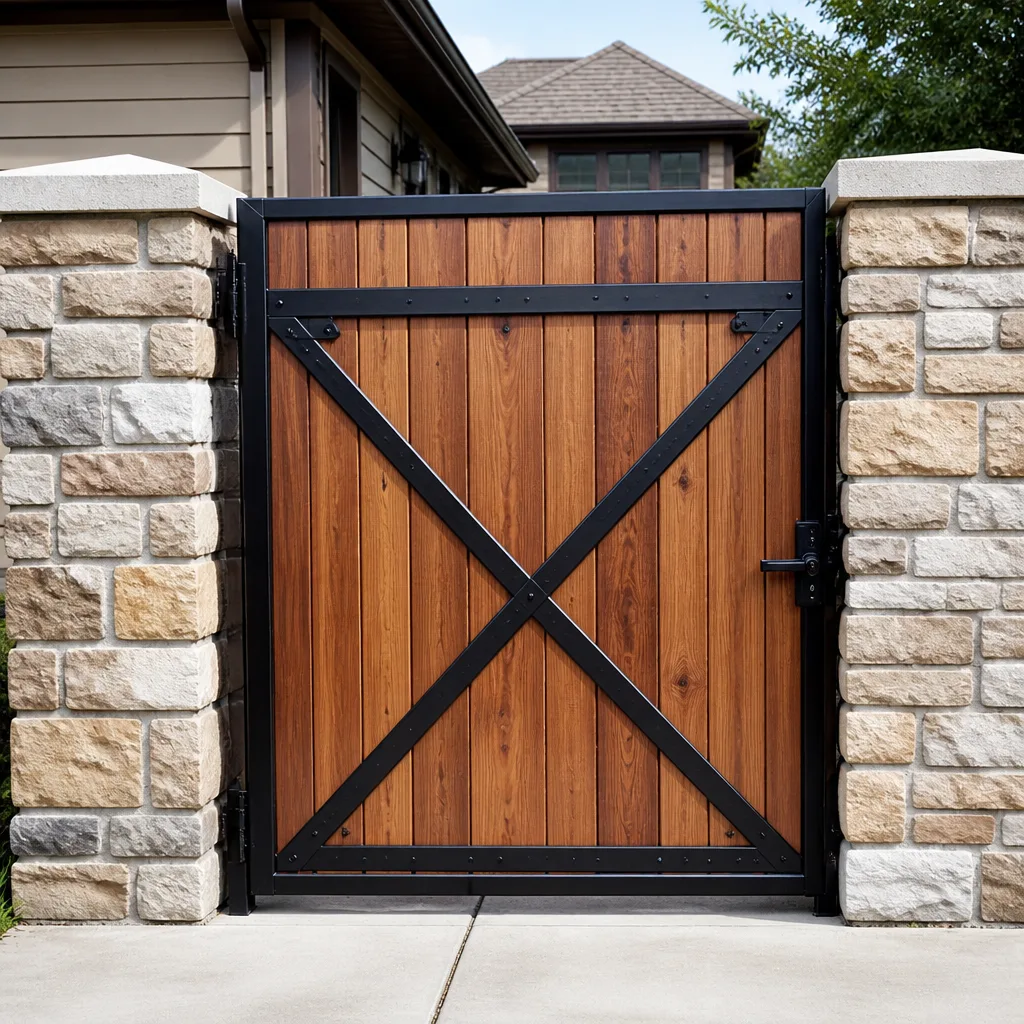 Wood & steel frame
 Farm & ranch
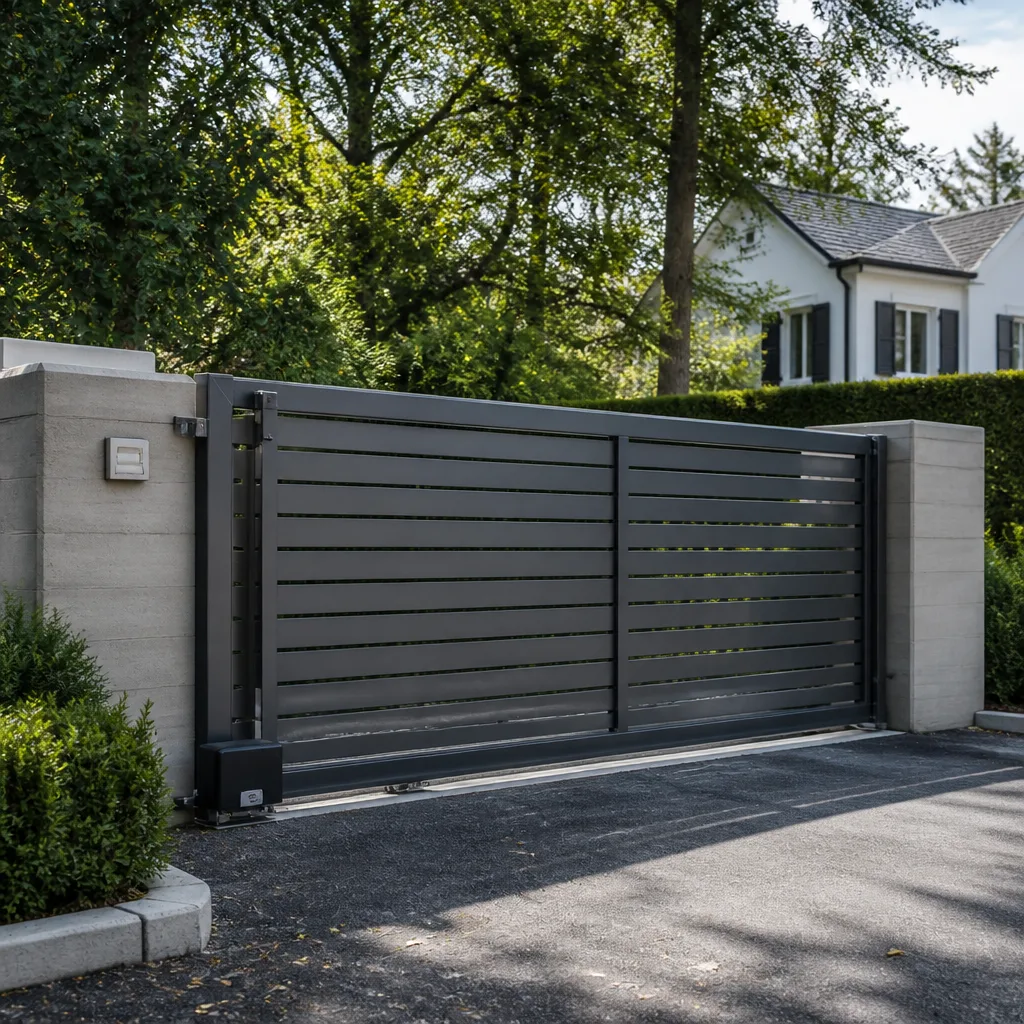 Sliding driveway gates
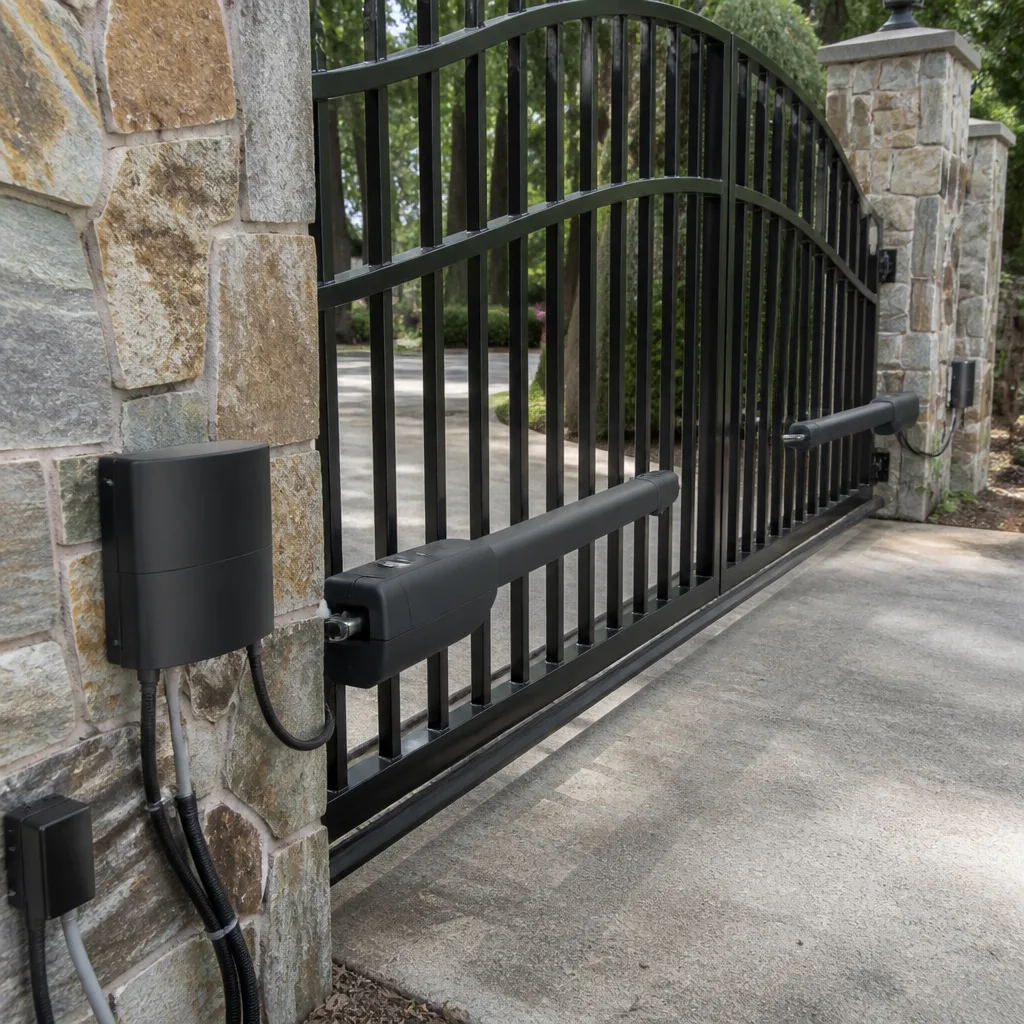 LiftMaster operators
Free on-site gate assessment - hinges, posts, and your LiftMaster or Nice gate operator checked before anything is quoted
The assessment is free and the quote is the invoice.
Get your free estimateChoosing the Right Gate Repair Brand: A Buyer’s Guide for Spring Valley
We’ve opened gate operators with names we’d never heard of that turned out to be excellent machines, and we’ve opened name-brand operators that were garbage from the factory. That’s the funny thing about the “best brand” question. Brand loyalty sells equipment. It doesn’t get your gate swinging again. What actually matters here in Spring Valley is whether the parts exist within driving distance, whether the machine survives a Las Vegas summer, and whether the person holding the wrench has seen the inside of that model before. This guide walks through the brands that hold up, the ones that don’t, why the number you don’t hear much about is parts availability, and why the brand of your steel hardware ranks behind the steel itself.
Quick Answer
There’s no single best gate brand in Spring Valley. The right choice depends on parts availability in Clark County, honest thermal ratings for sustained heat above 105°F, and whether your existing wiring and control board are compatible with the new equipment. LiftMaster and Linear tend to win on local parts access, FAAC and BFT earn their price on heavy swing gates, and Viking is the quiet workhorse for residential driveways. An operator with a ten-year warranty means nothing if nobody within 50 miles can get the parts.
Styles & brands we work with
- Wrought iron
- Wood & steel frame
- Farm & ranch
- Sliding driveway gates
- LiftMaster operators
Table of Contents
- Why Parts Availability in Clark County Beats Brand Name
- How Desert Heat Stress-Tests Your Operator
- The Honest Breakdown: LiftMaster, FAAC, Viking, and Linear
- Gate Hardware: Why Steel Gauge Beats Brand
- Compatibility Questions to Ask Before Anything Is Ordered
- How to Evaluate a Repair Brand Before You Call
- Common Mistakes to Avoid
- When to Call a Professional
Why Parts Availability in Clark County Beats Brand Name
Here’s the thing nobody tells you at the showroom. A gate operator is a mechanical device, and mechanical devices break. What matters at 6 p.m. on a Friday when your driveway gate is stuck halfway open is whether the control board, the limit switch, or the gear set is sitting on a shelf within driving distance or on a slow boat from a warehouse three states away.
In Spring Valley, we’ve watched homeowners wait six to fourteen days for parts on operators that retail for more than a good used car. That’s a week of a non-functional gate, a car parked on the street, and a security gap. Meanwhile a mid-range machine with a distributor in Las Vegas proper can have a motor capacitor in the truck by Tuesday morning.
When you’re comparing gate repair brands, ask these questions in this order:
- Where does the local distributor keep stock? Las Vegas, Henderson, or ordered from out of state? The answer changes your downtime from days to weeks.
- Is the control board a current production model or discontinued? Discontinued boards mean scavenged parts or a full operator replacement for a $40 capacitor.
- Do the common wear parts cross-reference to other brands? Some motors, capacitors, and limit switches are shared across manufacturers, which widens the supply of spares.
- Does the brand publish a parts diagram with part numbers? If a tech has to call a factory rep to identify a gear, your repair is slower and more expensive.
The brand that answers those four questions honestly is the brand worth owning, regardless of what the marketing brochure says. We see this play out differently across Spring Valley neighborhoods, from Rhodes Ranch to the older tracts near Spring Valley Parkway, where the same hardware behaves very differently depending on how it was installed. For straight diagnostics on a gate that’s already failing, our gate repair service in Spring Valley covers that first step.
How Desert Heat Stress-Tests Your Operator
Summer in Spring Valley isn’t a nice-to-have design condition. It’s the operating environment from June through September, with sustained temps above 105°F for weeks and gate operators baking on a south-facing wall that reads 130°F on the panel by 2 p.m. Manufacturers spec equipment for a range of temperatures, and the honest ones account for what continuous heat does to insulation, capacitors, and motor windings.
Three components take the beating:
- Duty cycle rating. Every operator has a duty cycle, like 20 cycles per hour or continuous-duty. LiftMaster and FAAC publish their ratings and hold to them. Off-brand imports sometimes claim continuous duty and then thermal-trip after the fourth open. If the spec looks too good for the price, it usually is.
- Motor thermal protection. A good operator shuts itself down before the motor cooks. Cheap ones don’t have a thermal cutoff, or the cutoff is a thermal fuse that fails permanently. Once that fuse pops, you’re buying a motor or a whole unit.
- Control board capacitors. The single most common summer failure we see in Spring Valley is a swollen capacitor on the control board. Heat degrades the electrolyte, the cap swells, the gate opens halfway and stops. Board-level repair is cheap if the part is available. It’s expensive when it isn’t.
The honest brands design for 120°F-plus ambient and rate the electronics accordingly. The optimistic ones print a warranty that sounds great and then deny a claim for “excessive heat exposure.” Ask the brand’s spec sheet what temperature range the duty cycle is rated at. If it isn’t there, that tells you something.
The Honest Breakdown: LiftMaster, FAAC, Viking, and Linear
Nobody’s paying us to say nice things about a brand. We fix them all, and the failures tell you as much as the wins. Here’s what we’ve actually seen in Spring Valley residential installations after three summers of 105°F heat.
LiftMaster
Parts availability is the big win. Distributors in the Las Vegas valley stock LiftMaster boards, capacitors, and hardware, and a control board is usually a phone call away. Their residential swing and slide operators are dependable, and duty cycles are published honestly. Where they tend to fail: the plastic drive gear in some slide models after heavy summer cycling, and the battery backup boards that cook if the cabinet doesn’t have shade. LiftMaster is the brand we recommend most often when the simpler question “how fast can we get parts?” is the deciding factor.
FAAC
This is the commercial-grade end of the residential market. FAAC operators are built for heavy gates and take summer heat without flinching. Duty cycles are rated for what the machine actually delivers, and the motor and gearbox hold up over many years. The trade-off: parts require more planning, and the local distributor network isn’t as deep as the domestic brands. If you own a heavy ornamental steel gate and can tolerate a day or two wait for a specialty part, FAAC is a machine worth the money. If down time of a week is unacceptable, ask before you buy where the closest FAAC stock lives.
Viking
Viking earns its keep on standard residential swing gates. Quiet, reliable, honest duty ratings, and a decent local parts channel through the valley. They don’t have the name recognition of LiftMaster, which means they also don’t have the price premium. After a few summers, what we see failing on Viking is typically the battery in the solar-ready models (a consumable, not a design flaw) and occasionally a limit switch that needs adjusting rather than replacing. Solid middle-of-the-road pick for a typical Spring Valley driveway gate.
Linear (Nortek)
Linear operators show up frequently on mid-market homes, and their accessory line is well-supported locally. The machine is dependable for a normal residential cycle count. Where Linear struggles in Spring Valley heat is in the manual release mechanism and the plastic-bodied limit cams, which get brittle and crack after several summers. If your gate is a standard swing double in the 10 to 14 foot leaf range, Linear is a workable option as long as you understand that the wear parts are plastic. For a heavier gate or a steep grade, we recommend owners step up to FAAC or LiftMaster.
Brands worth naming without a strong opinion in the Spring Valley heat context: BFT and Ghost Controls. BFT builds excellent equipment but its valley parts channel is thin enough that a control board can stall a repair. Ghost Controls is a newer entry that does the basics well but the local support network is still maturing. If you’re considering a gate motor and opener installation in Spring Valley, ask specifically what the parts wait looks like on each candidate before you commit.
Gate Hardware: Why Steel Gauge Beats Brand
Your hinges, latches, rollers, and drop rods are the parts of the gate that touch the weather, take the load, and fail first. And here’s the truth: the stamp on the hinge means less than the metal it’s made from and the weld holding it to the gate. We’ve pulled brand-name hinges that were thin zinc-plated pot metal and failed in two summers. We’ve welded in unbranded hinges made of 3/16″ steel bar that are still swinging a decade later.
What to actually evaluate when you look at hardware:
- Steel gauge. Measure the thickness with calipers or eyeball the edge. Heavier gauge, longer life. There’s no compromise here.
- Weld quality. Look at the weld bead. A good weld is smooth, continuous, and slightly crowned. A bad weld is lumpy, has holes, or looks like a hobbyist with a stick welder on a Saturday.
- Coating. Powder coat or hot-dip galvanizing on exterior hardware beats paint every time. In Spring Valley’s dry heat, paint chalks and fails within a few seasons.
- Bearing surfaces. Greaseable or sealed bearings on hinge pins outlast plain steel-to-steel pivots, which rust and bind.
- Weight rating. A hinge rated for a 150-lb gate sagging under a 300-lb gate is a failure waiting to happen. Match the hardware to the load.
We weld on site for exactly this reason. When a hinge post has moved, or a strike plate is wandering, or the weld on a plate has cracked, pulling the gate to a shop adds days of downtime for a job that should take an afternoon in your own driveway. That’s why our gate installation service in Spring Valley measures the post and the weld, not just the brand of the hinge.
Compatibility Questions to Ask Before Anything Is Ordered
Buying a new operator for an existing gate installation is one of the most common ways homeowners get burned. The new machine arrives, it’s a fine machine, and it doesn’t talk to the wiring that’s already buried in your driveway. Now you’re paying a second time for low-voltage cable, conduit, or a new control board.
Before you order anything, get the answers to these compatibility questions in writing:
- What’s the existing control board voltage and protocol? 24V DC, 12V AC, or high voltage? The wrong match means a control box swap.
- How many conductors run to the gate, and what are they doing? The existing wire may have enough conductors for the basic cycle but not for safety edges, loops, and access control.
- Is the wiring direct-burial or in conduit? Direct-burial cable has a shorter lifespan and may need replacement, which changes scope.
- Are safety edges and photo-eyes present, and are they compatible with the new operator? Most modern operators expect a specific type of edge signal. Mismatches are common and dangerous.
- What’s the access control setup? Keypad, telephone entry, remote, or a DoorKing unit? Each one has its own wiring requirements and voltage expectations.
- What’s the gate weight and grade? A brand that specs an operator for a 400-lb gate at a 2% grade rating will behave very differently on a steep Spring Valley driveway.
If the person quoting the job can’t answer these in plain language, that’s your signal to get a second opinion before signing anything. Our repair team walks through these questions on every estimate because getting them wrong is how homeowners end up paying twice.
How to Evaluate a Repair Brand Before You Call
The brand of the equipment matters. The brand of the company you hire matters more. Here’s a checklist we’d want a homeowner to run on us before picking up the phone.
- Is the address published? A gate repair company you can’t find on a map is a gate repair company you can’t visit if there’s a problem.
- Is the license number visible? Any state-licensed contractor should have the number on the truck, the website, and the invoice. You should be able to look it up.
- Is a live person answering the phone at 2 a.m. when your gate won’t close? Not a voicemail box. Not a call center in another time zone. A person who can tell you what’s wrong and when someone will be there.
- Do they weld on site, or haul the gate away? A repair-first philosophy keeps the gate in place and the downtime short. A replace-first philosophy doubles the invoice.
- Is the guarantee in writing? Not “up to” and not “in most cases.” A plain promise, stamped on the invoice, that if the work isn’t right it gets made right.
- Is the price locked at the estimate? The number on the phone is the number on the invoice, or it’s not a price at all.
- Are the techs background-checked? You’re letting a stranger onto your property. You should know who’s coming.
We answer these questions because they’re fair. See the Gatewood Fence & Gate Spring Valley home page for the shop address, the license number, and the standing offers we put on the table without haggling.
Common Mistakes to Avoid
- Buying on brand name alone. A respected brand with no local parts channel is a dead gate for a week. Ask where the parts live before the operator gets ordered.
- Fixing the panel and ignoring the post. A gate sags in the hinge post, not in the middle. If you patch the panel without addressing the post, you’ll be patching it again next spring.
- Taking the ten-year warranty at face value. That warranty means nothing if the manufacturer’s nearest authorized service center is 180 miles away and the parts are on backorder. Ask how a warranty claim actually works in the valley.
- Swapping the whole operator for one bad capacitor. A $40 part on a control board is common this time of year. A replacement-first shop will quote you the whole unit. Ask specifically what failed and whether a board-level repair is possible.
- Ordering accessories before checking the existing wire. New keypads and safety edges often need conductors you don’t have. That means re-trenching the driveway, which changes the whole budget.
- Trusting an unbranded hinge without looking at the weld. Brand of the hinge matters less than gauge and weld quality. Look at both, or have someone who welds look at them.
- Accepting a price that “may change at the door.” Upfront pricing is not a marketing slogan. It’s the thing that stops the bait-and-switch from a phone quote that balloons when the tech shows up.
When to Call a Professional
Some gate problems want a professional in the driveway, not a weekend’s worth of YouTube. High-tension springs and torsion assemblies store enough energy to break a wrist or worse, and a gate operator wired into line voltage is not a DIY proposition. Call if your gate has stopped or reversed mid-cycle, if it closes on its own without a command, if the operator is tripping a breaker, if the safety edges aren’t stopping the gate on contact, or if you’ve replaced one part already and the same symptom keeps coming back. Call us today if you smell burning at the control box or see scorched wire – that’s an electrical fault, not a software glitch, and it should be handled by a trained professional. Gatewood Fence & Gate Spring Valley offers free estimates in Spring Valley – call (888) 300-3906.
See the difference
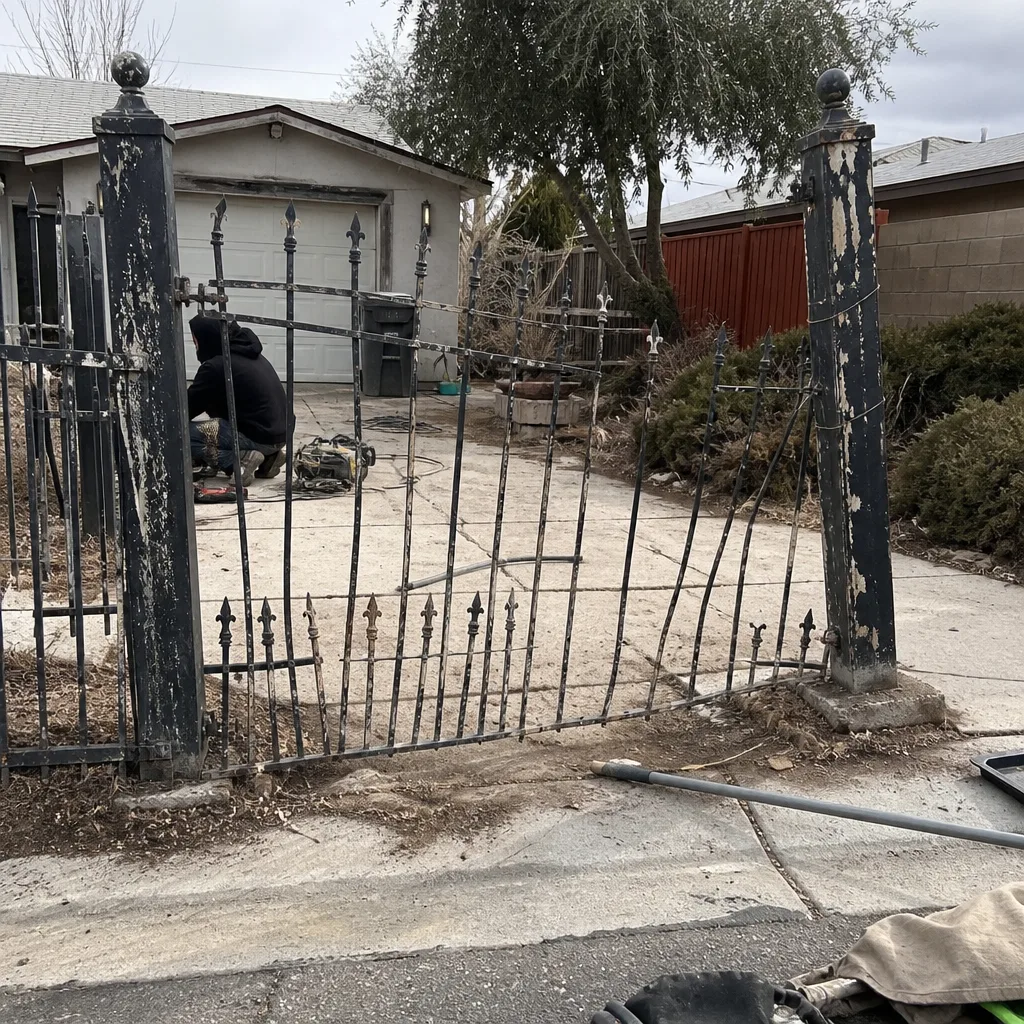 Before
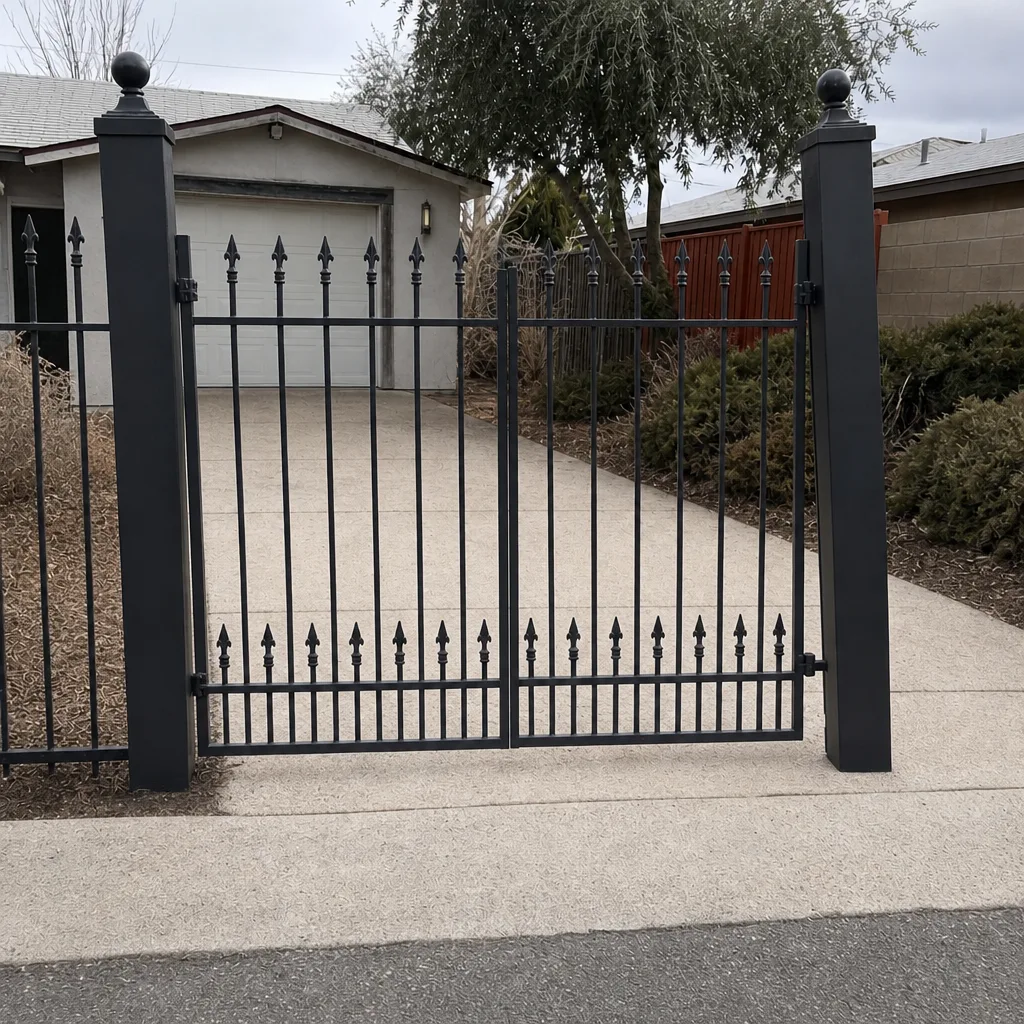 After
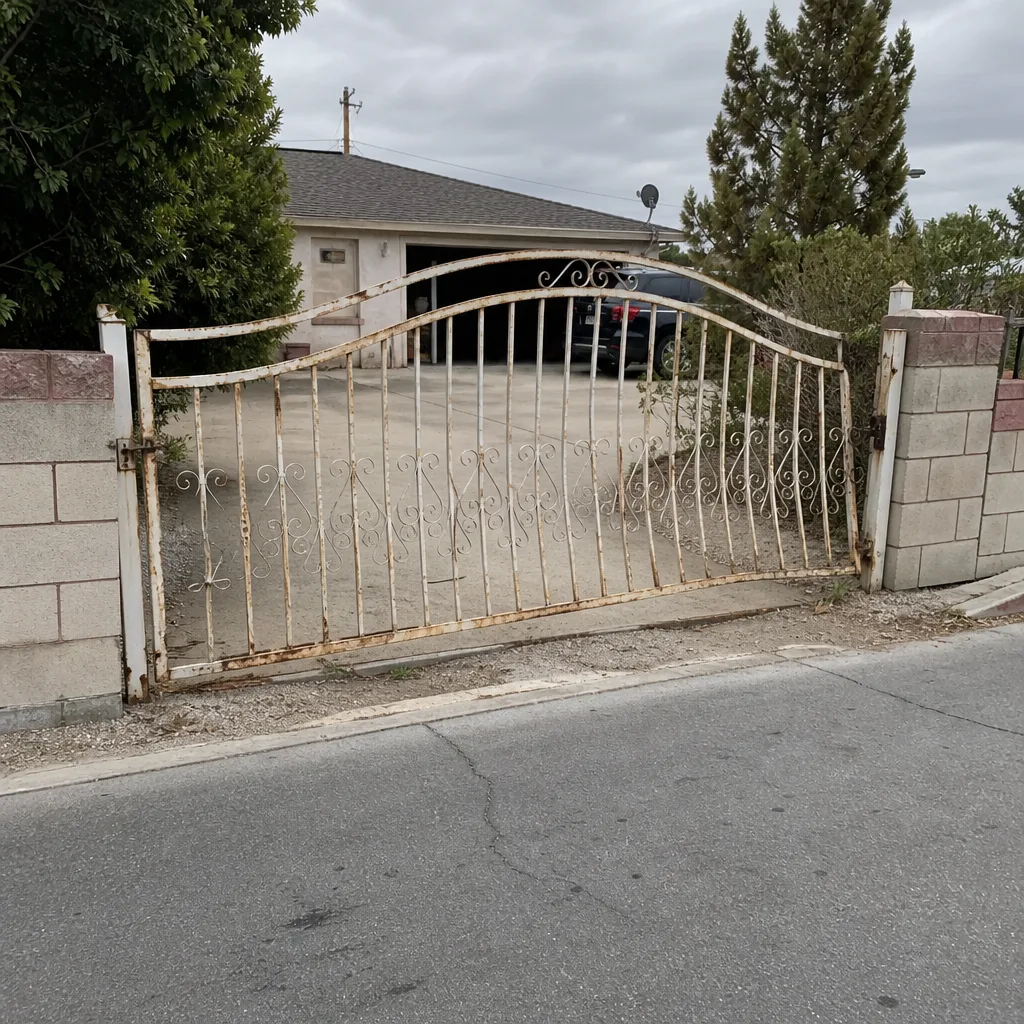 Before
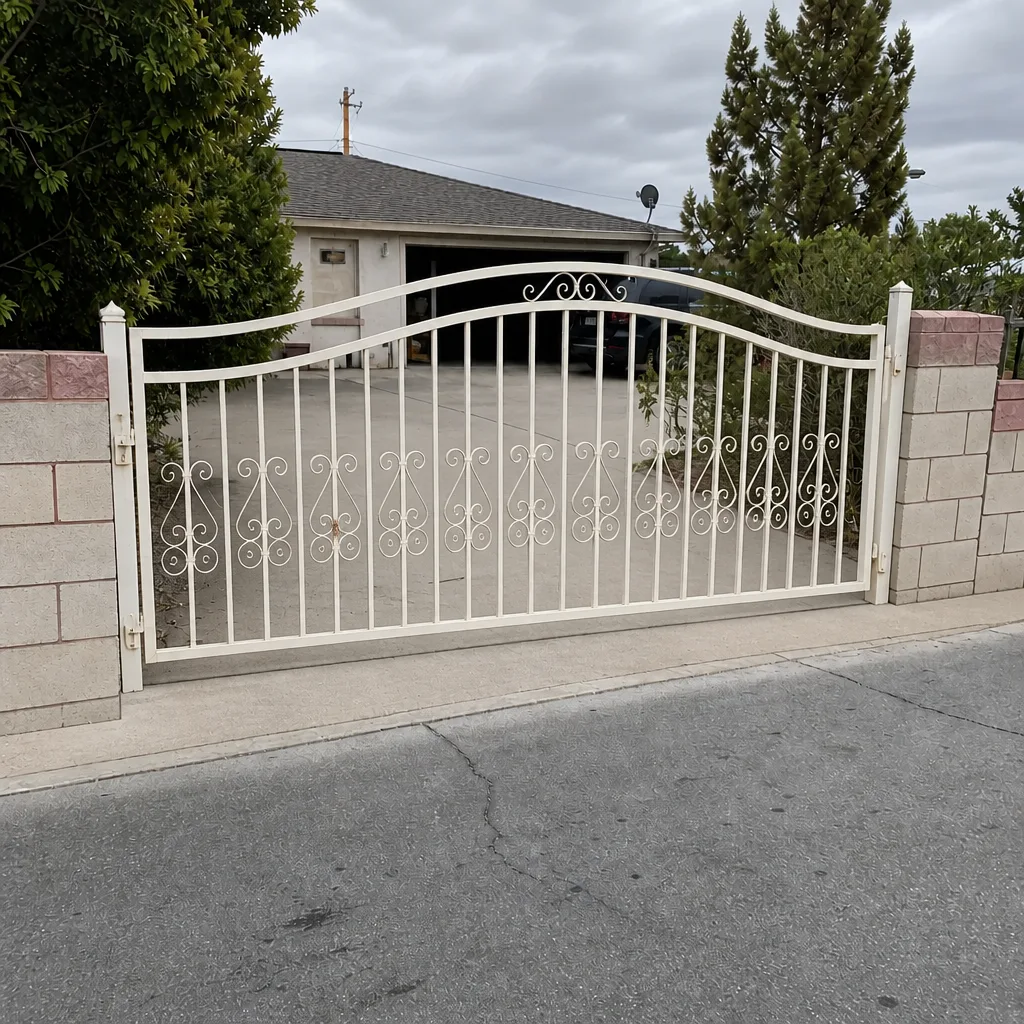 After
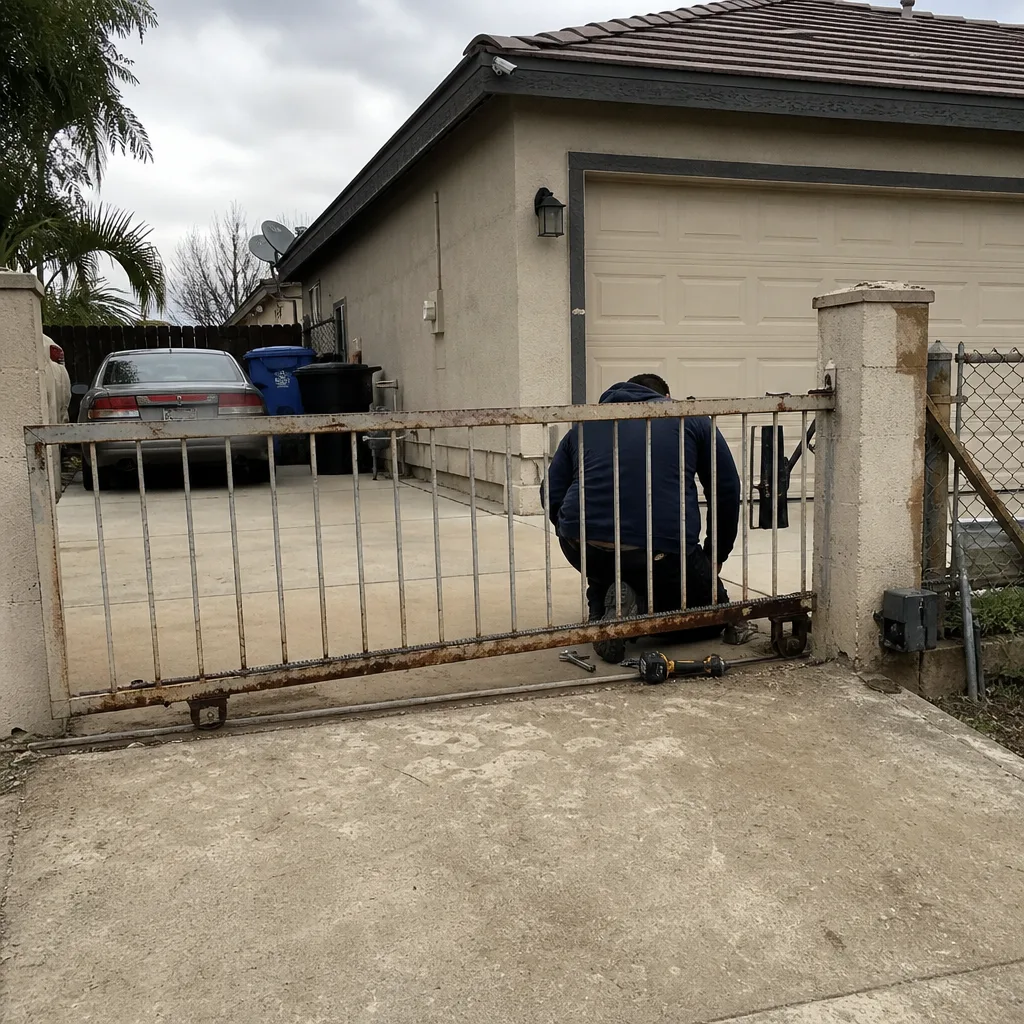 Before
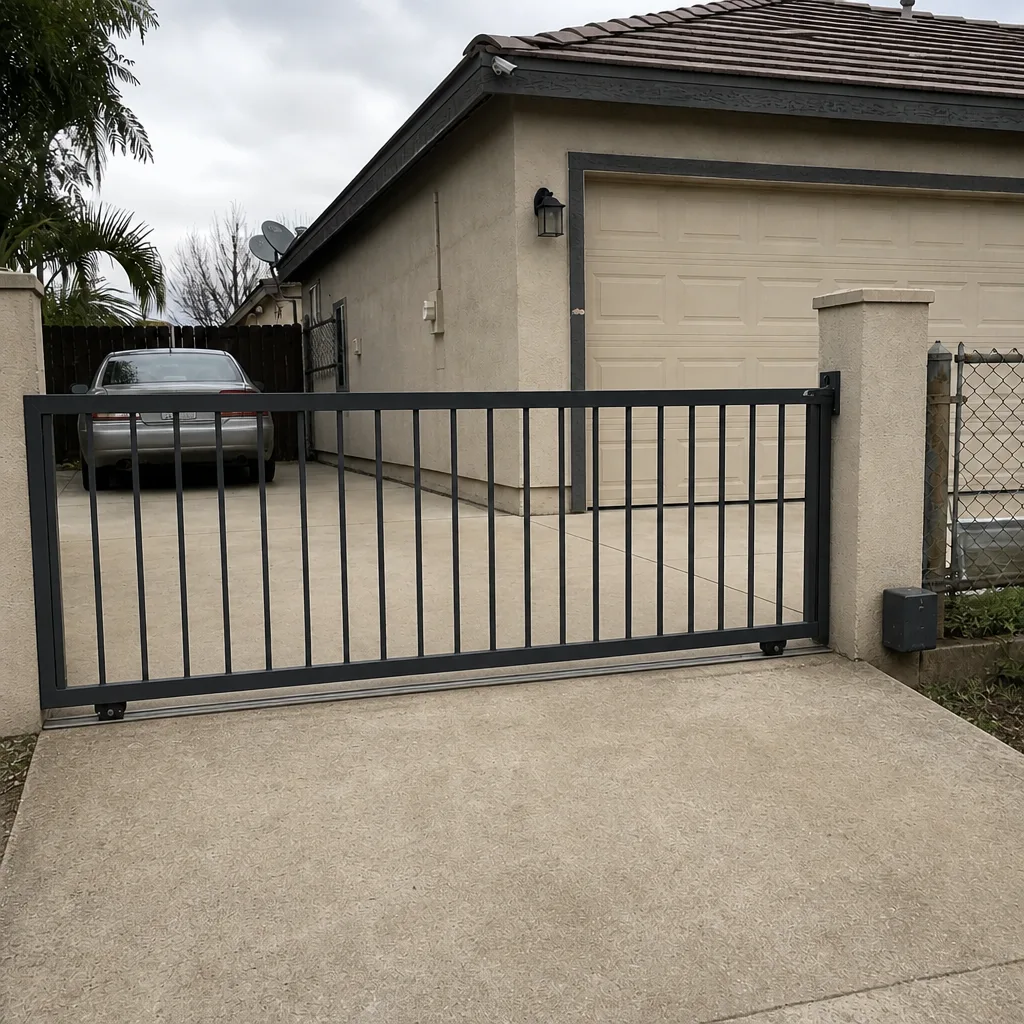 After
Frequently Asked Questions
There’s no single best brand. For most Spring Valley residential gates, LiftMaster and Linear win on local parts availability, FAAC wins on heavy ornamental gates where the budget allows the wait for specialty parts, and Viking is the quiet workhorse for standard swing operators. The best brand is the one whose parts live within reasonable driving distance. Call (888) 300-3906 for a free second opinion on any written estimate.
LiftMaster and Linear typically have the best local parts channel in the Las Vegas valley, with boards, capacitors, and common wear parts available one to two business days out. Viking is close behind. FAAC and BFT have thinner local stock, which can mean a multi-day wait for specialty parts. Always ask before ordering what the parts wait looks like. Call (888) 300-3906 to confirm current availability for your model.
Sustained 105°F-plus heat degrades control board capacitors, stresses motor windings, and pushes operators past their duty cycle. The most common summer failure we see is a swollen capacitor that causes the gate to open halfway and stop. Lithium batteries in solar-ready models also cook faster in direct sun. If your operator is in an unshaded cabinet, expect failure rates to roughly double. Call (888) 300-3906 for a free inspection before the next heat wave.
Usually not. Board-level repair is possible on most name-brand operators, and a $40 capacitor or limit switch is a common culprit. Replacement-first shops quote the whole unit because it’s faster and more profitable. Ask specifically what failed and whether a board-level repair is an option. For a free second opinion on any quote, call (888) 300-3906.
Ask about control board voltage, the number of conductors running to the gate, whether the wire is in conduit or direct-burial, and what type of safety edges and access control you have. A mismatch on any of these can force a second trench, a new control box, or new edge sensors. Get these answers in writing before any equipment is ordered. Call (888) 300-3906 and we’ll walk through them with you.
Less than most people think. The gauge of the steel and the quality of the weld matter more than the brand name stamped on the hinge. A thick, well-welded unbranded hinge will outlast a thin, poorly-welded branded one every time. Ask the installer to look at the weld bead, the gauge, and the bearing surface before the hardware is chosen. Call (888) 300-3906 for a free eval of your existing hardware.
The Bottom Line
The best gate repair brand in Spring Valley is the one whose parts live close, whose duty cycle ratings are honest about 105°F summers, and whose techs have actually worked on that model. LiftMaster and Linear earn their keep on parts availability, FAAC and BFT earn it on heavy gates, and Viking is a solid middle-ground for standard driveways. Your hinges and latches are a steel-and-weld question more than a brand question. Before anything gets ordered, get the compatibility questions answered in writing. And when in doubt, pick the company with a name on the shop and a live person on the phone.
We stand behind our work with a 90-Day Done Right Promise in writing, welded into every invoice. Calls are answered 24/7 by a live person, not a voicemail. Our techs are background-checked, uniformed, and have up to 25 years of experience on the equipment we service. Standing offers: $40 off any repair over $200, no trip charge inside the county, a free second opinion on any written estimate, and a permanent 10% discount for seniors and veterans. The name is on the shop, and the shop is down the road – that’s the oldest accountability there is.
Call (888) 300-3906 for a free estimate in Spring Valley. We’ll walk the gate with you, look at the weld and the wiring, and give you a straight answer on whether you’re looking at a $40 part or a full swap.
Written by the team at Gatewood Fence & Gate Spring Valley.