
Last updated November 18, 2026
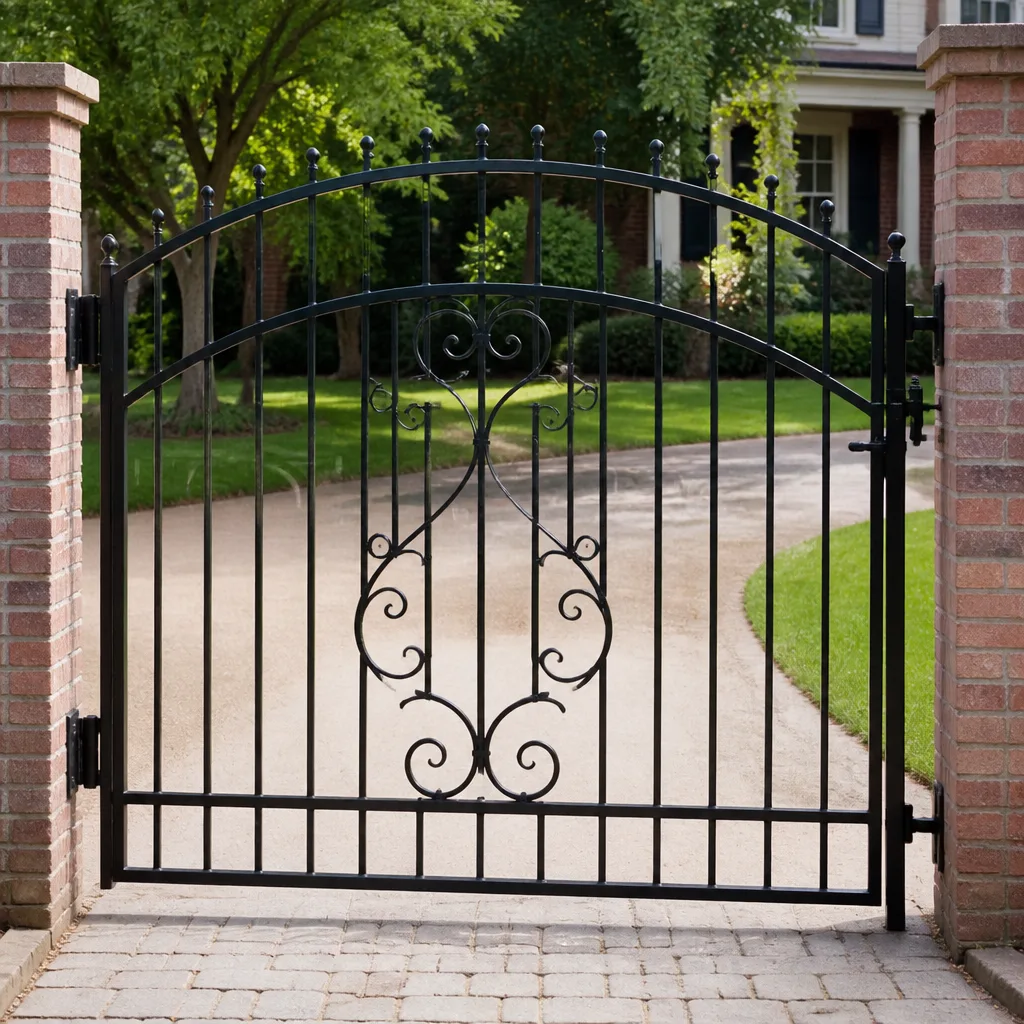 Wrought iron
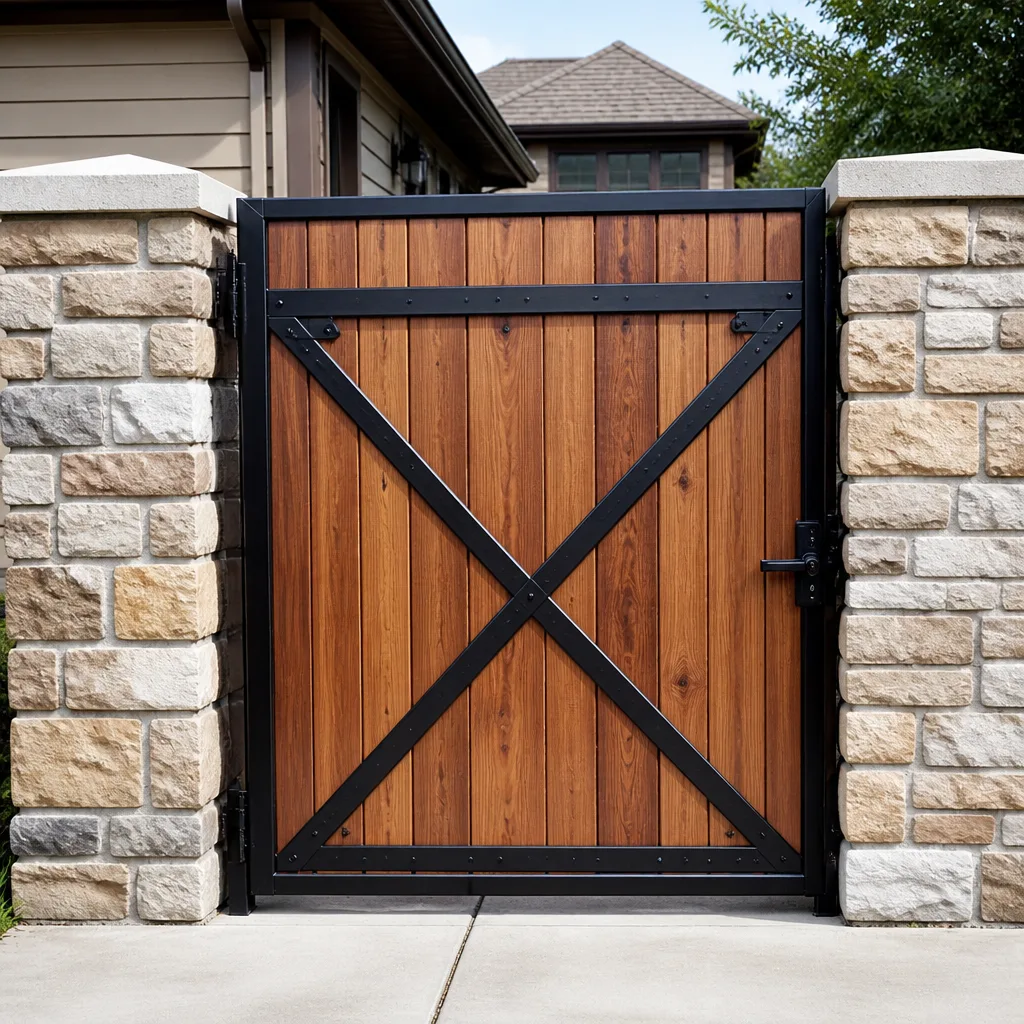 Wood & steel frame
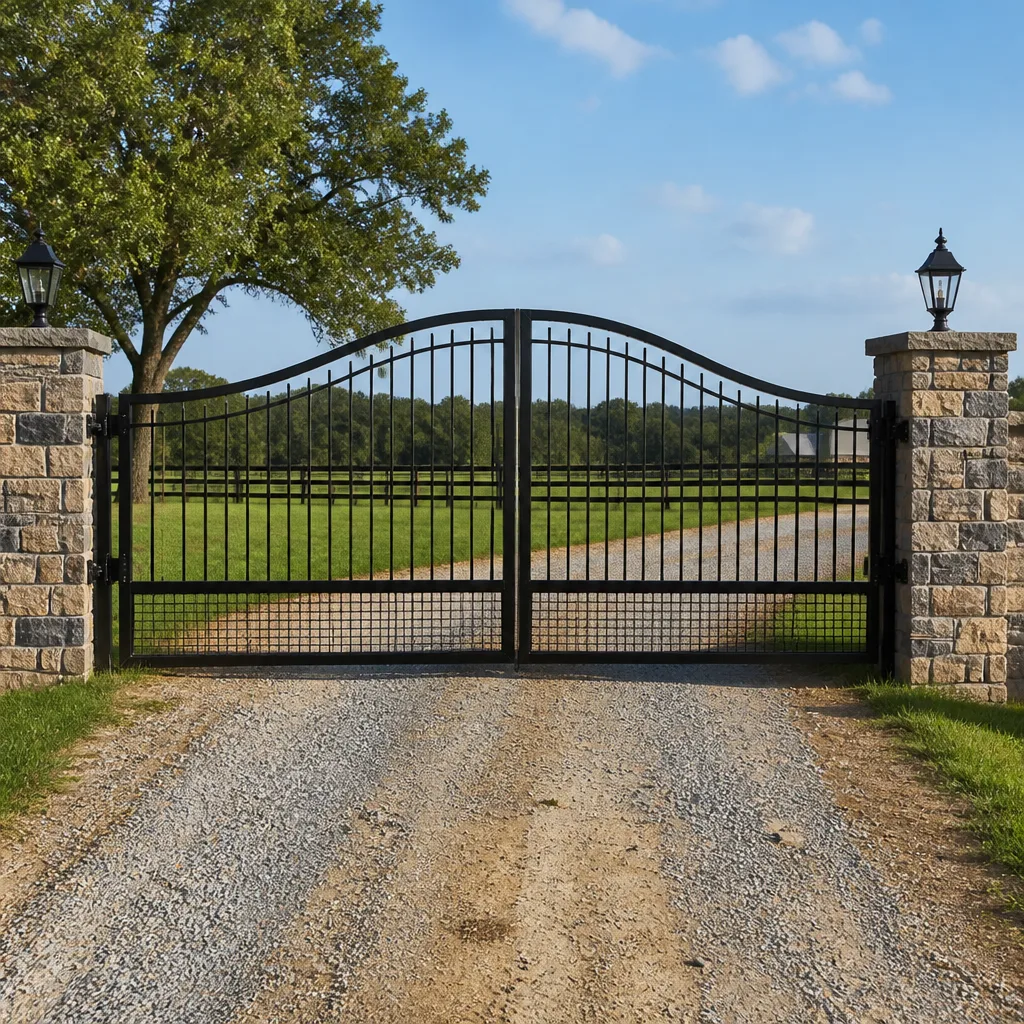 Farm & ranch
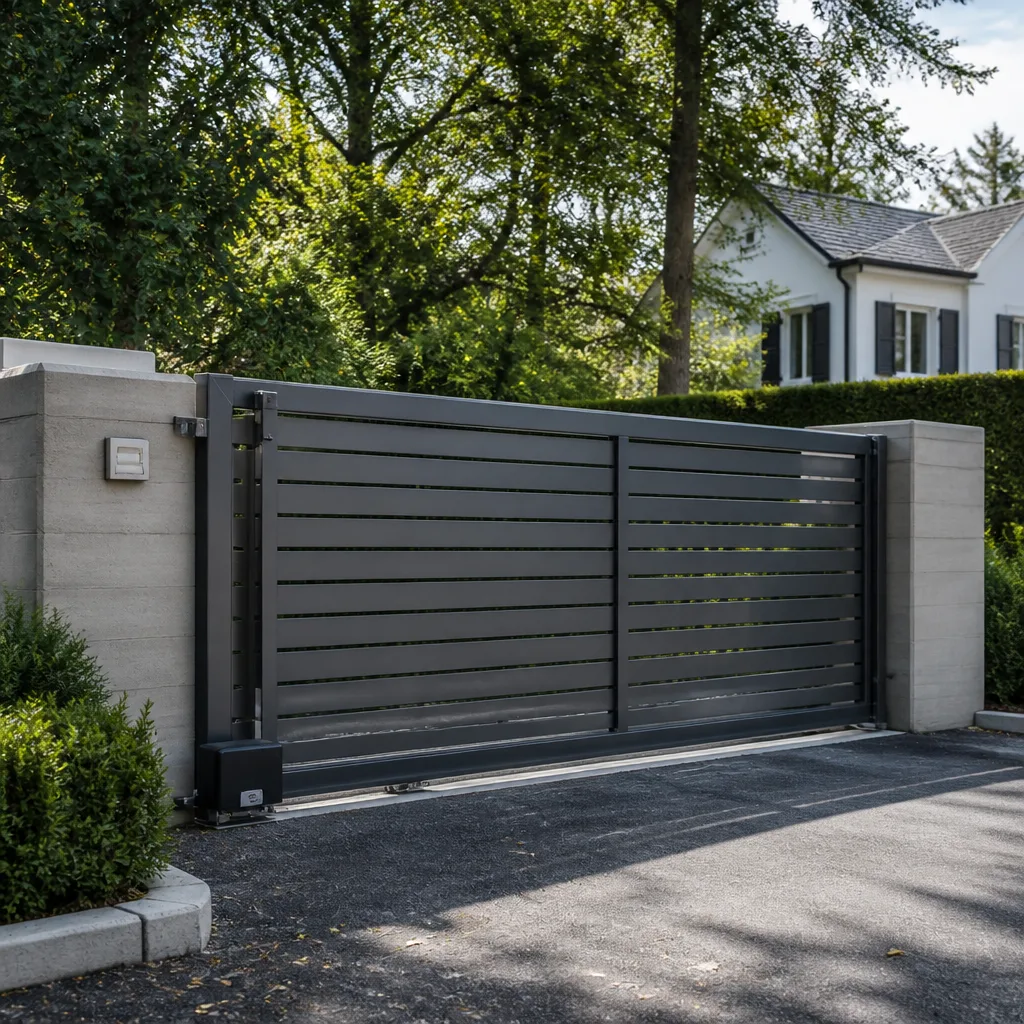 Sliding driveway gates
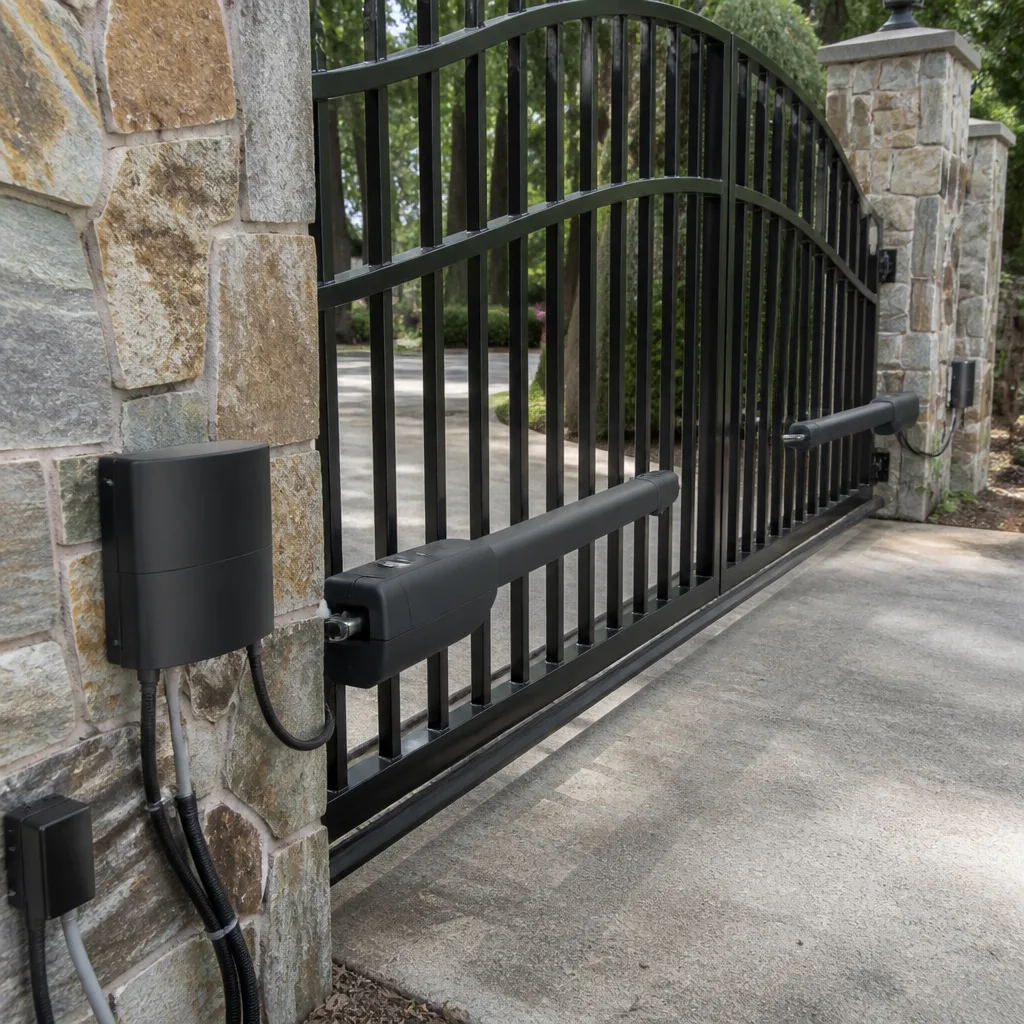 LiftMaster operators
Free on-site gate assessment - hinges, posts, and your LiftMaster or Nice gate operator checked before anything is quoted
The assessment is free and the quote is the invoice.
Get your free estimateThe Complete Gate Installation Guide for Spring Valley Homeowners
Most gates installed in Spring Valley fail for one boring reason: the posts were set for the wrong desert. The installer measured caliche hardpan, shrugged, dug a shallow hole, and poured concrete the way it’s done in Southern California, where the ground gives and the summer is gentler. Spring Valley doesn’t play that way. The soil here expands and contracts, the July heat bakes a cure into concrete before it sets, and a gate that was plumb on install day can be leaning by year three. This guide covers what a real Spring Valley gate installation takes: footing specs for caliche, Clark County and HOA approvals, powder coat that survives UV, slope math you can check yourself, and the contract terms that separate a real installer from a guy with a trailer.
Quick Answer
Installing a gate in Spring Valley starts with an engineered footing, not a hardware order. Posts need to be set below the caliche layer in properly sized concrete footings that account for expansive desert soil and summer-heat cure times, and every gate requires Clark County and HOA approval before the first hole is dug. Get those two steps right and a well-built gate lasts a decade or more; skip them and you’ll be paying for a re-set in three to five years.
Styles & brands we work with
- Wrought iron
- Wood & steel frame
- Farm & ranch
- Sliding driveway gates
- LiftMaster operators
Table of Contents
- Post Footings That Actually Hold in Caliche Hardpan
- Clark County and HOA Approval Before You Dig
- Choosing Materials That Survive Desert Sun
- Site Measurements and Slope Math Before You Get Quotes
- What a Complete Installation Contract Should Include
- How Long a Spring Valley Gate Install Really Takes
- Wiring for Gate Openers and Access Control
Post Footings That Actually Hold in Caliche Hardpan
The number one reason gates installed in Las Vegas and Spring Valley sag within three years isn’t bad materials. It’s posts set in caliche without proper footings. Caliche is a cemented layer of calcium carbonate that forms just under the topsoil across much of the valley. It looks like rock, feels solid, and fails as a footing. A post wedged into a shallow caliche pocket has no lateral support, and the minute the soil around it expands from irrigation or monsoon moisture, the post starts to lean. The gate is fine. The anchor is gone.
Here’s what we specify on spring Valley installations (and what we’d want to see on any bid you’re comparing):
- Depth: 30 to 36 inches minimum below grade, and deep enough to punch through the caliche layer, not just into it. On a 6-foot gate, that’s non-negotiable. On a driveway gate pushing 8 feet, we go deeper.
- Diameter: 12 to 18 inches for pedestrian gates, 18 to 24 inches for driveway gates and posts carrying an operator.
- Concrete mix: 3,000 to 4,000 PSI bagged mix is standard. In summer heat, we mix it slightly wetter than a cool-weather pour and shade it during the first 24 hours, because a poured footing in 105-degree sun will cure too fast and crack at the surface.
- Cure time: Minimum 48 to 72 hours in summer before hanging the gate. A rushed hang is one of the cheapest shortcuts to spot on a bid.
- Post type: Schedule 40 steel for anything over 5 feet. Powder-coated aluminum posts hold up but need a thicker gauge and a bigger concrete collar on the hinge side. The hinge post carries all the load. It’s the one to overbuild.
When someone quotes you a Spring Valley install and doesn’t mention footings, caliche, or cure time, they’re planning a surface hang. That works for a season.
Clark County and HOA Approval Before You Dig
Spring Valley is a patchwork of Clark County jurisdiction and HOA oversight, and the rules vary block by block. Some communities require architectural review for gate style, color, and height. Others require it for any change visible from the street. The single fastest way to have a gate install stopped is to build it, then ask for approval.
The order of operations that actually works:
- Check who governs the property. Is it unincorporated Clark County, a city pocket, or a master-planned HOA community? Different offices, different forms, different review timelines.
- Pull your HOA’s architectural guidelines. They’ll specify maximum gate height, allowed materials, powder coat color ranges, and whether automated gates need an operator whisper-quiet enough for shared property lines.
- Submit the architectural request with a drawing. A simple elevation sketch, gate dimensions, material, and color sample. Most HOA boards want a drawing more than a spec sheet.
- Confirm Clark County permit requirements. A pedestrian gate often doesn’t require a permit. A driveway gate with an automatic operator, a masonry pillar, or a change to utility or property lines usually does. Whoever pulls the permit should pull it before any hole is dug.
- Wait for written approval. Verbal “you’re fine” from a board member is not approval. Get it in writing and keep the letter.
In our experience in the Spring Valley area, the HOA review window runs two to six weeks depending on the board’s meeting schedule. Plan for it. If you call a gate contractor and they say they can install “next week” without asking about HOA approval, they haven’t done many installations inside an HOA community.
Choosing Materials That Survive Desert Sun
Desert sun is the slowest and most patient material test there is. It fades cheap powder coat within two seasons. It bakes a thin steel tube until it telegraphs every minor impact. It dries out wooden gates so fast that a gate hung tight in October can bind by May. The material spec matters more here than in milder climates, and the powder coat spec matters as much as the metal underneath.
What holds up in Spring Valley:
- Powder coat: Ask for a minimum 2-mil (ideally 3-mil) polyester or hybrid powder coat over a properly primed substrate. Thinner finishes chalk out fast in the UV. Matte or textured finishes tend to last longer than high gloss, which shows every fingerprint and sun spot.
- Steel gauge: 14-gauge solid steel for pedestrian gates, 12-gauge for driveway and heavy traffic. Anything thinner than 16-gauge looks fine for a year and then shows every basketball, every car door, every elbow.
- Aluminum: Excellent for corrosion and weight, poor if undersized. A 1/8-inch wall aluminum gate in 6061 or 6063 alloy holds up. Thin extruded box section will flex and fail at the welded joints.
- Wood: Cedar holds up better than pine, but in this climate it still needs yearly sealing and a gate designed to allow seasonal movement. Wood gates in Spring Valley are a maintenance item, not a set-and-forget.
- Colors: Dark colors absorb more heat. In direct sun, a black aluminum gate in July will warp where a lighter finish won’t.
If you’re automating the gate, the operator brand matters too. We service LiftMaster, FAAC, BFT, Linear, Viking, Ghost Controls, DoorKing, Elite, and Mighty Mule, and each has quirks in desert heat. Reliability starts with the right pair of operator and gate.
Site Measurements and Slope Math Before You Get Quotes
Before you call anyone, do a quick walk-around and note a few numbers. It changes how you read every bid you receive. If a contractor quotes you a gate without visiting the site, the bid is a guess. Here’s what to hand them:
- Opening width: Measure the distance between post faces at the top, middle, and bottom of the opening. If there’s more than half an inch of variance, the ground has moved or a post is already leaning.
- Grade / slope: Lay a 4-foot level on the ground between posts, or use a string line and a tape measure. A 1-inch rise over 4 feet is a 2% slope. Most swing gates work fine up to a 2% cross slope. Anything steeper needs an operator or a different design.
- Drainage direction: Where does water run off the property in a monsoon? A gate hung level to flat ground is often the gate that floods. You want the bottom rail 1.5 to 2 inches above the high-water point.
- Post condition: If you’re reusing existing posts, tap them near the ground with a wrench. A hollow, dull thunk means the post is rusting from the inside.
- Utility marks: Note any visible utility flags, meter boxes, or irrigation lines near the post lines. This is where utility conflicts become expensive.
- Sight lines: Where do you want the gate to open versus close for privacy, cars, and pedestrians? Note it before you talk to an installer.
These numbers take 20 minutes to gather. They let you spot a bid that assumes an easy install when your grade says otherwise.
What a Complete Installation Contract Should Include
A gate installation contract is where a good install gets promised in writing. The bid should be specific enough that if the job goes sideways, you have grounds to hold somebody to it. We’ve been called out to fix a lot of half-finished installs, and the pattern is always a bid that was one page of promises.
The contract should spell out:
- Scope of work in plain language: post depth and diameter, concrete PSI, gate dimensions, finish, hardware. If they won’t write it down, they don’t want to be held to it.
- Warranty terms: the workmanship window and what it covers. Ours is a 90-Day Done Right Promise, stamped in writing on every job. Any warranty less than 90 days on a $3,000+ gate install deserves a question.
- Who pulls the permit and who pays for it. Get it in writing, and confirm the permit is closed after inspection.
- Rock and utility clause: what happens if the post hole hits a utility line, a buried pipe, or a caliche formation so thick it takes extra equipment. Who covers that cost, and how much? A good contract has an explicit number or an hourly rate, not a shrug.
- Payment schedule: no more than a modest deposit up front. The bulk should be due at final walk-through, not before.
- Cleanup and haul-off: who removes the old gate, the concrete spoils, and the packaging.
- Change order process: how any price changes during the job get approved in writing before the work resumes.
This is exactly where a company like Gate Installation in Spring Valley has to be clear, because a written warranty and a written scope are the only things that matter a year later when the gate isn’t closing right.
How Long a Spring Valley Gate Install Really Takes
Most Spring Valley residential gate installs fall into one of three buckets by timeline:
- Pedestrian gate replacement: Half a day to a full day, assuming the posts are reusable and no HOA color restrictions force a special order.
- New pedestrian gate with posts: Two to three days of actual work, plus a 48 to 72-hour cure window between the pour and the hang. In summer, plan on three days of work stretching across four or five calendar days.
- Driveway gate with an operator: Four to six days of on-site work, plus permitting and HOA review time ahead of it. Automation wiring and control wiring typically gets its own visit inside that window.
Add two to six weeks for HOA approval if applicable. Then add material lead time: a standard powder-coated gate is often a one-to-two-week order. A custom color or a non-standard width is four to eight weeks. If a contractor quotes you “next week, all in” for a driveway gate in an HOA community, they’re either moving without permits or ordering something they haven’t verified will fit.
Wiring for Gate Openers and Access Control
If you’re installing a new gate with any chance of automating it later, run the electrical and control conduit during the install, not after. Retrofitting a power run to a driveway gate that’s already set in concrete is the most expensive five-figure mistake we see on Spring Valley installs, because it means trenching through mature landscaping and either lifting or re-pouring a footing.
What to plan before the first hole:
- Power run: a conduit path from the nearest panel to the operator location, sized for the operator’s draw plus a code-safe margin.
- Low-voltage control conduit: a separate small conduit for keypads, intercoms, and safety-loop wiring. Do not run low voltage in the same conduit as line voltage.
- Safety edges and photo-eye location: plan for the safety devices on the swing path. This is where a good Gate Motor & Opener in Spring Valley conversation starts before the post goes in.
- Access control hardware location: a keypad on the driveway side, a pedestrian entry on the other, and whether you want vehicle-loop detection or telephone-entry (DoorKing and LiftMaster are both common in this market).
- Ghost Controls and Mighty Mule solar-ready operators are a real option in Spring Valley where the power run is longer or a panel upgrade is too costly. They save trenching but need setup and calibration that most homeowners shouldn’t attempt themselves.
Run one 90-minute conversation with the installer about the wiring path, and you’ll save a five-figure retrofit later.
Common Mistakes to Avoid
- Quoting before a site visit. A bid written from a phone call is a bid to that call, not to your yard. If the grade or the post spacing adds work, the price changes at the door. Always get a written price from someone who’s seen the gate.
- Setting posts in caliche without a footing. The most common Spring Valley mistake. The post looks solid for the first summer, then the second monsoon season shifts the soil and it starts to lean.
- Skipping HOA architectural review. Even a repaint or a finish change can be a violation if it’s visible from the street in HOA-governed Spring Valley communities. Get written approval first.
- Buying the cheapest powder coat. A 1-mil finish on a black gate in full sun is chalked and faded within two seasons. Ask for the mil spec.
- Automating without safety edges. A swing gate operator without proper safety devices is a hazard to kids, pets, and cars. It’s also a code issue. Safety hardware isn’t optional.
- Paying the full install up front. A modest deposit is standard. Full payment before the gate hangs is a warning sign.
- Ignoring the utility clause. A post hole is one shovel away from a gas line or an irrigation main. The contract should say who pays for what if it happens. Ours is spelled out on the bid.
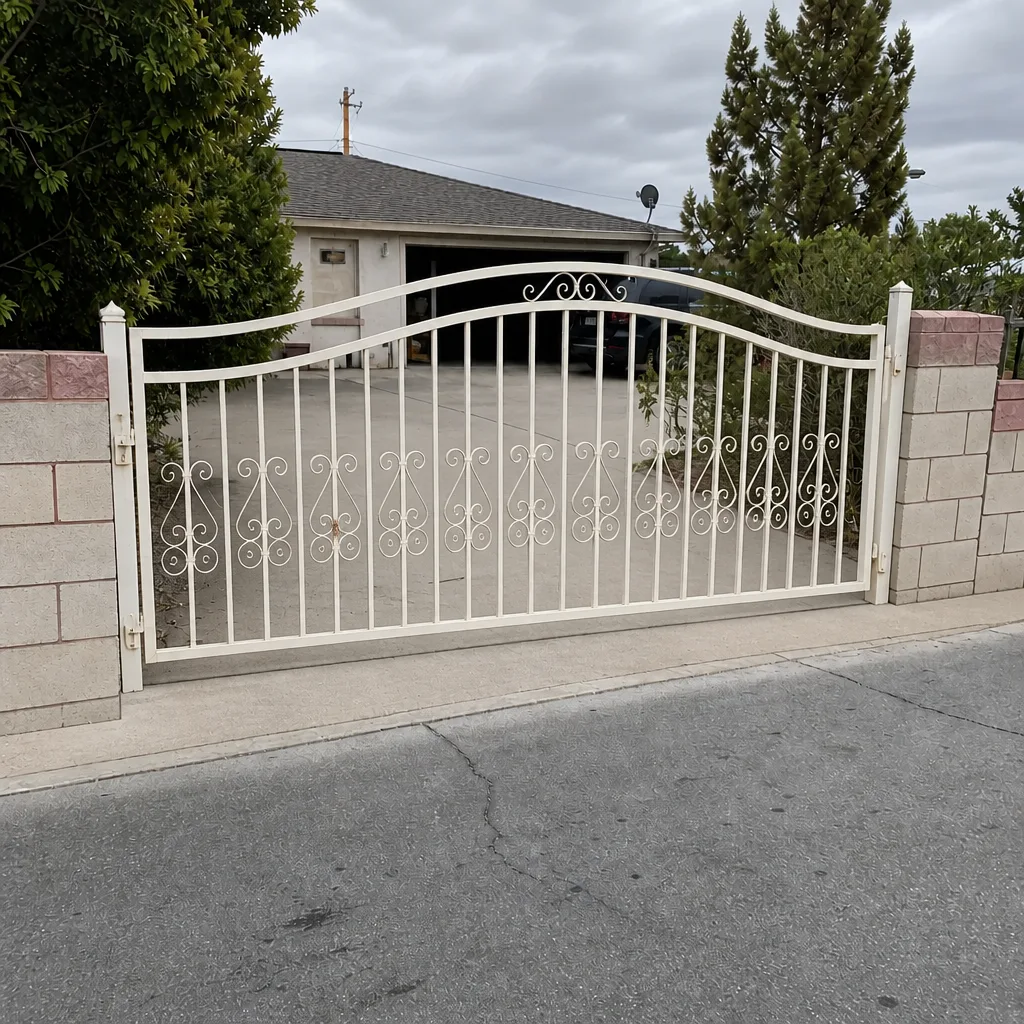
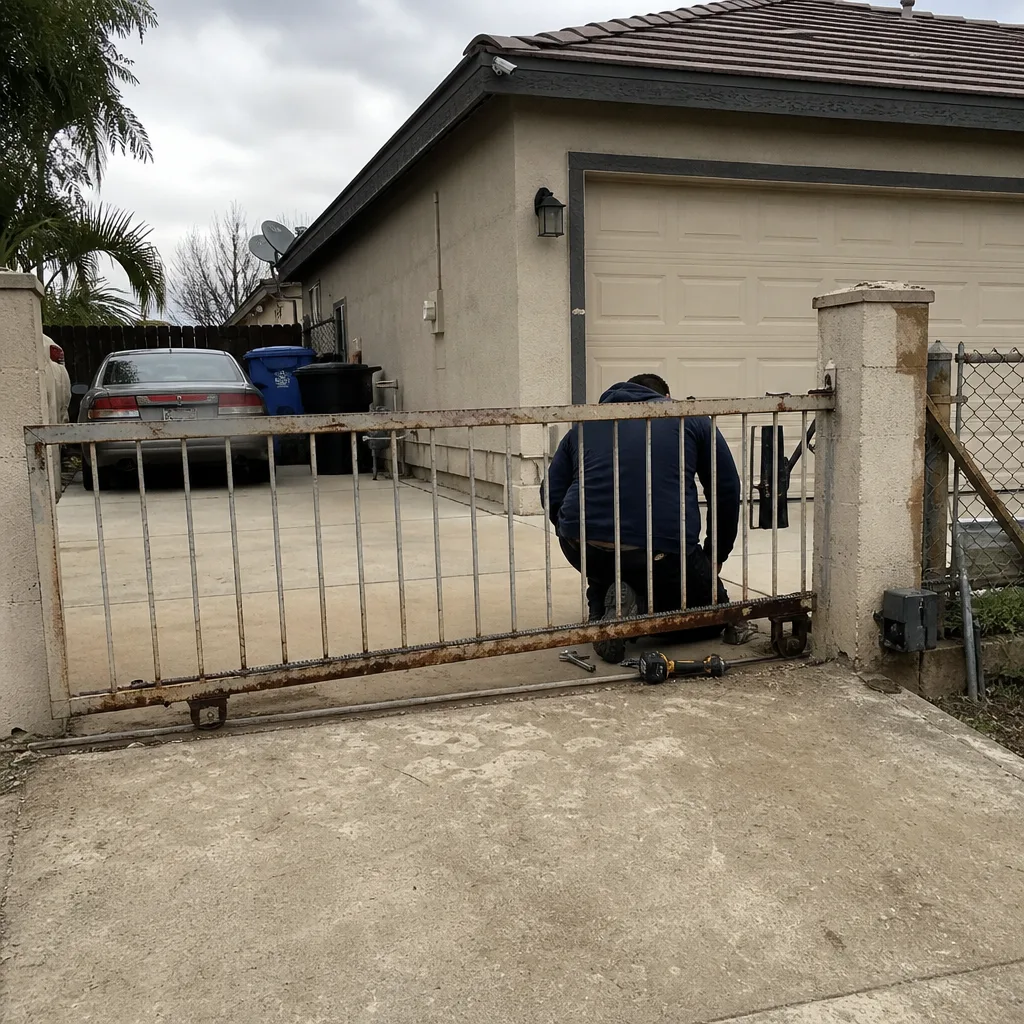
See the difference
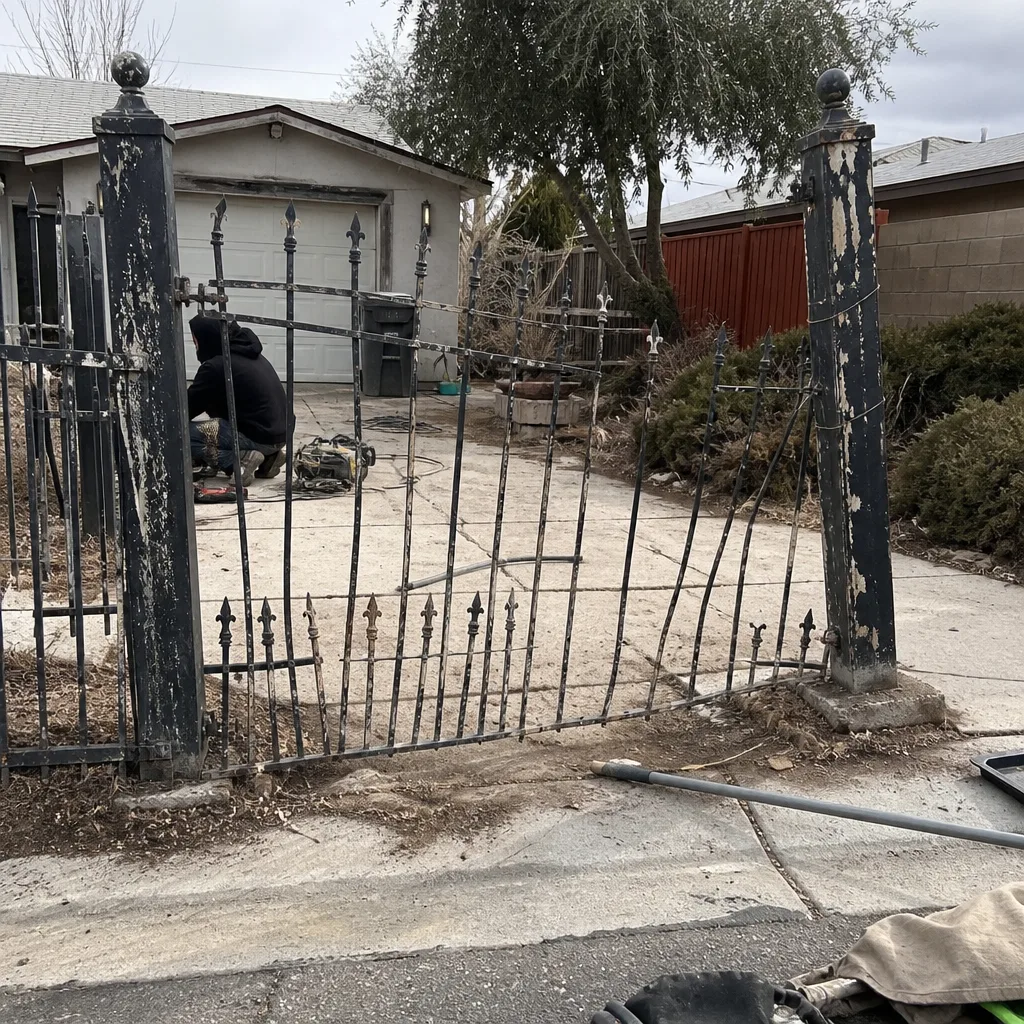 Before
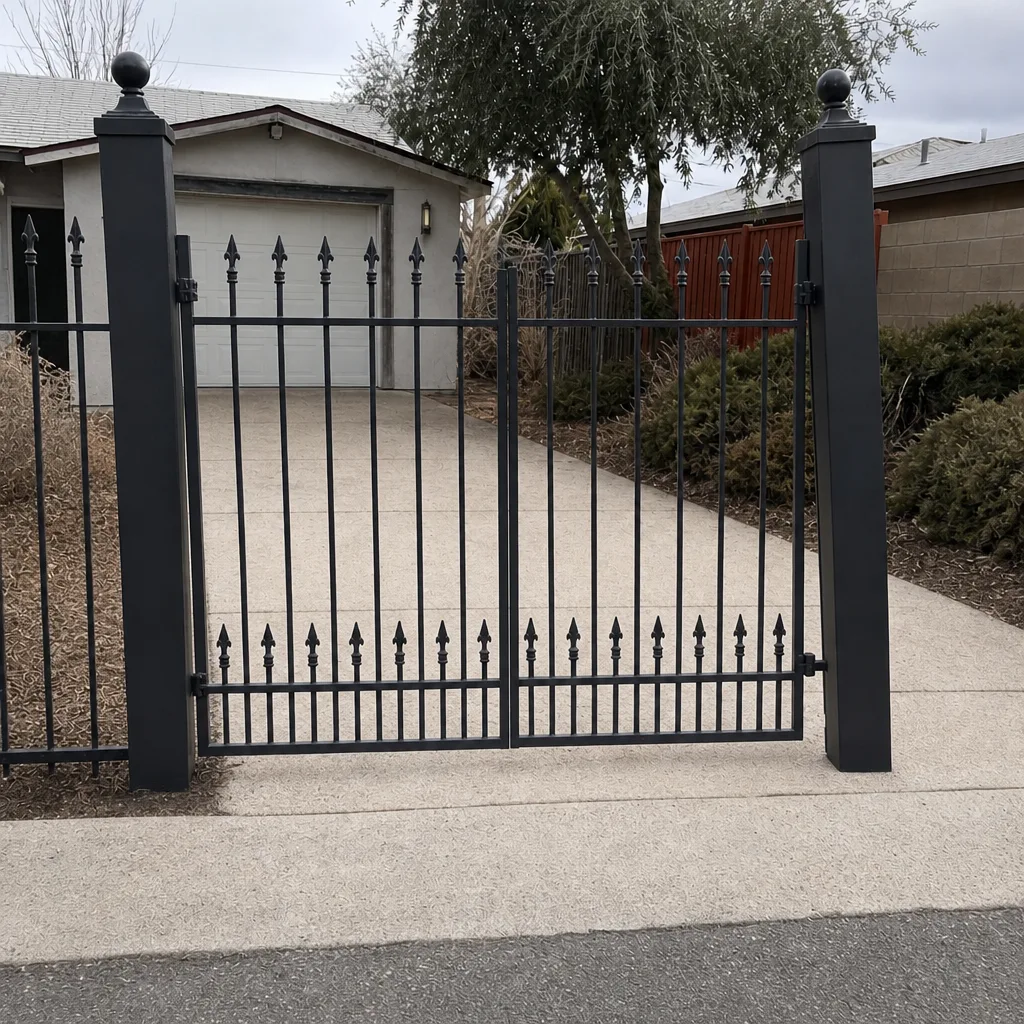 After
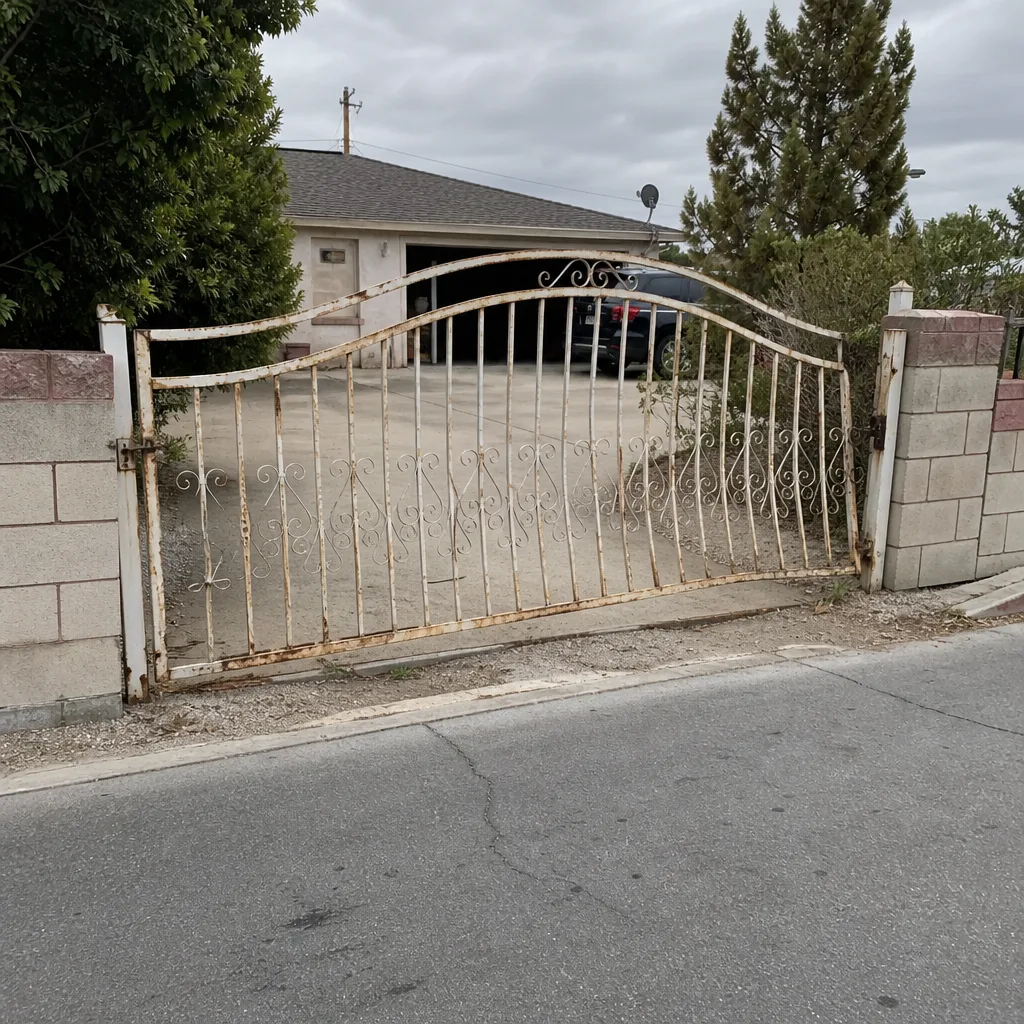 Before
 After
 Before
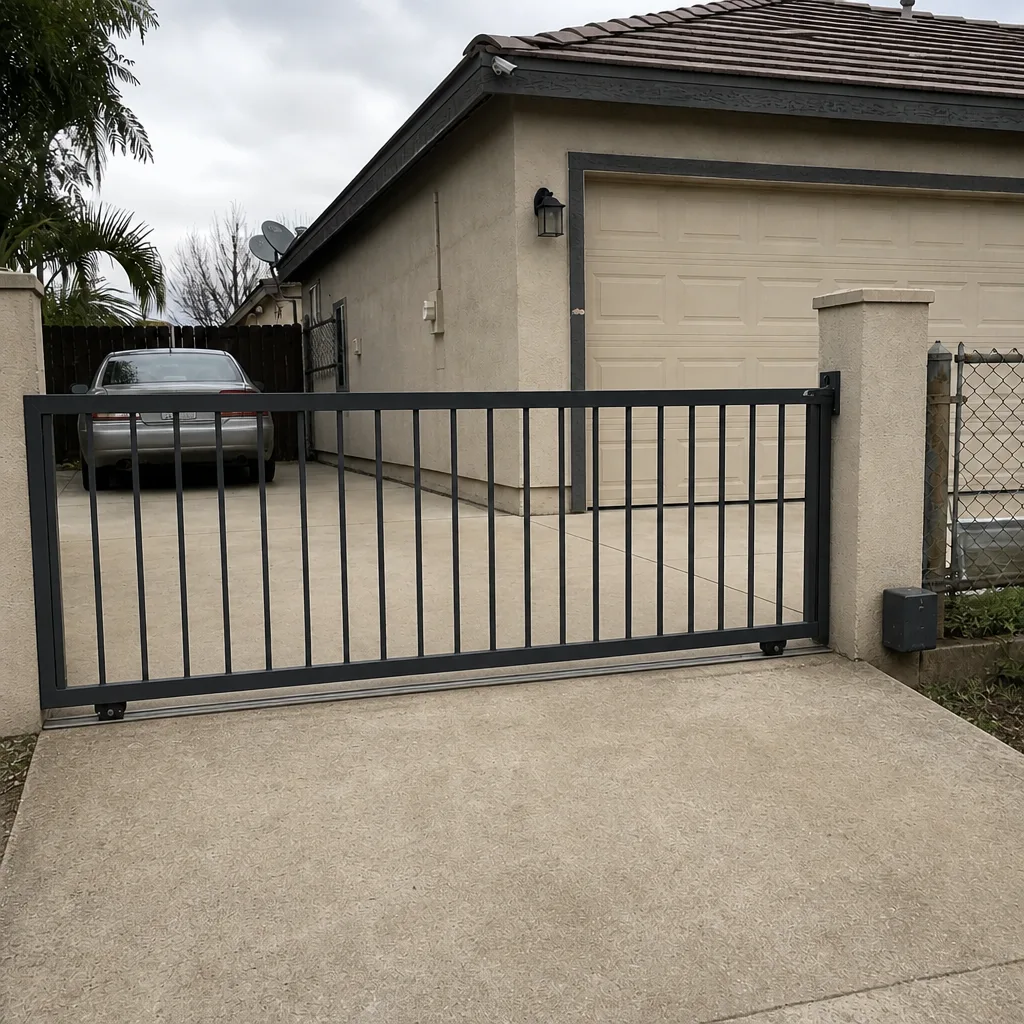 After
When to Call a Professional
Call somebody when the post needs to move, when the grade is off, when the HOA requires a review, or when the gate needs an operator. Also call when you’re not sure whether the gate is failing or the footing is: the difference changes the entire plan, and only someone who’s stood in the yard can see it. Faulty gate hardware under tension, operator wiring at line voltage, and footing work next to a buried utility line are all jobs that are safer and cheaper to bring in trained hands for. Gatewood Fence & Gate Spring Valley offers free estimates in Spring Valley. Call (888) 300-3906 and we’ll come measure your opening, check the grade, and put a written price in front of you before anything gets dug.
Frequently Asked Questions
A pedestrian gate installation in Spring Valley typically runs $1,200 to $3,500 depending on materials and footing work; a driveway gate with an operator commonly runs $4,500 to $12,000 and up, driven by width, material, and the power run. Call (888) 300-3906 for an exact quote – estimates are free and always quoted in writing before any work starts.
Often yes, especially for a driveway gate with an automatic operator or any gate tied into an existing wall or pillar. Clark County reviews permitting case by case, and your HOA may require architectural approval on top of that. The safe move is to ask whoever is pulling the permit to confirm in writing. We confirm permit requirements before we bid.
Because the posts get set in caliche hardpan with a shallow footing, and the soil around them expands and contracts with irrigation and monsoon seasons. The gate sags in the hinge post, not in the middle, and that is where we start. A properly footed post below the caliche layer is the fix, and it’s a repair, not a replacement.
Powder-coated steel in 12- to 14-gauge with a 2-mil or better finish is the most durable choice for a Spring Valley gate. Aluminum works well if the wall thickness is adequate. Cedar is beautiful but needs yearly sealing and a gate designed to move seasonally. Any of the three is fine when it’s sized and finished for the climate; the wrong choice is a thin steel tube with a cheap coat.
Usually, yes. On the vast majority of sagging gates, the gate itself is fine and the post footing is the problem. Re-setting the hinge post and re-hanging the gate costs a fraction of a new install, and it’s what we recommend unless the gate frame is rusted through or the operator is on its last leg. We weld on site so the gate stays in your driveway, and every repair carries our 90-Day Done Right Promise in writing.
Call (888) 300-3906 and we’ll look at any written estimate for free, no strings. Tell us the opening width, the material, and the scope, and we’ll tell you whether the bid covers footing, permit, warranty, and utility clause. If you’re in Spring Valley, we can usually see the gate in person the same week.
The Bottom Line
A Spring Valley gate install only lasts if the footing, the HOA approval, and the powder coat are all done right from day one. Posts set below the caliche in proper concrete, architectural review in writing before any work, a finish that holds up to UV, and a contract with clear warranty and utility terms. Get those three right and the gate is plumb in year ten. Skip any of them and you’ll pay twice. If you want a written price on a real install, or a second opinion on a bid you already have, call Gatewood Fence & Gate Spring Valley at (888) 300-3906. Live person, every time – and the price is agreed before a shovel hits the ground.
Written by the team at Gatewood Fence & Gate Spring Valley.