
Last updated November 18, 2026
 Wrought iron
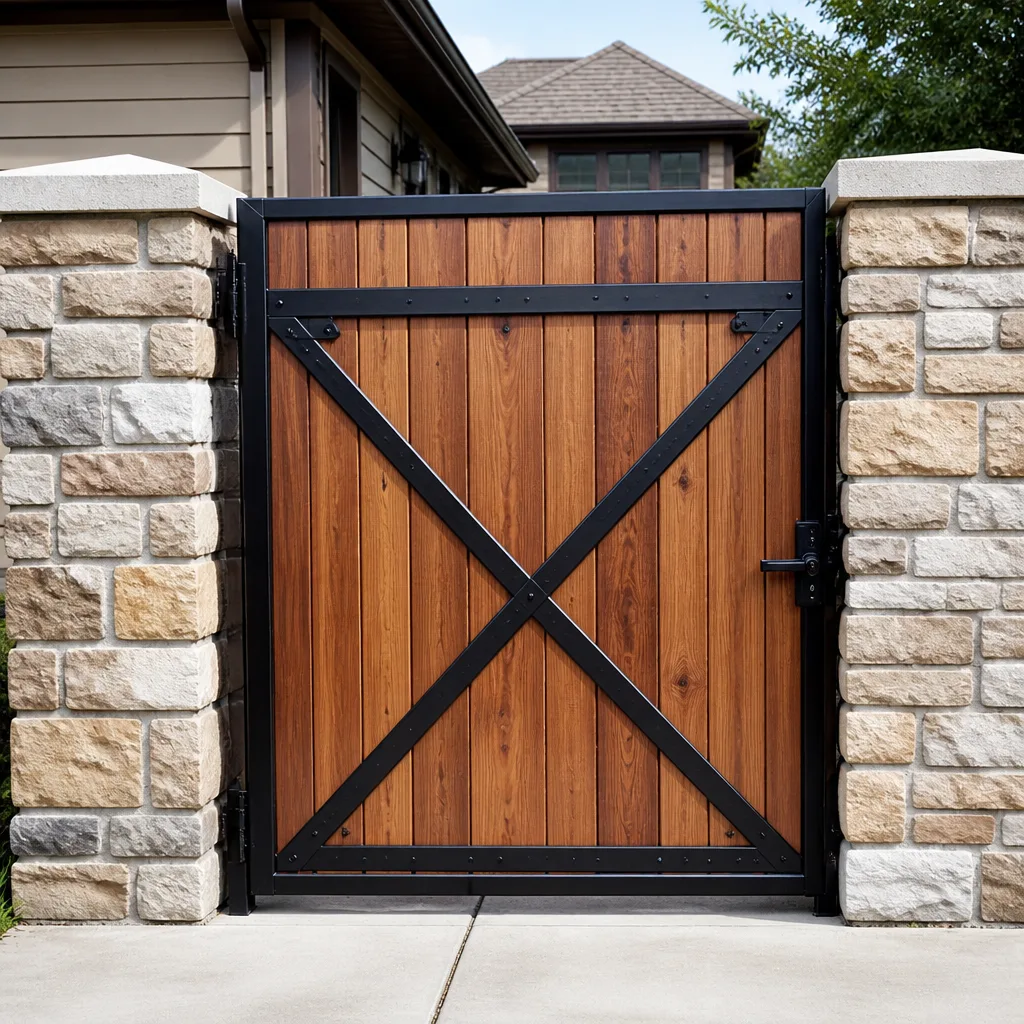 Wood & steel frame
 Farm & ranch
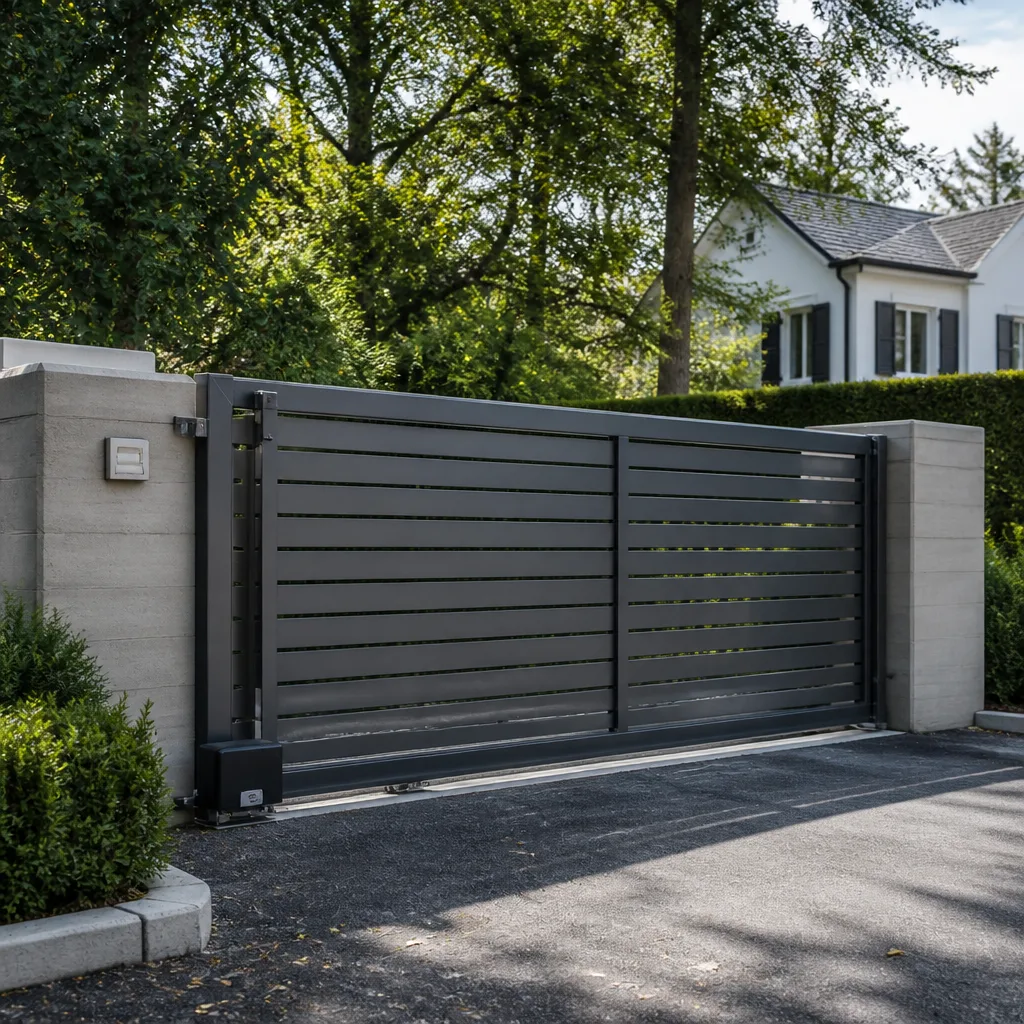 Sliding driveway gates
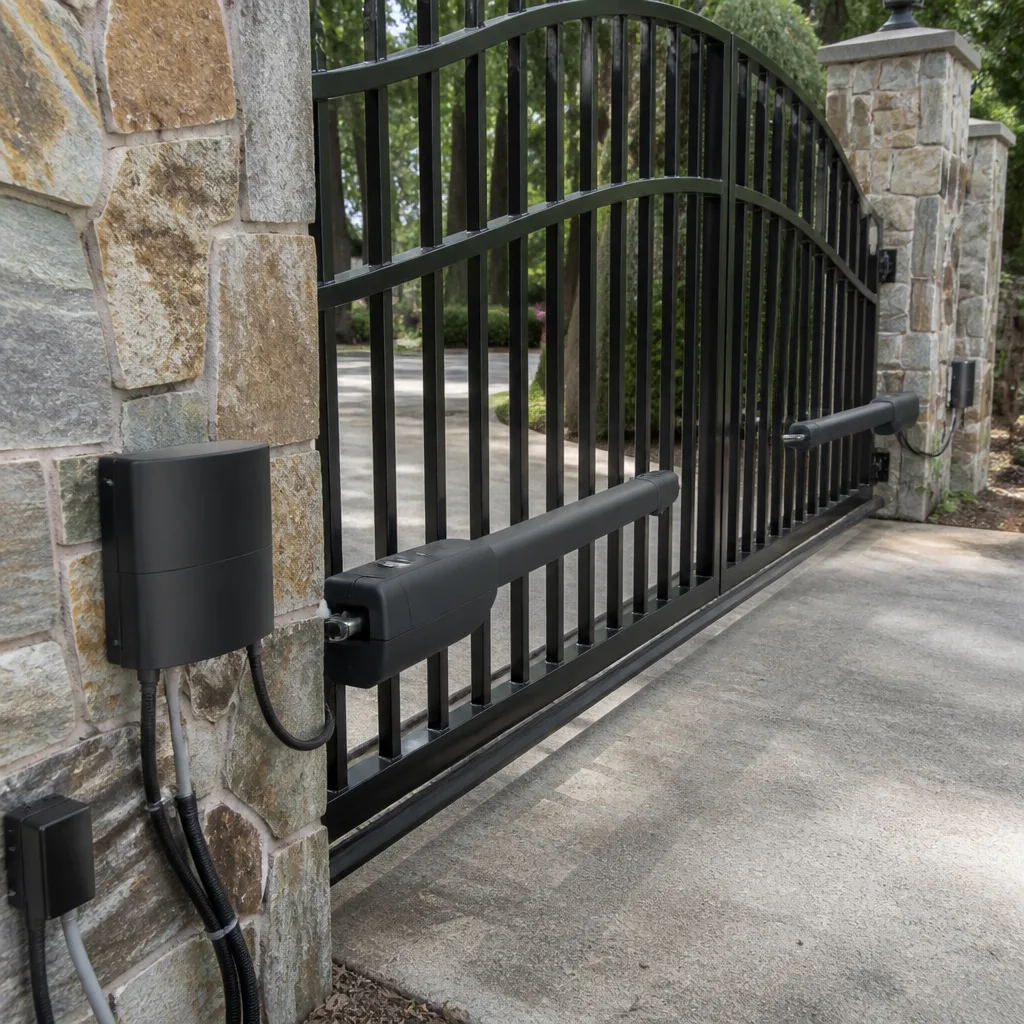 LiftMaster operators
Free on-site gate assessment - hinges, posts, and your LiftMaster or Nice gate operator checked before anything is quoted
The assessment is free and the quote is the invoice.
Get your free estimateGate Motor & Opener Maintenance Schedule: What to Do and When
The number-one cause of early motor failure in desert climates isn’t heat. It’s dust in the drive gear that nobody cleared out in October before the Santa Ana winds started. A $3 can of compressed air in fall buys you years. We’ve pulled apart FAAC and BFT operators here in Spring Valley that were grinding themselves to death on grit that would have come out in two minutes with a brush and a shop vac. What follows is the maintenance calendar we’d hand a neighbor if they asked – month by month, calibrated to Spring Valley’s dust season, monsoon moisture window, and the stretch of 100-degree weeks that punishes every seal and battery on your property. You’ll learn what to do yourself, what to skip, and the narrow list of tasks that genuinely need a licensed tech.
Quick Answer
A gate motor needs light owner maintenance twice a year – a full cleaning and inspection in October before dust season, and a second pass in April after the moisture window – plus one annual professional service that covers loop detector calibration and a load test on your backup battery. Most of the checklist is a 20-minute job with a brush, a can of compressed air, and the right lubricant. The part that requires a licensed technician is small and specific, and knowing where that line sits is how you avoid paying for service visits you don’t need.
Styles & brands we work with
- Wrought iron
- Wood & steel frame
- Farm & ranch
- Sliding driveway gates
- LiftMaster operators
Table of Contents
- The Spring Valley Month-by-Month Maintenance Calendar
- Which Lubricant Goes Where – and What Ruins Seals
- The Battery Load Test That Catches Failure Six Months Early
- Check the Gate Before You Blame the Motor
- Dust Season: What to Do in October and November
- Monsoon Moisture and the April Reset
- The One Annual Task That Belongs to a Licensed Tech
- Common Mistakes to Avoid
The Spring Valley Month-by-Month Maintenance Calendar
Gates in Spring Valley live through four distinct seasons of abuse, and the maintenance calendar follows them. The wind that funnels through the valley in late fall carries fine grit that settles into every open gear and track. Summer bakes the housings. The monsoon window in July and August pushes moisture into places it doesn’t belong. If you do the right task in the right month, the motor lasts years longer than one that gets attention only when it quits.
- October: Full clean-out before dust season. Brush and blow out the drive gear, wipe the photo-eye lenses, clear debris from the track or rack. This is the single most important month on the calendar.
- November: Lubricate per drive type (see the lubricant section below). Check all fasteners on the operator housing and the gate frame.
- December through February: Monthly visual check. Look for anything new – a sagging gate, a slow spot in the travel, a photo-eye that’s been bumped.
- March: Battery load test while the weather is mild and you have time to order a replacement before summer.
- April: Post-moisture reset. Inspect for corrosion at connections and hinges, re-lubricate pivot points, clear any grit the spring winds pushed in.
- May and June: Pre-heat check. Confirm the operator isn’t straining, listen for new noises, verify the manual release works.
- July and August: Watch the monsoon. After any heavy rain, check the control box and photo-eyes for water intrusion. Don’t wait for a failure.
- September: Annual professional service – loop detector calibration, full electrical check, and a technician’s eye on the mechanicals.
If your gate has a chain drive, add a monthly wipe-down of the chain during dust season. Rack-and-pinion systems need the rack brushed more often than the calendar suggests if you’re anywhere near an unpaved road or a construction site.
Which Lubricant Goes Where – and What Ruins Seals
This is where most well-meaning owners do damage. The wrong lubricant doesn’t just fail to help – it attracts dust, hardens seals, and turns a clean drive into a grinding paste. We’ve seen WD-40 sprayed into a Linear operator’s gearbox by an owner who meant well, and the result was a rebuild that cost more than a year of proper service would have. The general-purpose spray is a solvent, not a lubricant, and it strips the factory grease out of places you can’t easily re-pack.
- Chain drives (common on Viking and Linear operators): Use a chain-specific lubricant, ideally a dry chain lube that sets and doesn’t hold grit. Apply sparingly with a brush, wipe off the excess. Never soak it.
- Rack-and-pinion (common on sliding gates): A light coating of white lithium grease on the rack teeth, applied with a brush. Too much is worse than too little – excess catches dust.
- Screw drives: Manufacturer-specified grease only. These have sealed gearboxes for a reason. If the manufacturer calls for a specific product, use it; don’t substitute.
- Hinges and pivot points: A penetrating lubricant worked into the hinge, then a heavier grease to hold it. Different job, different product.
- What to avoid: General-purpose spray lubricants (WD-40, silicone sprays) on any drive component. They’re solvents first, lubricants second, and they don’t belong in a gearbox.
The safe rule: if you don’t know the drive type, look it up before you touch it. FAAC, BFT, and the other operators in our service range all publish their specifications, and a call to us gets you the right answer in two minutes. It beats guessing and paying for a rebuild.
The Battery Load Test That Catches Failure Six Months Early
A backup battery doesn’t fail loudly. It fades. The gate keeps working on AC power, so nobody notices the battery has lost its capacity until a power outage leaves the gate stuck open or closed – and by then it’s an emergency. The load test tells you the truth months before that happens.
- Locate the battery in the control box. Most operators have a 12V sealed lead-acid cell; some larger systems have two.
- With a multimeter, check resting voltage. A healthy 12V battery reads 12.6 to 12.8 volts. Anything under 12.4 is already suspect.
- Trigger the gate to run on battery power only – unplug the AC or flip the breaker – and watch the voltage during travel. If it drops below 11.5 volts under load, the battery is on its way out.
- If the gate travels slowly or stalls on battery power, the battery is failing regardless of resting voltage. Replace it.
- Replace every three to five years as a matter of course, or sooner in our summer heat, which shortens battery life.
Write the replacement date on the battery with a marker. The next owner of that gate – whether it’s you in five years or the person who buys the house – will thank you. Most battery failures we get called about in Spring Valley happen in July, during a heat wave, on a battery that was already weak in March.
Check the Gate Before You Blame the Motor
We get calls every week from folks in Spring Valley convinced their motor is dying when the problem is the gate. A gate that sags, drags, or binds puts enormous strain on the operator, and a motor that’s being asked to push a stuck gate will fail early – sometimes spectacularly. Before you spend a dime on motor service, check the mechanical side.
- Hinge and pivot points: Open the gate by hand. It should move freely. If it binds, the motor has been fighting that bind, and the fix is at the hinge, not the motor.
- Post integrity: A sagging gate hangs on a failing hinge post. Push on the post; any movement means the post needs attention before anything else.
- Track or rack alignment: Sliding gates need the track level and clear. A track with a kicked-up edge or debris catches the rollers and strains everything upstream.
- Gate frame and panel condition: Loose panels, rusted welds, and misaligned frames transfer load to the operator. On-site welding is often the right answer long before motor service.
- Manual release operation: Test it monthly. If the manual release doesn’t work when you need it, you’re one power outage away from a real problem.
A gate sags in the hinge post, not in the middle, and that’s where we start every diagnosis. Fix the panel without the post and you’ll fix it twice. If the mechanicals are sound and the motor is still struggling, then it’s time for our Gate Repair in Spring Valley team to take a closer look.
Dust Season: What to Do in October and November
The dust that moves through Spring Valley in fall is fine, abrasive, and relentless. It gets into every open tolerance on your operator – the drive gear, the track, the photo-eye lenses, the control box vents. This is why October is the month that matters most. If you do one thing on the calendar, do this.
- Kill the power at the breaker. Confirm the gate is on manual release.
- Open the operator housing. Brush out loose dust from the drive gear with a soft brush, then finish with a can of compressed air in short bursts. Don’t blast it into bearings or seals.
- Wipe the photo-eye lenses with a dry microfiber cloth. Dust on the eyes is the second most common cause of gates that stop mid-travel.
- Clear the track or rack with a stiff brush. A shop vac handles the loosened grit.
- Inspect the housing gaskets. A worn gasket lets dust into the control box; replace it if it’s cracked or hardened.
- Wipe down the exterior housing and the gate frame. Give the whole system a once-over while you’re outside.
Twenty minutes even on a full-size BFT sliding system. A $3 can of compressed air and a soft brush beat a motor replacement every time. Our Gate Motor & Opener in Spring Valley service schedule is built around this exact window for a reason.
Monsoon Moisture and the April Reset
The monsoon window in July and August puts water into places it hasn’t been since spring, and by the time April rolls around, the system has been through a full wet-dry cycle. That’s the second critical service month. Corrosion, seized hinges, and moisture-damaged connections are all things you catch in April before they cost you in summer.
- Photo-eyes: Check for water intrusion and fogging. If either eye has moisture inside the lens, it’s on its way out.
- Control box: Open it and look for standing water, rust on terminals, or any sign the seals failed over the wet months.
- Hinges and pivot points: Re-lubricate everything. Winter rain strips grease; spring winds bring grit back.
- Concrete and footing: Check for cracks or shifting around the hinge post after a wet winter. In the heavier soils this is worth checking every year.
- Gate frame: Look for rust spots that started over the wet months. Catch them before they spread.
For a full gate installation or replacing an aging operator, our Gate Installation in Spring Valley team handles the whole system, including the power run and safety edge setup. But for maintenance, April is the reset that keeps the system honest.
The One Annual Task That Belongs to a Licensed Tech
Loop detector sensitivity calibration is the one annual task that should never be a do-it-yourself project. The loop detector is the buried wire in your driveway that tells the gate a car is there. Its sensitivity is what makes the gate safe around people, pets, and vehicles. Calibrate it too sensitive and every passing truck trips the gate; too insensitive and a child’s bicycle doesn’t register, and that’s a liability issue, not a convenience one. The difference between the two is a fraction of a turn on a potentiometer that most homeowners don’t even know exists.
There’s also the electrical side. Any work inside the control box beyond the visual check belongs to someone who’s insured to be in there. A shock from a gate operator circuit is no joke, and a rushed wiring repair on a photo-eye tends to fail when you’re away for the weekend.
In our experience, the clean split is: you clean, brush, lubricate, test the manual release, check the battery, and look at the mechanicals. We calibrate the loop, check the electrical, and put a certified eye on the motor’s internals. That’s one service visit a year for most systems. Our techs have up to 25 years of experience and are certified across FAAC, BFT, Viking, Linear, and the other major brands. If you’re not sure whether a task is on your side of that line, call and ask – we’d rather answer the question than have you guess.
Common Mistakes to Avoid
- Skipping the October clean-out. It feels optional because the gate is still working. By the time the dust has done its damage, the motor is already on a short runway.
- Using WD-40 on drive components. It’s a solvent, not a lubricant. It strips factory grease and attracts the very grit you’re trying to remove. We see this constantly in Spring Valley.
- Slow-kill assumptions. A gate that’s moving a bit slowly isn’t “just getting old” – it’s usually a failing battery, a binding hinge, or a worn gear that can be caught early.
- Ignoring the gate to save the motor. A sagging gate kills motors faster than anything else. Fix the mechanicals and the operator gets years back.
- Replacing the motor when the problem is the gate or the wiring. The operator is rarely the first thing to fail. Diagnose before you replace.
- Never testing the manual release. When you need it, you need it now. A monthly test takes 30 seconds.
- Putting off the loop detector calibration. Too sensitive and the gate misbehaves; too insensitive and it’s a safety problem. It’s not a corner to cut.
If you catch one of these early and want a second set of eyes, our Gatewood Fence & Gate Spring Valley home page has the standing offers – including a free second opinion on any written estimate and a $40 credit on any repair over $200. No haggling, no fine print.
See the difference
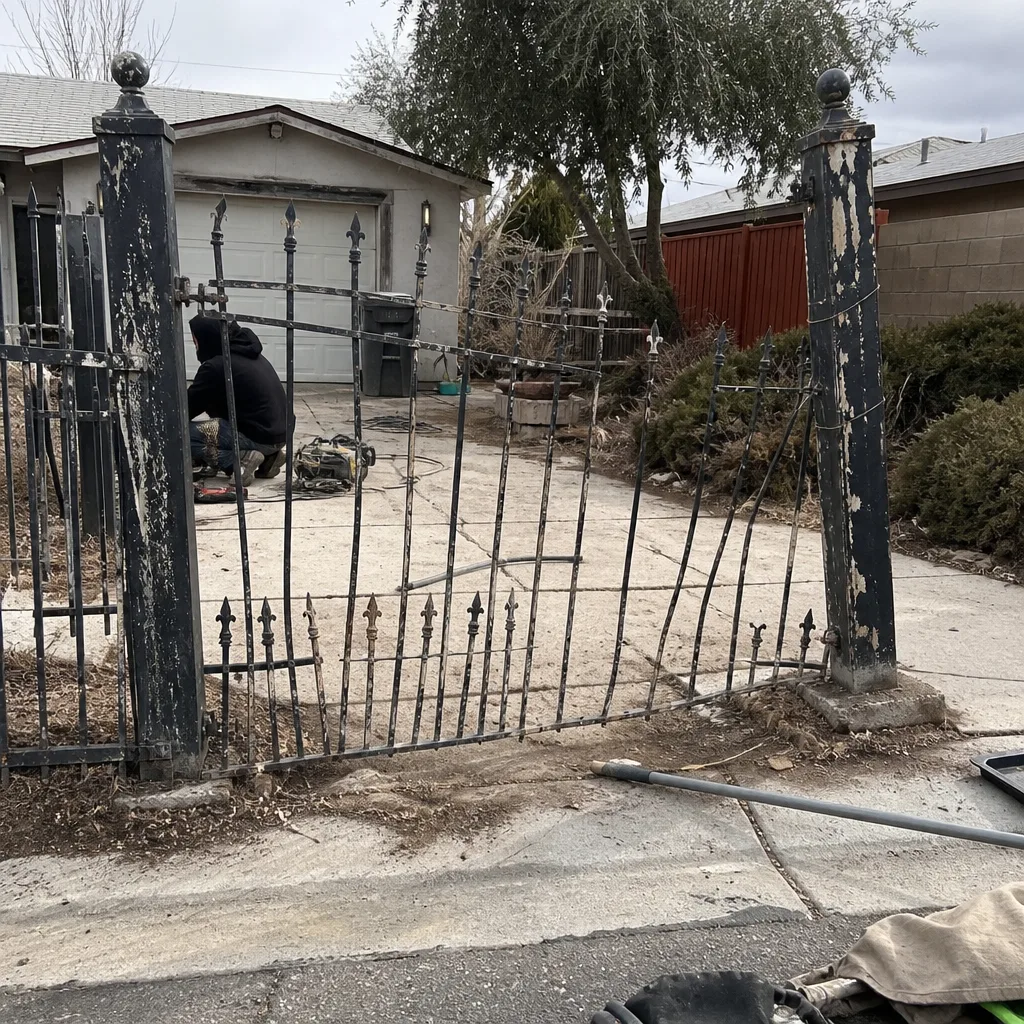 Before
 After
 Before
 After
 Before
 After
When to Call a Professional
Call a professional when the motor isn’t the only thing at risk. Specifically: any work inside the control box; loop detector calibration; electrical fault-finding; a drive motor that’s seized, smoking, or making a new grinding noise; welding on a cracked gate frame or post; and any gate that won’t move on manual release. These aren’t tasks to learn on your own equipment. The high-tension springs and drive chains on gate operators can cause serious injury, and the electrical side is a hazard in a way that a car door isn’t. We do the mechanical and electrical work ourselves so the gate stays in your driveway rather than going to a shop. Gatewood Fence & Gate Spring Valley offers free estimates in Spring Valley – call (888) 300-3906. Every job carries the 90-Day Done Right Promise in writing, and a live person answers the phone around the clock.
Frequently Asked Questions
Twice a year as an owner – a full clean-out in October before dust season and an April reset after the monsoon window – plus one annual professional service for loop calibration and an electrical check. In our climate, that’s enough for most residential systems on 12V or 24V operators. The calendar matters more than the frequency: doing the right task in the right month is what protects the drive gear and bearings.
Check the mechanical side of the gate before the motor: open it by hand and see if it binds. A sagging gate or a seized hinge puts strain on the operator and mimics motor failure. Then check the photo-eyes for dust or obstruction, and the battery resting voltage. If the gate moves fine by hand and the eyes are clean, call for a diagnosis. Our Gate Repair in Spring Valley team sees this every week – half the “motor failures” we get called about are a binding hinge or a dirty photo-eye.
Most of it, yes – cleaning, brushing, lubricating, testing the manual release, and the battery load test are all straightforward owner tasks. The line is electrical work and loop detector calibration, which need a licensed technician. Don’t open the control box beyond a visual check. Don’t adjust a loop detector’s sensitivity to save a service visit.
White lithium grease, applied lightly with a brush. Too much is worse than too little because excess grease catches dust and holds it against the teeth. For chain drives, use a dry chain-specific lubricant. For screw drives, use only the manufacturer-specified grease – substitutes can attack the seals.
Resting voltage under 12.4, or a voltage drop below 11.5 under load when the gate runs on battery power only, means the battery is on its way out. If the gate travels slowly or stalls on battery, replace it now. Plan on every three to five years regardless, and sooner in our summer heat.
Yes. We’re certified to service nine major brands, including FAAC, BFT, Linear, Viking, LiftMaster, Ghost Controls, DoorKing, Elite, and Mighty Mule. Free estimates in Spring Valley – call (888) 300-3906 for an exact quote. Estimates are free, and the price is quoted and agreed before any work starts.
The Bottom Line
Most gate motor maintenance isn’t the complicated service that gets sold to you. It’s a twice-a-year checklist – clean in October, reset in April – plus an honest battery load test and a look at the gate itself before you blame the motor. The three things that actually extend motor life in Spring Valley are the October dust clean-out, the right lubricant in the right place, and fixing the mechanicals before they strain the operator. Get those right and you’ll spend less on service and get more years out of the gate. Get one of them wrong and you’ll pay for it twice. When in doubt, look at the whole gate first and the motor second – that’s the order that saves you money.
If you’d like a hand with any of this, call Gatewood Fence & Gate Spring Valley at (888) 300-3906 for a free estimate. A live person answers around the clock, the price gets agreed before we start, and every job carries the 90-Day Done Right Promise in writing. We’ve been at this since 2001, we’re owner-operated, and the shop is down the road – that’s the oldest accountability there is.
Written by the team at Gatewood Fence & Gate Spring Valley.