
Last updated November 18, 2026
 Wrought iron
 Wood & steel frame
 Farm & ranch
 Sliding driveway gates
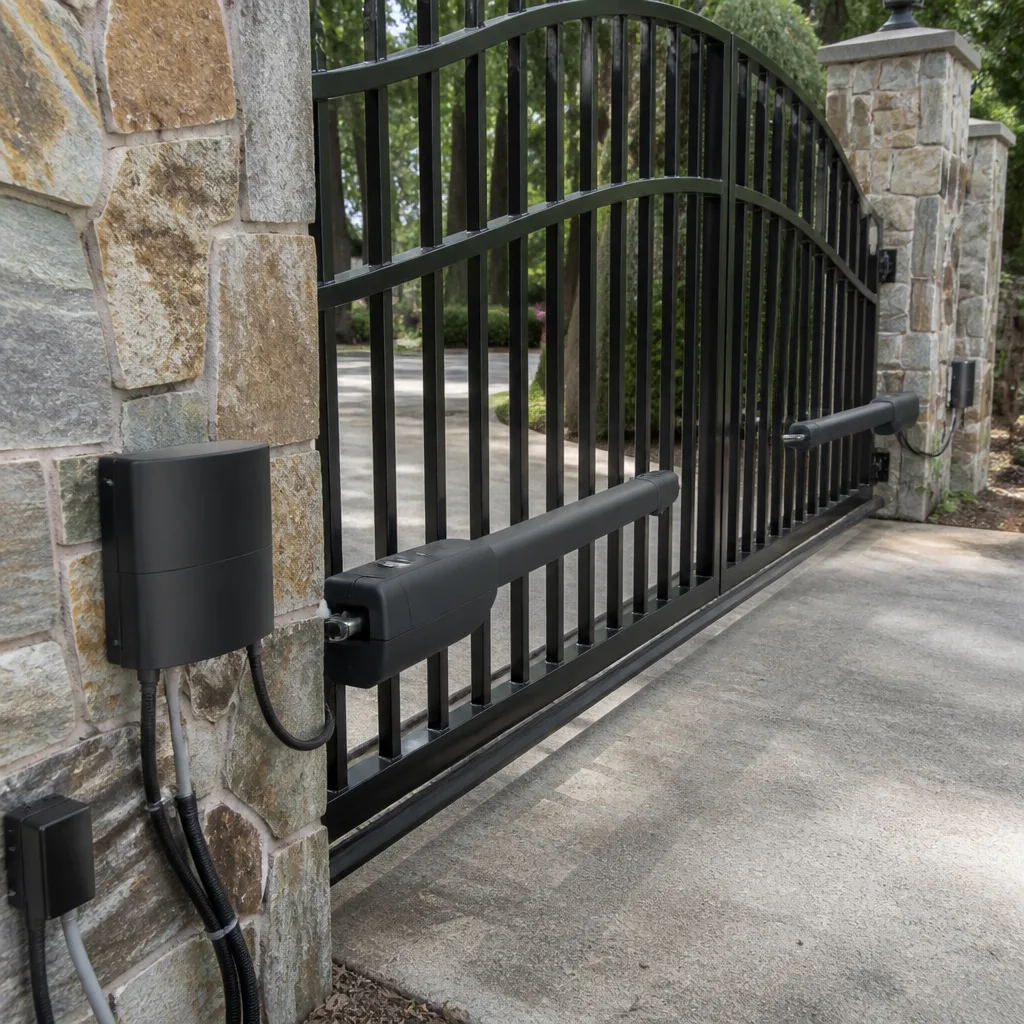 LiftMaster operators
Free on-site gate assessment - hinges, posts, and your LiftMaster or Nice gate operator checked before anything is quoted
The assessment is free and the quote is the invoice.
Get your free estimateGate Motor & Opener Warning Signs Every Homeowner Should Know
A gate that hesitates for half a second before it moves isn’t “just getting old.” That hesitation is a specific signal, and it tells you exactly which part is about to leave you stuck in the driveway with the car running. We’ve watched this play out hundreds of times in Spring Valley: a homeowner ignores a small stutter for a month, then pays for a whole new motor when a capacitor or a limit switch would have cost a fraction of that. This guide covers the warning signs that actually matter, what each one points to, and how to read them before a cheap repair turns into an expensive replacement.
Quick Answer
The main warning signs of a failing gate motor or opener are a hesitation before movement, a motor that sounds rougher or louder than it used to, sluggish operation in hot weather, shrinking remote range, and a gate that reverses or stops on its own mid-travel. Each symptom points to a different component, and catching any of them early usually means a repair instead of a full motor replacement.
Styles & brands we work with
- Wrought iron
- Wood & steel frame
- Farm & ranch
- Sliding driveway gates
- LiftMaster operators
Table of Contents
- 1. The Half-Second Hesitation: Capacitor, Battery, or Chain Tension?
- 2. Listening for Trouble: How Motor Sound Changes Over Time
- 3. Why Your Gate Struggles in July But Runs Fine in Winter
- 4. The Shrinking Remote Range Nobody Thinks to Check
- 5. Gate Reversing on Close: Sensor, Limit Switch, or Logic
- 6. Hinge, Post, and Track Problems That Look Like Motor Problems
- 7. A Simple Monthly Check You Can Do in Five Minutes
1. The Half-Second Hesitation: Capacitor, Battery, or Chain Tension?
When a gate pauses before it starts moving, the motor is trying to tell you one of three things, and the way it hesitates usually points to which one. A single soft delay that happens on every open is often a capacitor that’s lost its kick. A hesitation that’s worse on the first cycle of the day and then clears up tends to be a battery issue in solar or battery-backup units. And a hesitation that comes with a faint clunk or grind is usually the drive chain running too loose or a sprocket wearing down.
Here’s how to sort them out without guessing:
- Note the pattern. Does it hesitate every time, or only on the first cycle? Every-time suggests the capacitor or the control board. First-cycle-only suggests the battery or a cold gear.
- Listen for the clunk. A delay with a mechanical noise is drive-train. A delay with silence then sudden movement is electrical.
- Check the chain by hand. With the motor in manual release, the chain should have a little slack, not a lot. A chain you can lift more than about half an inch is loose.
- Look at the lights. Many LiftMaster and Elite control boards flash a diagnostic code during a fault. Note the pattern before you reset anything.
In Spring Valley we see a lot of battery hesitation during the dry summer months when solar panels on gate posts get coated with dust and the battery never fully charges. A quick panel cleaning sometimes buys you another season, but a battery on its way out won’t recover. On most swing and slide operators, a capacitor runs $40 to $120 installed, a battery $75 to $200, and a whole motor replacement runs into four figures. That gap is why reading the hesitation correctly matters so much.
2. Listening for Trouble: How Motor Sound Changes Over Time
A healthy gate motor has a steady, low, even tone. It’s not silent, but it doesn’t complain. As a gear-driven operator wears, the sound progresses through recognizable stages, and knowing the stages is the closest thing to a warning light on these machines.
- Stage one: A slightly louder whir than you remember. Most homeowners don’t notice this until something else draws their attention to the gate.
- Stage two: A rhythmic tick or click that follows the motor’s rotation. This is often early gear or bearing wear. It’s cheap to catch here.
- Stage three: A grinding or grinding-plus-squeal. This means metal is grinding on metal. At this point we’re often replacing a gear set, not just servicing.
- Stage four: A clank-and-stop, or the motor runs but the gate doesn’t move. Gears have stripped or the drive coupling has failed.
We’ve had Spring Valley customers describe stage-three noise as “the gate growling at me.” That’s usually a fair diagnosis. Gear-driven units are the most forgiving to repair in stages one and two and the least forgiving in stage four – by then it’s a rebuild or a motor replacement. A DoorKing slide operator with a worn gear sounds very different from a Mighty Mule swing arm with a dry pivot, but the progression is the same. Grease schedules matter more than most people realize. On a heavy-traffic gate, a lubrication service every year or two keeps you in stage one far longer.
When the sound changes, the worst move is to turn up the motor’s force setting to push through the noise. That hides the symptom and accelerates the wear. If the gate needs more force to move than it did last year, something is binding, and we need to find what.
3. Why Your Gate Struggles in July But Runs Fine in Winter
A gate that behaves perfectly in cooler weather and drags in July isn’t failing randomly. It’s telling you the motor is running into thermal overload – the operator is hitting its heat limit and either slowing down, stalling out, or tripping a thermal cutout to protect itself. That’s a design feature, not a fault, but it’s doing its job because the motor is being worked harder than it should be.
There are a few common reasons this happens:
- Friction in the gate itself. A hinge that’s a little stiff becomes a hinge that’s very stiff when metal expands in the heat.
- Tire or wheel pressure on slide gates. Worn rollers bind harder in hot weather, especially on older track systems.
- Sun load on the operator cover. In Spring Valley, an operator in full afternoon sun can run 20 to 30 degrees hotter than one in shade, and that eats into the thermal margin.
- Undersized motor for the gate. A cheap motor that’s technically rated for the gate can’t handle July in southern Nevada.
The fix isn’t usually the motor – it’s the friction. In our experience, most “thermal overload” calls in Spring Valley trace back to binding hinges, a dragging wheel, or a drive chain that’s been over-tightened. If your gate runs fine six months a year and struggles the other six, that’s the pattern to describe when you call. It saves us a trip and saves you money.
4. The Shrinking Remote Range Nobody Thinks to Check
Here’s a warning sign almost every homeowner misreads: the remote works from further and further away each day, until one morning you have to be within a few feet of the gate to get it to open. The first instinct is “the remote battery is dying,” and sometimes it is. But if you’ve replaced the battery and the range is still shrinking, the problem is on the gate end – and the usual culprits are the receiver antenna or the receiver board itself.
What to check, in order:
- Replace the remote battery with a fresh one. If range comes back, that was it.
- Look at the antenna wire at the receiver. It should be stretched out, not coiled up, and not touching metal. A coiled antenna loses a shocking amount of range.
- Note whether the range loss is gradual or sudden. Gradual usually means antenna or board degradation. Sudden usually means a damaged antenna wire or a lightning/near-strike event.
- Test a second remote if you have one. If both remotes fail at the same distance, it’s the receiver, not the remotes.
Spring Valley has its share of afternoon lightning in monsoon season, and a nearby strike can damage a receiver board without touching anything else. In those cases only the receiver needs replacing, not the whole opener. We see this most on LiftMaster and Elite units because their receiver boards are easy to swap independently – a much smaller repair than a full operator replacement, and one that a lot of companies would rather upsell.
5. Gate Reversing on Close: Sensor, Limit Switch, or Logic
A gate that opens fine but reverses or stops partway through closing is trying to tell you something specific, and the message depends on where it reverses. If it starts closing and reverses a foot off the open position, that’s usually a safety sensor or photo-eye fault. If it reverses at the last few inches before the closed position, that’s usually the close limit switch or the obstacle-detection logic. If it reverses at totally random points every time, that’s often a control board or a wiring fault that needs a trained eye.
Safety sensors on sliding and swing gates are the first thing to rule out because a bad sensor is exactly what a safety sensor is designed to look like – a gate that won’t close is a gate that thinks something is in the way. Common causes:
- Dirt, spiderwebs, or pollen on the sensor lens (very common in the desert)
- A sensor knocked out of alignment by the gate, a car, or lawn equipment
- A sensor wire nicked by a trimmer or chewed by wildlife
- A failing sensor that reads “blocked” all the time
- Board-level fault on the operator (limit switch or logic)
Never bypass a gate safety sensor to get the gate closing again. These exist because a gate under motor power can do real damage to a person, a pet, or a vehicle, and a bypassed sensor disables the one thing standing between a working gate and a dangerous one. If your gate won’t close, leave it in manual until somebody qualified can look. That’s a safety rule we don’t bend, no matter how much of a hurry you’re in.
6. Hinge, Post, and Track Problems That Look Like Motor Problems
A gate sags in the hinge post, not in the middle, and that’s where we start. Most “my motor is failing” calls we run in Spring Valley turn out to be gate hardware problems that show up as motor symptoms. The motor is working harder, running hotter, and hesitating – but the operator is doing its best against a gate that’s fighting it.
What we look for first:
- Hinge play. A hinge with a quarter-inch of play at the post can translate to an inch of swing wobble at the gate edge.
- Post shifting. A post that’s moved, even slightly, changes the whole geometry of the gate’s travel. Fix the panel without the post and you’ll fix it twice.
- Track wear on slide gates. Worn or flattened wheels, debris in the track, or a track segment that’s been bumped out of level.
- Weld failures. A cracked weld at a hinge or a frame joint will cause binding the motor can’t overcome. This is one of the reasons we weld on site – the fix stays on your gate, not on a truck heading out of your driveway.
If you’ve had a gate “repaired” by swapping parts and the problem came back, hardware is usually the reason. Swapping a motor when the hinge post is shifting fixes nothing. The person who shows up should be checking the gate and the motor together, because the motor only ever works as hard as the gate allows.
For a deeper walk-through of gate-side repairs, our Gate Repair in Spring Valley page covers the hardware side in more detail.
7. A Simple Monthly Check You Can Do in Five Minutes
The single best way to catch these signs early is a short monthly check. You don’t need tools for most of it. Five minutes a month is the difference between reading a signal and discovering a failure.
- Open and close the gate five times in a row and just watch. Note hesitation, sound changes, and whether it moves evenly.
- Listen on the cycle after it’s been sitting a few hours. First-cycle hesitation is a specific and useful clue.
- Test the remote from your normal driveway distance. If you’re creeping closer every month, that’s the range signal.
- Put a hand on the gate at the edge and try to move it while it’s in manual release. There should be a little play, not a lot, and no wobble at the hinges.
- Look at the sensor lenses and the antenna wire. A quick wipe and a straightening of the antenna go a long way.
- Check the motor housing for cracks, debris, or sun damage, especially if it faces west into the afternoon sun.
Write down anything you notice. When you call, “the gate stutters on the first open of the day” is a much more useful sentence than “it’s acting weird” – and it helps us bring the right part the first time. If you’re rough on the gate or you’ve got a rental property where tenants won’t notice small changes, that monthly check matters even more. A small problem caught in month one is a repair. The same problem in month six is often a new operator. For those of you who prefer a scheduled maintenance visit, our Gate Motor & Opener in Spring Valley page covers what a proper service visit includes.
Common Mistakes to Avoid
- Turning up the force setting to fix a binding gate. The gate doesn’t need more force, it needs less friction. Turning up the force just wears the gears faster and masks the real problem until something fails hard.
- Bypassing a safety sensor to get the gate to close. This is genuinely dangerous. A gate under motor power with a disabled sensor can injure a child, a pet, or a car. Never do it. If a company offers to, get a second opinion.
- Replacing the motor before checking the gate. If the hinges are stiff, the post has shifted, or the chain is bound, a new motor will fail the same way the old one did. Fix the gate first.
- Buying a “universal” remote or receiver off the internet. We’ve seen this go wrong more times than we can count, especially on DoorKing and LiftMaster units where the receiver is matched to the operator. Wrong pairing, wrong frequency, no warranty support, and it sometimes damages the board.
- Assuming a battery-backed or solar gate failing in summer is “random.” In Spring Valley, a solar gate in July is fighting heat, dust on the panel, and long cycle demands. Clean the panel, check the battery, don’t assume the motor died.
- Waiting until the gate won’t open at all. Every symptom on this list has a cheap stage and an expensive stage. The cheap stage is when you first notice. The expensive stage is when the gate stops moving in the morning and you’re already late.
- Letting a gate sit in manual release for months. A gate that’s been in manual for a season collects different problems – rust, sag, track settling. Get it fixed while it’s still a small job. If you’re at that point now, our Spring Valley home page is a good place to start figuring out who to call.
See the difference
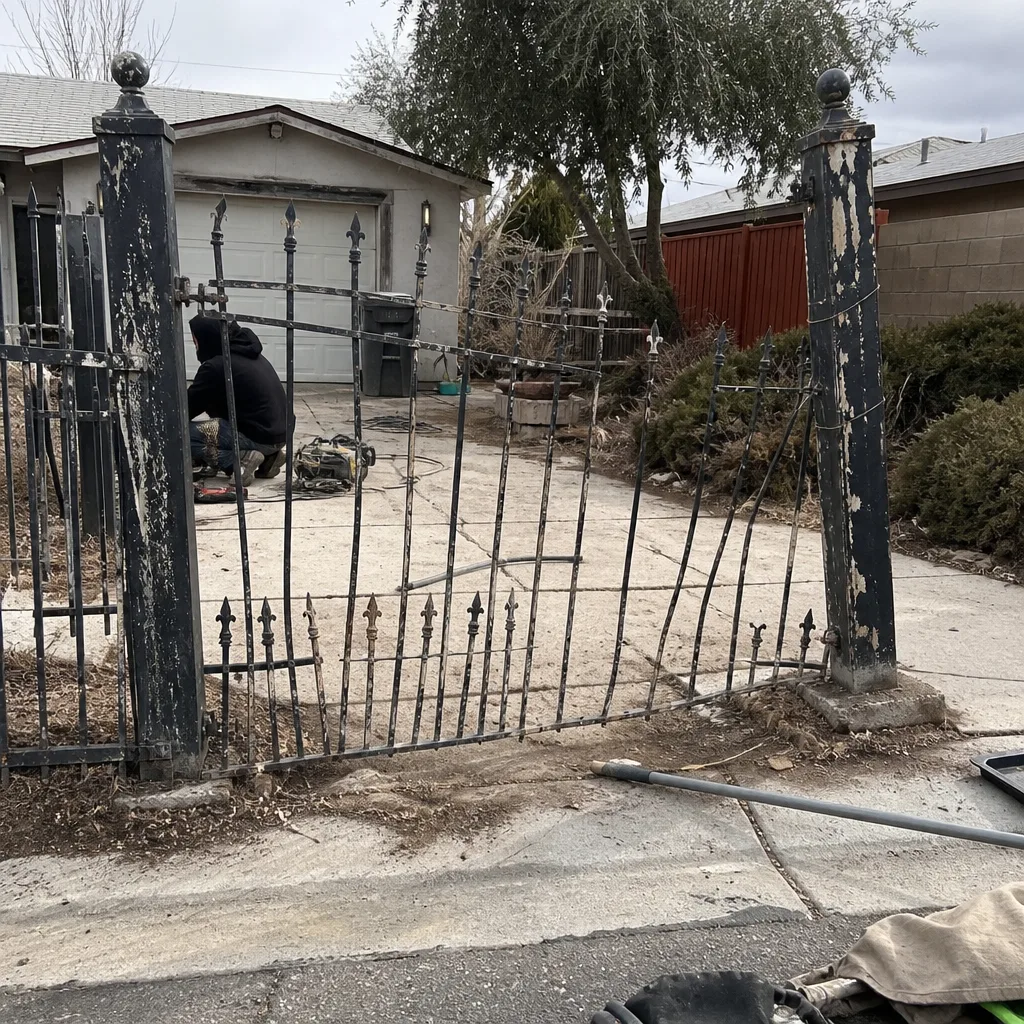 Before
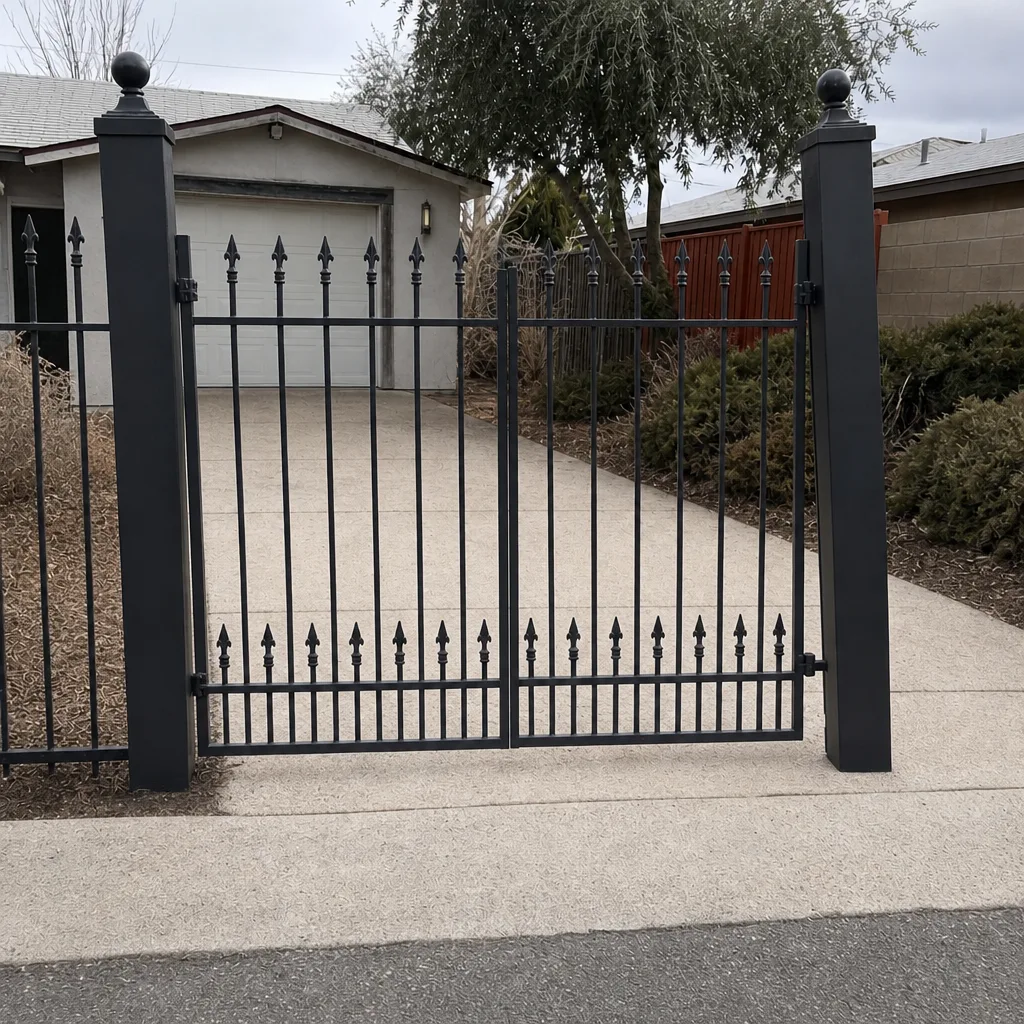 After
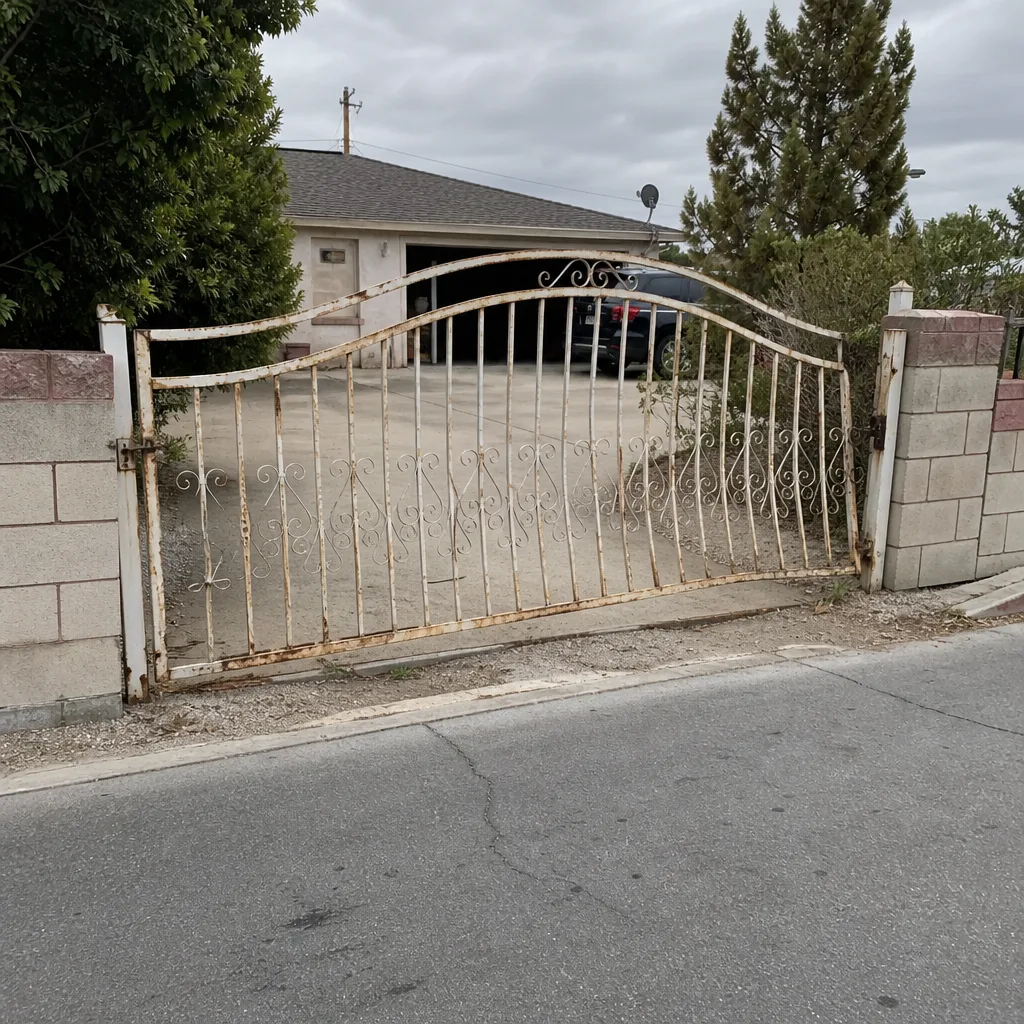 Before
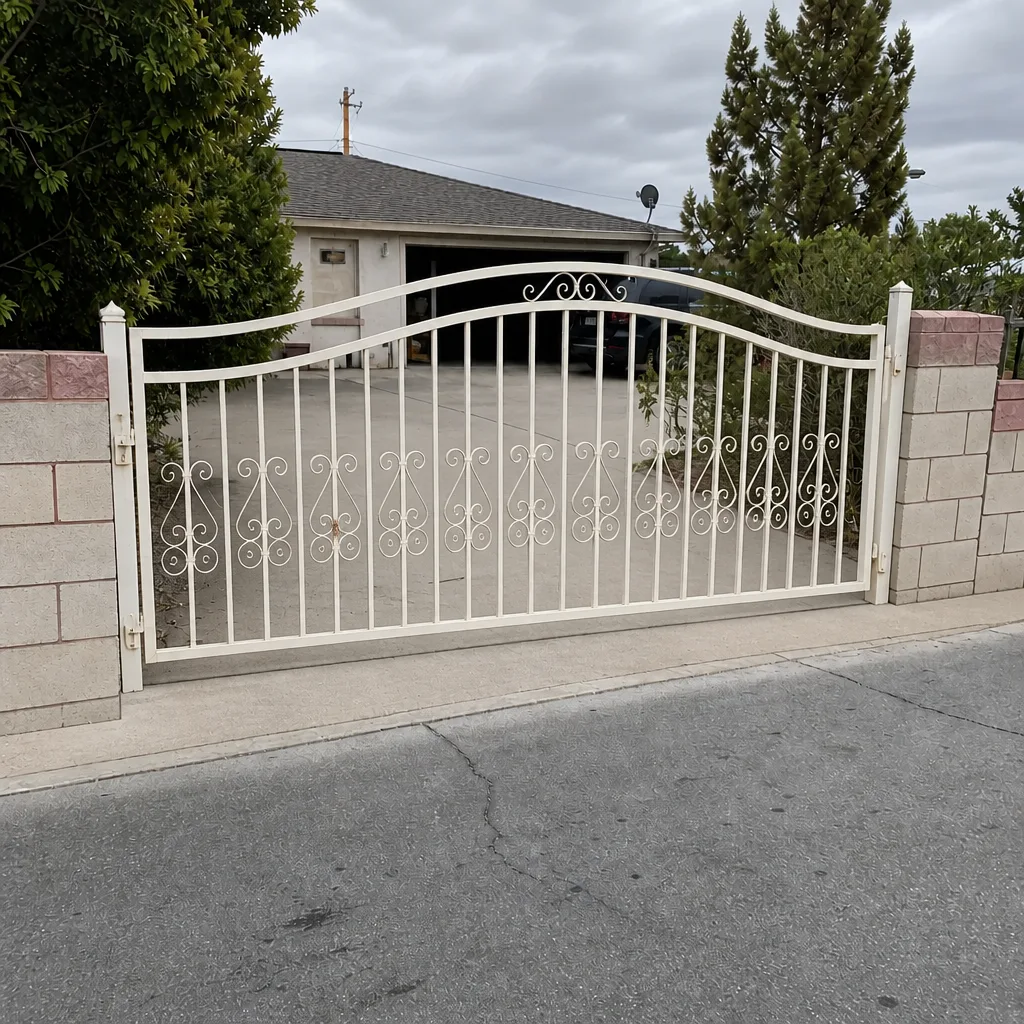 After
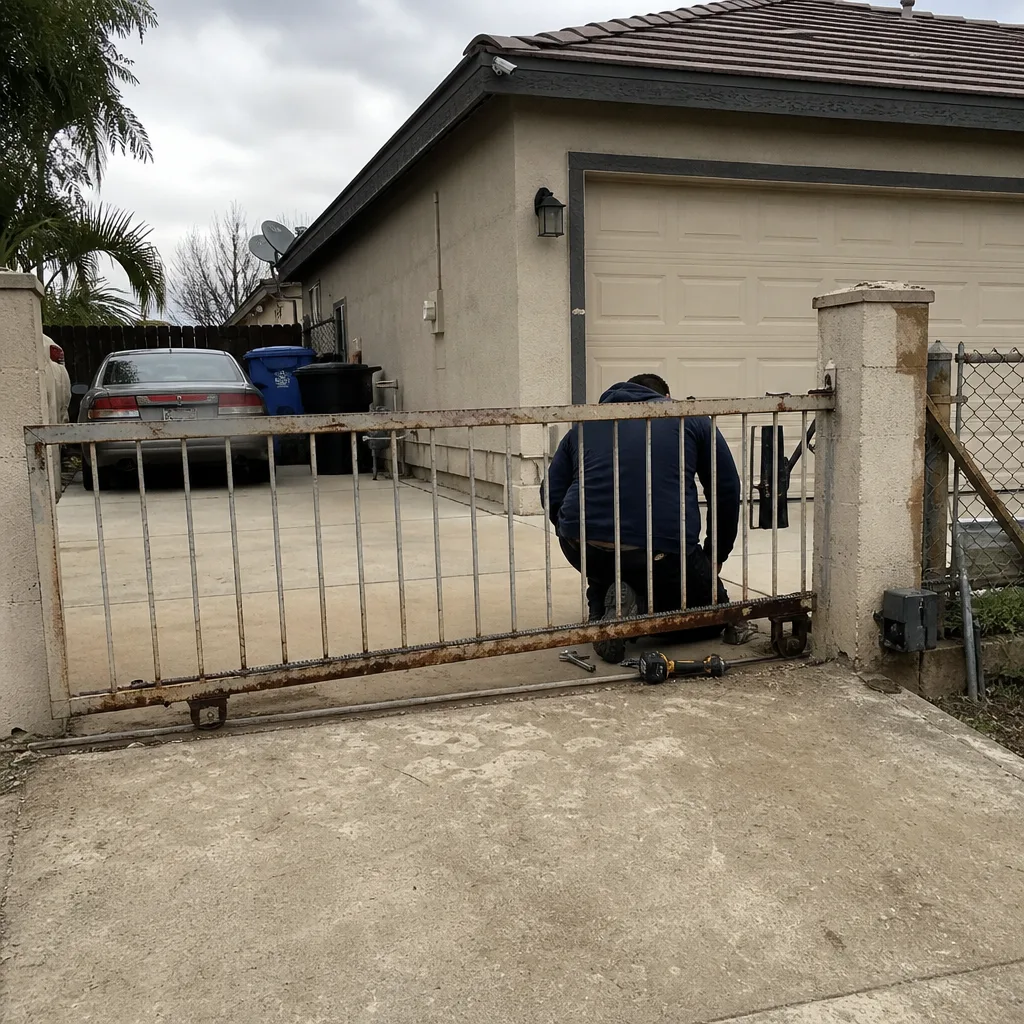 Before
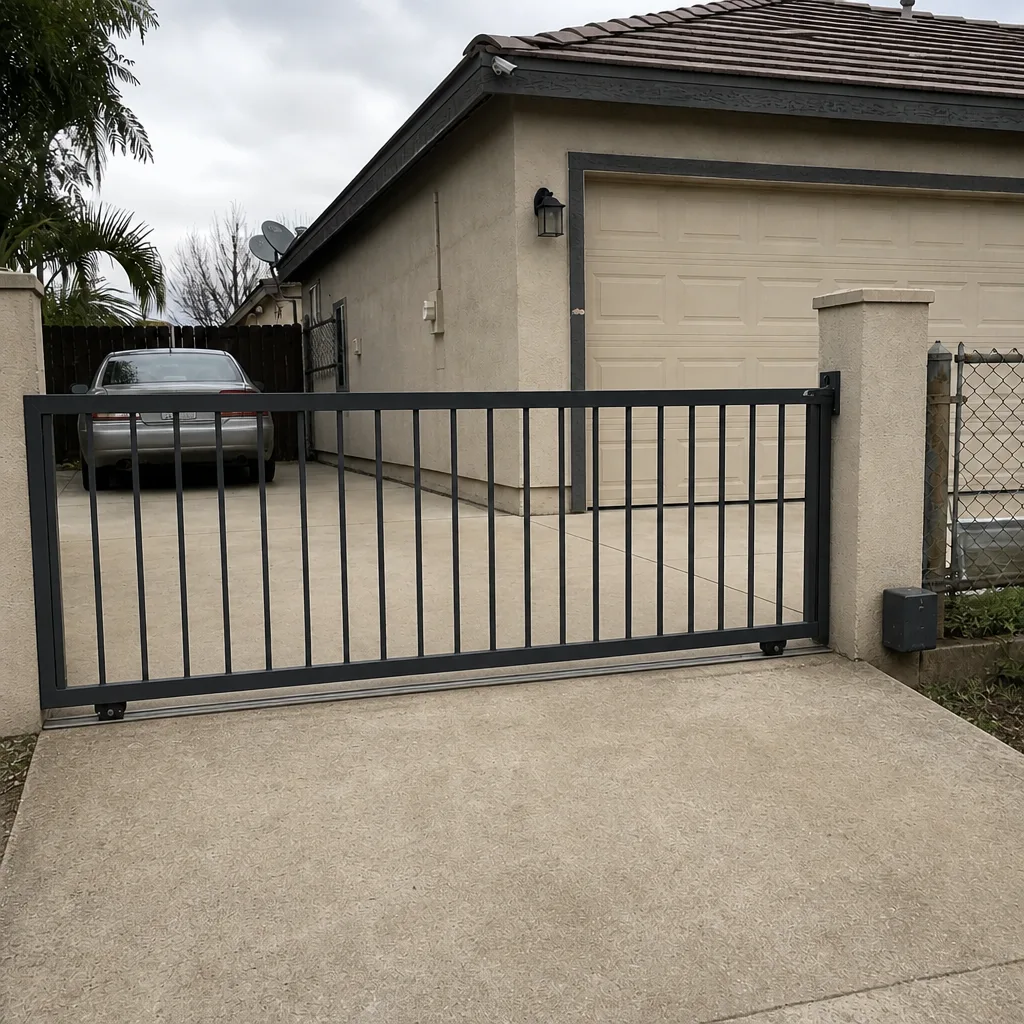 After
When to Call a Professional
Call a professional when the gate hesitates routinely, when you hear a new noise, when it reverses or stalls on close, when the remote range has shrunk even after a battery change, or when the motor runs but the gate doesn’t. Any of those is a signal, and none of them will fix themselves. Also call if the gate is over a driveway where kids or pets cross, because a failing sensor combined with a heavy gate is a genuine hazard. We fix gates and motors rather than swapping parts and hoping.
Gatewood Fence & Gate Spring Valley offers free estimates in Spring Valley – call (888) 300-3906. A live person answers around the clock, and we’ll tell you straight whether you’re looking at a repair or a replacement before anybody touches the gate.
Frequently Asked Questions
A hesitation before the gate starts moving is the most common early warning sign of a failing gate motor. It usually points to a capacitor losing its kick, a battery that isn’t holding a charge, or a drive chain that’s too loose. Catch it here and it’s typically a small repair. Ignore it and the same problem can end at a motor replacement.
A gate that reverses on close is almost always reporting a safety sensor fault, a limit switch problem, or an obstacle-detection fault. Check the sensor lenses for dirt and alignment first, then the close limit switch. Never bypass the sensor to force the gate closed. Call (888) 300-3906 if the reversal continues after a sensor cleaning.
That pattern usually means thermal overload. The motor is hitting its heat limit because the gate is binding somewhere – stiff hinges, dragging wheels, a tight chain – and the heat makes the binding worse. The fix is at the gate, not the motor. Spring Valley summers make this pattern show up fast, so don’t ignore it.
A shrinking remote range after a fresh battery usually means the receiver antenna or the receiver board is failing, not the remote. Stretch the antenna out, check for damage, then test a second remote to confirm. On most LiftMaster and Elite operators the receiver is a small, inexpensive part of the fix.
Warranty coverage depends on the motor’s age, the brand, and what failed. Some parts like receiver boards and safety sensors are commonly covered by operator warranties, while wear items like batteries and capacitors usually aren’t. Get a written second opinion before you accept anyone’s warranty verdict. We offer a free second opinion on any written estimate.
In Spring Valley, a diagnostic visit with a routine service typically runs in the low hundreds, a capacitor or battery replacement runs $40 to $200, and a sensor or receiver repair runs $75 to $300. A full motor replacement runs well into four figures. Every quote is agreed before work starts – no surprise on the invoice. Call (888) 300-3906 for a free estimate.
The Bottom Line
Gate motors don’t fail without warning. They hesitate, get louder, complain in the heat, lose remote range, or reverse on close. Each of those symptoms points to a specific part, and the earlier you read them, the cheaper the repair. A monthly five-minute check catches most of what matters. For a free estimate on anything in this guide, call Gatewood Fence & Gate Spring Valley at (888) 300-3906. Our technicians have up to 25 years of experience, every job carries our 90-Day Done Right Promise in writing, and we show up when we say we will.
Written by the team at Gatewood Fence & Gate Spring Valley.