
Last updated November 17, 2026
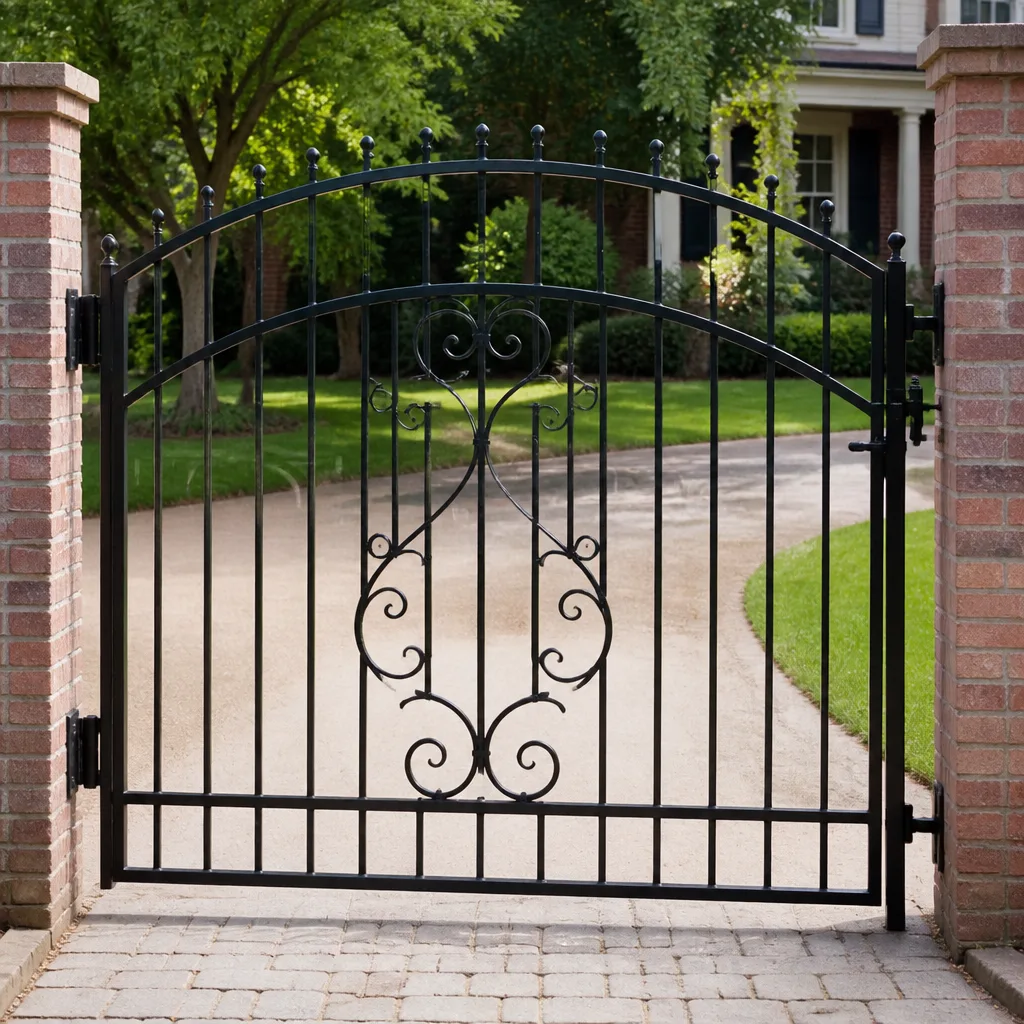 Wrought iron
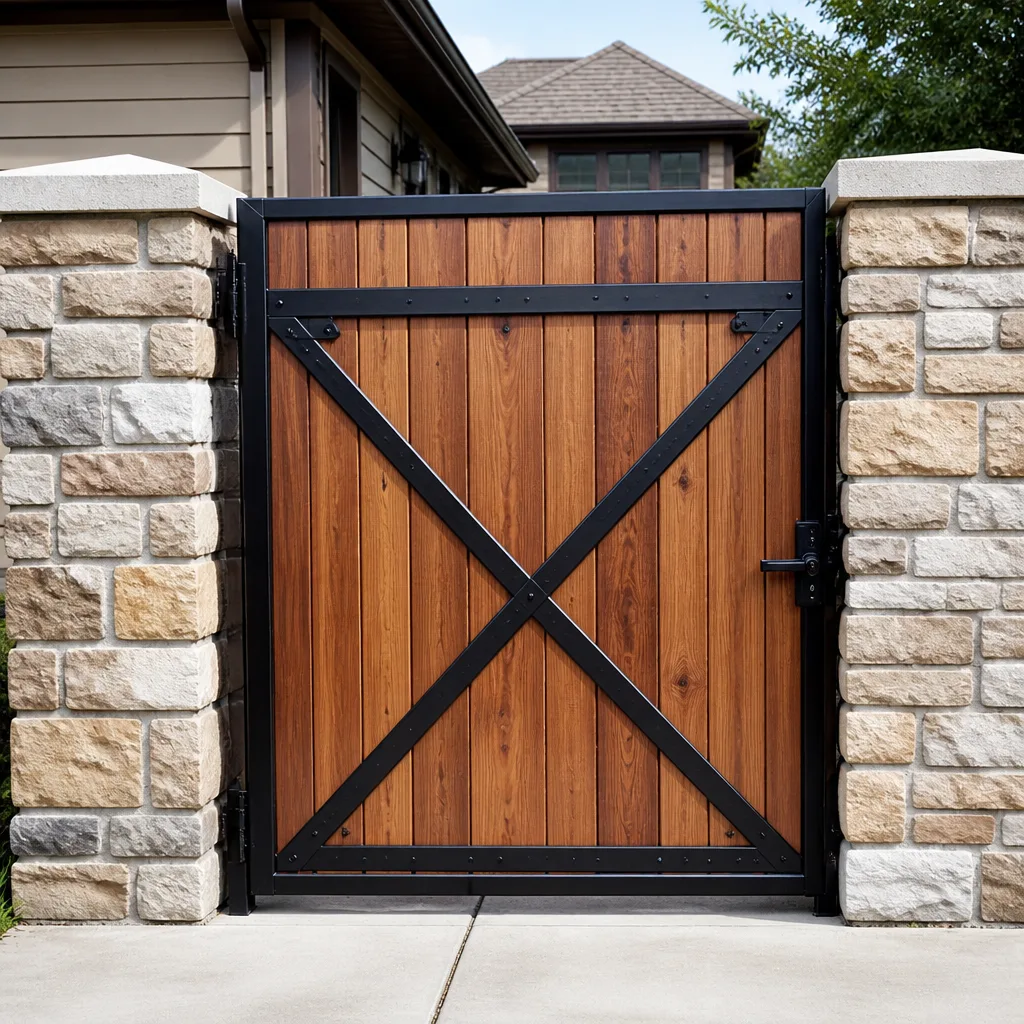 Wood & steel frame
 Farm & ranch
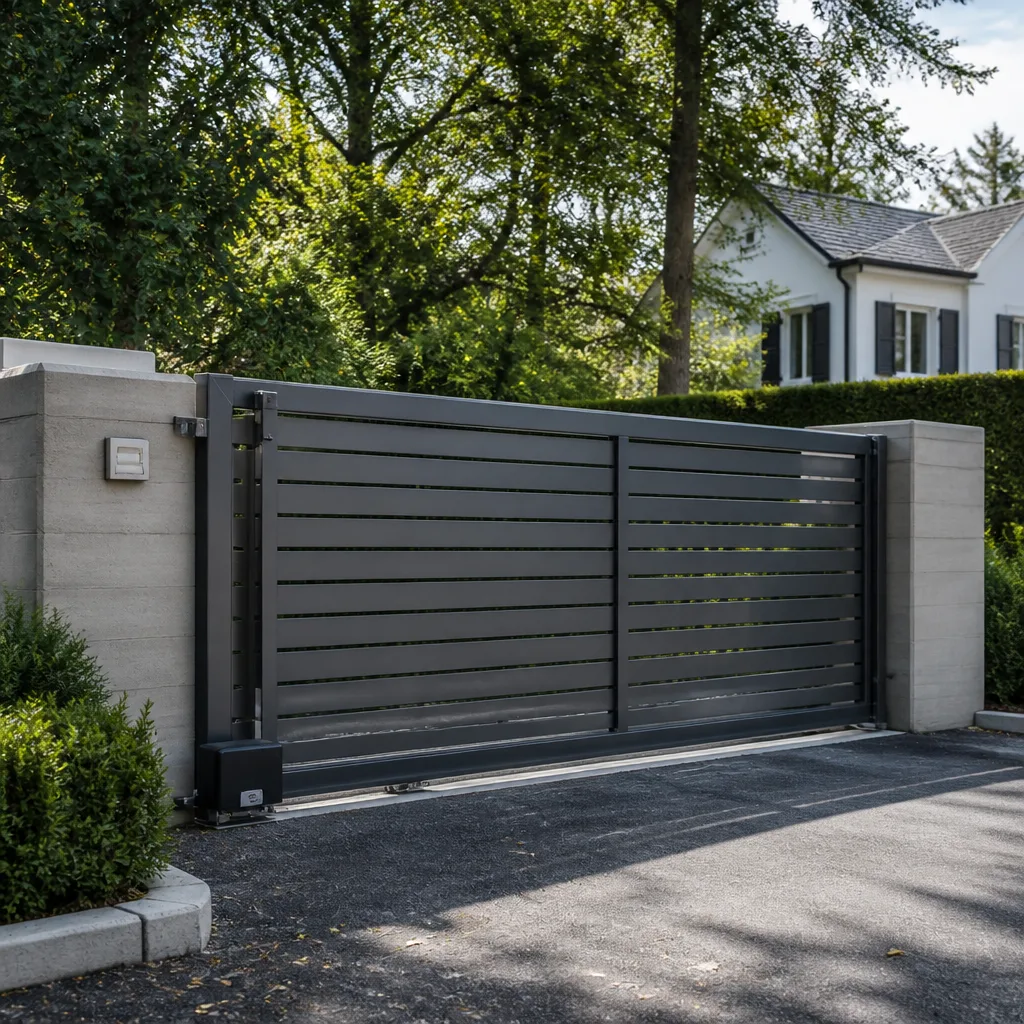 Sliding driveway gates
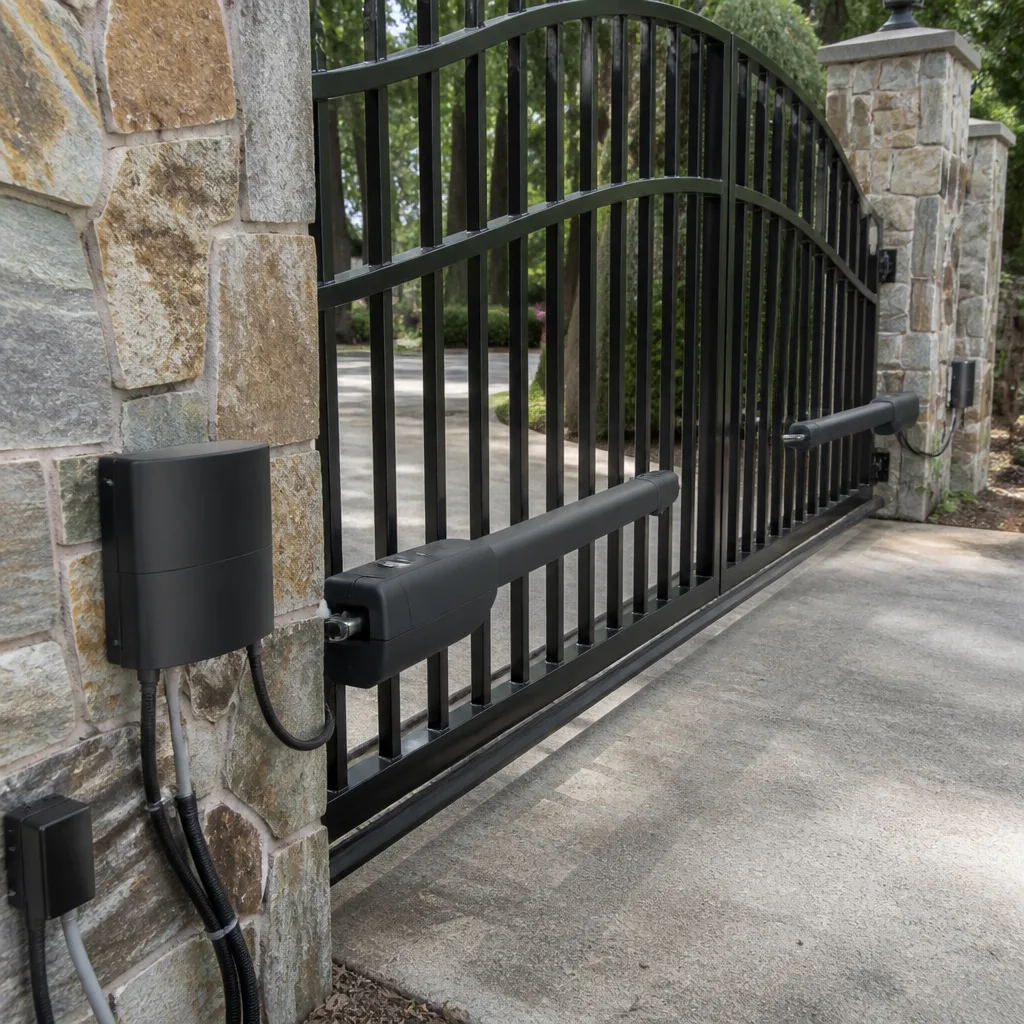 LiftMaster operators
Free on-site gate assessment - hinges, posts, and your LiftMaster or Nice gate operator checked before anything is quoted
The assessment is free and the quote is the invoice.
Get your free estimateGate Repair Troubleshooting: Common Problems and How to Fix Them
A gate that swings open on its own isn’t haunted. It means the latch strike plate has shifted and the bolt is no longer catching – a fifteen-minute fix if you catch it early, and a busted frame if you ignore it for six months.
That’s the pattern we see across Spring Valley: the gate looks finished, but there’s one specific failed component underneath. The hinge, the post, the strike, the roller, the board. Name the symptom precisely and you know whether it’s a ten-minute adjustment or a two-hour weld. This guide walks through the failure modes we’ve corrected in Spring Valley, what each symptom actually means, and how to tell the cheap fixes from the expensive ones.
Quick Answer
Most gate problems trace back to one of five failures: a sagging hinge or hinge post, a binding latch, worn rollers or track, a misaligned strike plate, or an opener that’s lost its limit settings. You can usually diagnose the right one by watching how the gate swings, listening for grinding, and checking whether the post itself moves when you push against it. Gates do fail in ways that look alike at first glance, and treating the wrong one is the most common reason people end up replacing a gate that only needed a weld.
Styles & brands we work with
- Wrought iron
- Wood & steel frame
- Farm & ranch
- Sliding driveway gates
- LiftMaster operators
Table of Contents
- The Symptom-to-Cause Table
- Sagging Gates: Hinge or Post?
- Gates That Bind, Stick, or Drag
- Gates That Won’t Latch or Swing Open on Their Own
- Grinding Noises and Roller Failures
- Slow or Fast Auto-Close on Automatic Gates
- Why Your Gate Sticks in June After a Perfect Winter
- Which Problems Compound Fast (and Which Can Wait)
The Symptom-to-Cause Table
Before anyone touches a wrench, start with the symptom. A gate sags in the hinge post, not in the middle – and that is where we start. The table below maps what you’re seeing to what’s actually failing, so you know whether you’re dealing with an adjustment or a repair.
- Sagging at the far edge, top rail out of line: top hinge worn or bent, or the hinge post has rotated in the ground.
- Dragging on the ground across the whole swing: post settlement, not just the hinge – check for movement at the base.
- Won’t latch, or pops open on its own: strike plate shifted, bolt worn, or the gate has drifted slightly out of square.
- Grinding or squealing during the swing: seized hinge pin, worn roller, or a bent track on a sliding gate.
- Opener runs but the gate barely moves: worn drive gear, slipping clutch, or a limit switch that’s tripped.
- Auto-close too slow or too fast: opener sensitivity setting, hinge friction, or a mis-set limit position.
- Rattling or banging when the wind blows: latch bolt not fully engaged, or a gate that’s out of square in the frame.
Read the symptom, write it down, and note when it started. The one-line description you give on the phone helps whoever shows up bring the right parts the first time.
Sagging Gates: Hinge or Post?
A sagging gate is the most common complaint we hear across Spring Valley, and the least-understood. The gate itself isn’t the problem. Weight and gravity are pushing against the top hinge and the hinge post, and one of those two pieces has given way first. Fix the panel without the post and you’ll fix it twice.
Here’s how to tell which one failed:
- Push the gate at the far edge. A hinge-only failure means the gate moves but the post stays put. A post failure means the whole gate plus the post shifts together.
- Look at the gap between the post and the ground. A crack that widens, a wet ring, or a fresh sinkhole around the footer means the post has moved.
- Open the gate halfway and let go. If it swings freely toward the sag, the hinges are loose. If it stays where you left it but the latch still misses, the post has rotated.
- Run a straight edge along the top rail and the hinge post. If the top rail tilts and the post still reads plumb, it’s the hinge.
Bent hinges get replaced on site. Moved posts get reset in concrete, which is a two-hour job, not a whole-day job, and it’s the kind of work our crew handles on site rather than hauling the gate away. Hinge replacement is straightforward. Post resetting requires re-digging the footer, aligning the post to a level, and re-pouring – and if a post has been sitting on bad drainage, that’s the root cause even if the hinge is what popped.
Gates That Bind, Stick, or Drag
Binding means the gate is fighting itself. Something is rubbing that shouldn’t be rubbing, and every swing wears the metal a little thinner. In our experience the three most common sources are:
- Ground drag. The gate has dropped just enough that its bottom edge scrapes the driveway or concrete pad. Often the drive surface has heaved, not the gate sagging – especially after a Spring Valley summer.
- Hinge-pin corrosion. Dust and irrigation spray work into the pin and dry. The gate doesn’t stop swinging, but it starts pushing back.
- Out-of-square panel. A wood or steel gate that’s been leaned on or hit has walked out of square, and the latch side now rubs the frame.
The fix depends on the cause. Ground drag is a post reset or a small height adjustment at the hinge. Corroded pins get cleaned and re-greased, or replaced if the collar is scored. Out-of-square panels get braced or, on wood gates, re-hung with a diagonal tie. A sliding gate that binds usually has a bent track, a roller out of the rail, or a roller collar that’s worn through – all fixable in the driveway with the right parts.
Gates That Won’t Latch or Swing Open on Their Own
A gate that eases open on a calm day isn’t a ghost problem. The latch bolt is riding against a strike plate that has moved out of position, so nothing is holding the gate shut. A slow drift of 1/8 inch at the hinge becomes a quarter inch at the latch, and suddenly the bolt doesn’t catch.
Here’s the honest sequence:
- Close the gate and watch where the bolt meets the strike. If the bolt misses the strike pocket entirely, the strike needs to move.
- Check the latch bolt for wear. A worn bolt has a rounded nose – it slides out of the pocket instead of catching, and no amount of adjustment will hold it.
- Check the gate for drift. A gate that’s dropped a quarter inch at the hinge has to be corrected at the hinge, not the strike – moving the strike to catch a misaligned bolt is one of the most common short-term fixes that creates a long-term problem.
On automatic gates, the same symptom can come from the opener itself. Some units (we work with Linear and DoorKing regularly) will reverse if the latch bolt binds the closing cycle, which makes it look like the motor is failing when it’s actually the gate. Watch the gate close by hand – if it catches, the opener wasn’t the issue.
Grinding Noises and Roller Failures
Noise is the cheapest signal a gate gives you. A squeak today is a seized pin next month and a snapped hinge collar in six. When we hear grinding, we’re listening for which of these three things it is:
- Roller on a sliding gate. A worn roller wheel or seized bearing grinds on the track and eats the rail. If you catch it at the squeak, it’s a $15 wheel. If you catch it at the grind, it’s a track section and a wheel.
- Hinge pin. Corroded pins grind as the gate swings. Clean, grease, or replace. If the collar is scored, replace the hinge assembly.
- Opener drive gear. A worn gear (common on older swing and slide openers) grinds inside the housing. That one needs the opener opened up, not the gate.
Grinding on the Viking and Ghost Controls operators we service often traces to a dry drive gear that only shows up when the gate is loaded by wind. If the noise disappears when the gate is opened by hand, the opener is the source; if it grinds both ways, it’s the gate hardware.
Slow or Fast Auto-Close on Automatic Gates
An auto-close that’s changed speed isn’t usually a motor failing. It’s the opener’s sensitivity or limit setting, the hinge friction, or the leaf weight drifting as the gate ages. The two things to check before you replace anything:
- Sensitivity dial. Most residential openers have a sensitivity or obstruction-force adjustment. If it’s been turned up to compensate for a binding gate, the gate will run faster or slower as the binding cycles with temperature and load.
- Limit switch position. An opener that’s reached the wrong end limit will either slam the gate or crawl into the last few inches. Re-teach the limits – on units like the Ghost Controls and Linear models we service, that’s a five-minute reset with the manual.
- Hinge friction. Disconnect the opener (most have a manual release) and swing the gate by hand. If it takes effort, the gate is dragging and the opener is doing its job correctly.
Auto-close speed that varies by season, faster in the cold and slow in the heat, usually means the opener is compensating for a gate that’s binding – not the other way around. Address the gate first and the opener behavior tends to return to normal.
Why Your Gate Sticks in June After a Perfect Winter
A gate that worked all winter and suddenly binds in late spring or early summer isn’t broken. It’s thermal expansion. Steel, aluminum, and even pressure-treated wood all expand in the heat, and a gate built with no allowance for expansion will bind at the strike or drag on the concrete pad once temperatures climb into the 90s and stay there.
In Spring Valley we see this every June. The winter gate clears the driveway by a quarter inch. The June gate drags. Same gate, same adjustment, different temperature. The fix is to build in a little more clearance at the hinge or re-level the bottom edge – not to replace anything. Thermal expansion also affects wood gates more than people expect, especially if the wood was installed in cooler weather and the gate has swollen against its frame.
If the gate is sticking in June and freeing up in October by itself, the problem is thermal, and it will come back next summer. A seasonal clearance adjustment done once usually settles it for good.
Which Problems Compound Fast (and Which Can Wait)
Not every gate problem needs the same urgency. Some failures stay put, and some get dramatically worse inside a couple of weeks. Here’s the honest short list:
Fix now:
- Any hinge failure that’s causing the latch to misalign. Ignored misalignment destroys hinges in weeks.
- Sagging on a gate that carries an automatic opener. A bent leaf pushes the opener gear past its design load, and that will kill a $400 operator inside a season.
- Grinding on a sliding gate. The roller wears the rail, and rail is much more expensive than roller.
- Any post that’s moving in the ground. It won’t settle itself, and it won’t get better.
Safe to watch for a month:
- A single slow-to-latch cycle in cold weather that resolves when it warms up.
- A minor squeak on a hinge with no misalignment yet – grease it and check back in 30 days.
- Thermal binding that only shows up in heat and clears overnight.
When in doubt, get a second opinion on the diagnosis before spending anything. That’s a core part of how we work – a free second opinion on any written estimate, so you can compare the fix you were quoted against the symptom you’re actually seeing.
Common Mistakes to Avoid
- Replacing the whole gate when the hinge failed. If the panel is straight and the posts are true, a hinge swap is a repair – replacing the gate is a project. We see this mistake most often on Spring Valley properties where a national outfit had no welding capability and quoted replacement because they couldn’t fix it on site.
- Adjusting the strike plate to match a sagging gate. The strike moves to chase the symptom, the hinge keeps dropping, and six months later the gate won’t close at all. Fix the hinge or the post, not the strike.
- Turning up the opener sensitivity to force a binding gate. That’s the equivalent of pulling the fire alarm out of the wall because it keeps going off. The gate is telling you something.
- Greasing a hinge that should be replaced. If the pin is scored or the collar is worn, grease buys weeks, not years.
- Assuming a June stick means a broken part. Thermal expansion gets treated as a repair maybe once a season when a simple clearance adjustment settles it.
- Letting a small misalignment sit through one more season. A quarter-inch at the hinge becomes a bent frame in the months that follow.
- Calling for a repair when the gate needs a reset post. If the post has moved, no adjustment will hold – reset the post, and the gate is straight again.
See the difference
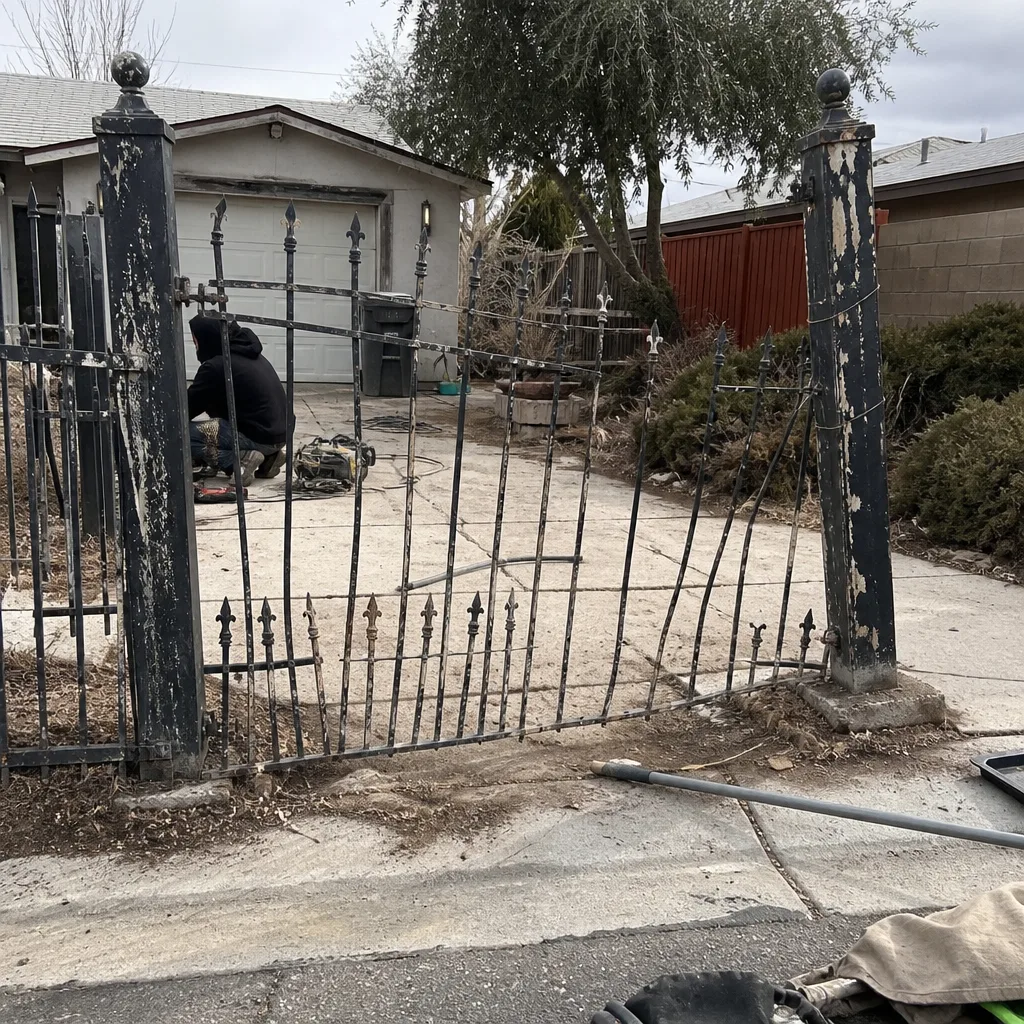 Before
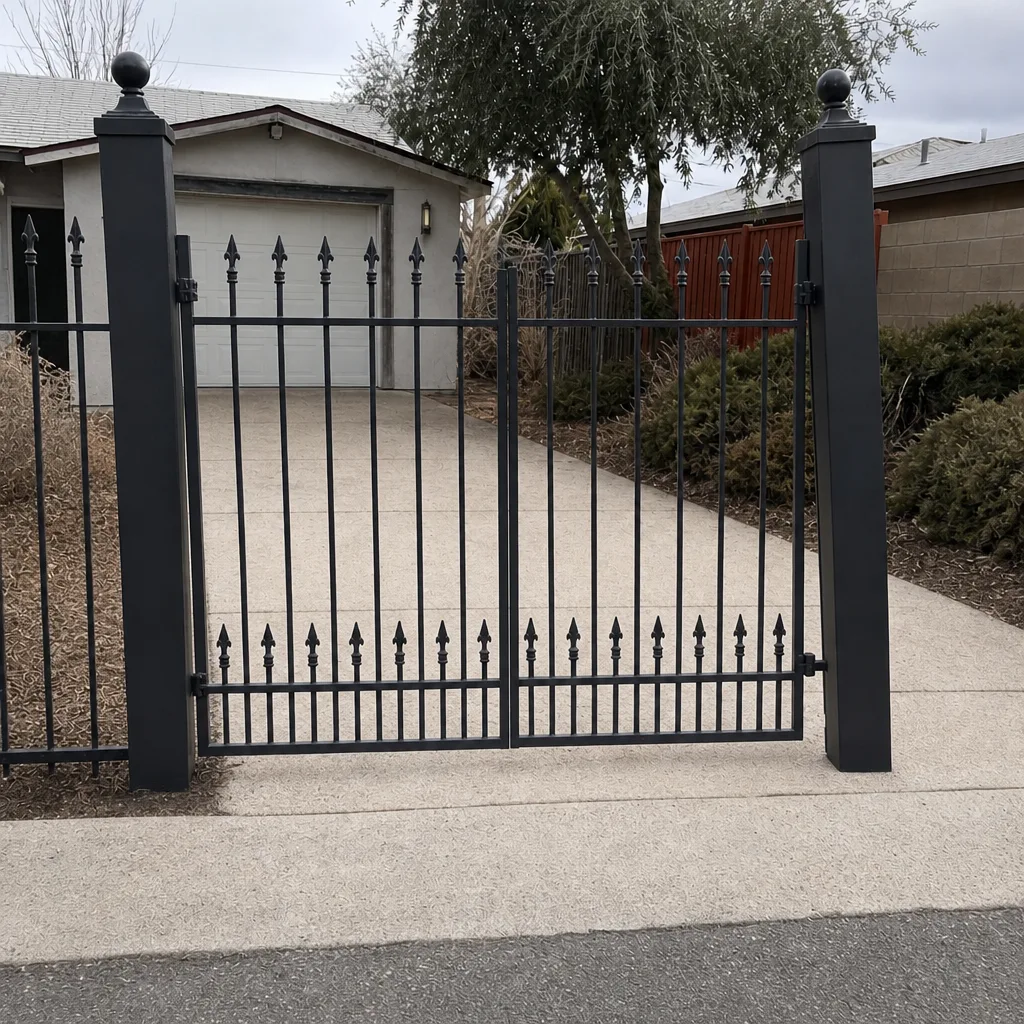 After
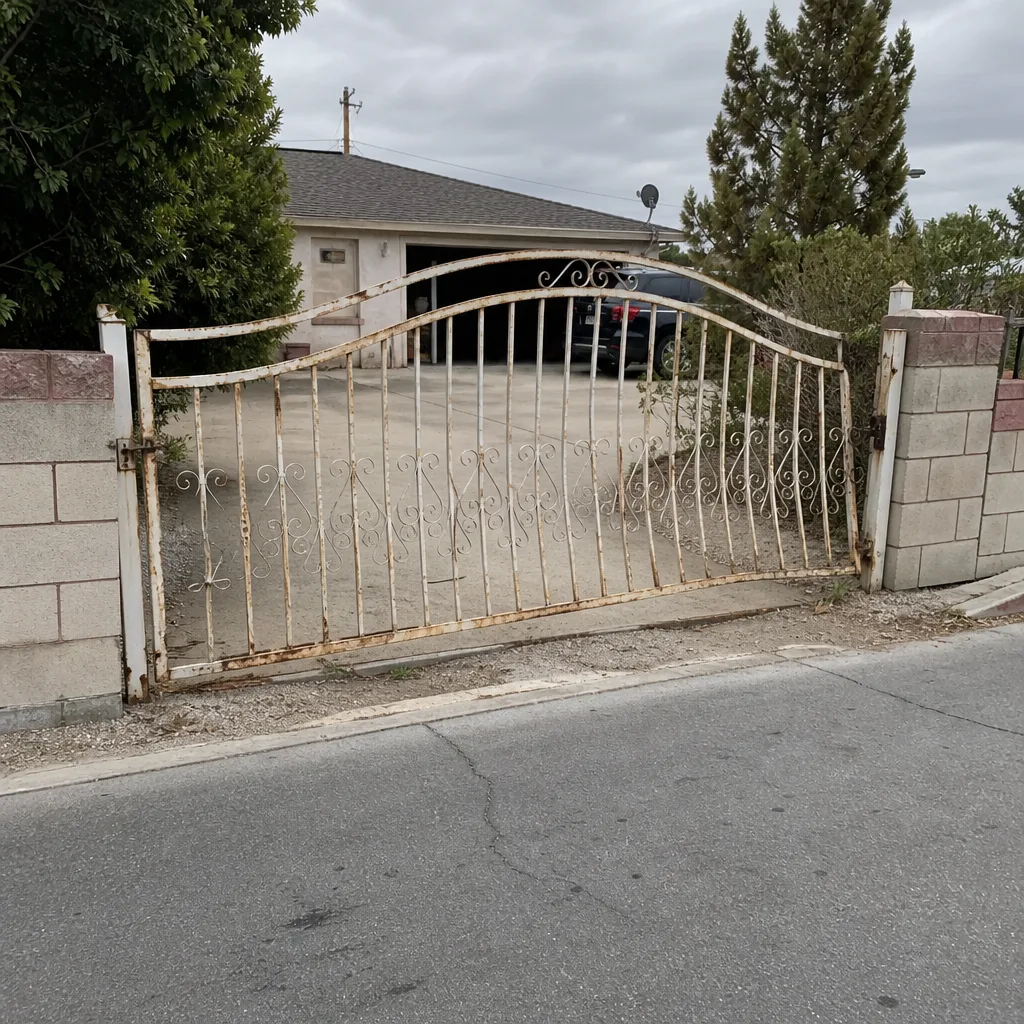 Before
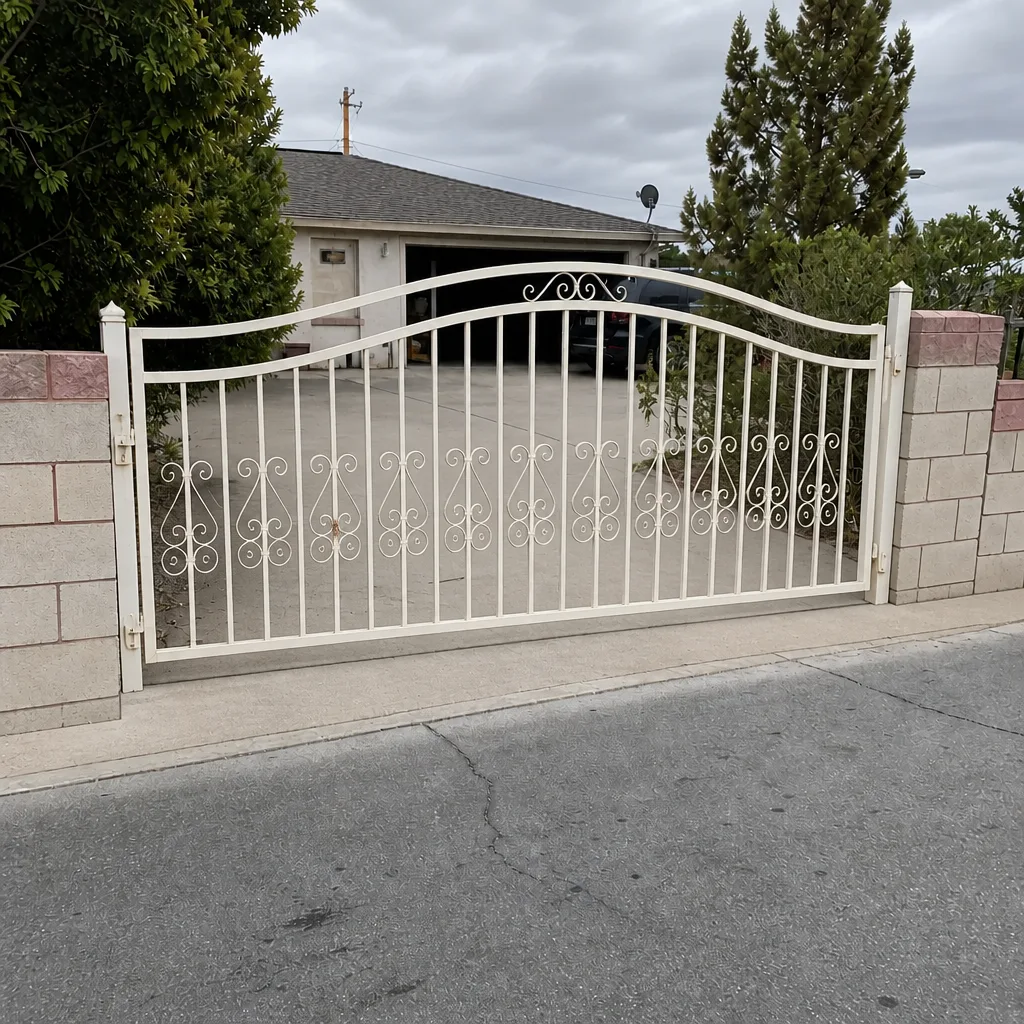 After
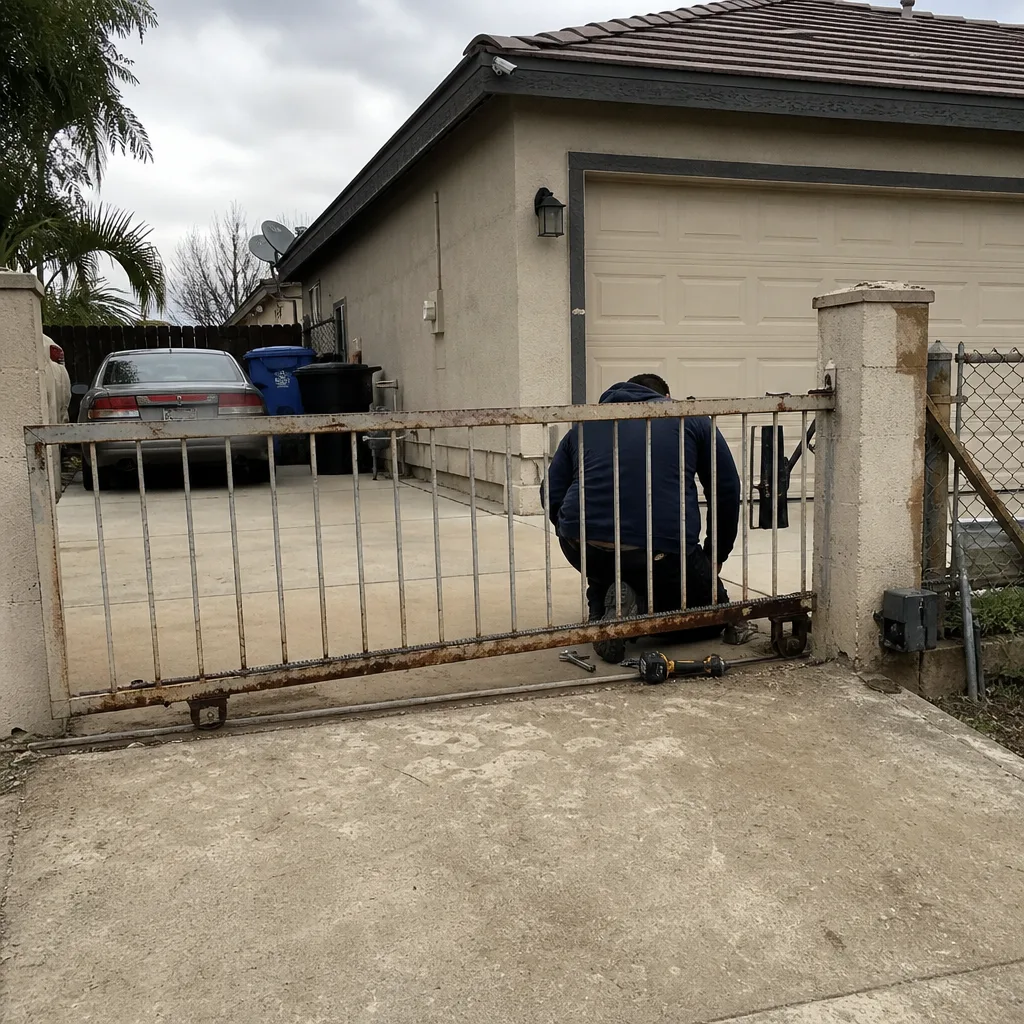 Before
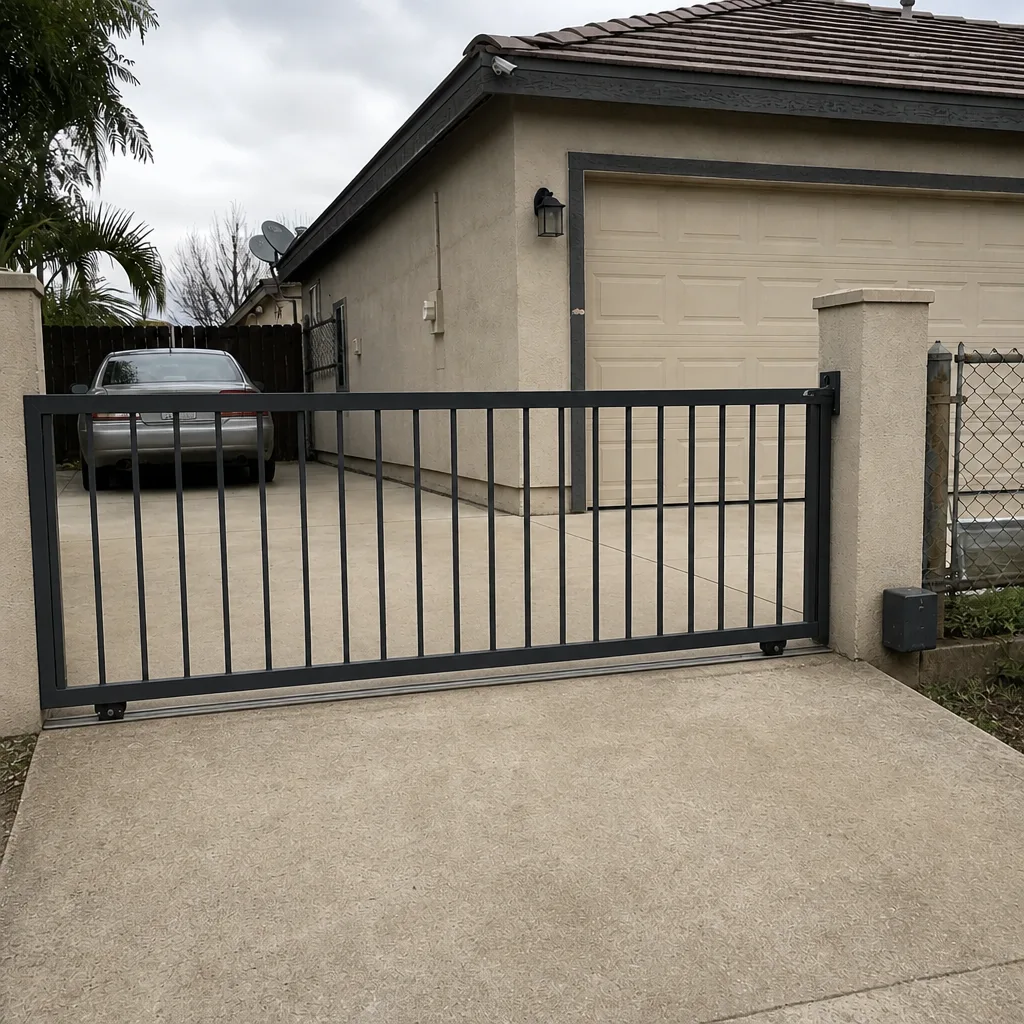 After
When to Call a Professional
If you’ve watched the gate swing, checked the hinge-post gap, listened for grinding, and the picture is still muddy, call someone. Some symptoms overlap enough that a careful pair of eyes is faster than another hour of YouTube. The prime candidates for a professional call: a post that’s moving in the ground, a hinge collar that’s scored or the assembly is welded (on-site welding is how we fix those without taking the gate off its hinges), any automatic opener that’s stopped responding to manual release, and any gate that’s dragging metal-on-metal. Gatewood Fence & Gate Spring Valley offers free estimates in Spring Valley – call (888) 300-3906 to talk through what you’re seeing. We answer every call with a live person, 24 hours a day, and we’ll tell you on the phone whether you’re looking at a $40 adjustment or a two-hour weld.
Frequently Asked Questions
Push the gate at the far edge and watch the hinge post. If the post stays still and the gate moves, the hinge is failing. If the post itself moves with the gate, the post has rotated or settled. A post problem is a reset; a hinge problem is a swap. The two look similar but the repair is completely different, and it matters.
Not immediately, but it compounds. A gate that won’t latch is a security failure and a safety one – especially with kids or pets – and the misalignment that causes it will wear the hinges faster than the gate can absorb. Fix it while it’s a strike plate. Left alone, it becomes a bent frame. Call (888) 300-3906 if you want a free estimate on the diagnosis.
Almost certainly not. It’s thermal expansion. Steel, aluminum, and wood all grow in heat, and a gate with tight clearance will bind as temperatures climb into the 90s. A clearance adjustment at the hinge is usually enough. If it recurs every summer, we can re-set the hinge position to allow more expansion.
Release the opener (most have a manual override) and swing the gate by hand. If it swings freely, the opener is the problem – check the sensitivity and limit settings. If it binds or drags, the gate is the problem and the opener is doing its job. We service Linear, DoorKing, Ghost Controls, and several other major brands, and doing that check first saves a lot of money on parts.
A few weeks, not months. Ignored misalignment destroys hinges fast – the hinge is bearing more load than it was designed for, and the wear accelerates. Track the date the symptom started. If it’s been more than two weeks and it’s getting worse, don’t wait.
Nine times out of ten, it’s a repair. Our experience in Spring Valley is that gates get quoted for replacement when the actual problem is one hinge, one strike, one roller, or one post. On-site welding and repair-first work keeps the gate you already have. Get a free second opinion on any written estimate before you commit.
The Bottom Line
Most “broken” gates aren’t broken. They’re one failed component – a hinge, a strike, a roller, a post – and the fastest way to know which is to read the symptom honestly. Sagging means a hinge or post. Grinding means a roller or gear. Won’t latch means the strike or the hinge drift. Sticks in June means thermal. Fix the fast-compounding problems now and let the thermal ones wait for the right season. If you’re still not sure, call a professional – the diagnosis is faster than another weekend of guessing. Free estimates in Spring Valley – call (888) 300-3906. Every job carries the 90-Day Done Right Promise in writing, $40 off any repair over $200, no trip charge inside the county, free second opinion on any written estimate, and a permanent 10% discount for seniors and veterans.
To see how we handle the work end-to-end, visit our Gatewood Fence & Gate Spring Valley home, our Gate Repair in Spring Valley page, our Gate Installation in Spring Valley page, or our Gate Motor & Opener in Spring Valley page. If you’re not sure where to start, call (888) 300-3906 and we’ll point you in the right direction.
Written by the team at Gatewood Fence & Gate Spring Valley.