
Last updated November 18, 2026
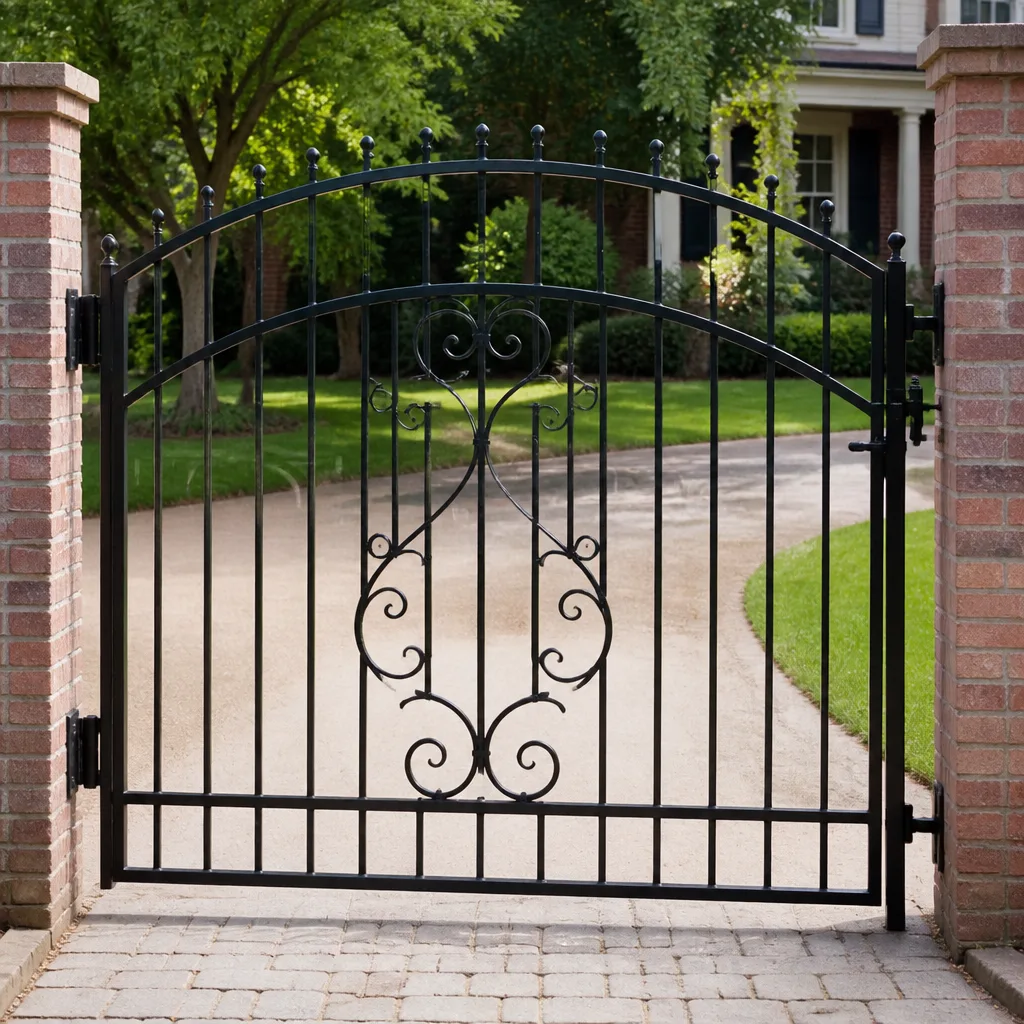 Wrought iron
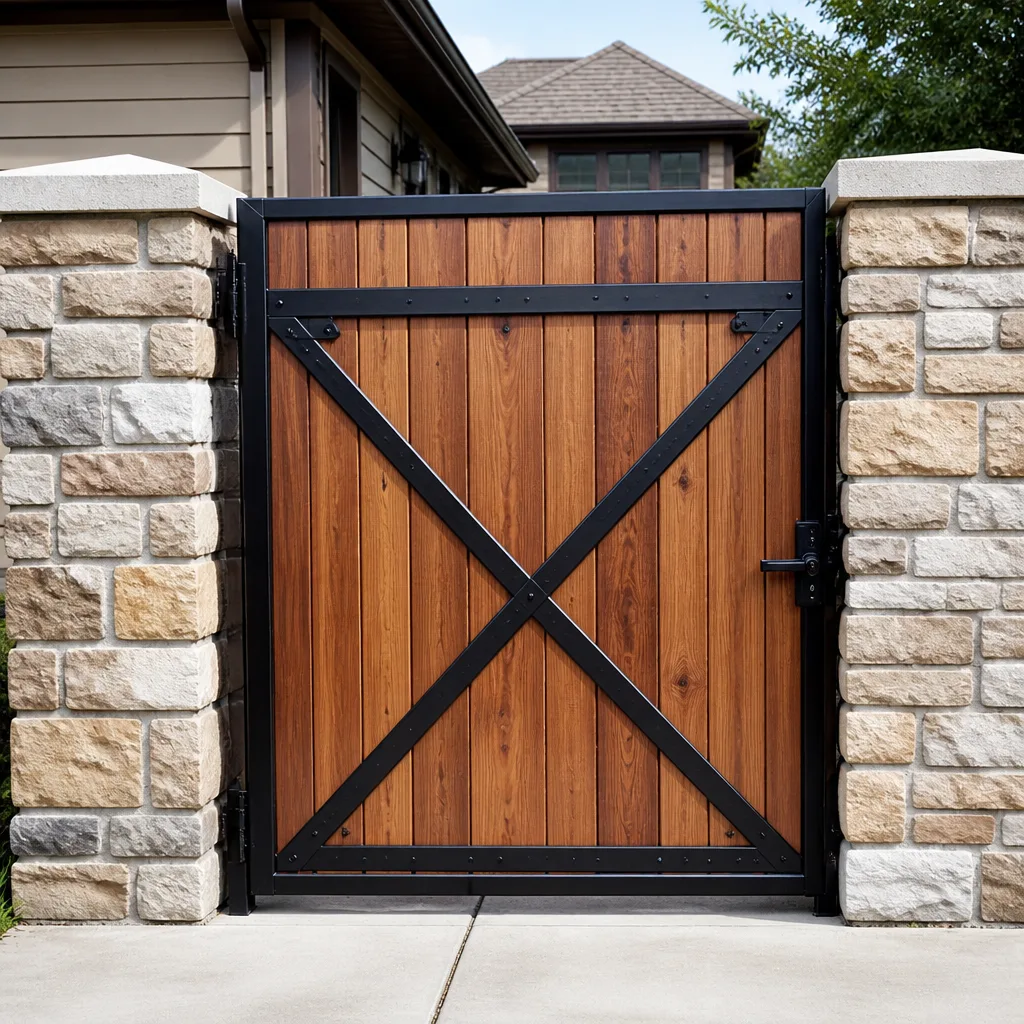 Wood & steel frame
 Farm & ranch
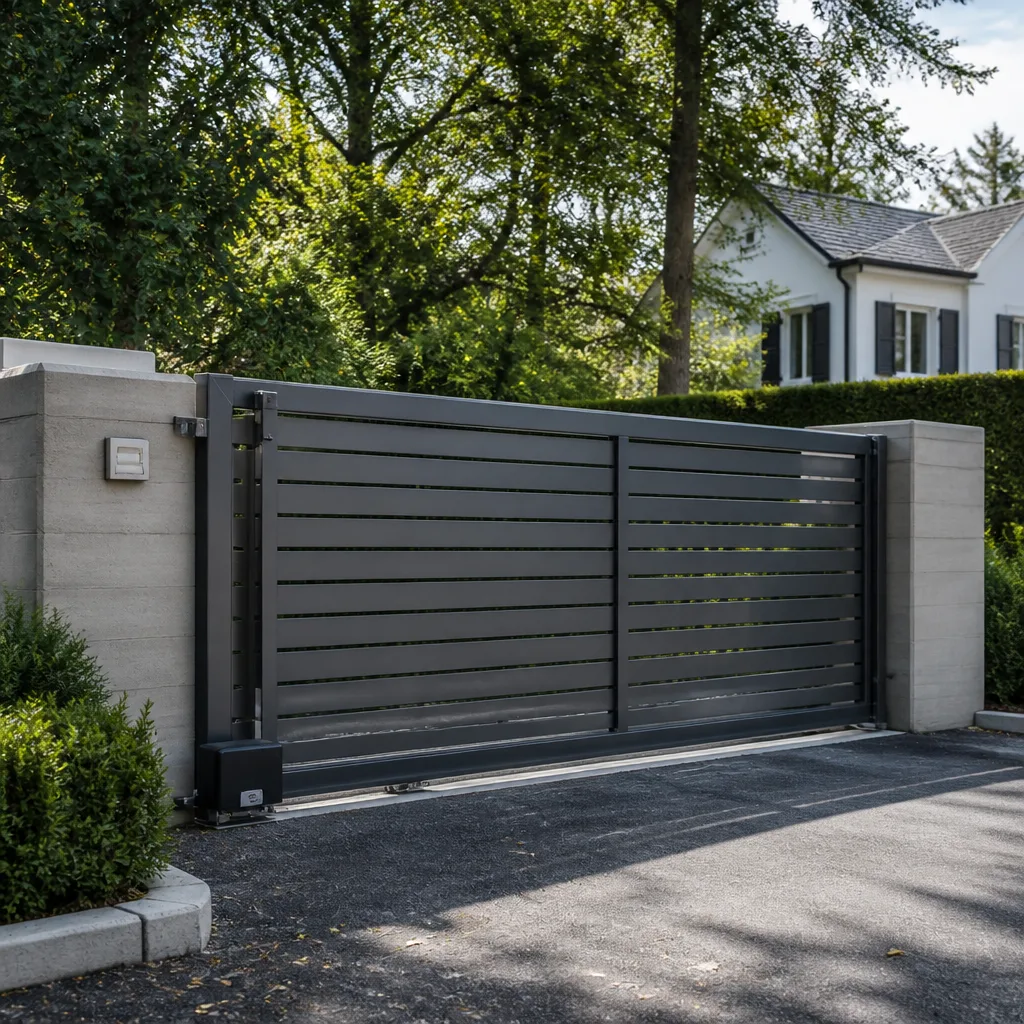 Sliding driveway gates
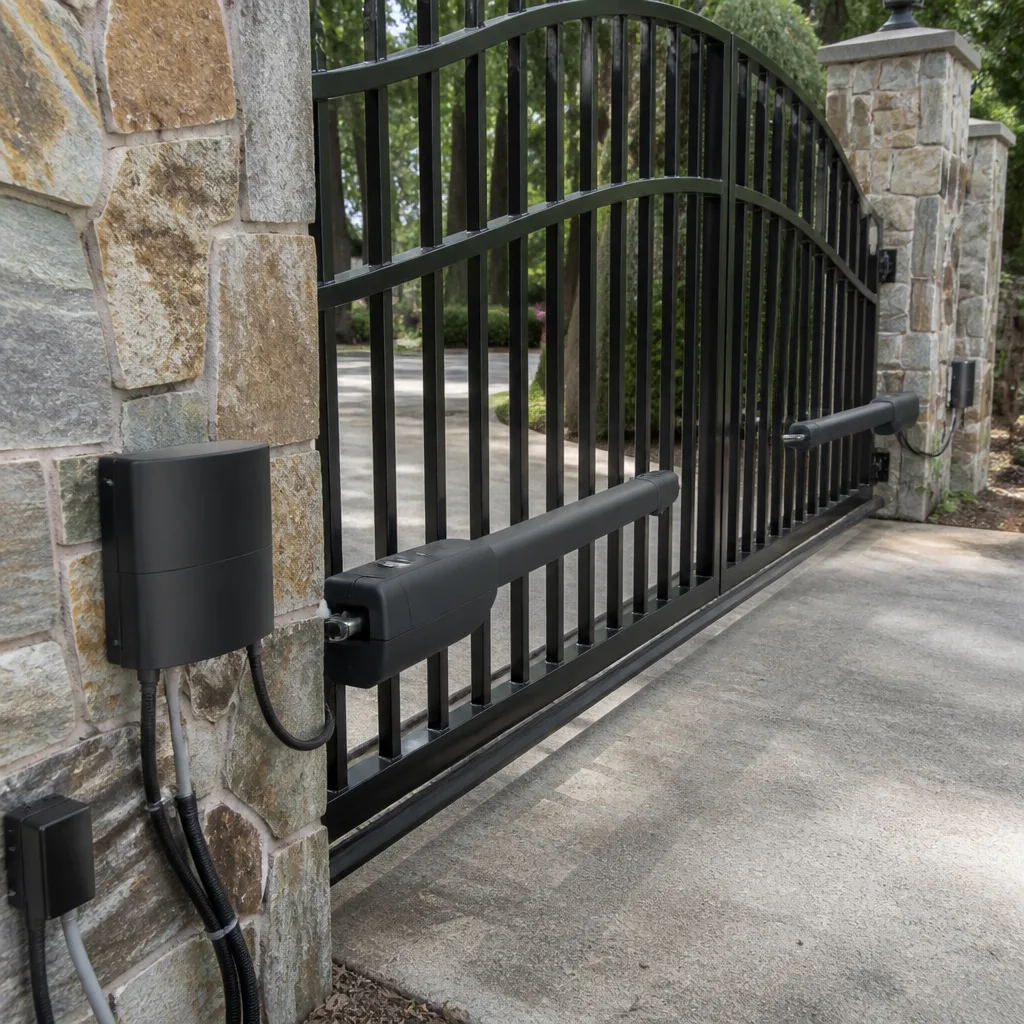 LiftMaster operators
Free on-site gate assessment - hinges, posts, and your LiftMaster or Nice gate operator checked before anything is quoted
The assessment is free and the quote is the invoice.
Get your free estimateGate Repair Warning Signs: A Spring Valley Homeowner’s Reference Guide
The grinding noise your gate makes when it opens isn’t the gate being “old.” It’s a specific mechanical message, and where that sound is coming from tells you what’s actually wrong. Most homeowners ignore it until the gate stops moving entirely, and by then a $200 adjustment has turned into a hinge-post rebuild. We’ve walked up a lot of driveways in Spring Valley and heard the same story: the signs were there for weeks, nobody had ever explained what they meant. This guide translates the sounds, movements, and visual cues your gate is giving you into plain language about what’s failing and how urgent it really is.
Quick Answer
Gates almost never fail without warning. The most common early signs are grinding or clicking at the hinges, a gate that sags more than half an inch at the latch side, a gate that sticks in summer heat, and an operator that runs slower, reverses mid-stroke, or shows a dead battery backup light. Anything involving a leaning post, a separating hinge, or a cracked weld means stop using the gate and call today.
Styles & brands we work with
- Wrought iron
- Wood & steel frame
- Farm & ranch
- Sliding driveway gates
- LiftMaster operators
Table of Contents
- A Sound-by-Sound Diagnostic for Swing and Slide Gates
- Measuring Sag: When It’s an Annoyance and When It’s a Security Risk
- Why Your Gate Sticks in Summer and Works Fine in Winter
- Warning Signs in an Automated Gate’s Behavior
- Schedule a Repair vs. Stop Using It and Call Today
- Spring Valley Climate and What It Does to Metal
- A Simple Monthly Walk-Around Checklist
A Sound-by-Sound Diagnostic for Swing and Slide Gates
Sound is the fastest way to narrow down a gate problem, because each mechanism fails differently. A swing gate pivots on hinges set into a post; a slide gate rolls on a track or hangs from a cantilever carriage. The same noise means two different things depending on which kind of gate you have, and getting that distinction right is where we always start.
Grinding. On a swing gate, grinding usually comes from dry or seized hinge bearings, and you’ll hear it low near the hinge side. On a slide gate, grinding means the rollers are eating into the track – grit, sand, and small debris work into the roller path and chew it up over time. Our gate repair in Spring Valley calls often start with grinding that’s been ignored for months.
Clicking. A rhythmic click that speeds up with the gate’s travel is almost always a worn roller, a loose sprocket, or a chain skipping a tooth. Clicking is an early warning that gives you time to schedule a repair on your own terms.
Squealing. High-pitched squealing is metal-on-metal contact with no lubrication left. Left alone, it grinds the parts into each other until something snaps.
Clunking. A single heavy clunk at the start or end of travel points to a loose hinge plate, a cracked weld at the frame joint, or a carriage bolt that’s backed out. Clunking is the one we take seriously right away.
Measuring Sag: When It’s an Annoyance and When It’s a Security Risk
Every gate sags eventually – what matters is how much and how fast. You can measure it yourself with a tape measure and a fixed reference point. Pick a spot on the gate’s edge, mark the ground below it with a piece of tape or a painted line, and record the gap while the gate is fully closed. Do the same in two weeks. That slope, not the number itself, tells you the real story.
A gate sags in the hinge post, not in the middle – and that’s where we start. A sagging gate is almost never the gate’s fault; it’s the post pulling or the hinge giving way.
- Under 1/4 inch of drop, no visible post lean: usually just hinge wear. Schedule a repair, no rush.
- 1/4 to 1/2 inch: the hinges are loosening, and you’ll start to see uneven wear on the latch side. Book a repair this month.
- Over 1/2 inch or a post that’s leaning: the gate is now off its alignment and the latch may not be secure. Stop using it until someone looks at it.
- Any lean in the post itself, or a hinge pulling out of the post: this is a structural problem, not a hinge problem. Do not operate the gate.
Fix the panel without the post and you’ll fix it twice. If the post is leaning, resetting the hinges won’t hold – the whole assembly needs to be evaluated. A free second opinion on any written estimate means you can have a competing quote checked before you commit.
Why Your Gate Sticks in Summer and Works Fine in Winter
A gate that “sticks in summer and works fine in winter” isn’t a minor quirk. It’s a specific thermal expansion problem, and it gets worse every year until something cracks.
Metal expands and contracts with heat. In Spring Valley, summer daytime temperatures routinely climb past 100°F, and afternoon sun on the west-facing side of a metal gate can push surface temperature much higher than the air. The gate grows a few thousandths of an inch per foot – enough to make a gate that was snug in January bind against the latch or track in August. Every summer cycle works the fasteners and welds a little harder. After a decade, you’re not dealing with a snug gate – you’re dealing with metal that’s been forced through thousands of expansion cycles and is ready to fail.
Show us a gate that closes on its own and we’ll show you where the post is out of plumb. A gate that swings on its own without being pushed is usually leaning a fraction of an inch, and that lean comes from the post, not the gate.
Two fixes: a proper adjustment to give the gate clearance to expand, or if the post is already leaning, resetting it. Our gate installation in Spring Valley work always accounts for this – we install for the summer width, not the winter width.
Warning Signs in an Automated Gate’s Behavior
Automated gates tell you they’re in trouble through the operator before anything mechanical fails. Watch your operator’s behavior the way you’d watch a car’s dashboard.
- Slow cycle time. If the gate is taking noticeably longer to open or close than it did six months ago, the motor or the controller is straining. On a LiftMaster or FAAC system, a slowdown like this can indicate a failing capacitor or battery-backed logic board.
- Mid-stroke reversals. A gate that opens halfway, stops, and reverses is telling you its safety-reversal logic fired. Sometimes it’s a misaligned photo-eye; other times it’s a slipping chain or an obstruction sensor going bad. Never disable the reversal feature to “fix” it – that’s a safety device.
- Dead backup battery indicator. A battery warning light on a BFT or Linear controller is easy to ignore until the power goes out and the gate can’t be opened or closed. Replace the battery now – not after the next outage.
- Beeping or chirping on every cycle. Some controllers chirp when a limit switch isn’t hitting its mark or a battery is weak. Check the manual for your brand or have us look at it – the chirp is usually specific.
- Runs past its limit. A gate that opens wider than normal or stops short of full travel needs its limits re-learned. On modern openers, this is a five-minute adjustment, but left alone it can burn up the motor or damage the gate’s end stop.
An automated gate that behaves oddly is not a “just live with it” situation. These are the operator’s early warnings, and they’re cheaper to fix than a burned-out motor. Our gate motor & opener service in Spring Valley covers every one of the brands above, and a lot of the time the fix is a fifty-dollar part, not a new motor.
Schedule a Repair vs. Stop Using It and Call Today
Not every sign is an emergency, but some genuinely are. The distinction is simple: if the gate’s structural integrity is in question, stop. If it’s mechanical wear, you have time.
Schedule a repair (no need to stop using it):
- Grinding, squealing, or clicking that’s been getting worse over weeks
- A gate that’s harder to latch
- A slow opener or a chirping controller
- A sag under 1/2 inch with no visible post lean
- A gate that sticks only in summer heat
Stop using the gate and call today:
- Leaning post. Any visible tilt opens the gate and gate post to collapse, and a falling gate is a serious injury risk – especially if it’s automated.
- Separating hinge. If the hinge plate has pulled away from the gate frame or post, the gate can drop without warning. Don’t prop it with a brick and keep going.
- Cracked weld. A visible crack at a frame joint or at the hinge bracket means the joint is failing. Don’t try to reinforce it with tape or a clamp.
- Reversing on its own during a cycle. If an automated gate reverses unexpectedly and there’s no obstruction, the safety sensors are failing. Disable nothing; stop using it.
- Gate that swings without pushing. A gate that moves on its own is out of balance and can pin or strike a person or pet.
Spring Valley Climate and What It Does to Metal
Spring Valley is a gate-killing climate, honestly. The combination of intense summer sun, dry winters, and the occasional monsoon burst is hard on outdoor metal, and the signs show up in predictable order.
Summer sun on a metal gate drives surface temperature high enough to expand and stress every weld, hinge, and fastener – that’s the thermal-expansion problem we covered above. Then along comes monsoon season, with its sudden downpours, and water gets into joints that were opened a few thousandths of an inch by the heat. Any moisture that does get in has nowhere to drain, so it starts rust working from the inside out. Winter brings dry, dusty wind that fills every roller track and hinge with fine grit – the short scrubby dust that works into an open bearing like sandpaper.
The net effect: in Spring Valley, the most overlooked failure is the one hidden inside a post or a frame joint, not the one you can see. That’s why we weld on site – the gate stays in your driveway, the joint gets addressed where it actually failed, and the repair is a fix rather than a patch.
A Simple Monthly Walk-Around Checklist
Two minutes a month heads off most of the repair calls we get. Here’s the walk-around we’d recommend to any gate owner:
- Open and close the gate by hand. It should move smoothly. If it binds, wobbles, or feels heavy, that’s the first sign.
- Look at the hinges and hinge plates. No gap should be appearing between the plate and the frame or post.
- Measure the sag with a tape measure and a fixed piece of tape on the ground. Log the reading.
- Check for lean with a level or by eye against a straight reference. Any tilt at the top of the post is an early warning.
- Look for rust bloom and cracks at welds – the small brown stains around a joint are usually the first visible clue.
- Test the automated opener. Watch for slow cycles, reversals, and any warning light on the controller.
- Test the photo-eye safety sensors by passing a hand between them. The gate should refuse to close. If it doesn’t, stop using the gate.
- Sweep the track and roller path on a slide gate. A little effort here prevents the grinding noise that eats the track.
Common Mistakes to Avoid
- Lubing with the wrong product. WD-40 is not a lubricant for hinges and chains; it attracts dust in a dry climate and gums up the parts. Use a proper chain lube or dry silicone on sliding parts.
- Propping a sagging gate with a brick. A brick hides the lean and stresses the post further. If a gate won’t latch, the post is leaning – fix that, not the symptom.
- Over-tightening hinge bolts to “stop the wobble.” This warps the hinge and makes the wobble worse on a different axis. The hinge should be snug, not crushing the plate.
- Replacing a whole gate because one weld cracked. Most gate welds can be repaired on site. Replacing the panel is usually someone else’s business decision, not a mechanical necessity.
- Disabling the safety reversal on a stuck opener. This is the single most dangerous “fix” a homeowner can make. The photo-eye and reversal features are there for a reason.
- Ignoring the “summer-only” stick. Every summer of sticking stresses the metal a little more. A $150 adjustment now prevents a hinge-post rebuild later.
- Calling a national company that quotes by phone. A firm quote requires seeing the gate. Upfront pricing means the price you hear is the price you pay, quoted in person – not a number that doubles at the door.
See the difference
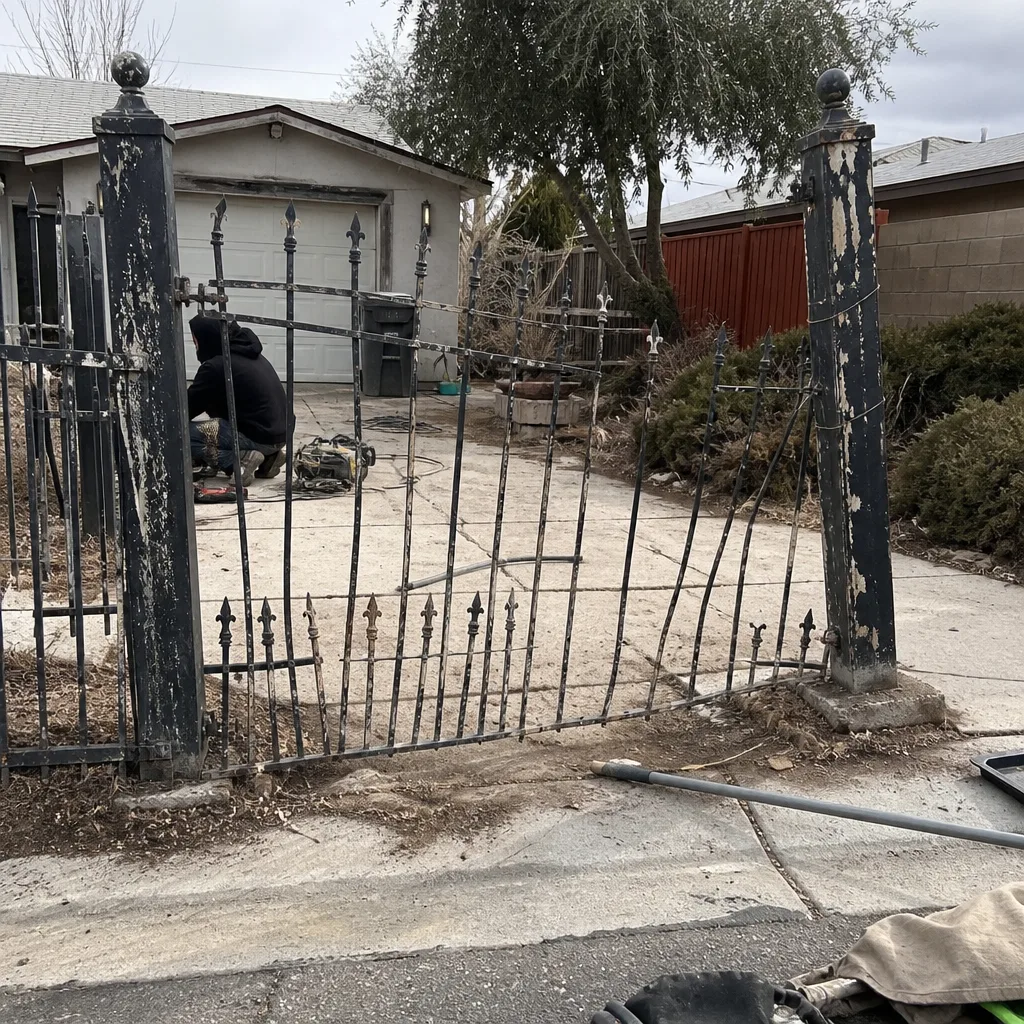 Before
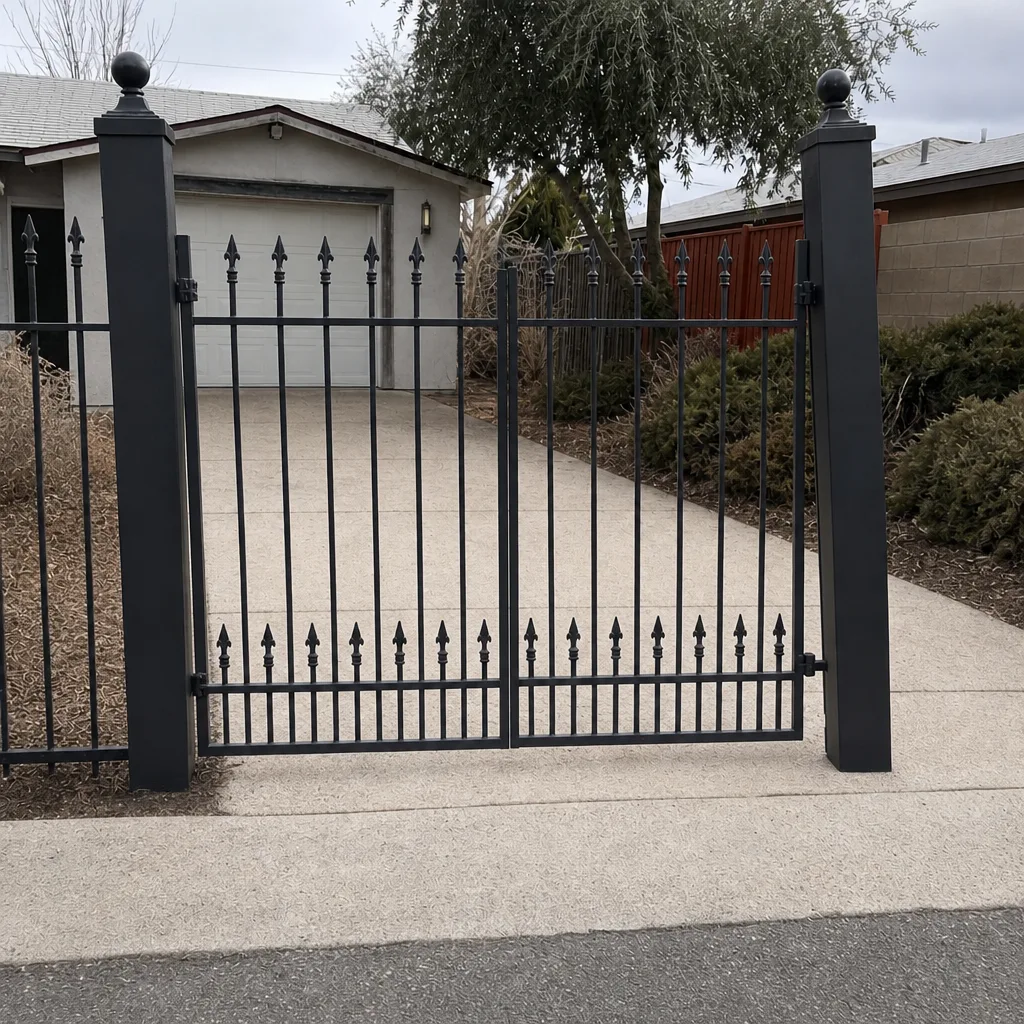 After
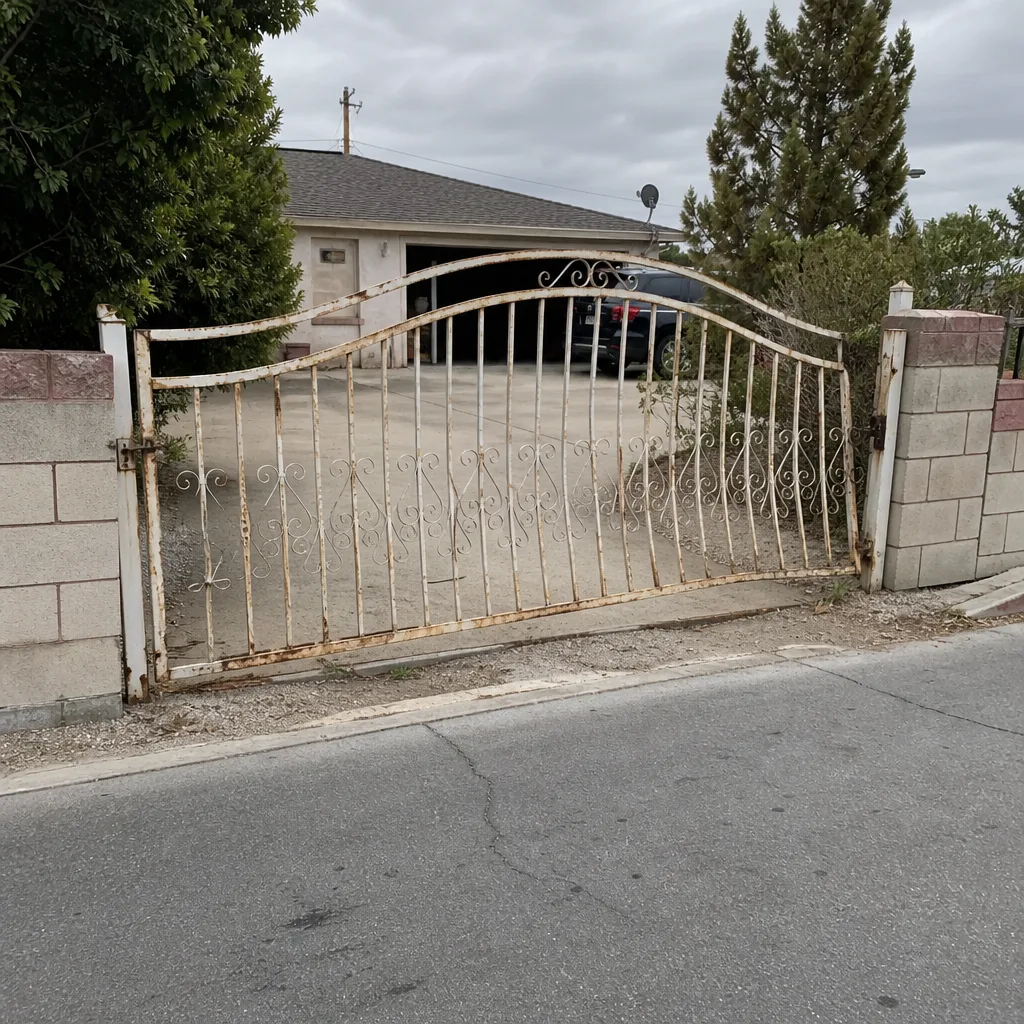 Before
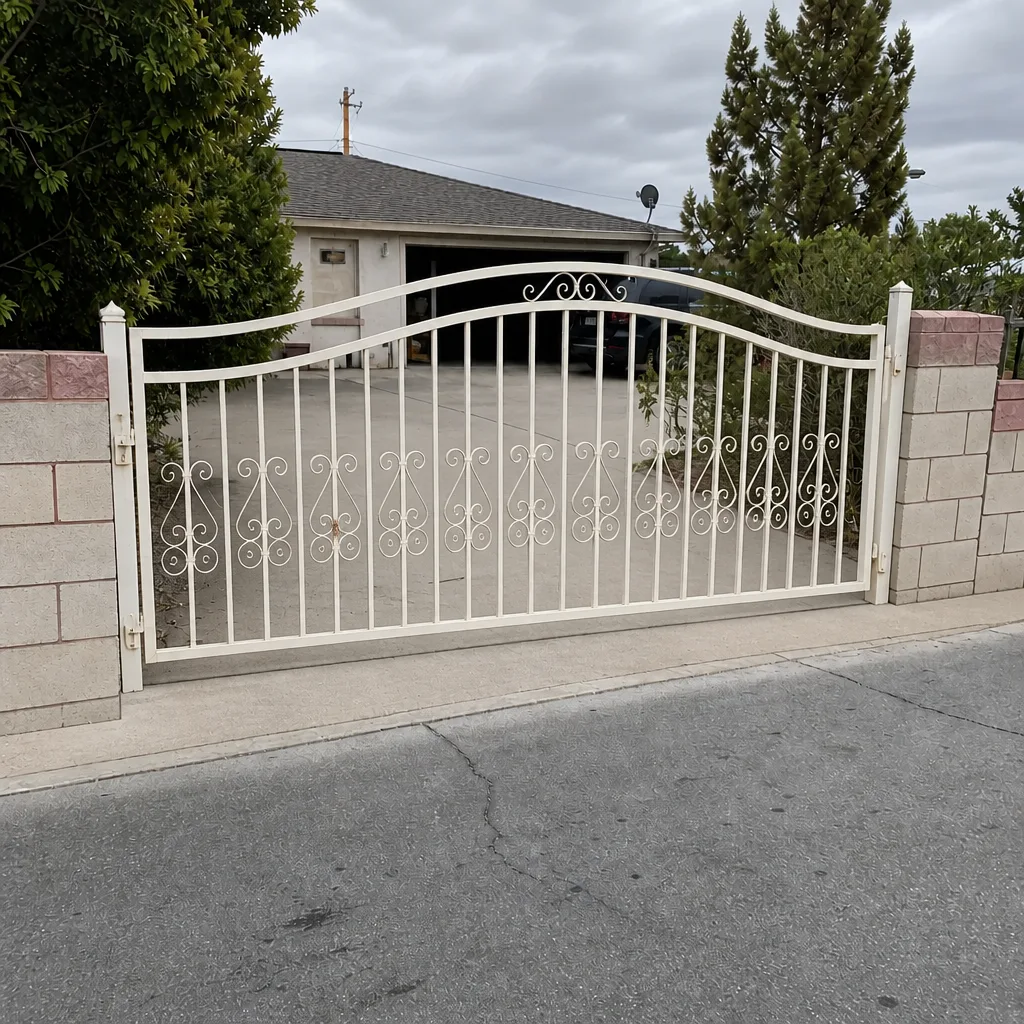 After
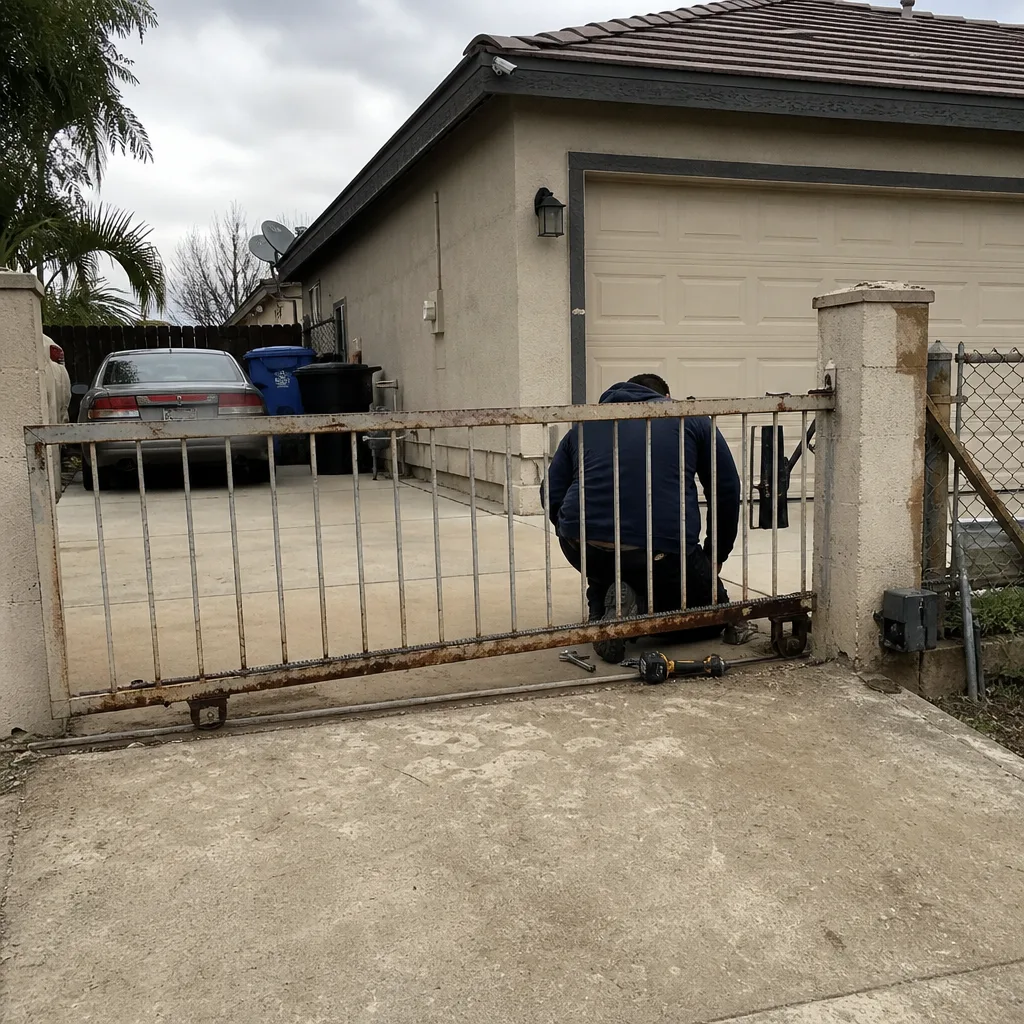 Before
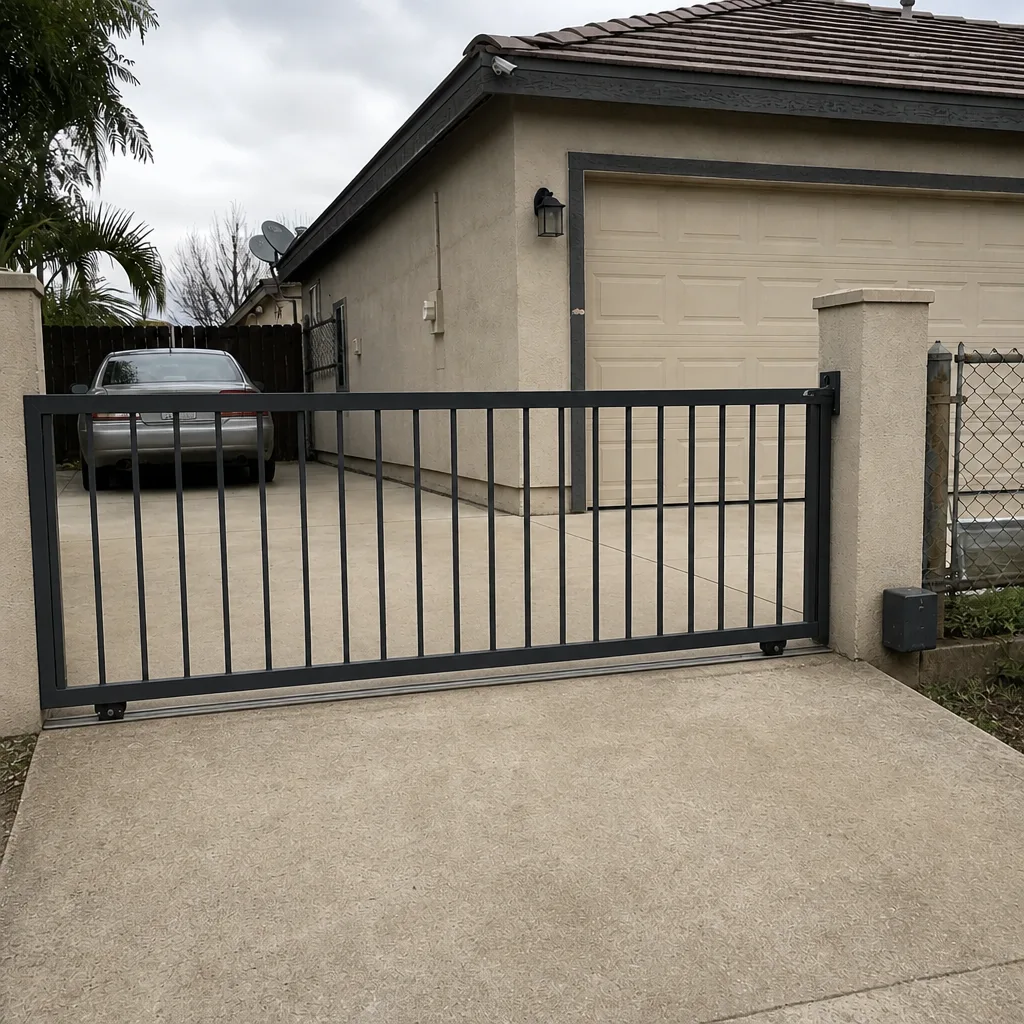 After
When to Call a Professional
Some repairs are genuinely DIY-friendly, and some will send you to the emergency room. Any gate with a leaning post, a separating hinge, or a cracked weld needs a trained hand – a falling gate or a gate under tension can cause serious injury, and we’d rather you call than try to brace it yourself. Likewise, high-voltage wiring at a gate’s automated operator, and any work on a spring-loaded gate, should be handled by a professional; the springs carry dangerous stored energy and the operator’s controller carries live current. If your gate is automated and reversing on its own, stop using it and call. Gatewood Fence & Gate Spring Valley offers free estimates in Spring Valley – call (888) 300-3906, and a live person answers around the clock. Every job carries our 90-Day Done Right Promise in writing, and repair is always the first option, not the last.
Frequently Asked Questions
Grinding on a swing gate usually means the hinge bearings are dry or seized, while grinding on a slide gate almost always means the rollers are eating into the track. It’s not a sign of age, and it doesn’t mean the gate needs replacing – it means a specific part is failing and needs attention before it takes a neighboring part with it.
More than 1/2 inch of drop, or any visible lean in the post, is the point where we’d say stop using the gate. Under 1/4 inch with a plumb post is usually just hinge wear and can wait for a scheduled visit. The trend matters more than the raw number – re-measure every two weeks and see which direction it’s going.
That’s thermal expansion. Metal grows in the heat, and a gate installed with a snug fit in winter can bind in a Spring Valley summer. It’s not a quirk – it’s a specific problem that gets worse each year until the metal cracks or the post pulls, and it’s fixable with an adjustment before that happens.
Yes, in most cases, and that’s our preferred approach. We weld on site so the gate stays in your driveway, which avoids the cost and delay of hauling it off and means the joint gets repaired where it actually failed. Not every crack is weldable, but a lot more of them are than you’d think.
It slows down. A slow cycle, a mid-stroke reversal, or a warning light on the controller (LiftMaster, FAAC, BFT, Linear, and others all have their own warning codes) are the earliest signs. Every one of them is worth checking – a battery, a capacitor, or a photo-eye alignment is a whole lot cheaper than a new operator.
Yes. A leaning post is a structural problem, not a cosmetic one. The gate’s weight is being carried at an angle the post wasn’t built for, and a collapse can happen without much warning. It’s the one sign on this list where we’d rather you call today than wait for a scheduled visit.
The Bottom Line
Your gate tells you what’s wrong long before it gives up. Grinding, squealing, clicking, clunking, sag, lean, and odd opener behavior are all early warnings – and each one points to a specific mechanism. The trick is knowing which sounds and movements mean “schedule a visit” and which mean “stop using the gate and call today.” Lean posts, separating hinges, and cracked welds always fall into the second category; everything else usually has time. A two-minute monthly walk-around catches most of it. When you’re not sure, get a second opinion – it’s free on any written estimate.
Call Gatewood Fence & Gate Spring Valley
If any of the warning signs above sound familiar, call us at (888) 300-3906 for a free estimate. A live person answers the phone around the clock, and we’ll come look at your gate, tell you what’s actually failing, and write down the price before we touch anything. No trip charge inside the county, $40 off any repair over $200, and a permanent 10% discount for seniors and veterans. If it’s not done right, we make it right – stamped in writing. That’s the 90-Day Done Right Promise, and it’s why we’ve been able to stand behind our work in Spring Valley for years. Learn more about Gatewood Fence & Gate Spring Valley and the way we work.
Written by the team at Gatewood Fence & Gate Spring Valley.