
Last updated November 18, 2026
 Wrought iron
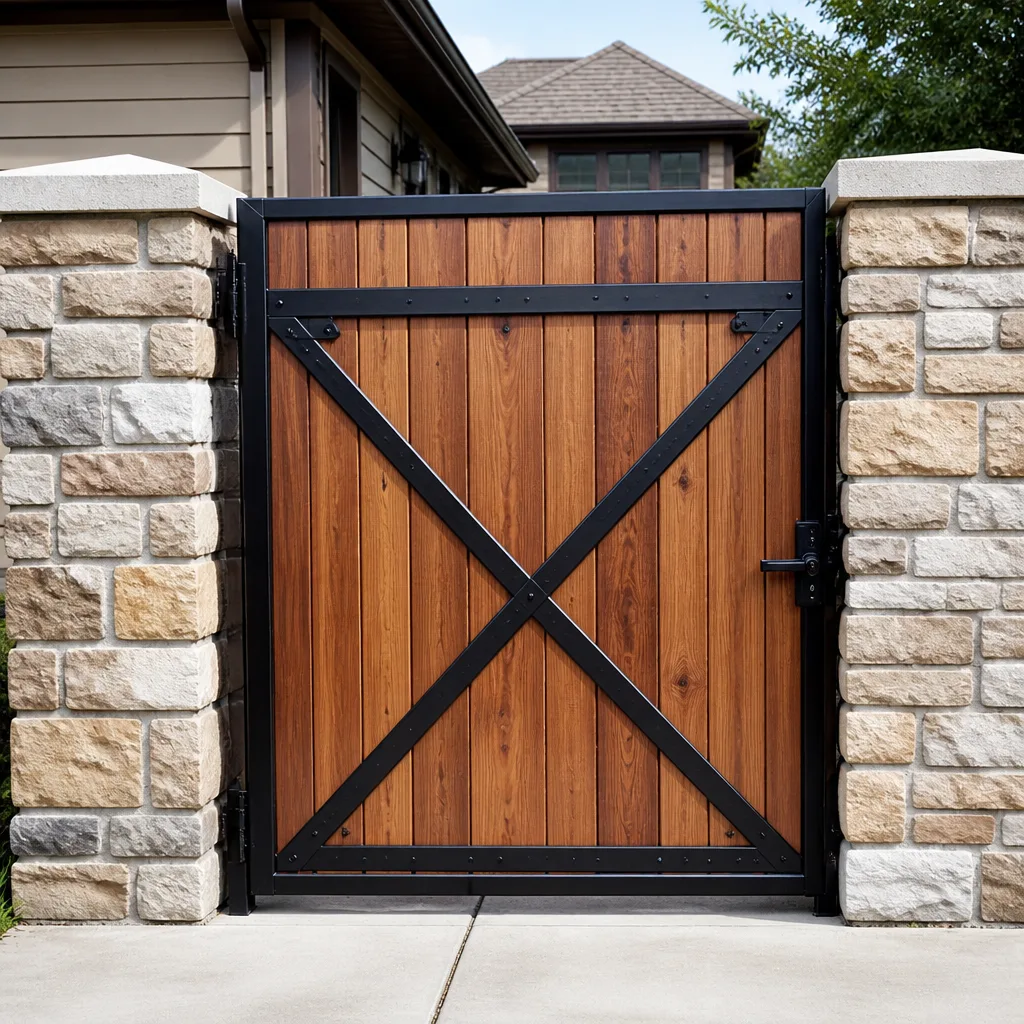 Wood & steel frame
 Farm & ranch
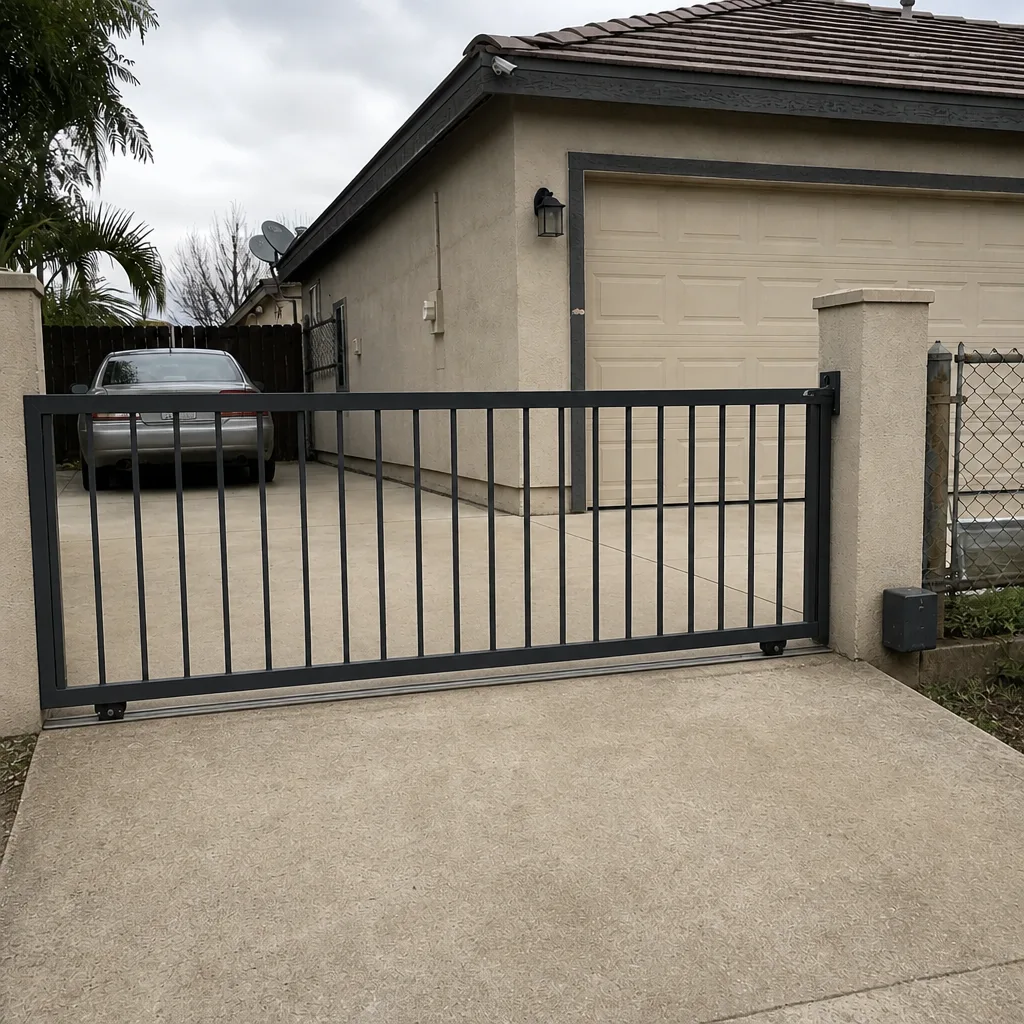
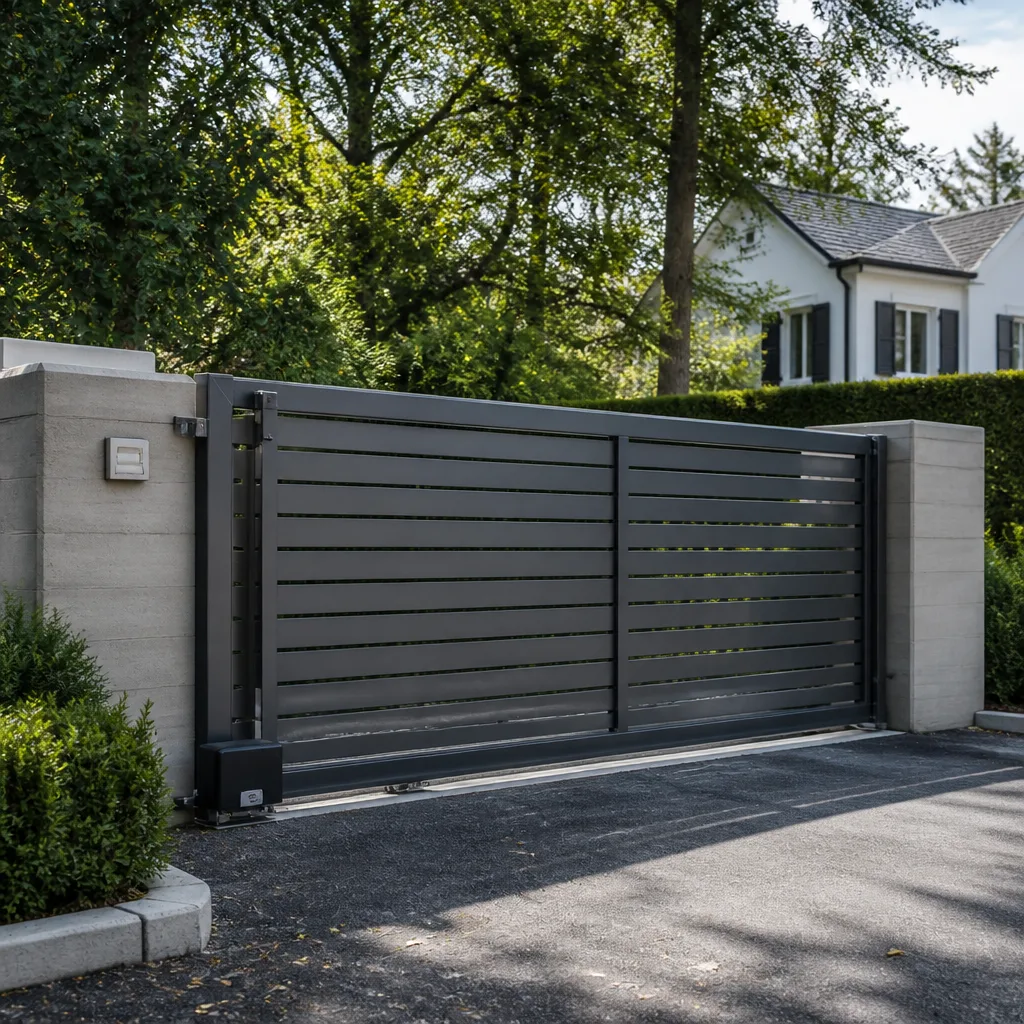 Sliding driveway gates
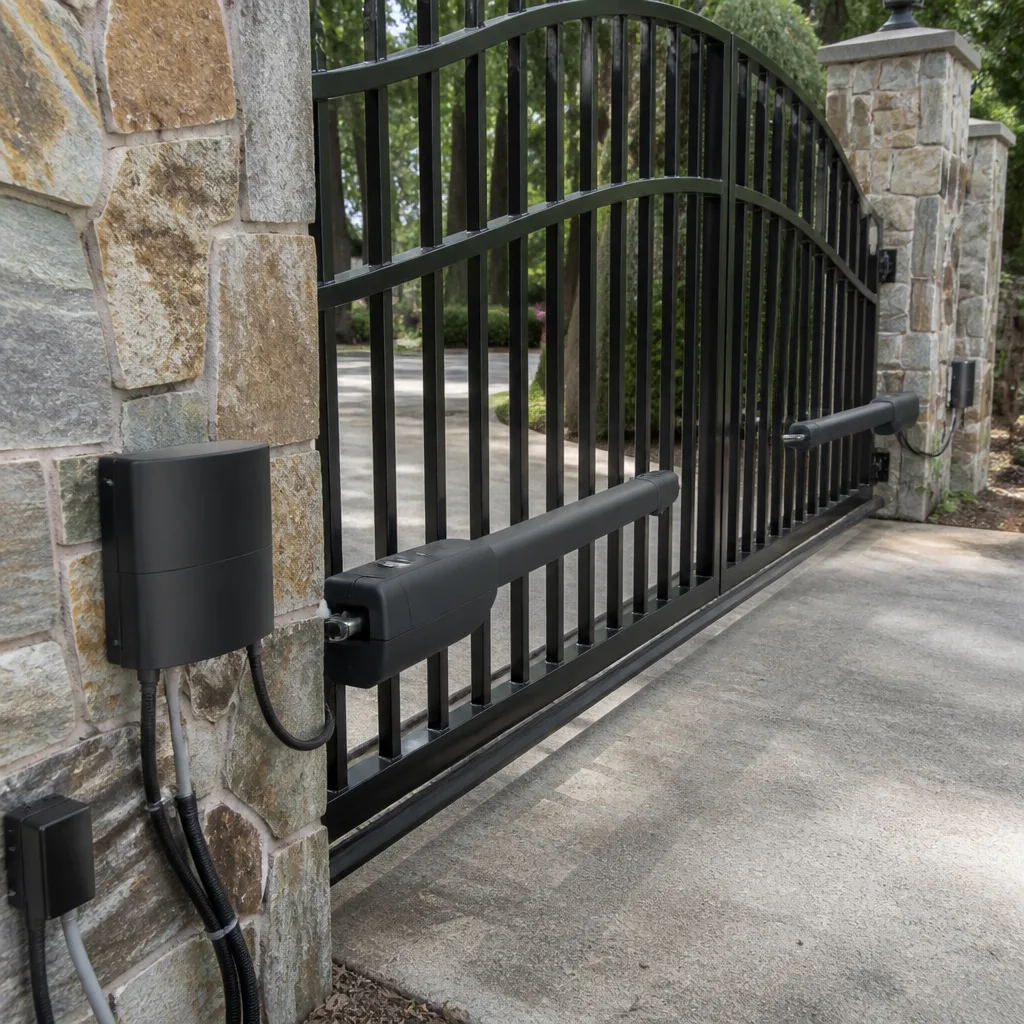 LiftMaster operators
Free on-site gate assessment - hinges, posts, and your LiftMaster or Nice gate operator checked before anything is quoted
The assessment is free and the quote is the invoice.
Get your free estimateGate Repair Permits, Codes & Inspections in NV: What You Need to Know
Here’s the part nobody warns you about: a homeowner in the northwest valley found out at closing that an automated gate her contractor installed without a permit had to be inspected and brought up to code, at her expense, three days before the sale. The contractor was long gone. We’ve watched more than one deal nearly fall apart over ten feet of aluminum and a missing piece of paper, and in our experience in Spring Valley, the confusion almost always starts the same way, with a homeowner who assumed all gate work was the same. It isn’t. This guide cuts through the Clark County code language and tells you plainly which gate jobs need paperwork and which ones don’t.
Quick Answer
Most residential gate repairs in Nevada do not require a permit. What usually triggers one is a change to the gate’s height, footprint, or structure, adding motorization, or replacing a structural post, because those changes affect wind load and safety and fall under Clark County building code. When in doubt, one call to the county building department settles it, and so does a contractor who works with permits as a matter of habit.
Styles & brands we work with
- Wrought iron
- Wood & steel frame
- Farm & ranch
- Sliding driveway gates
- LiftMaster operators
Table of Contents
- What Actually Triggers a Permit in Clark County
- HOA Rules vs. County Code in Spring Valley
- The Two Places Unpermitted Gate Work Costs You
- What a Clark County Gate Inspection Really Looks Like
- How to Pull a Simple Residential Permit Yourself
- Why Refusing Permits Is a Red Flag
- Common Mistakes to Avoid
- Frequently Asked Questions
What Actually Triggers a Permit in Clark County
Clark County does not require a permit to swap a hinge, re-weld a sagging frame, or replace a latch. Those are repairs, and repairs don’t change the structural reality of the property. What does require a permit is anything that changes height, footprint, or how the gate is anchored to the ground. Here is how that shakes out in plain English:
- Height increase. Going from a 4-foot ornamental gate to a 6-foot privacy gate is a height change and usually needs a permit, even when the post stays in place. Wind load on a solid gate in a desert gust is real, and the county treats that seriously.
- Motorization. Adding an automatic opener to an existing manual gate generally falls under electrical and structural review. Anything that connects to the power grid or introduces an entrapment hazard gets inspected.
- Structural post replacement. Swapping a fence post is fine. Replacing the hinge post the gate hangs from, or a corner post carrying load, is a structural repair and the county wants to know about it.
- New gate installation. A brand-new gate, especially a sliding or swing gate, needs a permit if it crosses the property line, exceeds height limits, or involves electrical work for an operator.
Every city in the Las Vegas Valley has residents who assume “Nevada is a low-regulation state, so anything goes.” It isn’t, and gate work is one of the places where the rules have teeth. If you’re planning a Gate Installation in Spring Valley, plan on a permit conversation before work starts. For repair-only work, most of it sails through without paperwork, which is exactly how it should be.
HOA Rules vs. County Code in Spring Valley
Spring Valley is a patchwork of master-planned communities, and in those communities the HOA often has stricter rules than Clark County does. Both sets of rules apply at the same time. That means the more restrictive of the two governs your project, and it is not unusual for a gate that meets county code to fail HOA review on the first pass.
Here’s what we’ve seen go wrong in Spring Valley: a homeowner gets county approval for a 6-foot gate, hires a welder, and installs it. Two weeks later the HOA sends a letter because the architectural committee wanted a 5-foot gate with a specific material to match the rest of the neighborhood. The gate got torn out. The county permit didn’t protect the homeowner because the county isn’t in the business of enforcing HOAs and has no idea what your CC&Rs say.
The fix is simple, and it saves money:
- Read your CC&Rs specifically for gate height, materials, color, and visibility from the street.
- Submit an architectural review request to your HOA before you file a county permit.
- Get the HOA approval in writing. Keep it in the same folder as your permit.
- Only then start the county permit process, and only then order materials.
When people ask us whether the HOA or the county wins, the honest answer is: whoever says no first. Both have to say yes. When the two conflict, the more restrictive rule governs, and going back to the drawing board costs months and a few hundred dollars per attempt.
The Two Places Unpermitted Gate Work Costs You
Unpermitted gate work is invisible until it isn’t. There are two scenarios where it turns into a real problem, and both of them cost more than the permit would have.
Homeowner’s insurance claims
If a gate fails and damages property or injures someone, the insurer will look at how the work was done. An unpermitted installation or a motorized gate that was never inspected can give the insurer grounds to reduce or deny the claim, because the work didn’t meet the standards the policy assumes. We’ve heard homeowners describe this as “the insurance company looked for a way out.” That’s the wrong framing. The insurer’s job is to verify the home met code, and the county paper trail is how they do it. No trail means no easy claim.
Real estate transactions
This is where the northwest valley story comes from. When you sell, the buyer’s inspector will note any “unpermitted structures and improvements.” An automated gate with no permit and no electrical inspection gets flagged, and the buyer’s lender can require it to be brought to code before closing. The cost and the timeline fall on the seller. In a Spring Valley closing where a gate installation was properly permitted at the time of install, the entire situation is a one-page disclosure and a signature.
There is a third scenario worth naming, quieter but real: if the gate is damaged and your policy is on the hook, an adjuster’s first question is almost always “can you send us the permit and inspection paperwork?” Being able to send it is the whole difference.
What a Clark County Gate Inspection Really Looks Like
Most homeowners schedule a county inspection expecting a thorough, hands-on review of every weld. What actually happens is a quick visual. The inspector shows up, checks that the work matches the approved scope, verifies the footing depth if that was called out, looks at the operator if there’s one, and asks to see the electrical sign-off if the gate was wired. Twenty minutes is typical. Long enough to catch obvious deviations, not long enough to identify every quality issue.
That mismatch matters twice:
- You may feel underwhelmed. Homeowners paying a permit fee often expect value for it. The permit’s value isn’t a perfect inspection, it’s documenting that the work was done under county oversight.
- You may not realize what the inspector checks. Go into the appointment knowing the specific callouts on your permit, and be walking through them with your contractor the day before. Small details like the footing depth or the disconnects for an operator are the parts that get flagged.
If your Gate Motor & Opener in Spring Valley involves new wiring, expect a separate electrical inspection. That’s not a duplicate. It’s a different code scope. In Spring Valley, most inspections are scheduled 2 to 5 business days out. Ask your contractor to book it at the same time the install date gets set, not after.
How to Pull a Simple Residential Permit Yourself
If your contractor asks you to pull the permit, you can do it. This is common in Nevada, and there is no rule against an owner doing residential permits on their own property. It takes a little patience but is not complicated for a single gate installation.
- Gather your documents. Property deed or tax record showing you as owner, a site plan showing where the gate goes (can be hand-drawn to scale), a basic gate spec sheet with height and materials, and your contractor’s license number.
- Submit the application. Clark County’s online portal handles most residential permits. One simple gate is usually a straightforward submittal. Anything more complicated goes in for plan review, which adds time.
- Pay the fee. Simple residential gate permits in the Las Vegas Valley typically run in the low hundreds of dollars. Complex projects or those requiring plan review go higher, and you’ll get the exact number at the counter.
- Schedule the inspection before you finish. Call the number on your permit once the work reaches the point the county wants to see. Do not close the gate, literally or figuratively, until the inspection has passed.
- Keep the paperwork. Permit, inspection card, and a photo of the finished gate go in your house file. You’ll need all three when you sell.
We’ve pulled plenty of permits on Spring Valley jobs, and we’ve also worked happily on jobs where the homeowner pulled their own. Either way, the paper trail is the point.
Why Refusing Permits Is a Red Flag
If a contractor tells you “you don’t need a permit for that” when it’s clearly a new install or a motorization job, ask them to put that in writing. They won’t. The conversation usually pivots to “we can get it done faster without one,” which is code for “we don’t want to wait for the inspection.” That’s a contractor who leaves you holding the bag at sale time or claim time, and we’ve seen the damage on the other side often enough to know it doesn’t wash out.
We’ve never had a homeowner regret pulling a permit. We’ve had plenty regret skipping one. A contractor who is proud of the work will show you a license number on the invoice, invite you to look them up, and hand you the permit folder at the end of the job. Ours is on every invoice, and the shop is down the road. If a crew can’t produce a license number and a permit on request, that’s your sign.
There’s also the repair-versus-replace question. A lot of gate problems we get called about, from sagging swing gates to double gates that won’t latch, are fixable on site without a permit and without replacement. Sometimes the honest path is a weld and a post reset, not a whole new install. We do that work happily. When a repair really does need to go up a level to an install, we walk through the permit first. You can see that range of work on our Gate Repair in Spring Valley page.
Common Mistakes to Avoid
- Skipping the HOA review because the county said yes. The HOA can override the county in Spring Valley, and getting a letter after install means the gate comes out.
- Taking “no permit needed” from a contractor at face value. Ask for it in writing. They won’t put it in writing, which tells you the answer.
- Motorizing an existing gate with no electrical inspection. Low-voltage operator or 120V, if the gate is wired, the county wants to see the disconnect and the safety reversing feature documented.
- Replacing the hinge post to fix a sag without a permit. The post carries the load. Homeowners assume it’s a repair; the county treats it as structural.
- Losing the completion paperwork. Permits and inspection sign-offs are your proof at closing time. Put them in the folder with your deed.
- Hiring a crew that “works in Spring Valley every week” but can’t produce a license. A neighborly reference is not a license, and the county registration shows up when it matters.
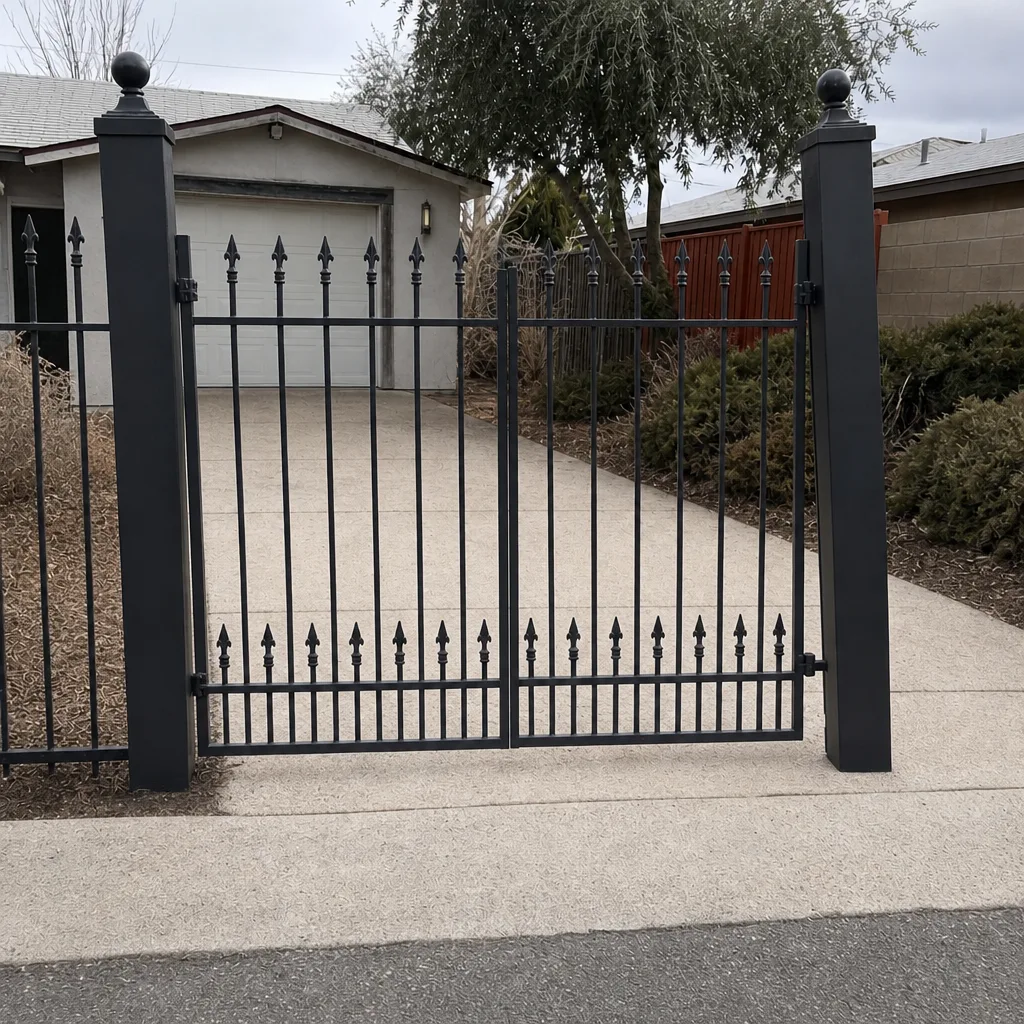
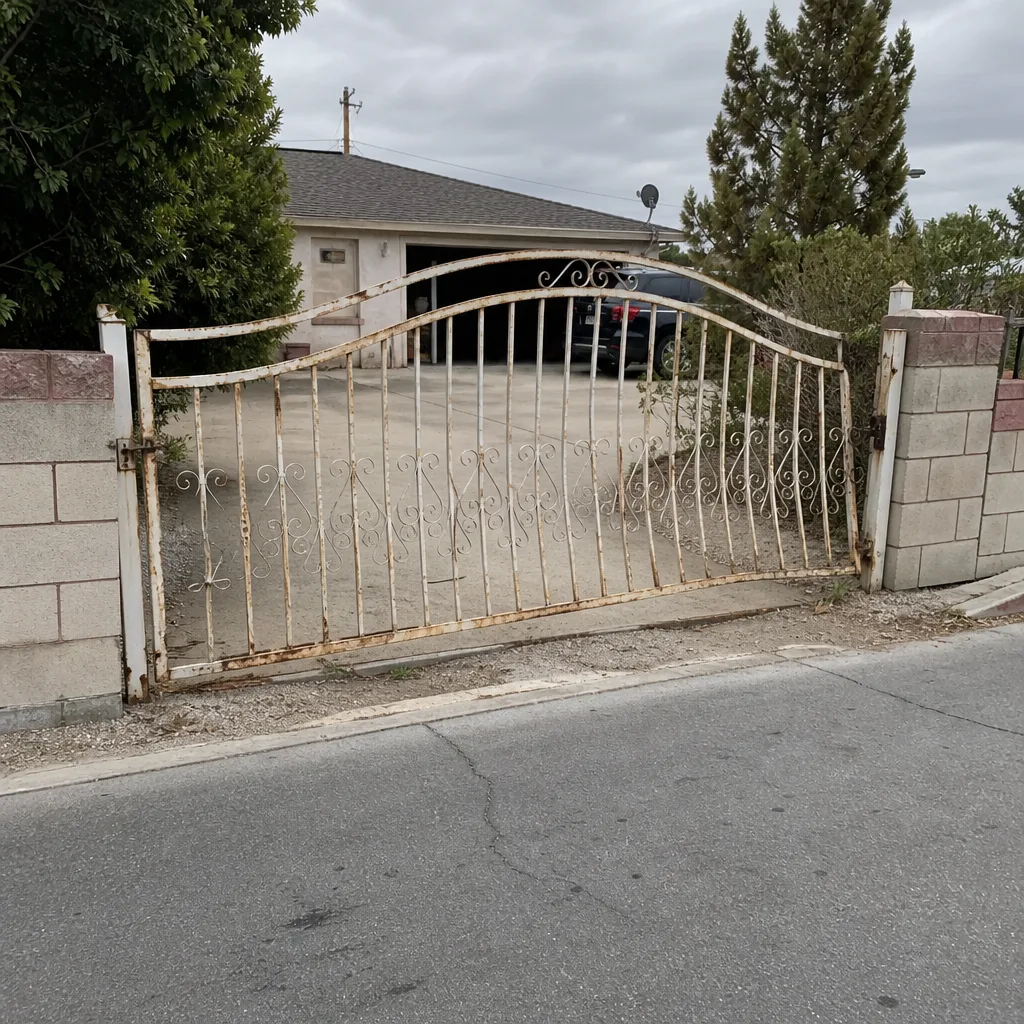
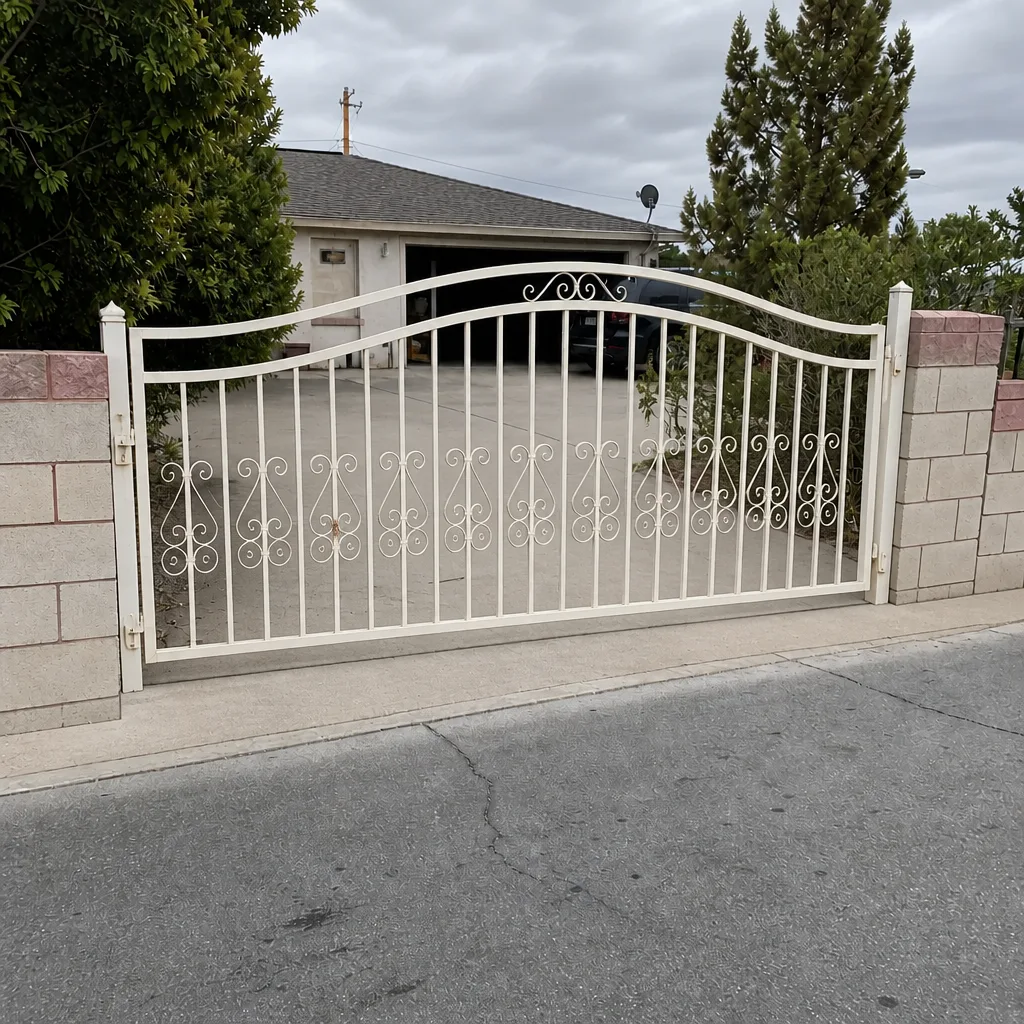
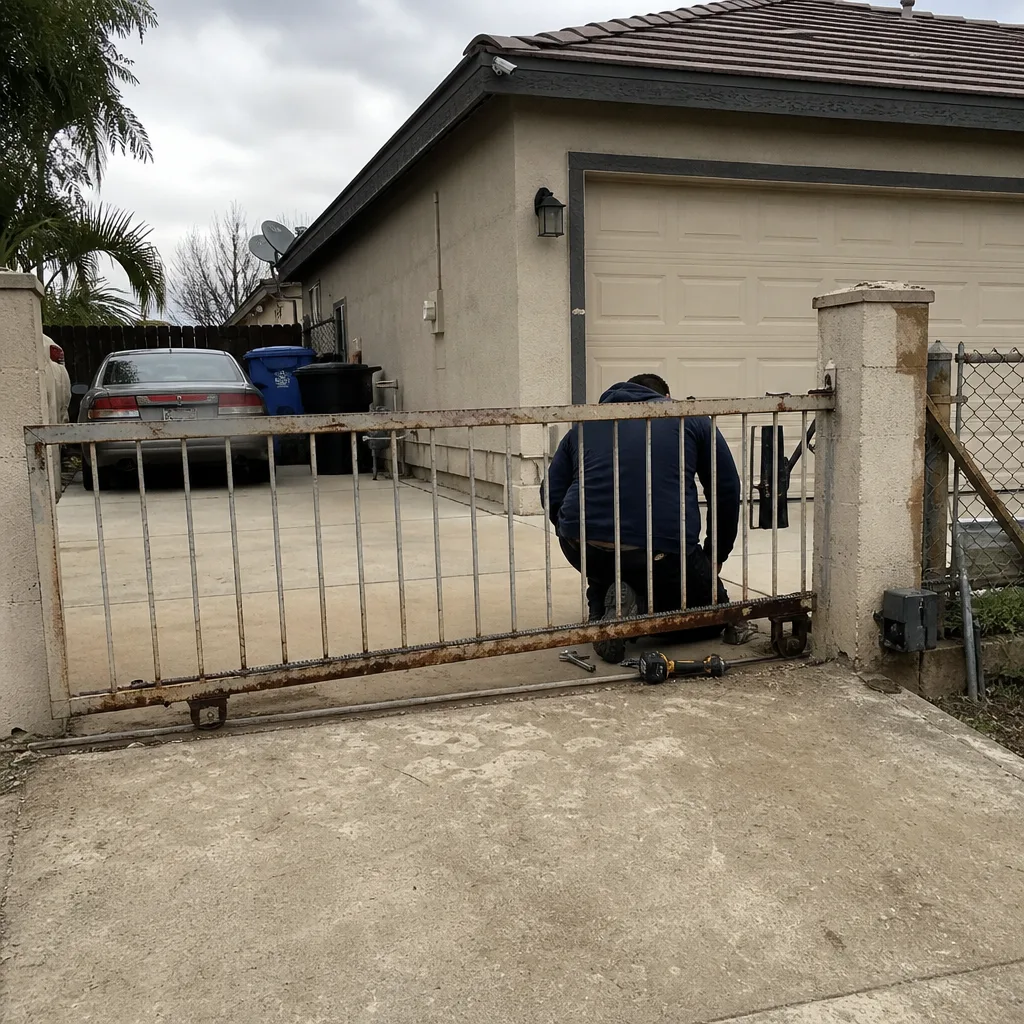
See the difference
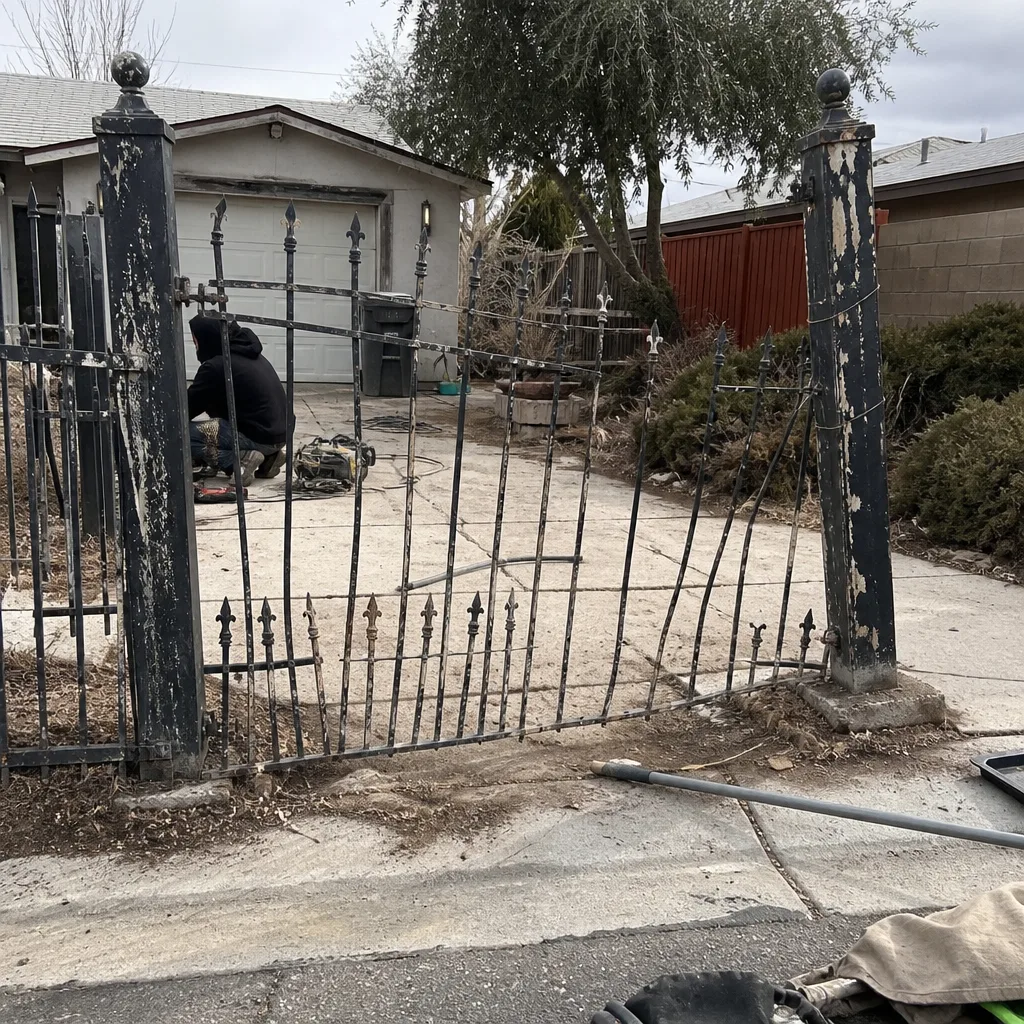 Before
 After
 Before
 After
 Before
 After
When to Call a Professional
Call us when the gate has clearly moved from repair into install territory, when the motor has failed and the operator has to be re-worked, or when the county has flagged something from a prior install and you need it brought up to code before closing. If your HOA is already writing letters or the police have shut off an automatic gate after a safety complaint, that’s a professional call. And if the gate frame is welded in a way that makes the current hardware non-standard or the safety reversing feature is not working, that is not a homeowner job. Gaps under a motorized gate and failed safety edges cause injuries, and getting them right requires an operator that matches your gate, whether that’s a Ghost Controls, a Viking, or a DoorKing.
Gatewood Fence & Gate Spring Valley offers free estimates in Spring Valley. Call (888) 300-3906. The phone is answered by a live person, day or night. If you need standby work you can read on your own time, our Gatewood Fence & Gate Spring Valley home page is a good place to start.
Frequently Asked Questions
Almost never. Replacing hinges, re-welding a sagging frame, replacing a latch or an opener battery, or resetting a gate that’s dropped are all repairs, and repairs do not require a permit in Clark County. The exceptions are height changes, structural post replacement, motorization, and new gate installs. If your planned repair changes how the gate is anchored or how tall it is, call the county before you start.
Usually yes. Adding an automatic operator to a manual gate typically triggers an electrical inspection and, depending on the gate, a structural review, because the operator changes the forces acting on the posts and introduces an entrapment hazard that the county wants documented. The safety reversing feature and the disconnects are the parts inspectors actually check, so have those working before the appointment.
Yes, and it frequently does. HOA CC&Rs in Spring Valley often run stricter than county code on height, materials, and color. When the two conflict, you have to satisfy both, and the HOA review is almost always the slower of the two. Submit the architectural request first, get approval in writing, then file the county permit. County approval does not override your CC&Rs.
The buyer’s inspector will flag it as an unpermitted improvement, and the buyer’s lender can require it be brought up to code before closing, at your expense and your timeline. In the northwest valley case that prompted this guide, a homeowner lost three days to a surprise inspection and county-fee scramble right before closing. A permit at install time would have made the whole thing a one-page disclosure.
Most simple residential gate permits in the Las Vegas Valley run in the low hundreds of dollars. Complex projects, motorization with electrical scope, and anything requiring plan review will run higher, and the county gives you the exact number at submittal. The inspection sign-off is included in the permit fee and doesn’t carry a separate charge. Call (888) 300-3906 for a free second opinion on any written estimate.
Once the hinge post has to be replaced, that becomes a structural repair and usually needs a permit. A sagging gate hangs from the hinge post, so replacing it changes the load path the gate was originally engineered for, and the county treats that as more than routine maintenance. We see this a lot in older Spring Valley neighborhoods where desert heat has dried out and split the post over time. The repair itself is straightforward. The paperwork is what catches people flat-footed three months later.
The Bottom Line
Most gate repairs in Nevada need no paperwork, and most new installs, height changes, motorizations, and structural post replacements do. The exceptions are specific, and they cost far more to fix after the fact than they cost to fund up front. Read your CC&Rs, submit the HOA review before the county permit, keep every document in the same folder as the deed, and don’t take “no permit needed” from anyone who won’t put it in writing. When a real installation is on the table, we’ll walk you through the paperwork as part of the job. Free estimates in Spring Valley. Call (888) 300-3906 and a live person picks up, any hour. Or stop by the shop and look us in the eye.
Written by the team at Gatewood Fence & Gate Spring Valley.