
Last updated November 17, 2026
 Wrought iron
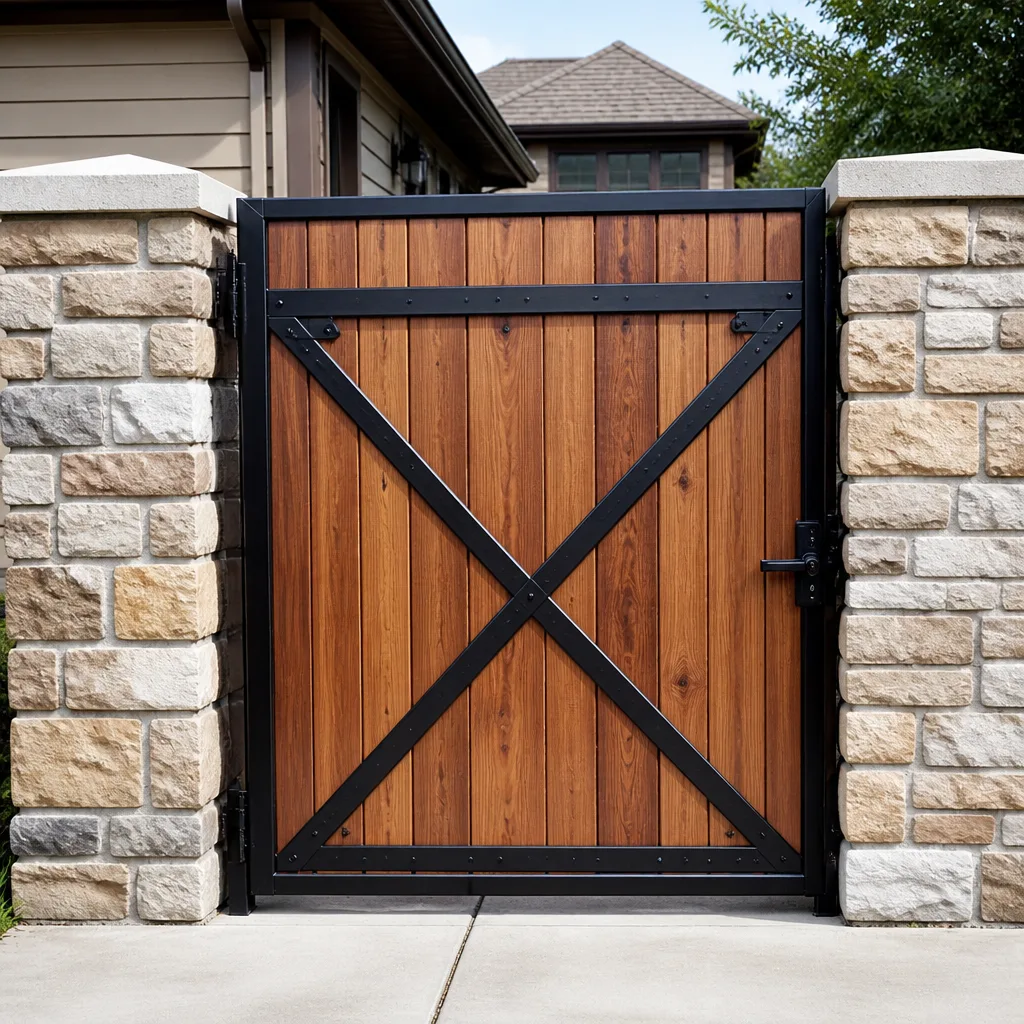 Wood & steel frame
 Farm & ranch
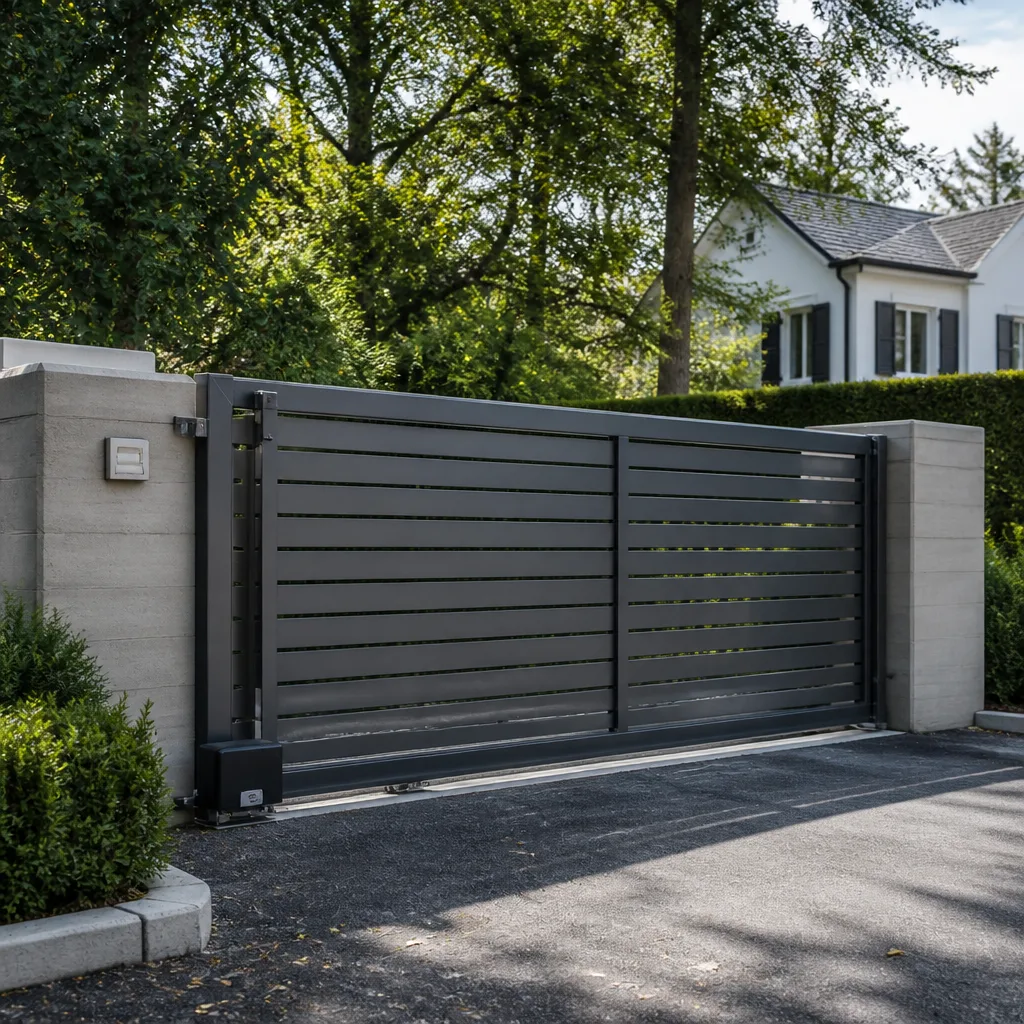 Sliding driveway gates
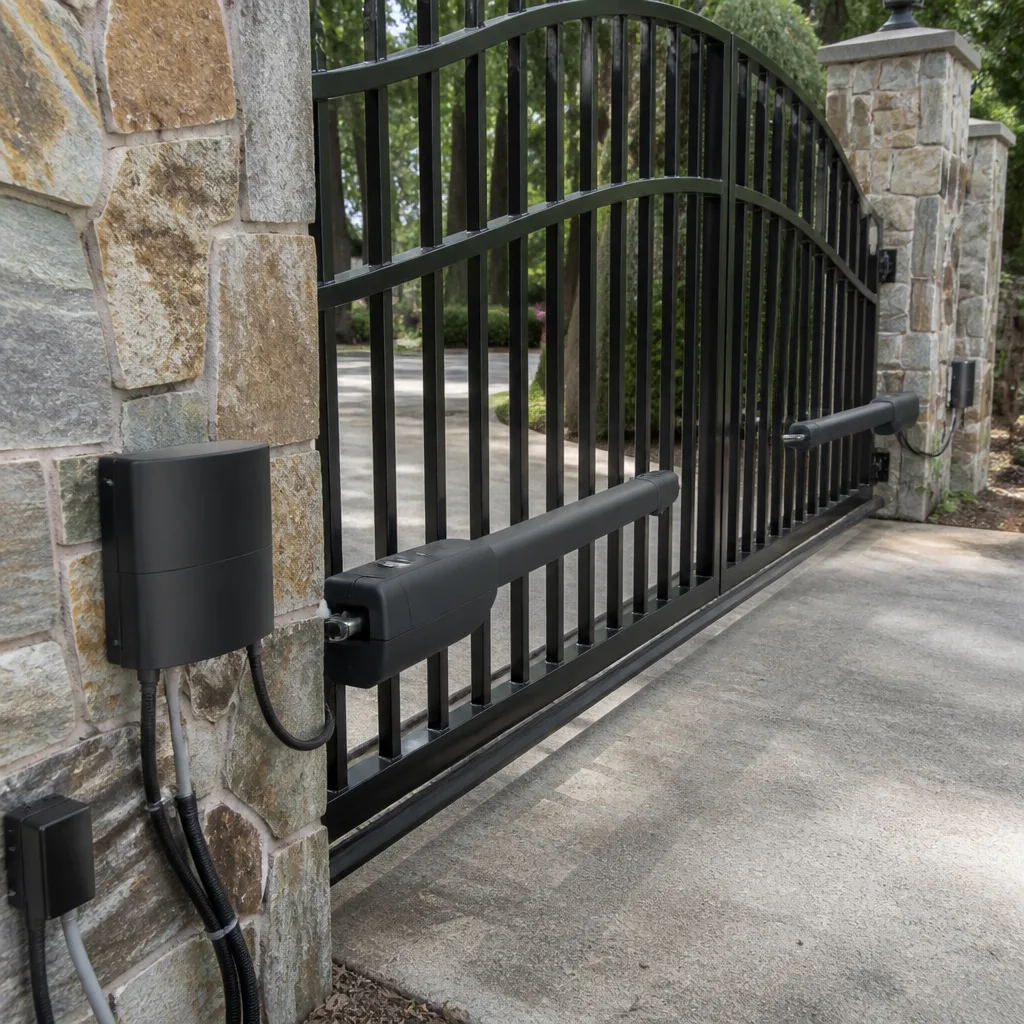 LiftMaster operators
Free on-site gate assessment - hinges, posts, and your LiftMaster or Nice gate operator checked before anything is quoted
The assessment is free and the quote is the invoice.
Get your free estimateGate Repair Maintenance Schedule: What to Do and When
There’s no mud season in Spring Valley, but there is a two-week window every October when temperatures finally drop below 90 and your lubricants actually flow right. That is when the annual hardware check gets done around here, not in January like every generic spring-and-fall maintenance guide tells you. The schedule that actually protects a gate in the Mojave is built around heat, windblown grit, and the July monsoon – not frost heave. Get the timing right and a well-built gate will go years between real repairs. Get it wrong, or borrow a schedule written for Ohio, and you’ll be calling someone out every spring. Here is the month-by-month plan we’ve worked out over years of repairs across Spring Valley, and what you can honestly handle yourself versus what needs a trained hand.
Quick Answer
In Spring Valley, a gate needs a five-minute visual check every month, lubrication and hardware tightening in October once the heat breaks, hinge and post checks before the July monsoon, and one professional inspection a year that covers the opener, battery backup, and safety sensors. The two biggest killers of gates in this climate are heat-baked lubricant that turns to paste and monsoon-season ground movement that throws hinges out of line.
Key Takeaways
- Desert heat, not cold, is what wears a gate out here – most failures start with dried-out or gummed-up lubrication.
- October is the real annual service month in Spring Valley; the pre-monsoon check comes in late June or early July.
- A monthly five-minute walkaround catches most problems before they turn into a service call.
- Opener battery backup needs to be tested on a schedule, not discovered dead during an outage.
- Welded joints, spring tension, and electrical work belong to a trained professional – not a YouTube tutorial.
Styles & brands we work with
- Wrought iron
- Wood & steel frame
- Farm & ranch
- Sliding driveway gates
- LiftMaster operators
Table of Contents
- Why a Desert Gate Ages Differently
- The Five-Minute Monthly Walkaround
- The Month-by-Month Spring Valley Calendar
- Which Lubricants Work in the Desert and Which to Avoid
- Opener and Battery Backup Testing Schedule
- What a Professional Inspection Covers vs. What You Can Do
- Common Mistakes to Avoid
- When to Call a Professional
Why a Desert Gate Ages Differently
Most gate maintenance advice is written for places with four seasons and regular moisture. Spring Valley doesn’t play that game. Metal here swings between 40-degree winter mornings and 110-degree summer afternoons, and that expansion and contraction works every hinge, latch, and weld on the gate a little looser each year. Add the fine grit that rides in on the spring winds and the summer monsoon dust storms, and you get a wear pattern that has almost nothing to do with the calendar most guides hand you.
What we see on repair calls across Spring Valley tells the story. Hinges seize more often than they snap. Grease that was fine in March has baked to a sticky paste by August and is now holding grit like sandpaper against the pin. Gate posts shift a hair after a heavy monsoon soaking softens the soil, and suddenly the gate drags. The gate itself is usually fine. The hardware around it is what’s tired.
The good news: because the failure modes here are predictable, the maintenance is too. If you understand that heat cooks your lubricant and monsoon season moves your posts, you can schedule around those two events instead of guessing. That’s the whole idea behind a Gatewood Fence & Gate Spring Valley home approach to gate care – work with the climate you actually live in, not the one in the manual.
The Five-Minute Monthly Walkaround
You don’t need tools or training for this. Once a month, walk the gate line and run this checklist. It takes about as long as checking the mail, and it’s how you catch a $60 fix before it becomes a $400 repair.
- Open and close it by hand (with the opener off if you can safely disengage it). It should move smoothly with light effort. Any grind, squeal, or spot where it catches tells you something is binding.
- Look at the hinges. Rust streaks, dark grease trails, or a hinge sitting at a different angle than its neighbors means it needs attention.
- Check the latch and the strike. Does the gate line up and catch cleanly, or does it take a shove? Misalignment usually starts at the post, not the latch.
- Scan the welds and joints. Look for hairline cracks, especially where the frame meets the hinge side. Cracks don’t heal themselves.
- Check for dragging at the bottom. A gate that scrapes the ground or a track is telling you the post has moved or the hinge has sagged.
- Look at the opener’s safety sensors. Wipe them off, make sure nothing blocks the beam, and confirm the gate reverses when something is in its path.
- Clear the track or the swing arc. Gravel, weeds, and blown debris cause more phantom “gate problems” than any mechanical fault.
Write down anything that looks off, with the date. Patterns matter. A gate that drags only in July and August is a heat and post issue; one that misbehaves after every rainstorm is a soil and alignment issue. Either way, that note is worth more to whoever services the gate than any description you can give over the phone.
The Month-by-Month Spring Valley Calendar
This is the schedule we actually recommend, calibrated to the Mojave year. Take it to the fridge.
January – February: Latch and Hardware Check. The cold is mild here, but it’s the easiest time to work outside. Test every latch, tighten loose bolts (hand-tight, don’t over-crank and strip), and confirm the gate swings freely in cool weather so you have a clean baseline.
March – April: Pre-Summer Heat Prep. This is the big one before the heat arrives. Lubricate every moving part with a heat-stable product (more on which ones below), inspect and re-grease the hinges, and have any worn or missing hardware replaced now – not in August when it’s 108 and everything is failing at once. On automatic gates, this is also the time to test the opener’s battery backup before summer outage season.
May – June: Safety Sensor and Opener Check. Dust and blown debris start collecting on sensors. Clean them, test the auto-reverse, and check that the opener’s manual release works. If you’ve got an older FAAC or Viking operator on the gate, this is the season to notice if the motor is straining.
July – August: Monsoon Hinge and Post Check. When the monsoon rains hit, the ground moves. Walk the gate and look for new dragging, posts that have shifted, or hinges thrown out of line. This is the most common time of year we get called out for a gate that suddenly won’t close square. Catching it fast keeps it a hinge adjustment rather than a post repair.
September: Dust Storm Cleanup. After the wind and grit, strip off the caked-on dust, clean out tracks and hinges, and re-lubricate anything that got fouled.
October: The Annual Hardware Inspection. This is the real service month. Temperatures drop below 90, lubricants flow properly again, and you can do a thorough top-to-bottom check of hinges, welds, posts, and the opener. It’s also when a professional annual inspection pays for itself.
November – December: Winter Prep. Re-test lubrication, confirm the gate closes securely, and check the opener’s backup battery again ahead of any power interruptions. A gate that’s solid going into winter is a gate that won’t surprise you in spring.
Which Lubricants Work in the Desert and Which to Avoid
This is where a lot of well-meaning homeowners go wrong, and it’s why we end up cleaning gummed-up hinges so often in Spring Valley. The wrong product is worse than no product, because it attracts grit and, in summer heat, sets up like glue.
Use these:
- White lithium grease on hinge pins and latches – it holds under heat and stays put.
- Silicone spray on Teflon-type gate track glides and on components you don’t want to collect dust.
- Dry PTFE or dry-film lubricant where grit is a constant problem – it sheds dust instead of trapping it.
- A dedicated gate-hinge and operator grease matched to your opener’s manufacturer recommendation – BFT and Linear operators, for example, have their own specs.
Avoid these:
- Household 3-in-1 or general-purpose oil – too thin, it runs off in July heat and doesn’t protect the pin.
- Sticky heavy grease on exposed parts – fine inside a sealed bearing, terrible on an open hinge in a dusty climate because it turns into a grit magnet.
- WD-40 as a lubricant – it’s a great cleaner and a poor long-term lubricant. It evaporates and leaves the hinge drier than you found it.
- Graphite dust near the opener electronics – it can migrate into sensitive components.
The rule of thumb: match the lubricant to the component and the climate. A hinge pin exposed to desert grit wants a product that stays put without turning into flypaper. A track glide wants something slick that won’t collect sand. If you’re not sure what a specific opener brand wants, that’s a good question for the annual inspection – or a quick call to the shop.
Opener and Battery Backup Testing Schedule
The battery backup on an automatic gate opener is the single most neglected part of the whole system. It sits quietly, does nothing, and then fails exactly when you need it – during a power outage, in the dark, with the gate stuck open. Testing it on a schedule, not just when the lights go out, is the fix.
- Test it twice a year – April and November. Unplug the opener’s power at the source, watch the gate, and confirm it opens and closes on battery just like it would on the wall.
- Note how the gate behaves. If it’s sluggish on battery, or only makes it partway, the battery is on its way out.
- Check for swelling or corrosion on the battery terminals if you can safely reach them. Never open sealed electrical enclosures on the opener itself – that’s a job for a professional.
- Replace on a schedule, not on failure. Backup batteries have a service life and degrade quietly. Ask the annual inspector to test the battery’s actual health, not just whether the gate moves.
- Confirm the manual release works – that’s the lever or key that lets you operate the gate by hand if the whole system goes down. Know where it is and how to use it before you need it.
If your gate runs on a FAAC, BFT, or DoorKing operator, the specific battery test procedure differs a little by model, and that’s a good reason to let the person who knows the brand handle it. Our role at Gatewood is to connect people with professionals who can service a whole range of operators and brands, all of which have their own schedules and battery specs. When it comes to gate motor and opener service, knowing the brand matters more than most homeowners realize – see our guide to Gate Motor & Opener in Spring Valley for more on that.
What a Professional Inspection Covers vs. What You Can Do
Half of good gate maintenance is homeowner work. The other half shouldn’t be. Knowing where the line sits saves you money and keeps you safe, especially with opener springs and electrical components.
What you can legitimately handle:
- The five-minute monthly walkaround and the notes that record it.
- Cleaning out tracks, hinges, and sensors.
- Lubricating hinges and latches with the right product.
- Testing the battery backup by unplugging power at the source.
- Clearing debris and weeds from the gate’s path.
- Hand-tightening visibly loose bolts (without over-tightening).
What needs a trained professional:
- Welded joints and structural repairs – a cracked weld isn’t something to patch at home. It’s a load-bearing failure and needs a real repair on site, not a swap of parts that don’t need swapping.
- Opener spring, cable, and tension work – these components store enormous energy. If a spring or cable is involved, stop and call. A trained professional should handle it, and we won’t give you a step-by-step because the wrong step can seriously hurt you.
- Electrical components and safety sensors – anything that involves wiring, the control board, or the safety-edge system belongs inside a licensed professional’s hands.
- Post alignment and ground anchoring – a gate that sags in the hinge post, not the middle, needs the post addressed. Fix the panel without the post and you’ll fix it twice.
- A full annual inspection – a proper pro inspection covers the opener’s internals, the battery’s actual health, weld integrity beyond the eye, and safety compliance. That’s the piece that turns a maintenance schedule into years of reliable service.
When a repair is genuinely needed, the right approach is repair first. A good specialist looks at a sagging gate and checks the post before recommending a whole new gate. That’s the philosophy behind Gate Repair in Spring Valley – fix what’s broken, weld it on site, and leave the gate in your driveway.
Common Mistakes to Avoid
- Following a generic spring-and-fall calendar. A schedule written for a Midwest climate has you greasing in spring and winterizing in fall. In Spring Valley, the real work happens in October and ahead of the July monsoon. Wrong timing means you’re servicing at the wrong time of year.
- Using the wrong lubricant. Thin household oil runs off in the summer heat, and sticky grease turns into a grit magnet. Both accelerate the wear you were trying to prevent.
- Ignoring a small drag until it becomes a big one. A gate that scrapes the ground a little is telling you about a post or hinge problem that’s easy to fix early and expensive to fix late.
- Skipping the battery backup test. Waiting for a power outage to discover a dead battery means discovering it the hard way, with the gate stuck and no way to close it.
- Over-tightening bolts. Cranking down on hardware to “make it tight” strips threads and cracks welds. Tight is right; cranked is broken.
- Burying the cause under a new part. Replacing a hinge when the real problem is a shifted post is a repair you’ll do twice. A local specialist should check the post first, every time.
- Letting the pros you hire skip the paperwork. Any repair worth doing comes with a written guarantee. Here, every job carries a 90-Day Done Right Promise in writing – and if it’s not done right, we make it right. Don’t settle for a handshake you can’t hold anyone to.
When to Call a Professional
Call a professional the moment a spring, cable, or anything electrical is involved – full stop. Those components can hurt you, and no online guide is worth a hospital trip. Beyond that, call when you see a cracked weld, a gate that won’t close square, a hinge you can’t tighten back into place, a post that has obviously shifted, or an opener that reverses or hesitates on its own. Call when the gate drags only sometimes, too – intermittent problems are almost always alignment or post issues that get worse in the monsoon heat. And call if a monthly check finds something you’re not sure about; a free second opinion on any written estimate costs you nothing but a phone call.
Gatewood Fence & Gate Spring Valley offers free estimates in Spring Valley – call (888) 300-3906. A live person answers, not voicemail, and you’ll get an upfront price agreed before any work starts.
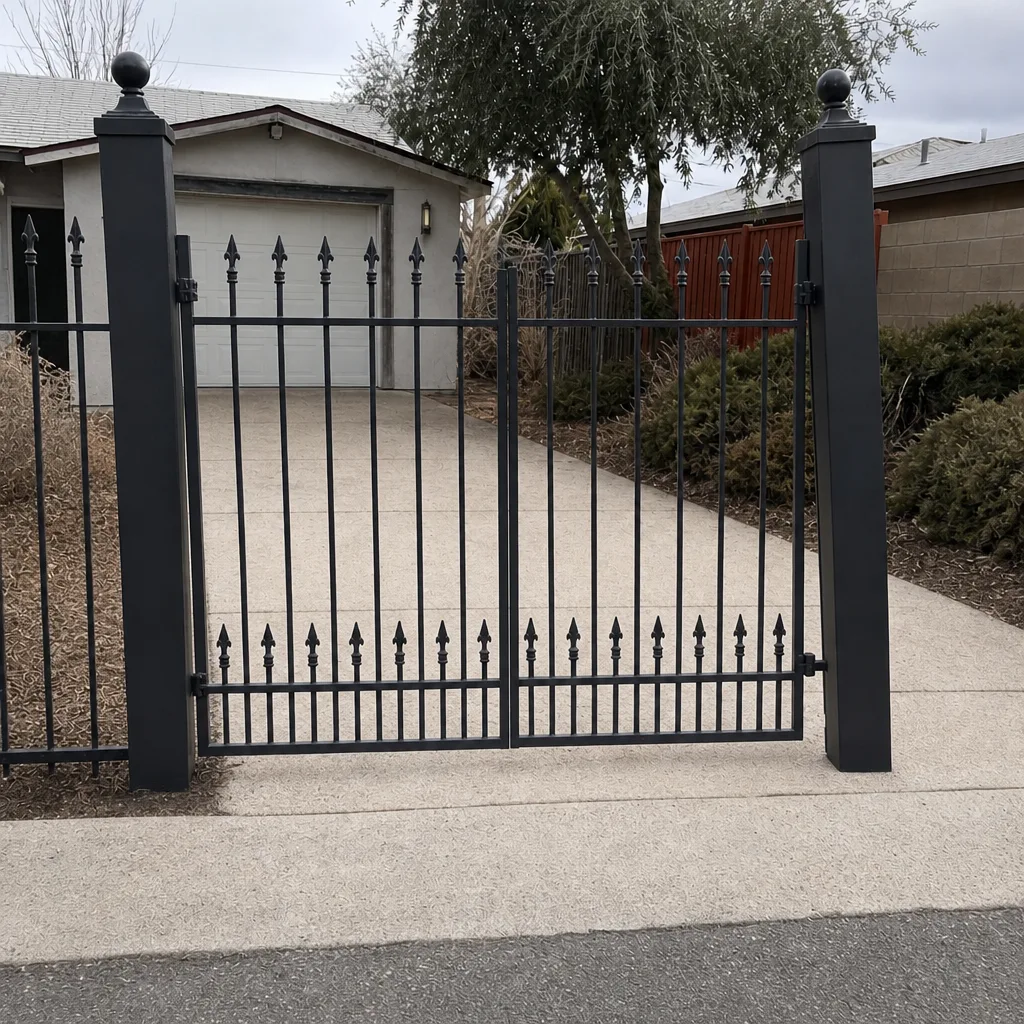
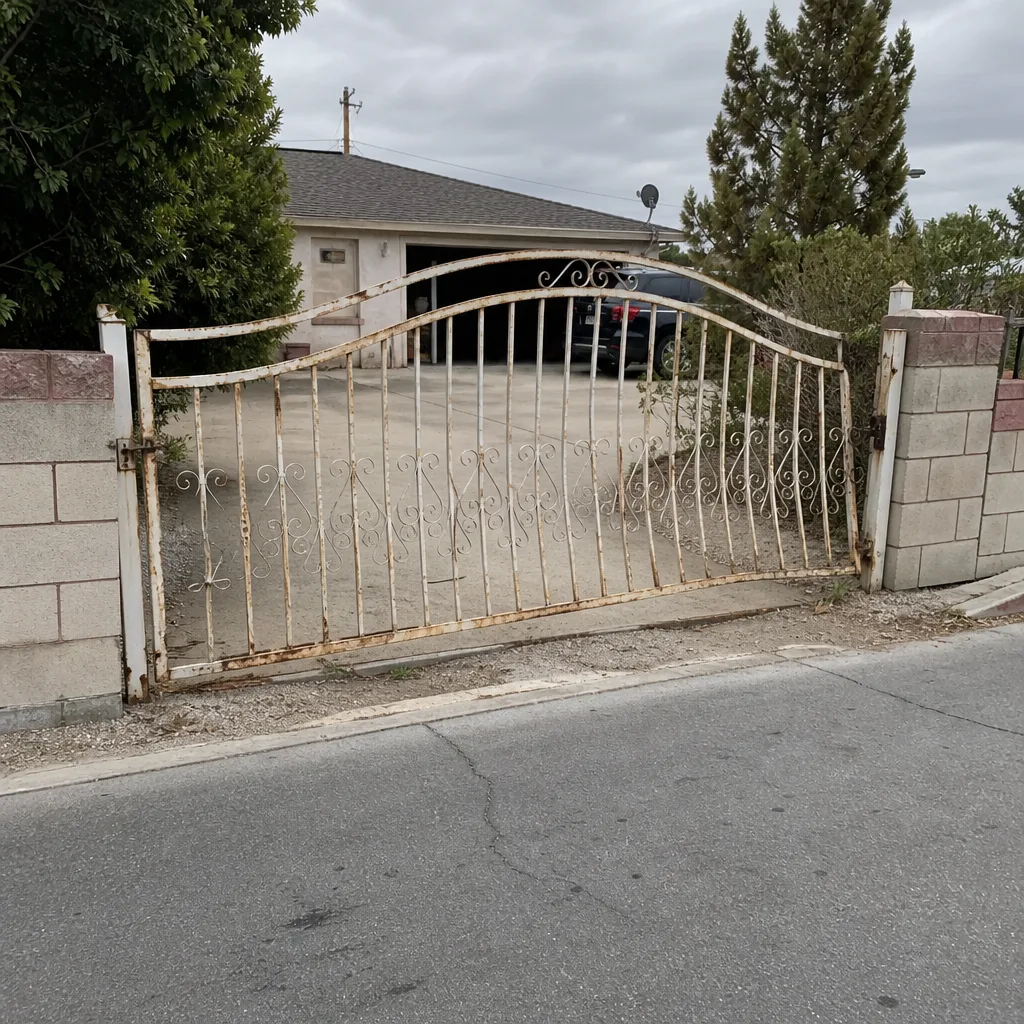
See the difference
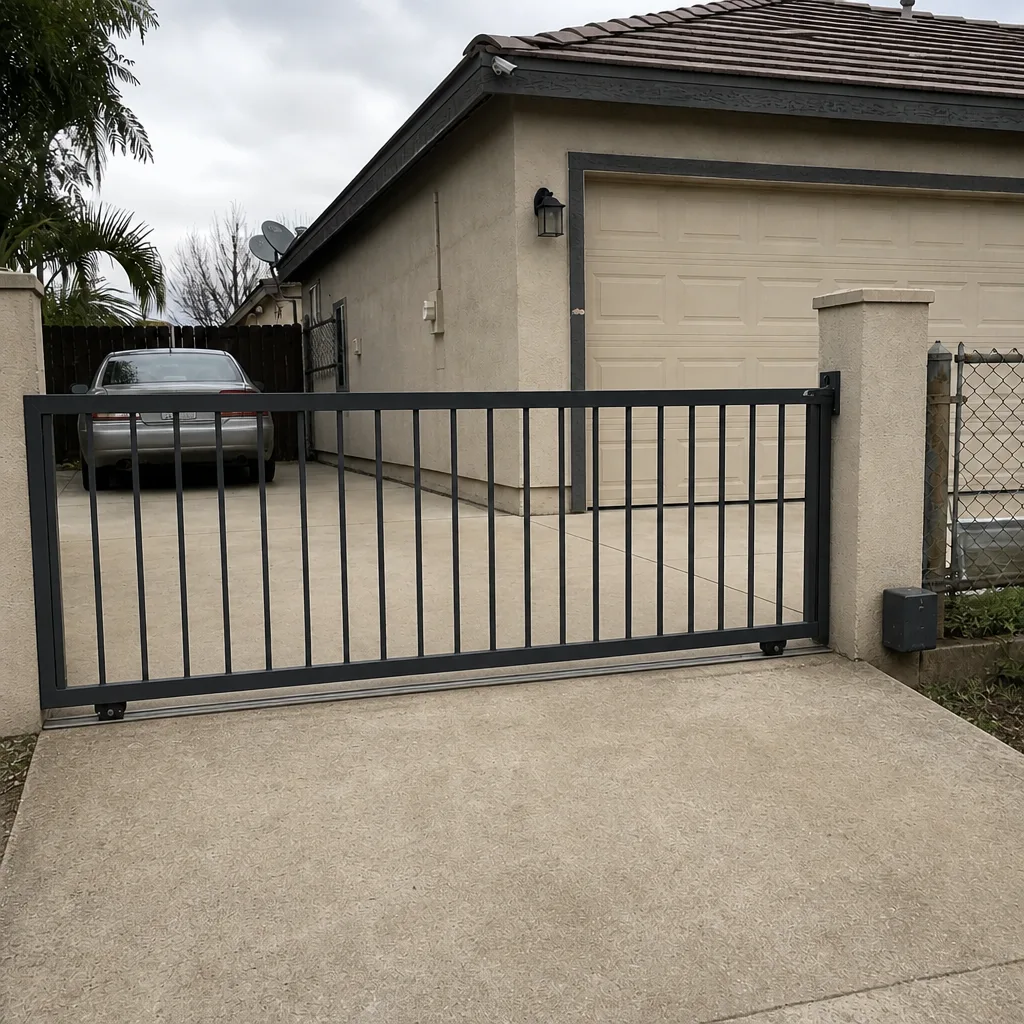
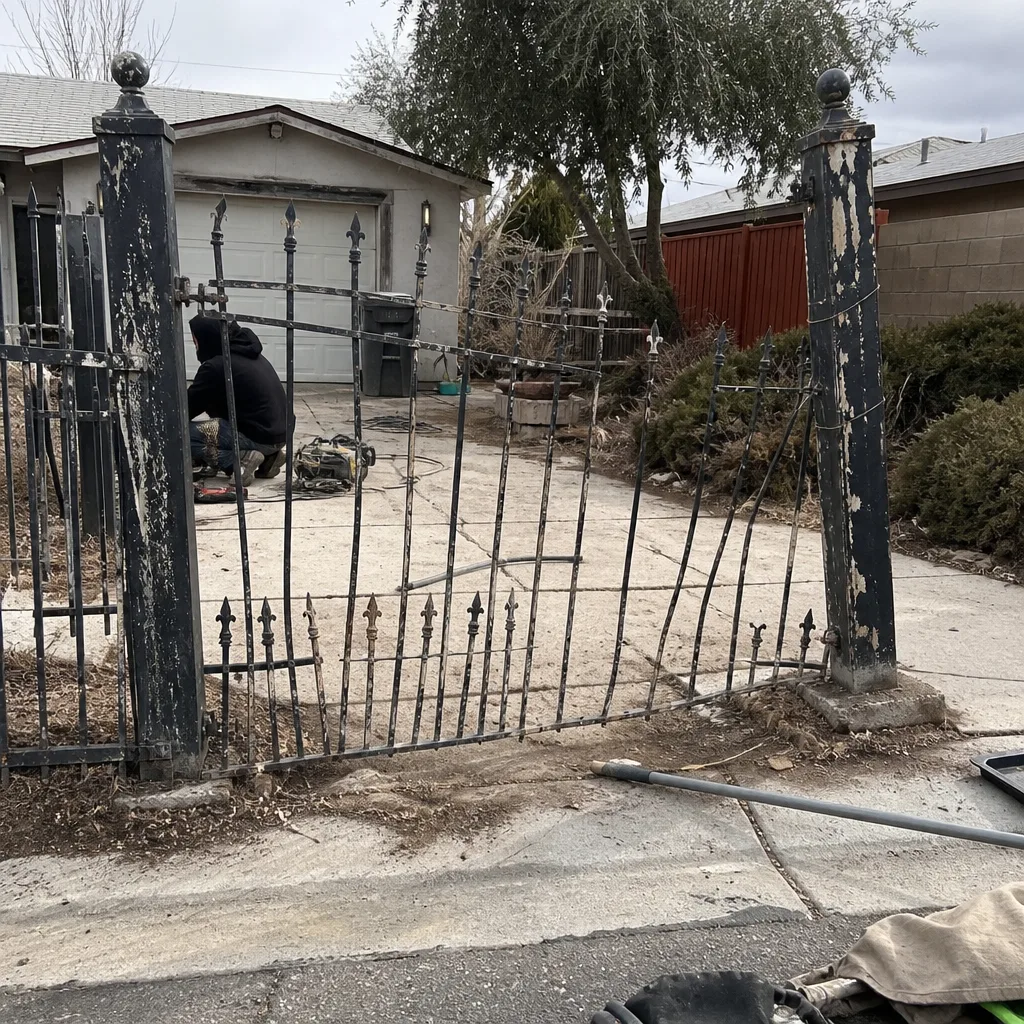 Before
 After
 Before
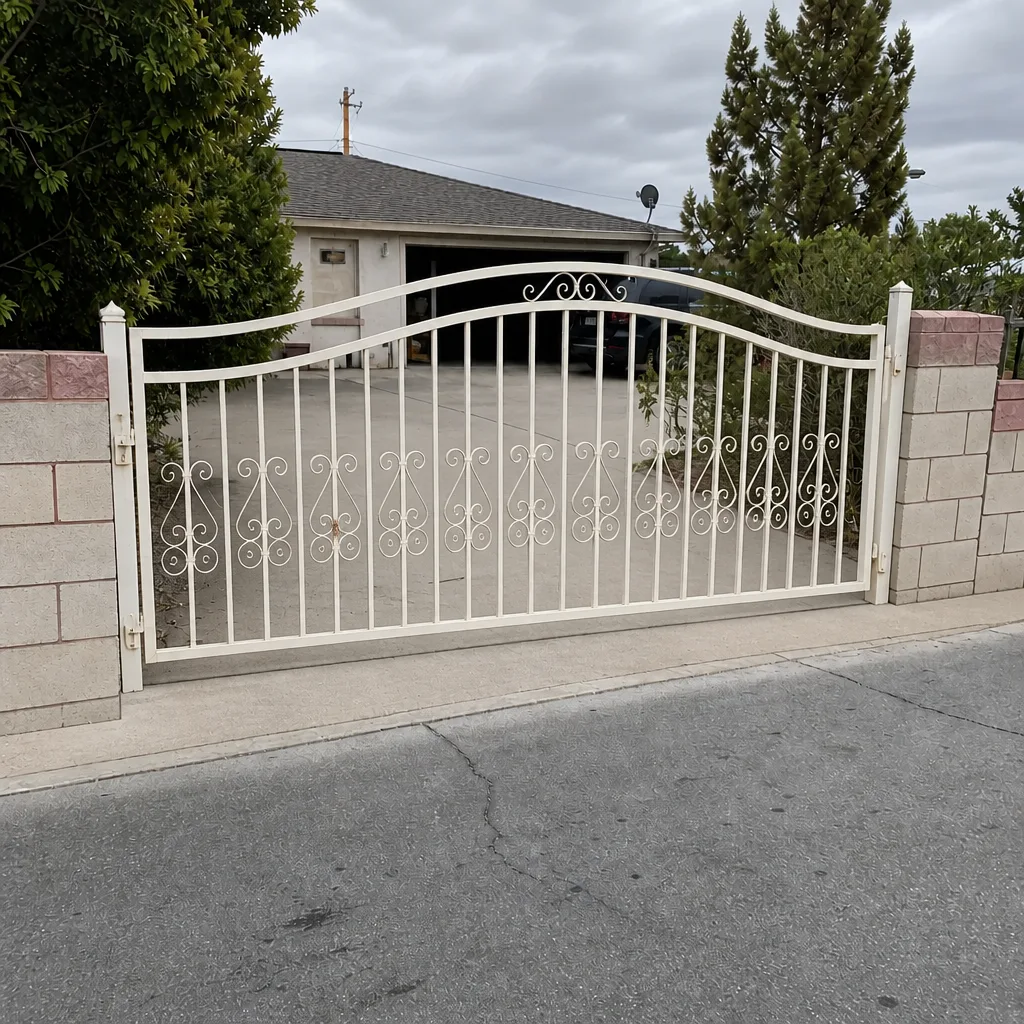 After
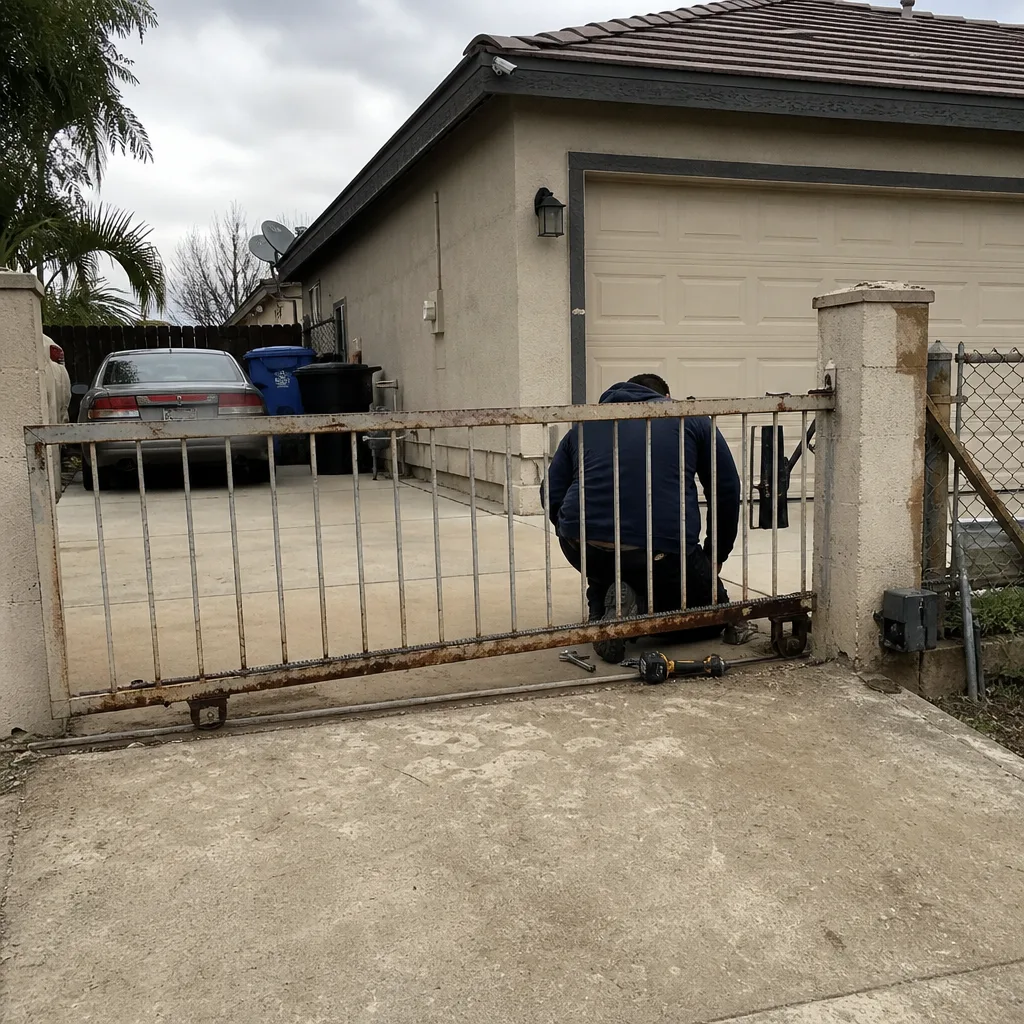 Before
 After
Frequently Asked Questions
Run the five-minute walkaround once a month, do a full lubrication and hardware pass in October once the heat breaks, and add a hinge and post check ahead of the July monsoon. One professional annual inspection fills in everything you can’t safely check yourself, including the opener battery backup. That schedule keeps a gate in good shape through the desert year.
White lithium grease for hinge pins and latches, silicone spray for track glides, and a dry PTFE lubricant where grit is a constant problem. Avoid thin household oil, sticky heavy grease on exposed parts, and WD-40 as your long-term lubricant. The right product stays put without trapping sand.
You can handle the monthly visual check, cleaning, lubrication, and the battery test. Anything involving springs, cables, welds, electrical components, or post alignment belongs to a trained professional. That split keeps your maintenance bills low without putting you near the dangerous parts.
Twice a year, in April and November, unplug the opener’s power at the source and confirm the gate opens and closes on battery the way it would on the wall. If it’s sluggish, hesitates, or only makes it partway, the battery needs attention before the next outage.
It’s almost always heat and ground movement. Summer heat dries out the lubricant and works the hinges loose, and the monsoon rains soften the soil enough that a post can shift a fraction of an inch – which makes the gate drag or close out of square. Catching it in the monthly check keeps it a small adjustment.
Yes. Every job we’re connected with carries the 90-Day Done Right Promise in writing. If it’s not done right, one call brings us back – no runaround. Just call (888) 300-3906 and we’ll get it handled.
The Bottom Line
A gate in Spring Valley ages on a desert clock, not a generic spring-and-fall one. Build your year around the two events that matter here – the October cooldown and the July monsoon – and fill the rest with a five-minute monthly check. Use the right lubricants, test the opener’s battery backup twice a year, and let a trained professional handle the springs, welds, electrical work, and post alignment. Do that consistently and you’ll stretch the time between real repairs, skip the surprise failures, and keep a gate that swings clean for years. When you need a hand, you want a name you can verify and a shop you can drive to. If you’re planning an upgrade rather than a repair, start with Gate Installation in Spring Valley.
Call (888) 300-3906 for a free estimate. Upfront pricing, a free second opinion on any written estimate, no trip charge inside the county, and a permanent 10% discount for seniors and veterans. We’ll walk you through the schedule, tell you what actually needs doing, and let you decide.
Written by the team at Gatewood Fence & Gate Spring Valley.