
Last updated November 18, 2026
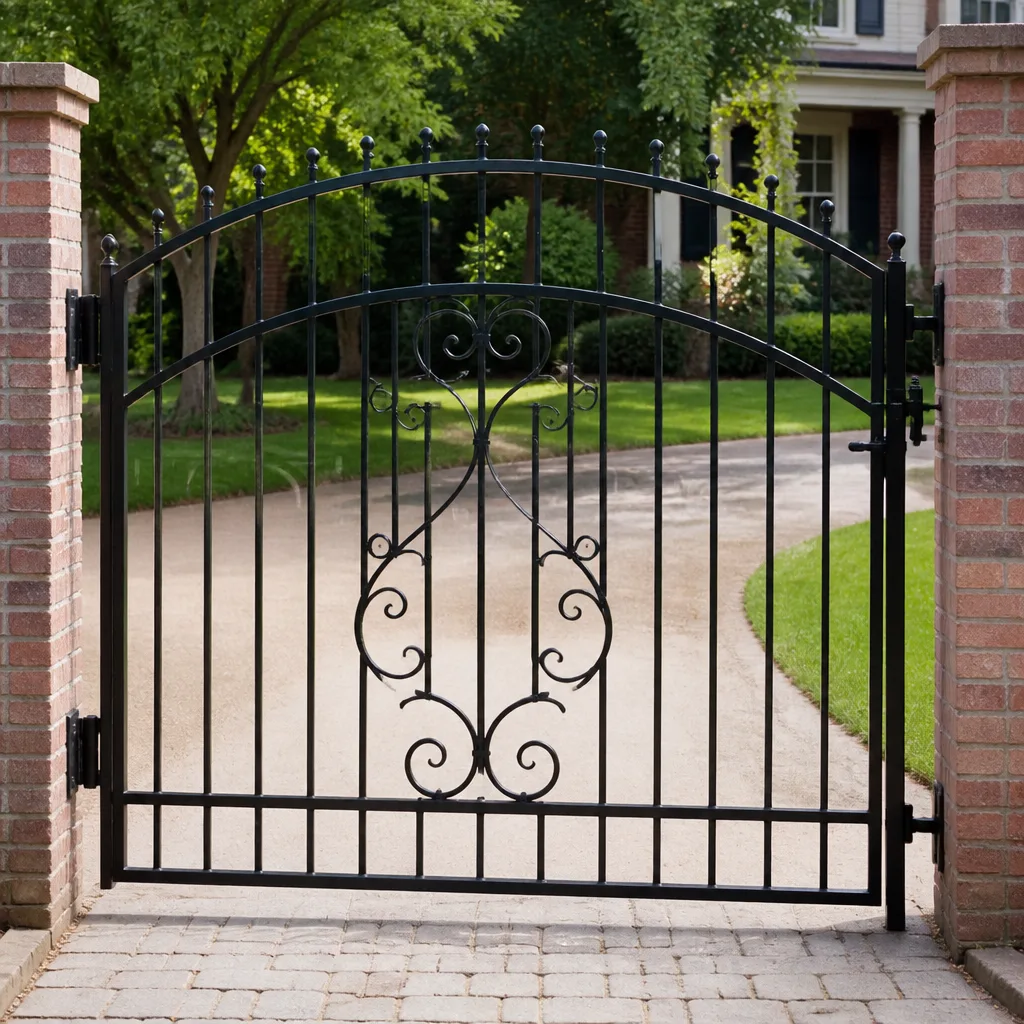 Wrought iron
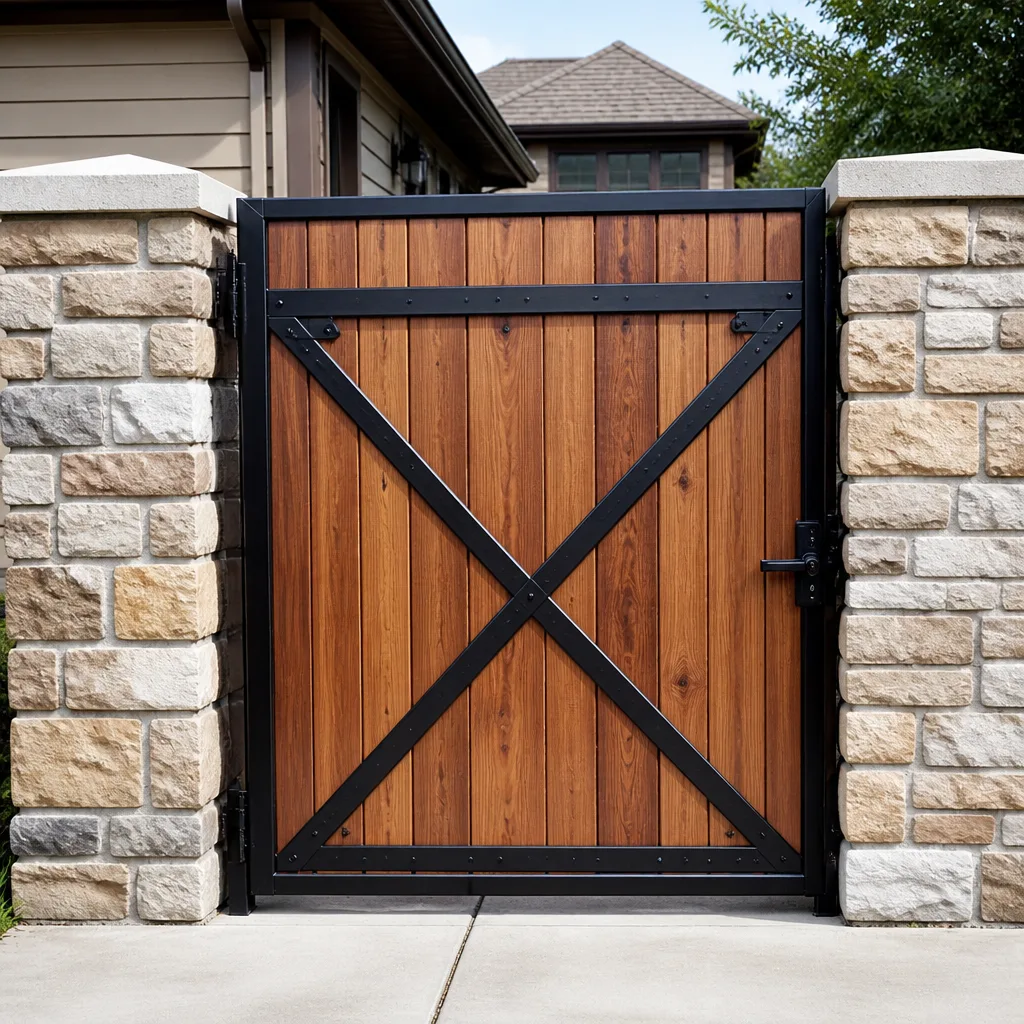 Wood & steel frame
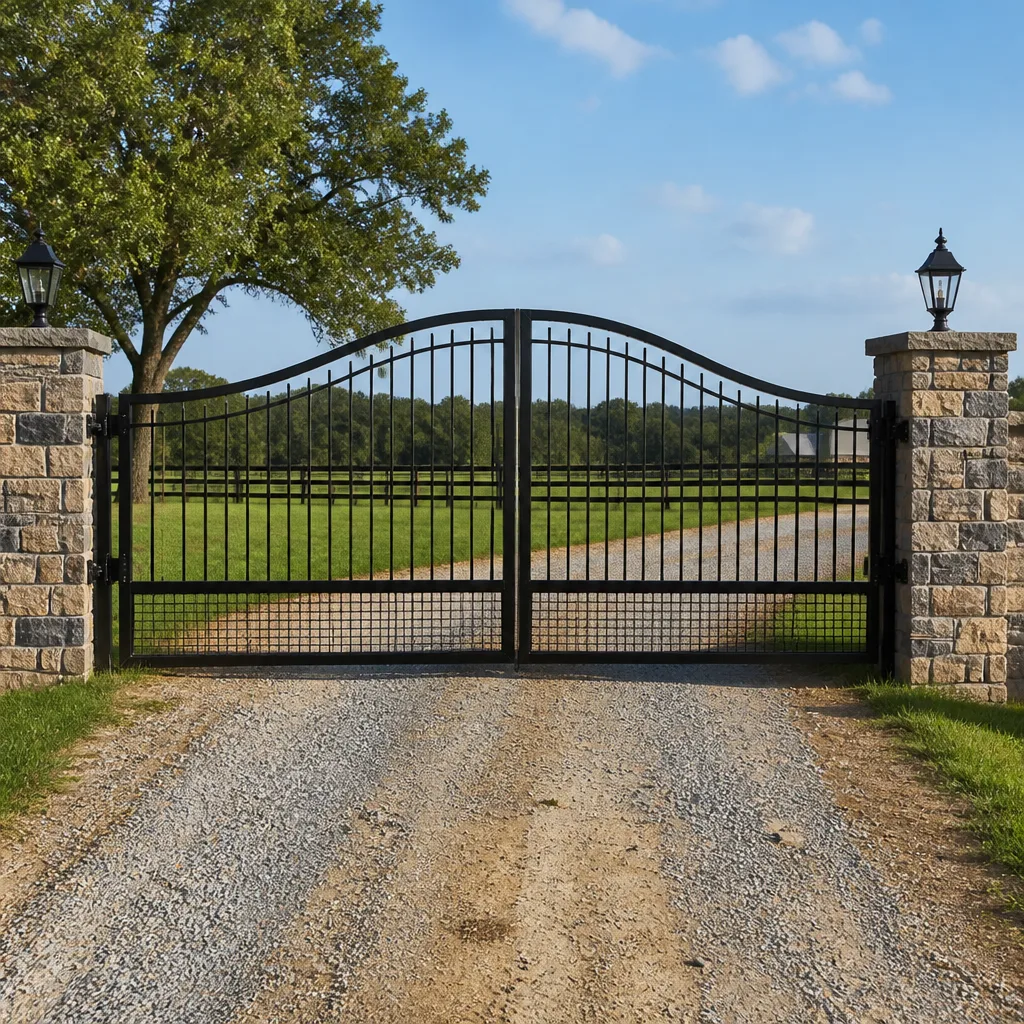 Farm & ranch
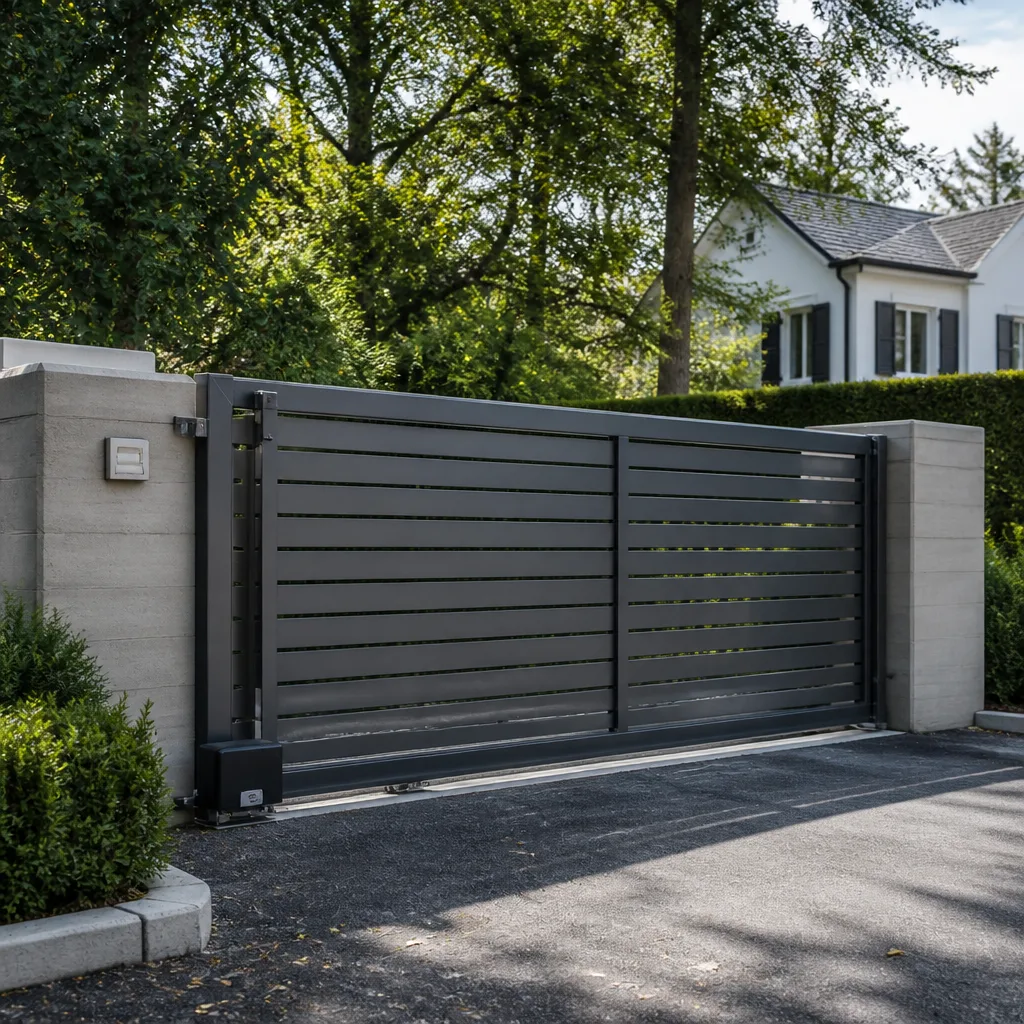 Sliding driveway gates
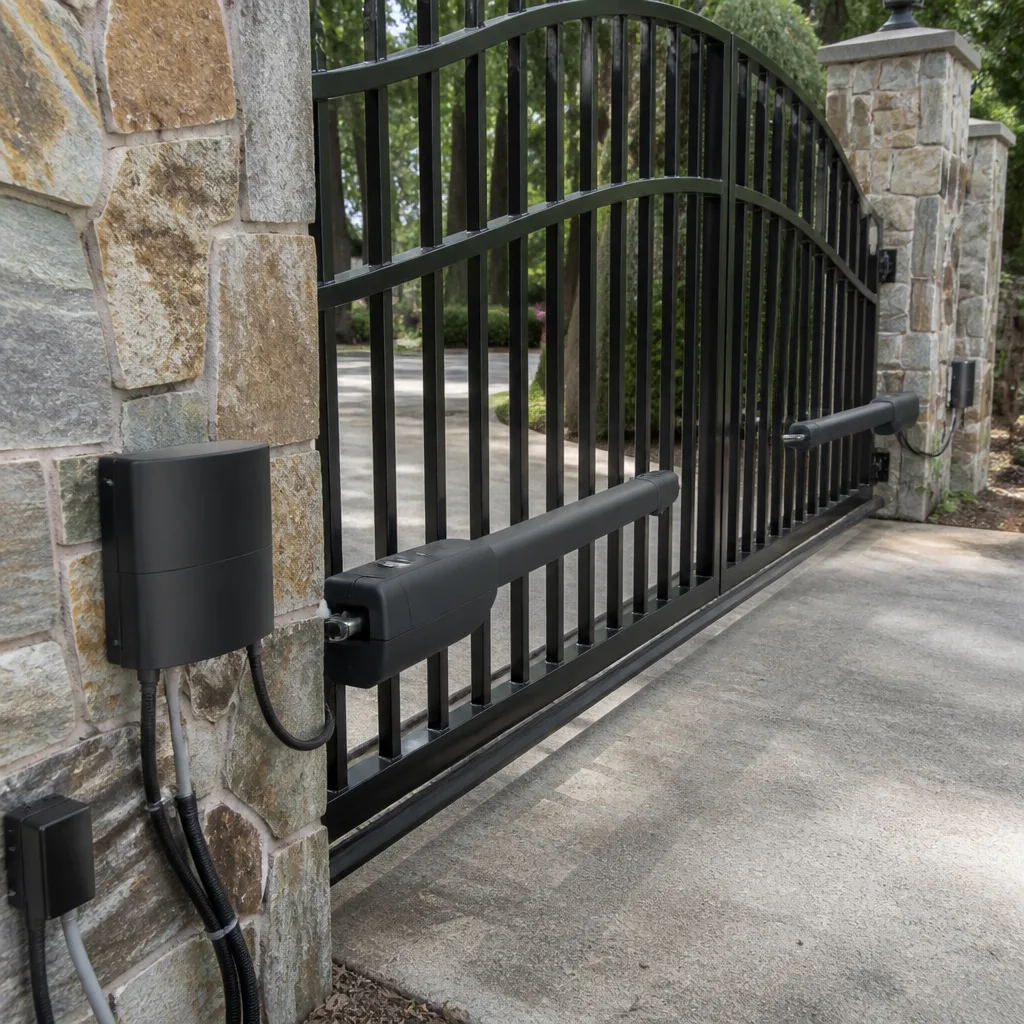 LiftMaster operators
Free on-site gate assessment - hinges, posts, and your LiftMaster or Nice gate operator checked before anything is quoted
The assessment is free and the quote is the invoice.
Get your free estimateDIY vs Professional Gate Parts & Welding: What’s Safe to Do Yourself
A flux-core welder from a home improvement store will put metal on metal, but it won’t penetrate a gate hinge plate the way a MIG setup will. The result looks fine until the gate gets hit by a truck or even just a strong wind gust, and then it doesn’t. We’ve pulled apart joints in Spring Valley that looked solid for two winters before they let go at the worst possible moment. This guide sorts the honest categories: which gate fixes a handy homeowner can handle with a socket set, which ones need a real welder, and how to tell the difference before you buy the wrong machine or ignore a problem that’s worse than it looks.
Quick Answer
Bolt-on parts work – hinges, latches, drop rods, and post straightening are safe for a careful homeowner with basic tools. Anything that requires welding on a load-bearing component is not a DIY job. A proper structural weld on a gate needs correct penetration, the right filler material, and heat control; a bad weld on a hinge or post connection can fail suddenly and cause injury or vehicle damage that lands on you, not the gate.
Styles & brands we work with
- Wrought iron
- Wood & steel frame
- Farm & ranch
- Sliding driveway gates
- LiftMaster operators
Table of Contents
- Hardware vs. Welding: The Distinction That Matters
- What’s Actually Safe to Do Yourself
- Why Structural Welding Isn’t a Hardware Swap
- How to Judge a Weld Without Being a Welder
- The Liability Reality of a DIY Weld
- Spring Valley Heat, Wind, and Gate Wear
- What to Gather Before You Call
- Common Mistakes to Avoid
Hardware vs. Welding: The Distinction That Matters
Most of what fails on a residential gate is hardware, not structure. The hinge bolt wears. The latch striker bends. The drop rod gets bent backing into it with the truck. Those are bolt-on problems, and a homeowner with a wrench, a replacement part, and a Saturday morning can often solve them. The gate stays hung, the alignment holds, and the fix costs twenty dollars instead of two hundred.
Welding is a different animal. When a hinge plate separates from the gate frame, when a post bracket tears off, when a gate arm mount cracks at the weld – those are structural failures. They’re holding weight. They’re holding the gate square against gravity and wind load. We see this constantly in Spring Valley, where gates face summer heat that expands metal and dry winter wind that works every joint. A welded repair there isn’t cosmetic. It’s load-bearing, and it has to be done right.
The confusion comes because both categories look like “fixing the gate.” A homeowner sees a loose hinge and thinks welding because the hinge is metal. But a loose hinge bolt is a wrench job. The weld only enters the picture when the metal itself has failed, not the fastener holding it.
What’s Actually Safe to Do Yourself
Here’s the honest list of jobs a reasonably handy homeowner can take on without a welder, without risk, and without voiding anything:
- Hinge bolt replacement. Worn hinge pins cause most gate sag. Pull the old pin, match the diameter and length, install the new one, and check the swing. If the gate still drags after a fresh pin, the problem is the post, not the hinge.
- Latch and striker swap. Latches are bolt-on. Match the throw distance and the gap, and a new latch solves most “gate won’t stay shut” complaints in under an hour.
- Drop rod repair. Bent drop rods straighten or replace easily. If the rod won’t seat in the ground sleeve, check the sleeve first – a shifted sleeve mimics a bent rod.
- Basic post straightening. A slightly leaning post can sometimes be pulled back with a come-along and re-set with concrete. This one has a limit: if the post is rusted through at the ground line, straightening it just hides the failure.
- Lubrication and adjustment. Greasing hinges, adjusting the opener limit switches, tightening the track bolts. Routine maintenance prevents most of the repairs people call about.
What ties these together is that none of them require the gate to come down or the metal to be cut. They’re reversible. If you get it wrong, you try again. That’s not true of a weld.
Why Structural Welding Isn’t Just “Having a Welder”
Owning a welder and being able to weld a gate safely are two different things. The gap between them is where failures happen. Three factors separate a weld that holds from one that looks fine and isn’t:
- Penetration. The weld has to fuse into the base metal, not just sit on top of it. A flux-core machine running too cold lays a bead that looks like a weld but only bonds at the surface. Under load, it pops off clean.
- Filler material. Gate frames are often galvanized, painted, or a mix of steel types. Using the wrong filler on galvanized steel produces porosity and weak joints – and breathing the zinc fumes is its own health problem.
- Heat management. Too much heat warps the gate out of square or burns through thin-wall tube. Too little and you get no penetration. A gate frame 1/16-inch thick needs a different approach than a 1/4-inch hinge plate.
We use a MIG setup on site for exactly this reason. It gives control over heat and penetration that a $150 flux-core box can’t match. A proper repair on a load-bearing hinge or post bracket in Spring Valley is a fifteen-minute weld when you have the right equipment and a thirty-minute disaster when you don’t. If you want to see what a real on-site repair looks like, our gate repair in Spring Valley page walks through the process.
How to Judge a Weld Without Being a Welder
You don’t need to weld to spot a bad one. Here’s what to look for on a gate you’re inspecting, whether it’s a repair you’re considering or work someone already did:
- Look at the toes. The edges where the weld meets the base metal should slope in smoothly. A weld that sits on top like a bead of caulk, with a visible line where it meets the metal, didn’t penetrate.
- Check for undercut. A groove melted into the base metal alongside the weld means too much heat. That thins the gate frame and creates a new weak point next to the repair.
- Look for porosity. Tiny holes or a spongy texture in the bead mean gas or contamination got in. Those welds fail from the inside.
- Check the alignment. A gate that was square before the weld and binds after it got too much heat. Warping is a sign the repair is now the problem.
- Test the swing. Open and close the gate ten times. A structural repair that holds should feel identical to before, not stiffer or looser.
Grinder marks over a weld are a warning sign. Someone who ground a bead smooth may have been hiding a bad one. A clean weld is usually left visible.
The Liability Reality of a DIY Weld
This is the part nobody talks about. If you weld a gate hinge and it fails six months later, and the gate falls on a delivery driver, a neighbor’s kid, or a parked car, the liability is yours. Homeowner’s insurance may cover the damage, but it may also deny the claim on the grounds of unpermitted or improperly performed work. Either way, you’re the one explaining it.
There’s also the permit question. Spring Valley and the surrounding county have requirements around structural work on fences and gates above a certain height, and a welded structural repair can fall into that category. A licensed gate contractor carries insurance for exactly this reason. When the work is done by a business with a published address and a license number anyone can look up, the accountability doesn’t disappear when the truck leaves.
A weld isn’t a part you can swap back out. Once it’s on the gate, it’s part of the gate. That’s the reason we recommend caution even when the repair looks small – the failure mode of a bad weld is sudden, and it’s usually the gate falling, not the weld cracking quietly.
Spring Valley Heat, Wind, and Gate Wear
Gates in Spring Valley live a harder life than gates in milder climates. Summer temperatures in the valley regularly push past 100 degrees, and that heat cycles metal every day. Expansion and contraction works hinge pins loose faster, opens hairline cracks in welds, and stresses the wood or vinyl panels that fill metal frames. The dry winter wind does the rest – we see gates that swing fine in July and bind in January because the post shifted a quarter inch.
That climate has two practical consequences for the DIY decision. First, hardware wears faster here, so bolt-on maintenance matters more than it does in a mild climate – a hinge pin that would last five years elsewhere needs attention in three. Second, heat cycling punishes marginal welds. A bead that would hold in a stable climate will open a crack here within a season or two. We’ve pulled gates apart in Spring Valley where a previous weld failed not because the job was terrible but because it wasn’t built for the heat load.
If you’re dealing with a gate that’s been through several valley summers, our Gatewood Fence & Gate Spring Valley home page covers the repair-first approach we take across the area.
What to Gather Before You Call a Professional
Most estimate conversations take twenty minutes because the homeowner doesn’t have the basics. If you gather these five things first, the conversation takes five:
- The gate type and material. Ornamental iron, chain link, wood-frame, vinyl-clad – each has a different repair approach. A photo of the full gate helps.
- The failure point. Point to it in a photo. “The hinge plate separated from the frame” beats “the gate is broken.”
- The gate size and brand. If there’s an opener, the brand matters. We service LiftMaster, FAAC, BFT, Linear, Viking, Ghost Controls, DoorKing, Elite, and Mighty Mule, so knowing the brand speeds up parts sourcing.
- The history. When did it fail, what were the conditions, has it been repaired before. If a weld failed, mention that – a repeat failure gets a different approach than a first one.
- The access. Can a truck pull close to the gate? Is there power nearby? On-site welding needs a working area, and knowing that up front means no surprise on the day.
With those five things in hand, you’re ready for a call that ends with a written estimate rather than a follow-up visit.
Common Mistakes to Avoid
- Welding a hardware problem. If the hinge pin is worn, welding the hinge plate doesn’t fix it – it welds a worn part in place. Replace the pin first.
- Buying a flux-core welder for a structural repair. It’ll run a bead, but it won’t penetrate a hinge plate. The result looks fine until it doesn’t. Rent or hire for structural work.
- Straightening a rusted-through post. Pulling a post straight that’s rusted at the ground line hides the failure for a few months and makes it worse. Check the base before you pull.
- Grinding a weld to hide a bad one. A smooth grind over a porous bead doesn’t fix porosity. It hides it until the bead fails.
- Skipping the permit question. Structural gate work above the county height threshold can require a permit. Check before you start, not after.
- Repairing the gate without checking the post. A gate sags in the hinge post, not in the middle, and that’s where a real repair starts. A gate fixed at the frame without a post check will fail again.
- Putting off a cracked weld through summer. In Spring Valley heat, a crack opens fast. A hairline in June is a separated joint by September.
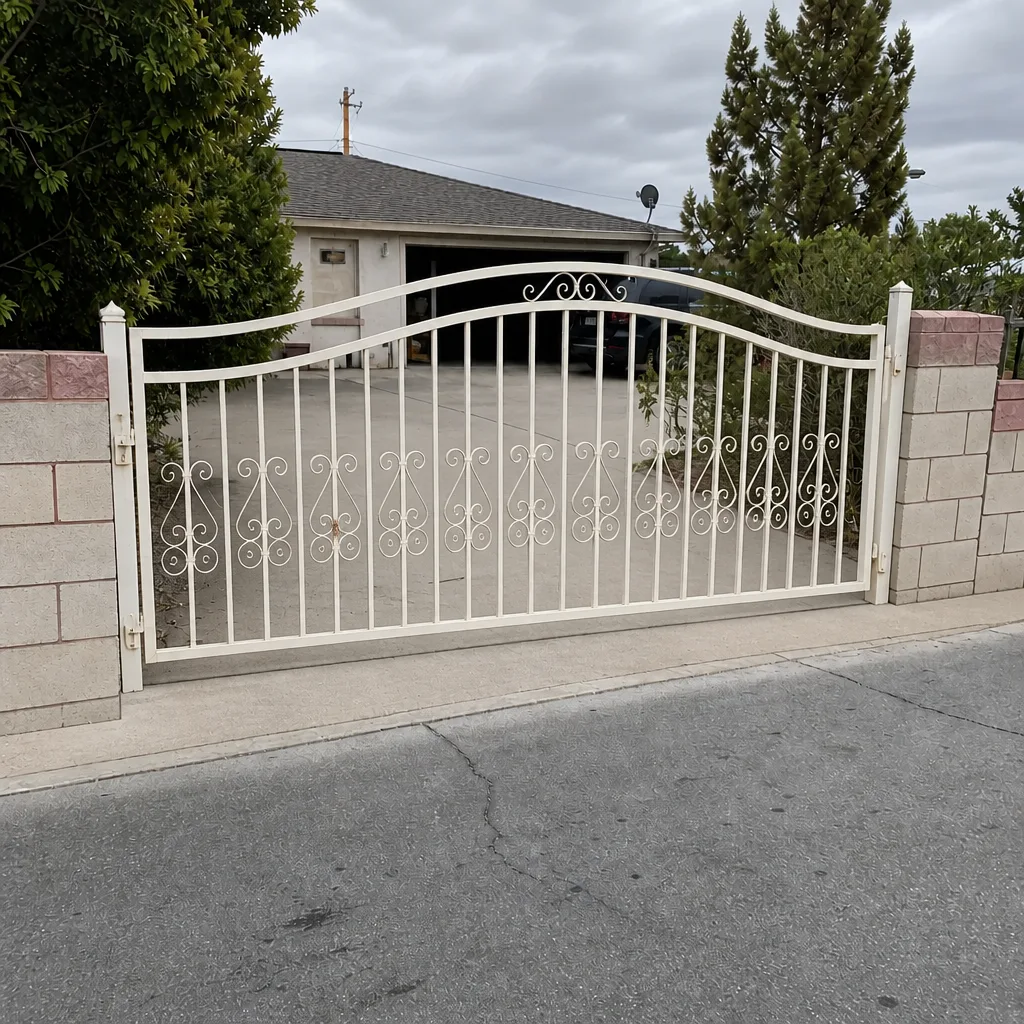
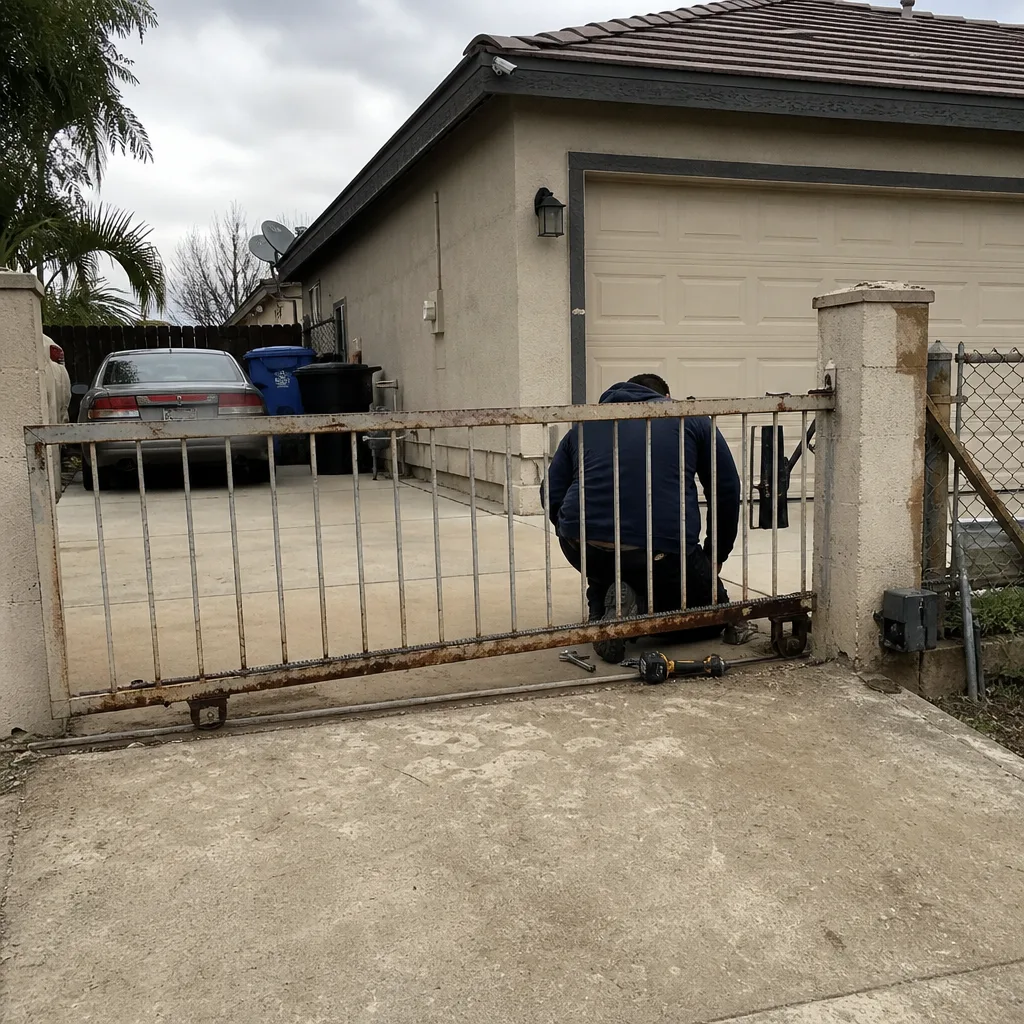
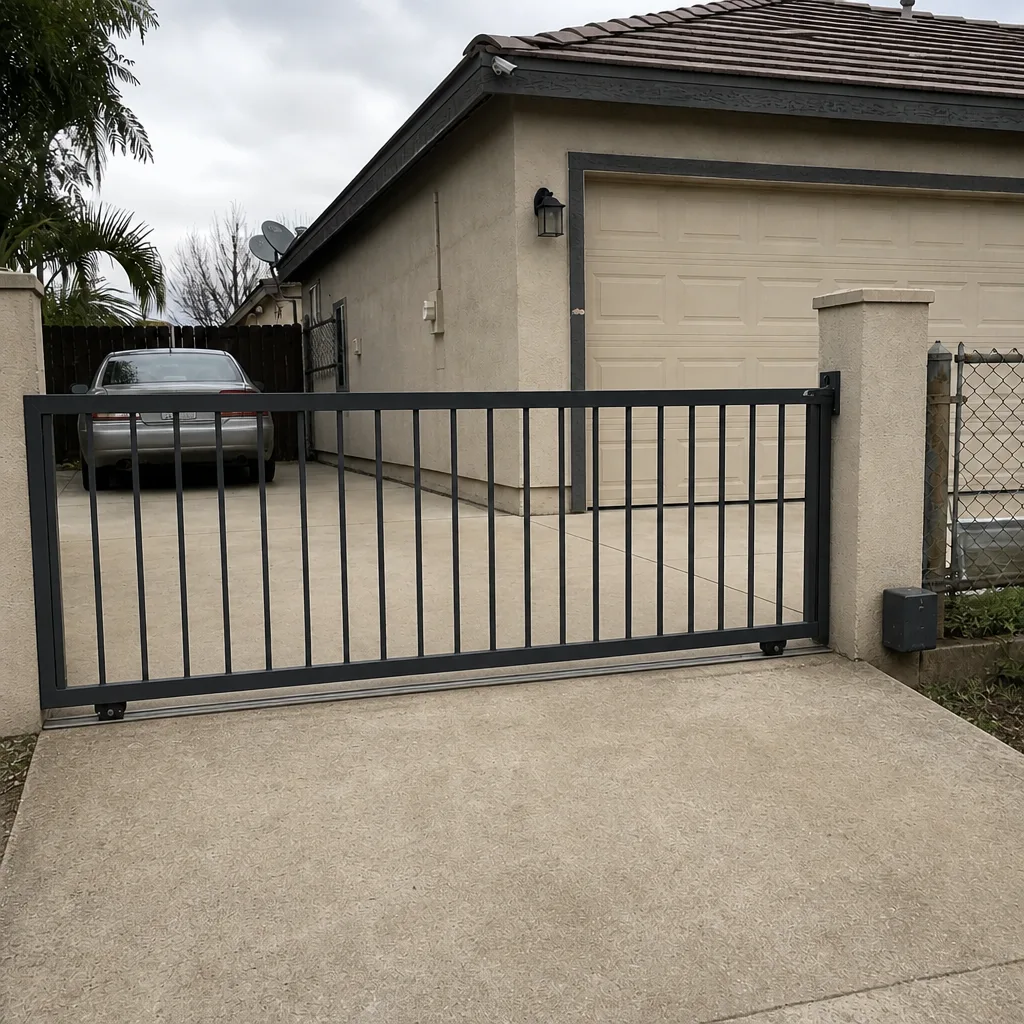
See the difference
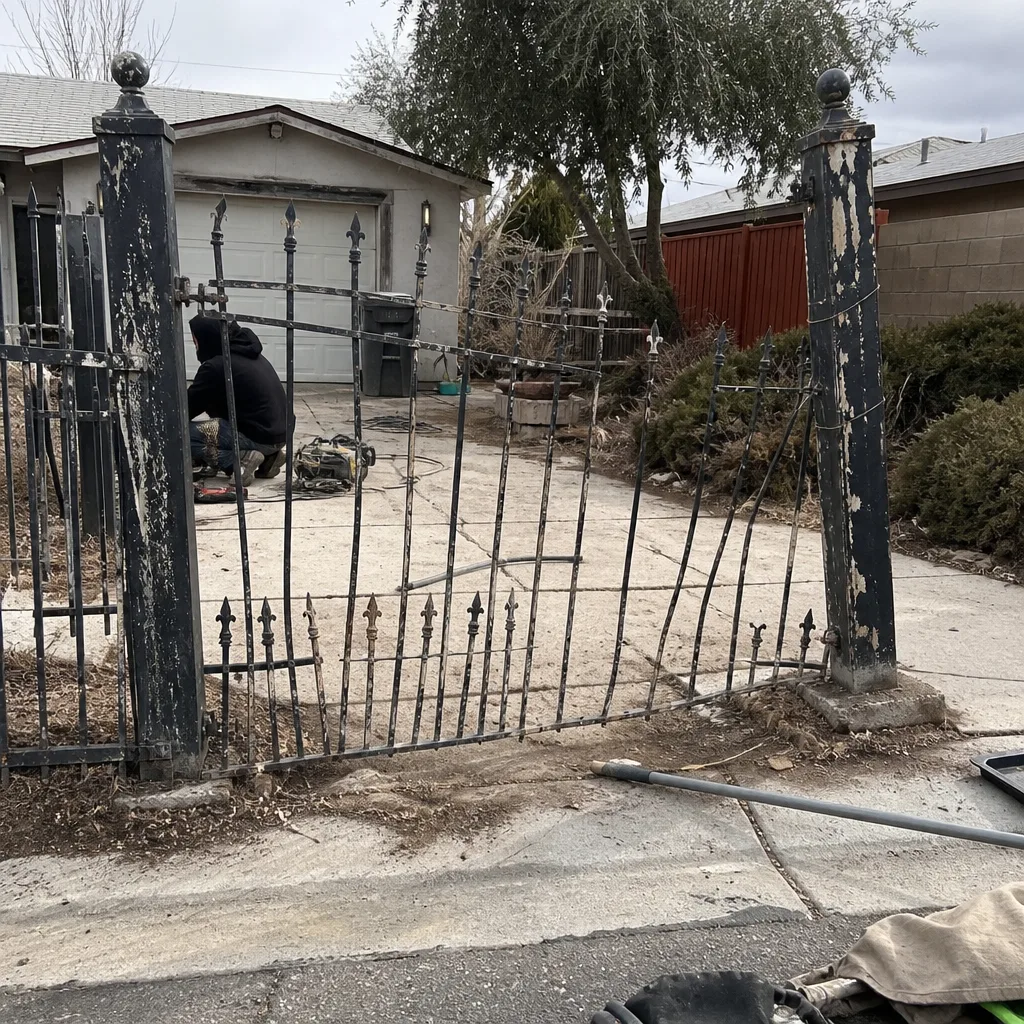 Before
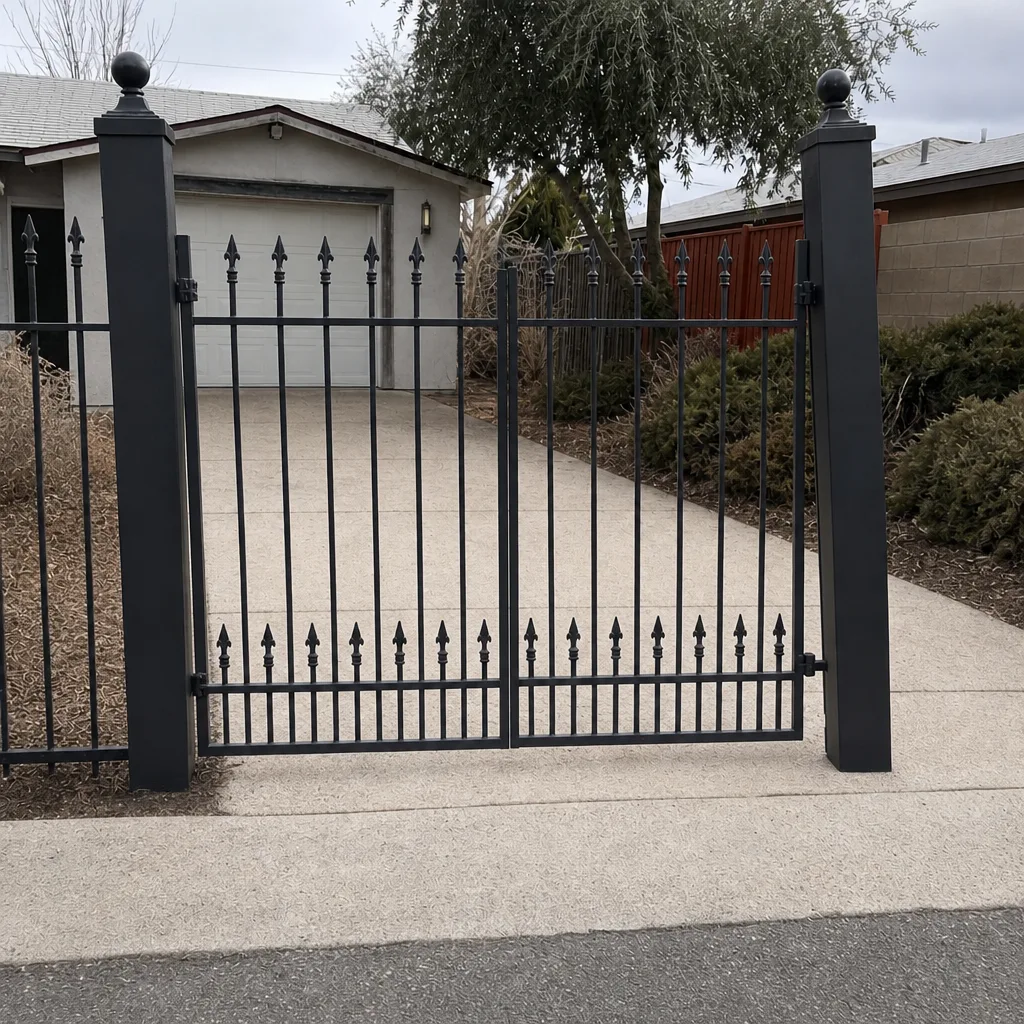 After
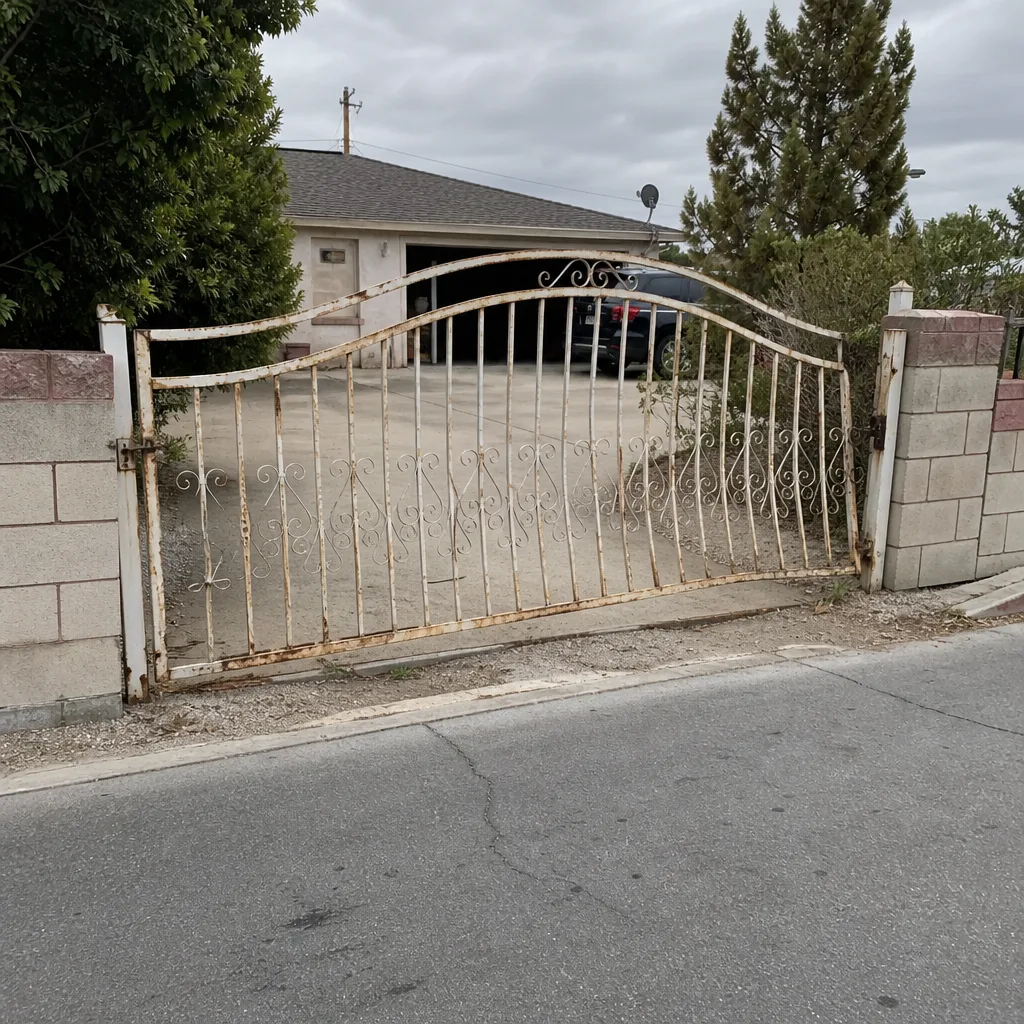 Before
 After
 Before
 After
When to Call a Professional
Call a pro when the failure is structural: a hinge plate separated from the frame, a post bracket torn off, an opener arm mount cracked at the weld, or a gate frame cracked in a load-bearing spot. Call when a post is rusted through at the ground line, when a weld has been repaired once and failed again, or when the gate won’t stay square no matter what you adjust. Call when you don’t know whether the problem is hardware or structure – a free second opinion on a written estimate settles that without costing you anything, and it’s cheaper than a failed DIY repair.
Gatewood Fence & Gate Spring Valley offers free estimates in Spring Valley – call (888) 300-3906. Every repair comes with our 90-Day Done Right Promise in writing, and our technicians have up to 25 years of experience with the nine major gate brands.
Frequently Asked Questions
Yes, replacing a hinge pin or a bolt-on hinge is a safe DIY job. If the hinge plate is welded to the gate frame and that weld has failed, that’s a structural repair and needs a welder. The distinction is whether the fastener is holding the hinge or the weld is holding the hinge.
A hardware repair swaps a bolt-on part – hinge pin, latch, drop rod – without cutting or fusing metal. A weld repair fuses metal on a load-bearing component. Hardware repairs are reversible and DIY-safe; weld repairs are permanent and should be done by a trained welder with the right equipment.
Look at the edges where the weld meets the metal – they should slope in smoothly, not sit on top like caulk. Check for grooves melted into the base metal (undercut) or tiny holes in the bead (porosity). Open and close the gate ten times; a proper weld holds the gate square without making it stiffer or looser.
Yes. If a DIY weld fails and the gate damages a vehicle or injures someone, the liability falls on the homeowner. Insurance may deny the claim if the work was unpermitted or improperly done. A licensed contractor carries insurance for exactly that reason. Call (888) 300-3906 for a free estimate before you weld.
We weld on site. The gate stays in your driveway, which keeps the repair faster and avoids the alignment problems that come from transporting a gate. On-site work is part of how we handle gate motor & opener service in Spring Valley as well, since the opener has to be realigned after any structural repair.
Most structural weld repairs fall in a range that depends on access, the component, and whether the gate needs realignment after welding. The price is quoted and agreed before any work starts, so there’s no surprise at the door. Standing offers include $40 off any repair over $200, no trip charge inside the county, and a permanent 10% discount for seniors and veterans. Call (888) 300-3906 for an exact quote – estimates are free.
The Bottom Line
Hardware problems are yours to fix. Structure problems are not. Hinge pins, latches, drop rods, and a slightly leaning post are safe homeowner jobs that cost little and cause no risk. Welding a load-bearing hinge, post bracket, or gate frame is a structural repair that needs penetration, the right filler, and heat control – and a bad weld fails suddenly, with the liability on you. If you’re in Spring Valley and not sure which category your gate falls into, that’s the moment to call. A free second opinion on a written estimate settles it faster than a welder purchase ever will. New gate on the way? Our gate installation in Spring Valley page covers what a proper install looks like from the post up.
Gatewood Fence & Gate Spring Valley – locally owned and owner-operated, with calls answered by a live person 24/7. Call (888) 300-3906 for a free estimate.
Written by the team at Gatewood Fence & Gate Spring Valley.