
Last updated November 18, 2026
 Wrought iron
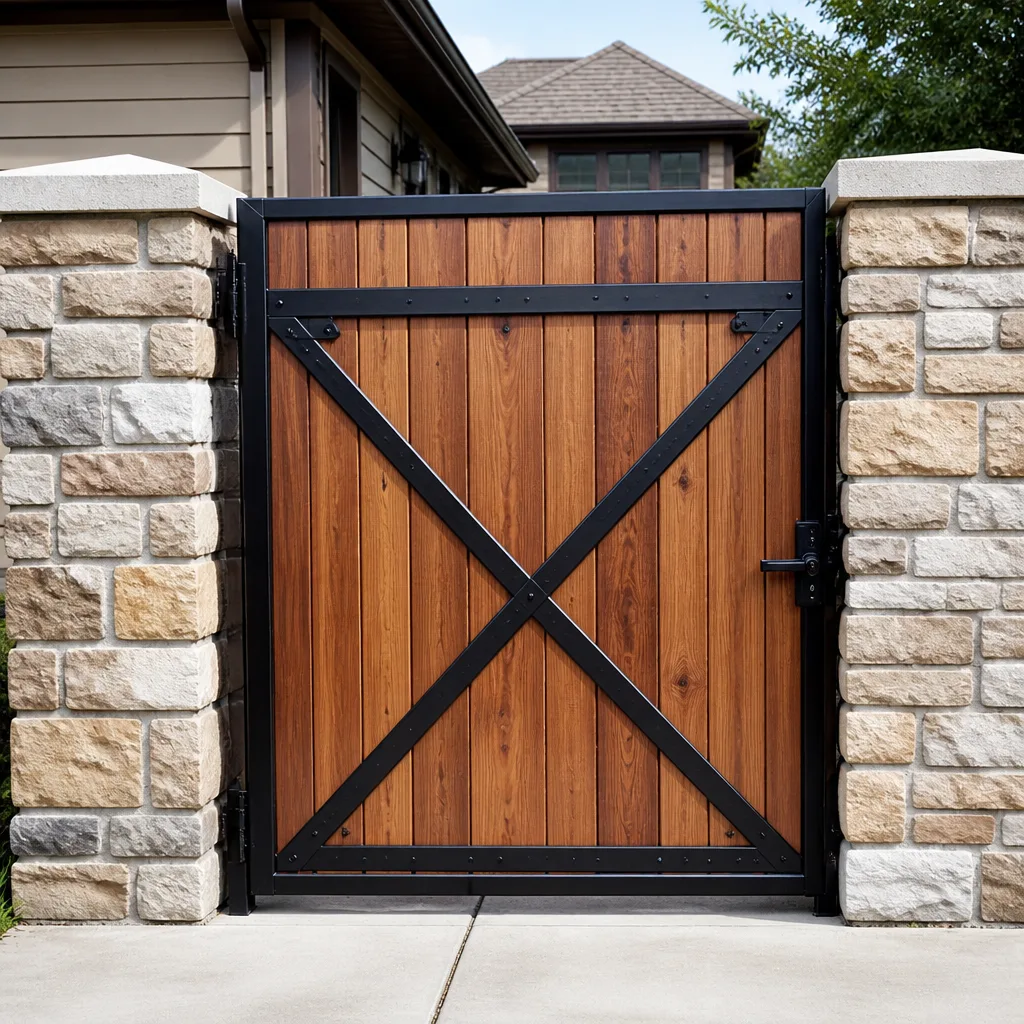 Wood & steel frame
 Farm & ranch
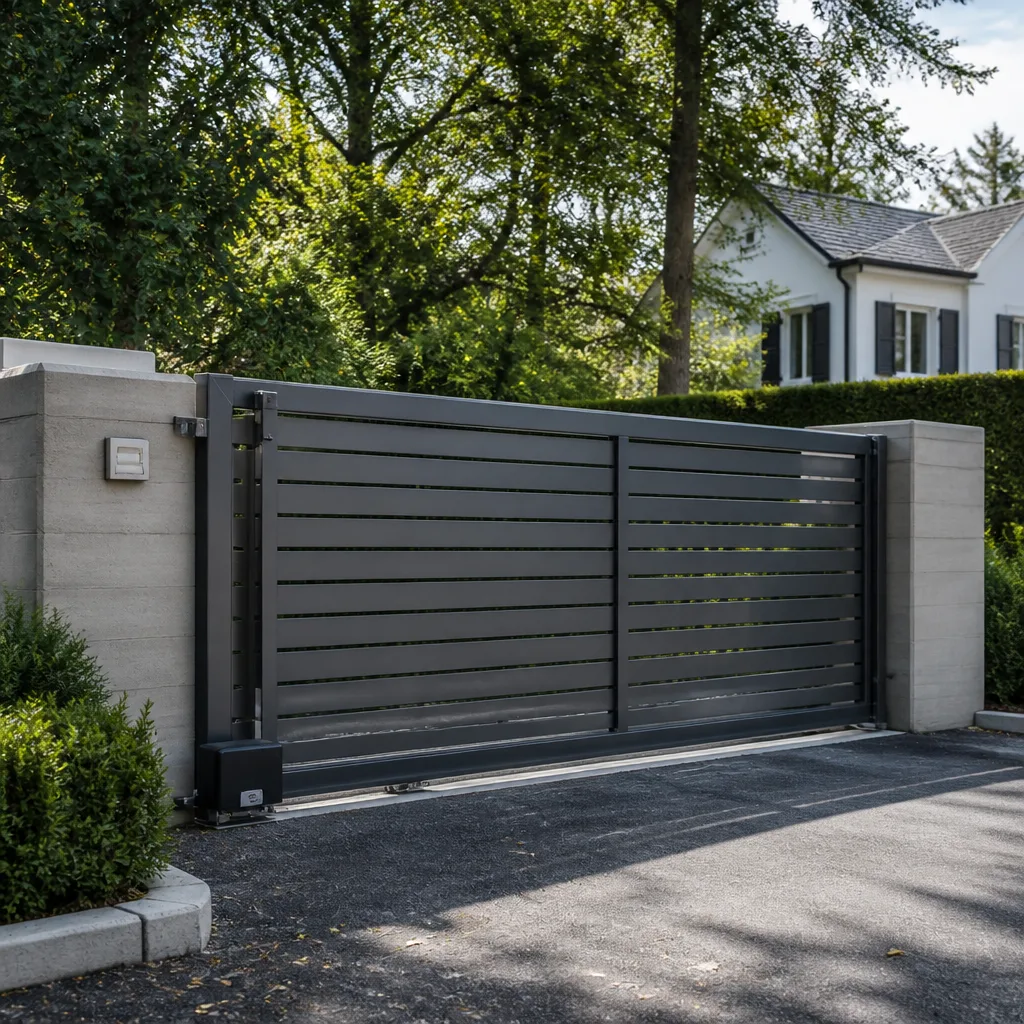 Sliding driveway gates
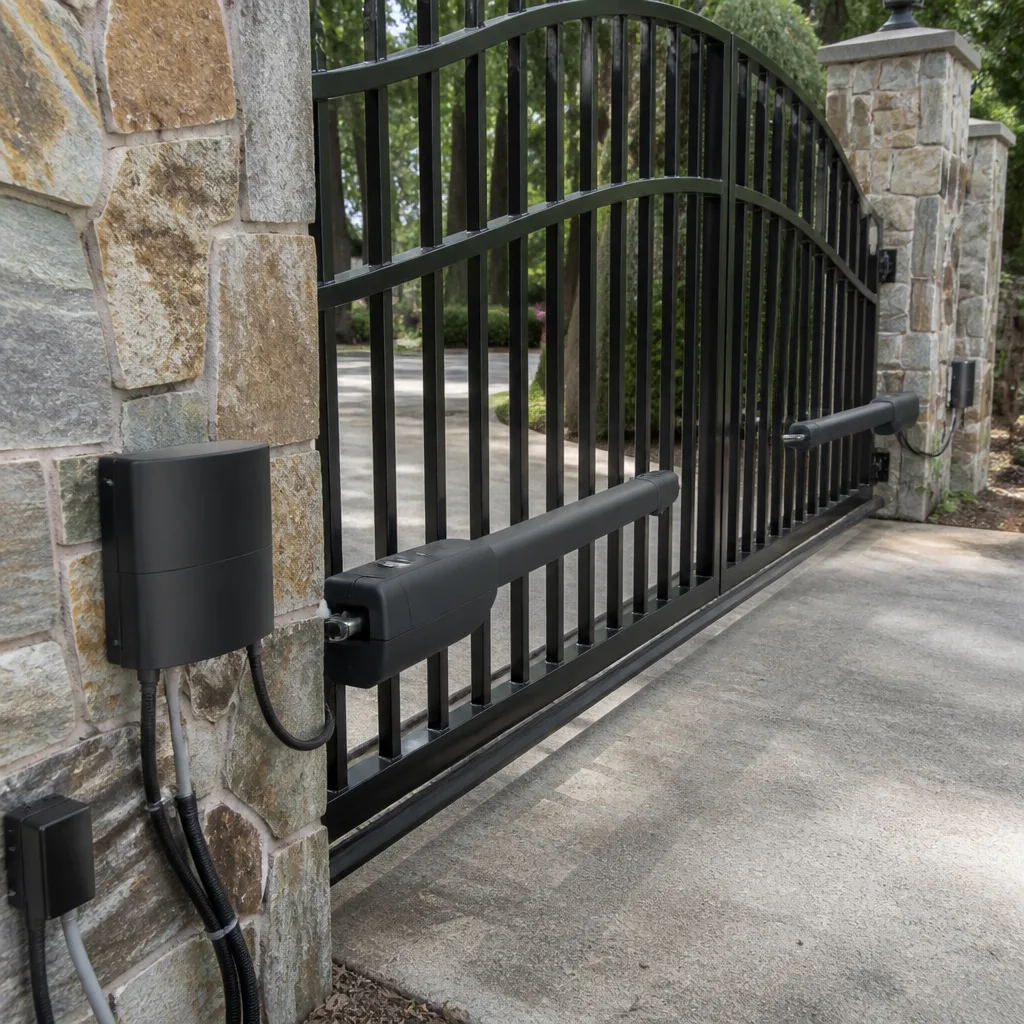 LiftMaster operators
Free on-site gate assessment - hinges, posts, and your LiftMaster or Nice gate operator checked before anything is quoted
The assessment is free and the quote is the invoice.
Get your free estimateDIY vs Professional Gate Access Control: What’s Safe to Do Yourself
Swapping a dead keypad battery yourself is fine. Rewiring a loop detector because a YouTube video made it look easy is how people end up with a gate that opens for every car on the street, including ones that shouldn’t be there. We’ve been fixing gates around Spring Valley since 2001, and the calls that start with “I watched a video and thought I’d try it” almost always cost more than the original repair would have. Most homeowners assume the line between safe DIY and call-a-pro comes down to skill. It doesn’t. It comes down to where low-voltage electronics meet moving mechanical parts, and what happens to your warranty and your liability when you cross that line. This guide draws that line clearly so you’re not guessing.
Quick Answer
You can safely handle keypad code changes, battery swaps, remote pairing, and cleaning photo-eye sensors on your own gate access control. Anything involving 120V power, loop detector wiring, control board replacement, or safety device modification needs a licensed professional, both because of Nevada low-voltage rules and because a gate that “seems to work” after a DIY fix can fail silently until someone gets hurt. When in doubt on a Spring Valley gate, a free second opinion on any written estimate costs you nothing and saves you plenty.
Styles & brands we work with
- Wrought iron
- Wood & steel frame
- Farm & ranch
- Sliding driveway gates
- LiftMaster operators
Table of Contents
- Where the DIY Line Actually Sits
- Genuinely Low-Risk Tasks You Can Do Yourself
- What Carries Real Electrical or Liability Risk
- How Nevada’s Low-Voltage Rules Affect You
- The Loop Detector Mistake We See Most
- Why “It Seemed to Fix It” Is the Most Dangerous Outcome
- The Honest Cost of a Failed DIY Attempt
- What Your Warranty Says About DIY
- Common Mistakes to Avoid
- When to Call a Professional
Where the DIY Line Actually Sits
Picture a gate access system as three layers stacked on top of each other. The top layer is what you touch every day: keypads, remotes, card readers, phone apps. The middle layer is the control board and wiring that translates what you touch into a command. The bottom layer is the moving hardware: the operator arm, the hinge, the closing mechanism, the safety edges. The line between homeowner-safe and call-somebody runs between the top and middle layers. Once you’re in the control board or the wiring, you’re working on the part that decides which cars get in and which don’t.
Here in Spring Valley, we see both extremes. Some folks won’t touch anything, even a dead battery, and they pay for a service call they didn’t need. Others crack open the control box because the manual is online and they’re handy. The handy ones are the ones we worry about, because the failure modes on access control are quiet. A gate that lunges partway open and stops will get your attention. A gate that opens for the right transponder plus the wrong one every tenth cycle won’t, until the day it matters.
The other thing to understand is that a Spring Valley access control system is usually tied to a warranty. LiftMaster, DoorKing, and Elite all warranty their equipment against defect, not against homeowner modification. Open that control box and touch a terminal you weren’t trained to touch, and you can void the coverage on a board that costs several hundred dollars to replace. That’s the part nobody explains before they start.
Genuinely Low-Risk Tasks You Can Do Yourself
Some tasks are truly safe, and doing them yourself is a good use of a Saturday morning. These are the ones we walk Spring Valley homeowners through over the phone all the time.
- Changing the keypad code. Every major keypad, DoorKing or otherwise, has a code-change sequence in the manual. If you’ve lost the manual, the sequence is usually printable from the manufacturer’s site. Nothing inside the gate operator needs to come apart for this.
- Swapping keypad batteries. Most standalone keypads run on AA or 9-volt batteries. Dead keypad, working gate elsewhere? That’s the battery.
- Pairing or re-pairing a remote. Press the learn button, hold the remote, done. On LiftMaster and Mighty Mule operators this is often a homeowner-level task, and the manual spells it out.
- Cleaning photo-eye sensors. Dust, spider webs, and desert grit kill more photo-eyes in Spring Valley than electrical faults do. A soft cloth and a quick wipe clears most intermittent “gate won’t close” complaints.
- Clearing debris from the gate track or rack. Gravel kicked up by the wind, leaves packed into the operator, a branch in the slide track. Clearing the physical path is safe and solves a surprising number of issues.
- Resetting a tripped breaker that serves only the gate. If your gate is on its own dedicated circuit and the breaker trips, resetting it once is fine. If it trips again, stop and call. That’s a symptom, not a fix.
If your task is on that list, save yourself the trip charge and go for it. If it’s not, keep reading, because the next section is where things get real.
What Carries Real Electrical or Liability Risk
This is the part of any honest gate repair conversation that every Spring Valley homeowner should hear once. The tasks below are the ones we won’t walk a homeowner through, no matter how careful they sound on the phone.
- Anything touching 120V line voltage. The operator pulls from a dedicated circuit, and the transformer inside the housing is live even after the gate stops moving. We don’t need to explain what happens after that. If you’re opening the operator housing to get at line voltage, close it and call.
- Loop detector wiring. Vehicle loops are cut into the driveway, wired back to the detector card, and tuned for the driveway’s specific inductance. Get the tuning wrong and your gate reads cars that aren’t there, or reads nothing when a car is. Neither is safe.
- Control board replacement or modification. Even swapping a board for the identical part number carries risk if the DIP switch configuration doesn’t match the original. That configuration is how the board knows the gate’s travel, reversing behavior, and safety delays.
- Safety edge and photo-eye wiring. Safety devices are the gate’s last line of defense against closing on a person, a pet, or a car. If the device is wired in but the board isn’t configured to listen to it, the gate thinks the device isn’t there. That’s the exact failure that turns an inconvenience into a lawsuit.
- Adding or replacing a card reader or intercom tied to the control board. The wiring itself looks simple. The integration isn’t: readers depend on specific power, grounding, and relay configuration that vary by brand.
One more: garage-style radio receivers on older Spring Valley gates. If you’re swapping a receiver because the old one died, the antenna and wiring can be live. We’ve seen folks take a shock they didn’t expect because the operator housing wasn’t fully de-energized.
How Nevada’s Low-Voltage Rules Affect You
Nevada draws a clear line around who can legally install and modify low-voltage wiring in a residential setting, and access control wiring falls inside that line more often than homeowners expect. The practical upshot: work that connects to line voltage, or that touches the wiring infrastructure serving safety devices, generally needs to be done by a licensed contractor. Keypad swaps and remote pairing don’t trip this wire. Loops, readers, control boards, and safety edge wiring usually do.
Why should you care if you’re handy and confident? Two reasons.
First, insurance. If a gate access control system is modified without proper licensing and something happens later, an insurer can push back on a claim. That may look theoretical until it isn’t, and it’s the kind of thing that only surfaces at the worst possible moment. Second, resale. A home inspection in Spring Valley can flag unpermitted low-voltage work, and the buyer’s agent will ask about it. A receipt from a licensed contractor ends the conversation. An unmarked modification starts one.
This is one of the reasons we service nine major gate brands, including DoorKing, LiftMaster, and Elite. We know what the correct, code-compliant installation looks like on each, and we can show you what’s been changed on yours.
The Loop Detector Mistake We See Most
Here’s the one that dominates our call volume. A homeowner has a gate that opens too eagerly or not at all. They find a video online, watch someone adjust the sensitivity pot on the loop detector, and turn it up. The gate now opens reliably. They call it fixed. What they’ve actually done is lower the detection threshold below the level that distinguishes a car from a bicycle, a trash can, or a pedestrian walking past the driveway.
The loop detector on your gate isn’t a motion sensor. It’s an inductive loop cut into the pavement, and the detector card reads changes in its magnetic field. Sensitive enough to catch a car is a narrow window. Turn it up to “catch every car,” and you’ve turned it up to catch everything else too. We’ve driven up to Spring Valley homes where the gate now opens for the neighbor’s dog at 2 in the morning, and the homeowner never noticed because it doesn’t happen every cycle.
The right answer, nine times out of ten, is not a sensitivity adjustment at all. It’s that the loop itself has developed a fault, or the splice to the detector has corroded, or the loop wire was damaged by a shovel or a wayward sprinkler head. Turning up the sensitivity masks the fault instead of fixing it, and it usually causes a second problem before it solves the first. That’s why we don’t coach this one over the phone. We test the loop, we check the splice, and we replace the piece that failed.
Why “It Seemed to Fix It” Is the Most Dangerous Outcome
In most home repair, an intermittent fix is annoying. In access control, it’s a security problem waiting to happen. The failure that gets homeowners hurt isn’t the gate that stays broken. It’s the gate that works most of the time. Most of the time is exactly enough to build trust, which means nobody notices the tenth cycle where it doesn’t.
We’ve seen this play out three ways in Spring Valley:
- A safety edge that reads fine on a bench test but doesn’t trip under load. The gate closes on a person or a car because the wiring was reconnected but the board wasn’t reconfigured to listen.
- A loop detector tuned too loose. The gate opens for someone walking down the driveway. That’s a courtesy problem until it isn’t.
- A control board swap with the DIP switches set from the wrong manual. The reversing behavior is different from the original, and the mismatch only shows when the gate meets resistance it wasn’t expecting.
If your DIY attempt “seemed to fix it,” treat that as a red flag, not a win. Have the system tested end to end by somebody who can measure the actual gate force, trip the safety devices under real load, and confirm what the board is doing. That’s not a lecture. It’s what your Spring Valley neighbors’ gate systems deserve before anyone trusts them.
The Honest Cost of a Failed DIY Attempt
We get asked a version of this constantly on gate motor and opener service in Spring Valley calls: “How much does it cost to fix what I already tried?” Here’s the honest version, without pricing games.
A straightforward access control repair, when we walk into a system that hasn’t been touched, typically runs the cost of the failed part plus an hour or so of labor. A control board replacement runs higher. A loop detector replacement runs higher still because of the driveway cutting and re-seal. Add these on top when a homeowner has already been inside the system:
- Voided warranty on the operator or control board. Often hundreds of dollars, sometimes the entire board’s cost.
- Secondary damage from an incorrect wiring diagram. A mis-wired card reader or safety device can take out a relay or a power supply on the way in.
- Baseline testing time. When we walk in on a system that’s been modified, we don’t get to trust anything. We verify every terminal, every device, every DIP switch before we call it done.
- Rework on the original failed part. The original problem didn’t go away. It’s still there, under whatever was added on top.
What we can’t quote is how much a Spring Valley homeowner will spend fixing the consequent problem after a safety device fails. That’s the number that doesn’t fit on an invoice. If you’re holding a DIY estimate you’re about to act on, take us up on the free second opinion on any written estimate. It costs nothing and it’s saved folks more than one weekend.
What Your Warranty Says About DIY
Every major gate brand we service, LiftMaster, DoorKing, Elite, Mighty Mule, and the rest, has a warranty that covers manufacturing defects. None of them cover homeowner modification. That distinction matters more than most people realize.
If your LiftMaster operator fails from a faulty board at year two, that’s a warranty claim. If it fails after you swapped in a board you bought online and configured yourself, we’re not submitting that claim, and neither are you. Similarly, Elite operators and DoorKing access systems have specific installation parameters that are part of the warranty condition. When those aren’t met, the manufacturer has a clean way to decline the claim, and they use it.
What that means practically for Spring Valley homeowners is this: if your gate is under warranty, keep it under warranty by keeping DIY inside the safe list. Keypad codes, battery swaps, remote pairing, and cleaning photo-eyes will never threaten coverage. Control boards, loops, readers, and safety edges will. That’s the whole line in one sentence, and it’s why we keep the free second opinion offer standing, because a five-minute conversation before you open the box beats a week of arguing with a manufacturer afterward.
Common Mistakes to Avoid
- Adjusting loop sensitivity before confirming the loop is healthy. In Spring Valley, wind-blown gravel damages loops more often than electrical faults do. Turning up sensitivity on a damaged loop masks the injury instead of healing it.
- Replacing a control board “just to see if that’s the problem.” Boards are the most expensive diagnostic answer. A trained technician finds the fault first, then replaces the part.
- Disconnecting a safety edge because the gate kept reversing. Every one of these calls ends the same way. The gate was reversing because something was actually in the way, and the safety device was doing its job.
- Buying the same brand keypad without checking the receiver compatibility. DoorKing and LiftMaster keypads are not interchangeable across every operator year, and the wrong pairing wastes a weekend.
- Using a lawn edger, string trimmer, or shovel near the driveway loop. One pass over the wrong spot cuts the loop wire. If your gate started acting up after yard work, this is the first thing to check.
- Not documenting the fix. If you do the safe repair yourself, write down the date, part number, and what you did. Future you, and future service techs, will thank you, and it keeps the warranty conversation clean.
- Ignoring a slow-closing gate that “still works.” In Spring Valley’s summer heat, a failing operator shows up as a gate that closes a little slower, then a little slower. Catching it early is the difference between an on-site repair in Spring Valley and a full operator replacement.
When to Call a Professional
Call on the gate when any of these is true: the operator housing needs to come open, the driveway loop is suspect, the safety edge or photo-eye is acting up, a control board is in play, or the system is under warranty and something inside it has failed. Call regardless of what a video said. Call before you buy a part you might not need. Spring Valley homeowners deserve a real diagnosis, not a guessing game with their gate.
Gatewood Fence & Gate Spring Valley offers free estimates in Spring Valley and a free second opinion on any written estimate, which means you can call us after a DIY attempt and just get an honest read before deciding what to do. Our technicians have up to 25 years of experience, we’re certified on nine major brands including DoorKing, LiftMaster, and Elite, and every job goes out with the 90-Day Done Right Promise in writing. When your gate needs more than a code reset, call (888) 300-3906.
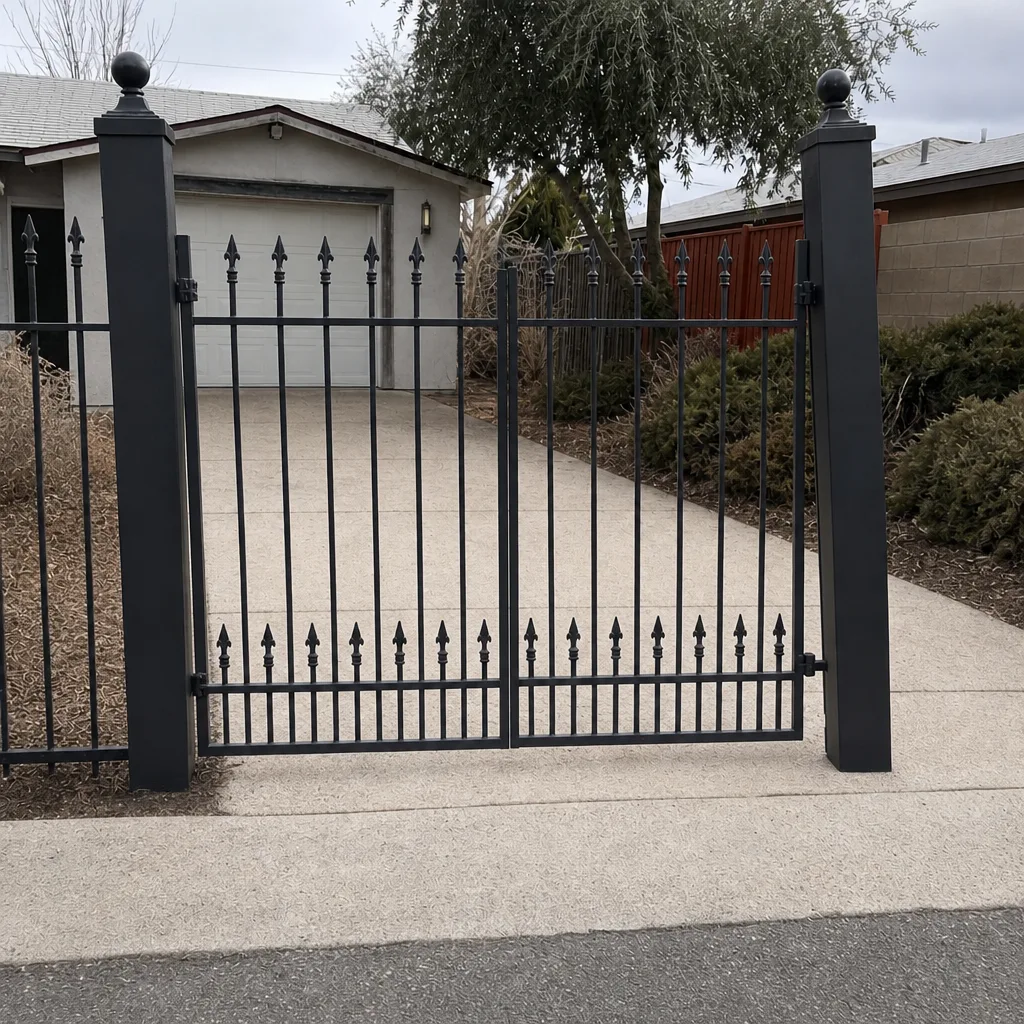
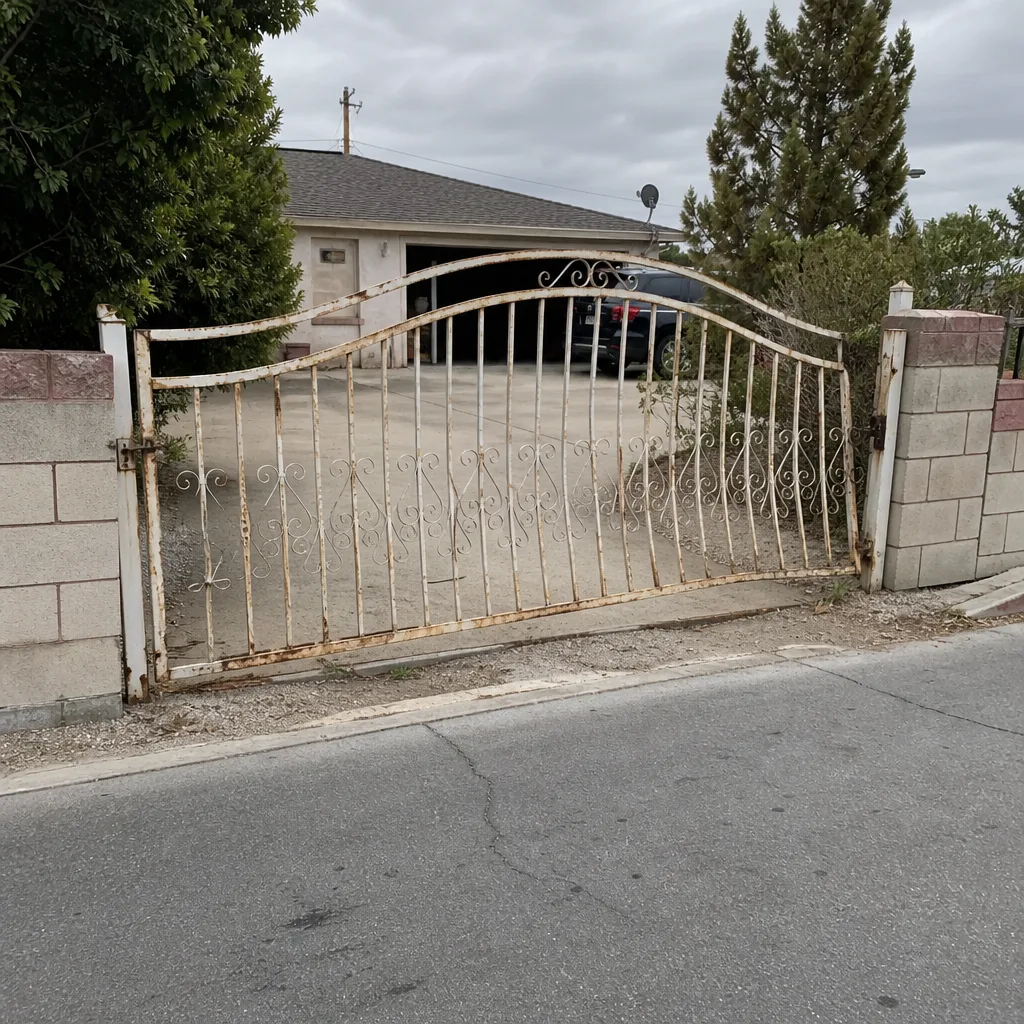
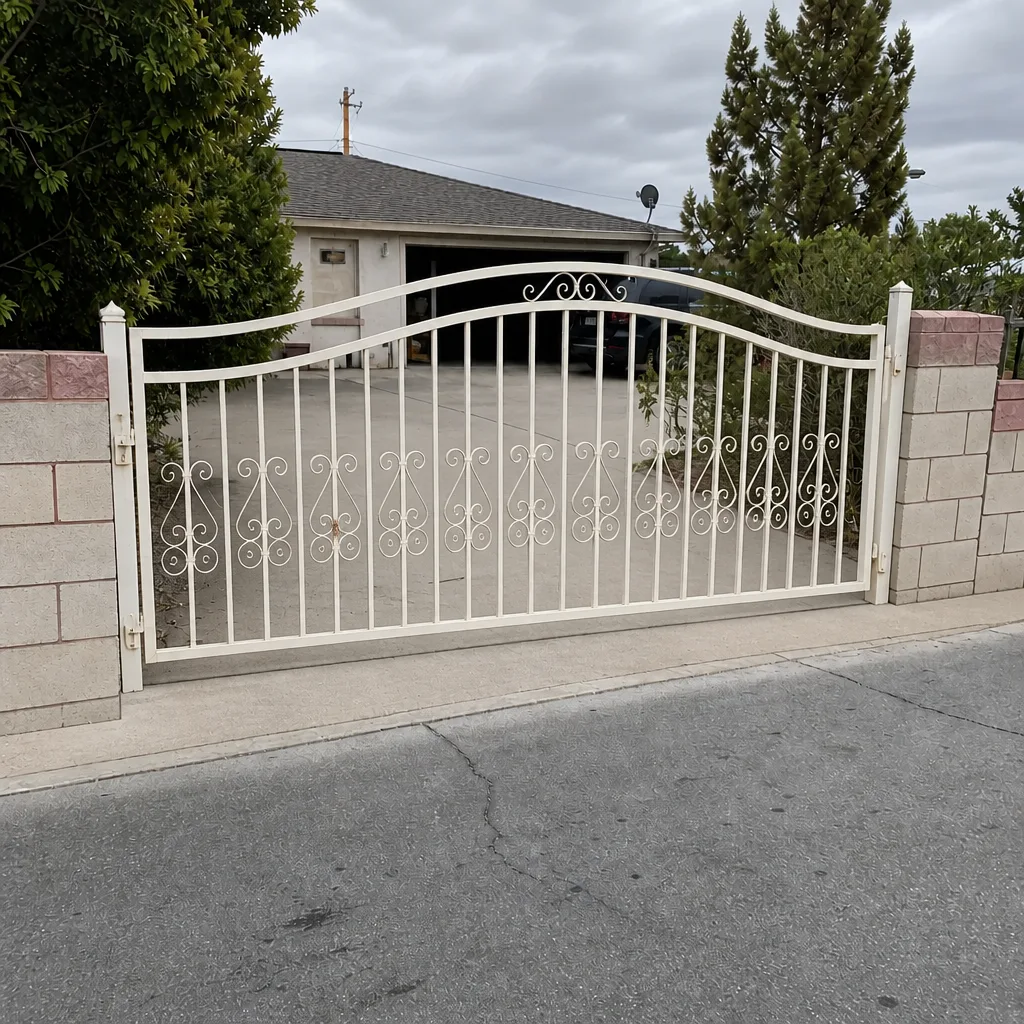
See the difference
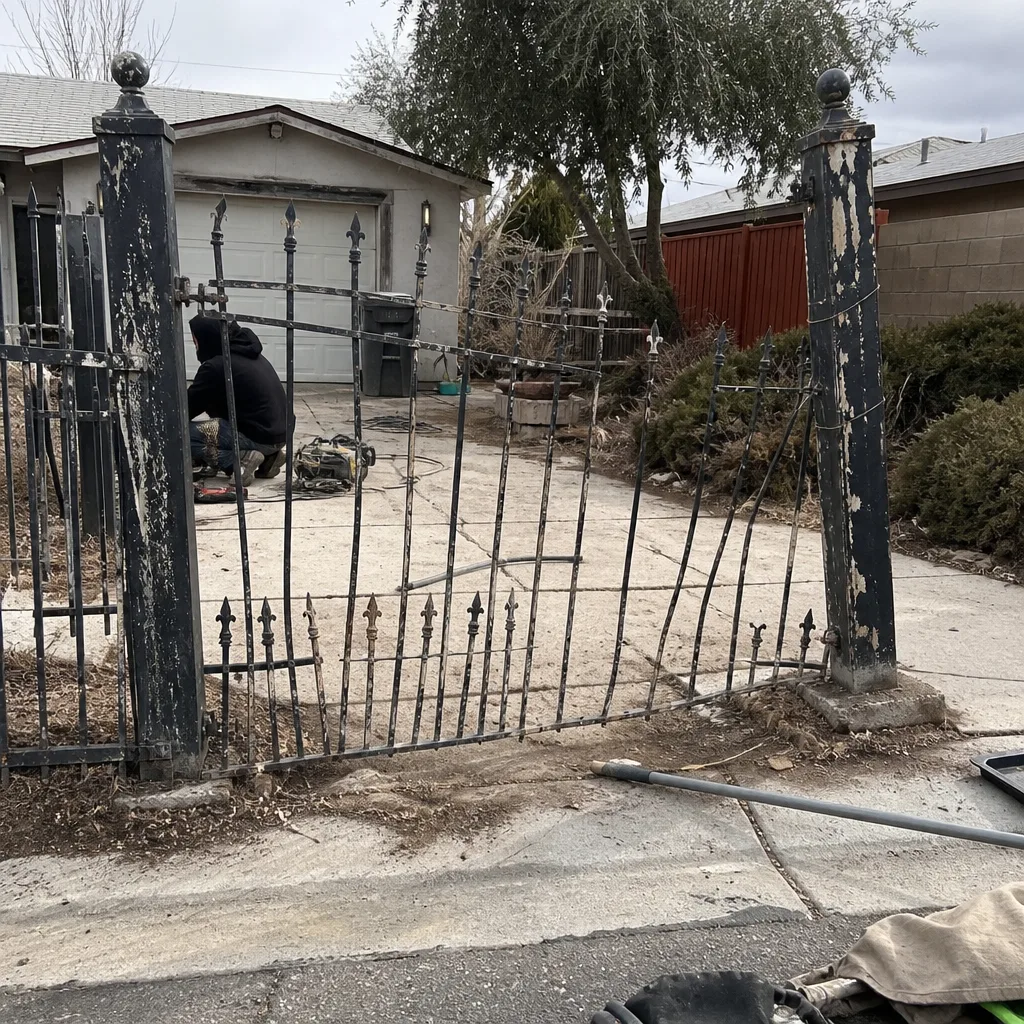 Before
 After
 Before
 After
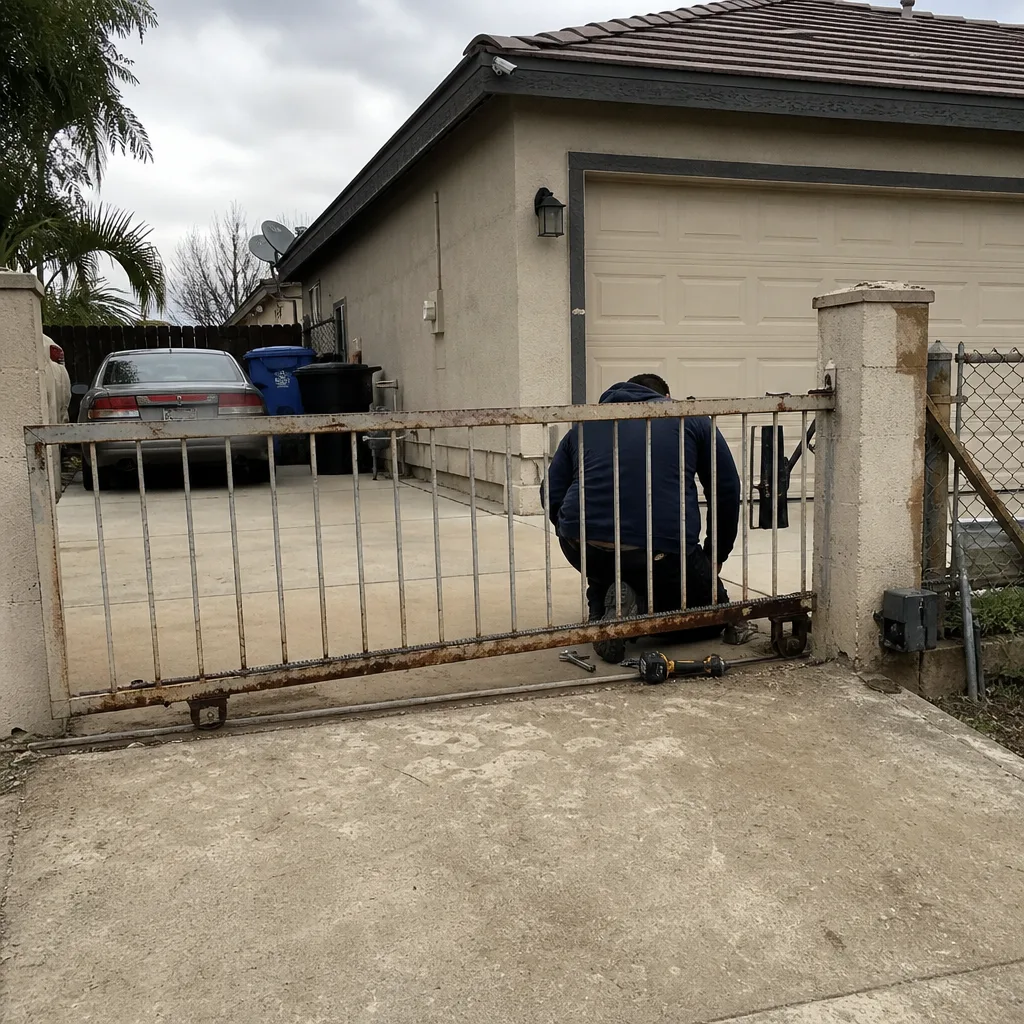 Before
 After
Frequently Asked Questions
Yes. Changing a keypad code is a homeowner-safe task on every major brand we service, including DoorKing and LiftMaster. The sequence is in the manual or on the manufacturer’s website, and nothing inside the operator housing needs to come apart. If you’ve lost the manual, call us and we’ll point you to the right document for your keypad model.
In most cases, no. Nevada low-voltage rules generally require licensed work once you’re modifying wiring that connects to the gate operator’s control board or that serves safety devices, and loop detectors fall into that category. Beyond legality, a miswired loop is one of the leading causes of gates that open for the wrong vehicles, so it’s a task that costs you money to get wrong either way. Call (888) 300-3906 for a free estimate on a proper repair.
Most repairs land in the cost of the failed part plus an hour or so of labor, with loop detector replacements running higher because of the driveway work. A free second opinion on any written estimate is standing policy with us, so you’ll know that number before anyone starts work. Call (888) 300-3906 for an exact quote.
It depends on what you touch. Battery swaps, code changes, remote pairing, and photo-eye cleaning won’t threaten your warranty on any brand we handle. Any modification inside the operator housing or to the control board will, including on LiftMaster, Elite, and DoorKing equipment that’s still under manufacturer coverage.
Yes. Intermittent access control failures are the ones that cause real problems later, because they hide behind normal operation until the tenth or hundredth cycle. A professional test walks every safety device and every loop under real load. It’s the only way to know a repair actually fixed the gate instead of just quieting it. Spring Valley homeowners can call (888) 300-3906 for that check.
Turning up the sensitivity on a loop detector to make a stubborn gate open. The loop was usually damaged by gravel, wind, or a yard tool, and raising the sensitivity masks the damage while making the gate open for cars and pedestrians it shouldn’t. We test the loop and the splice instead of adjusting the pot. Gate installation in Spring Valley is where we see this most often because new driveways and landscape work can nick a loop wire.
The Bottom Line
The line between DIY and professional on access control isn’t about whether you’re handy. It’s about whether you’re touching the top layer (keypads, remotes, batteries, sensor cleaning) or the middle layer (wiring, loops, boards, safety devices). Top layer is yours. Middle layer belongs to someone who can test it end to end. In our experience across Spring Valley, the calls that cost the most are the ones where the homeowner was almost right, and the gate almost worked. Staying on the safe side of that line keeps your warranty intact, keeps your insurance clean, and keeps your gate doing the one thing it’s actually there to do.
For repairs, a second opinion, or just a plain conversation about whether your gate needs a professional, call Gatewood Fence & Gate Spring Valley at (888) 300-3906. Free estimates, upfront pricing, no trip charge inside the county, and a live person answers the phone any hour of the day. The team in Spring Valley and our Spring Valley home base are here when you need us.
Written by the team at Gatewood Fence & Gate Spring Valley.