
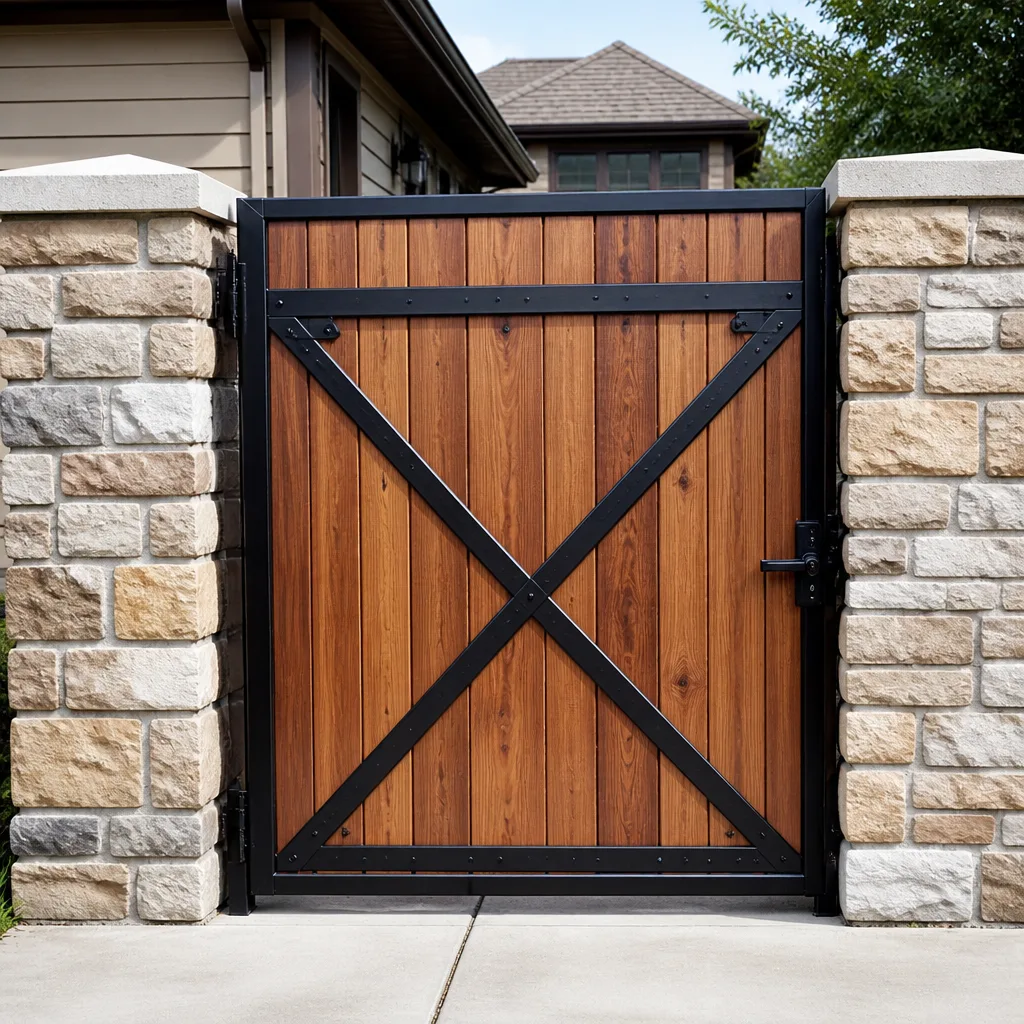
 Wood & steel frame
 Wrought iron
 Farm & ranch
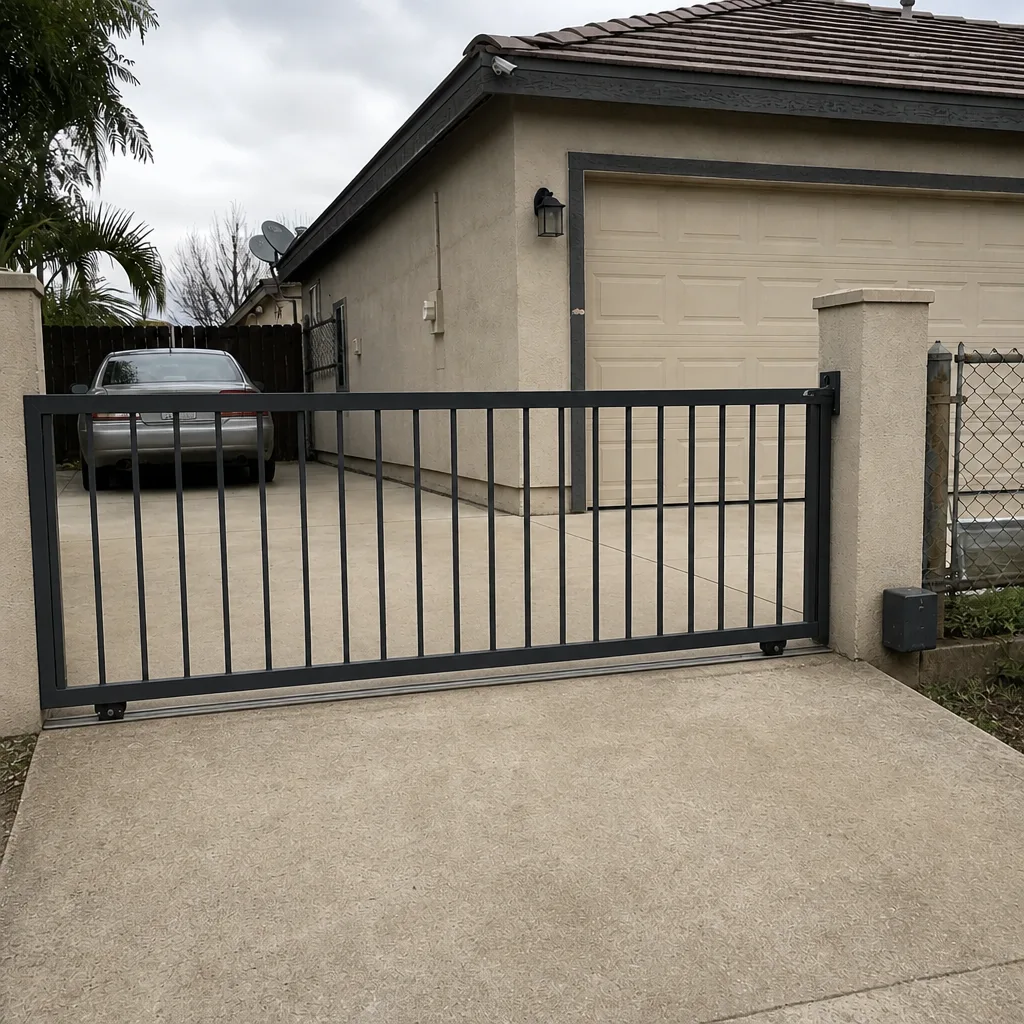
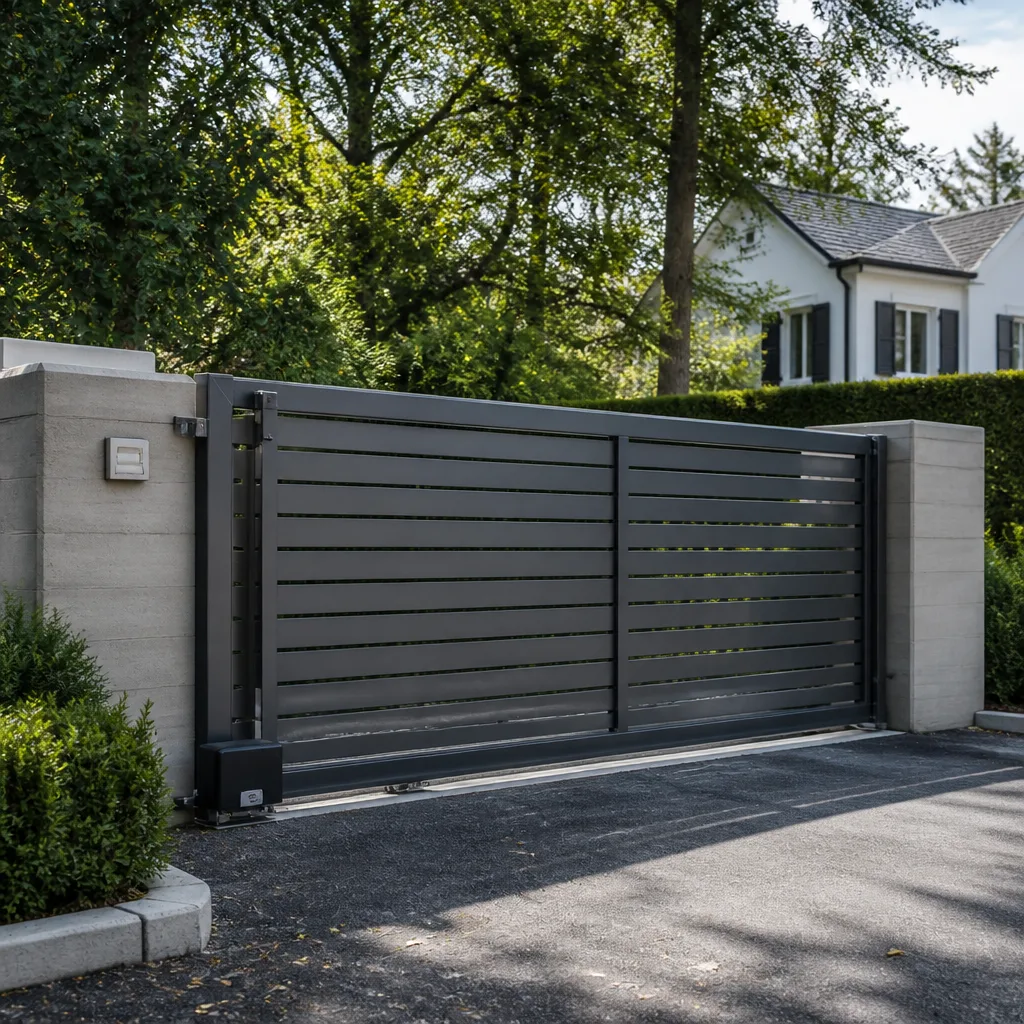 Sliding driveway gates
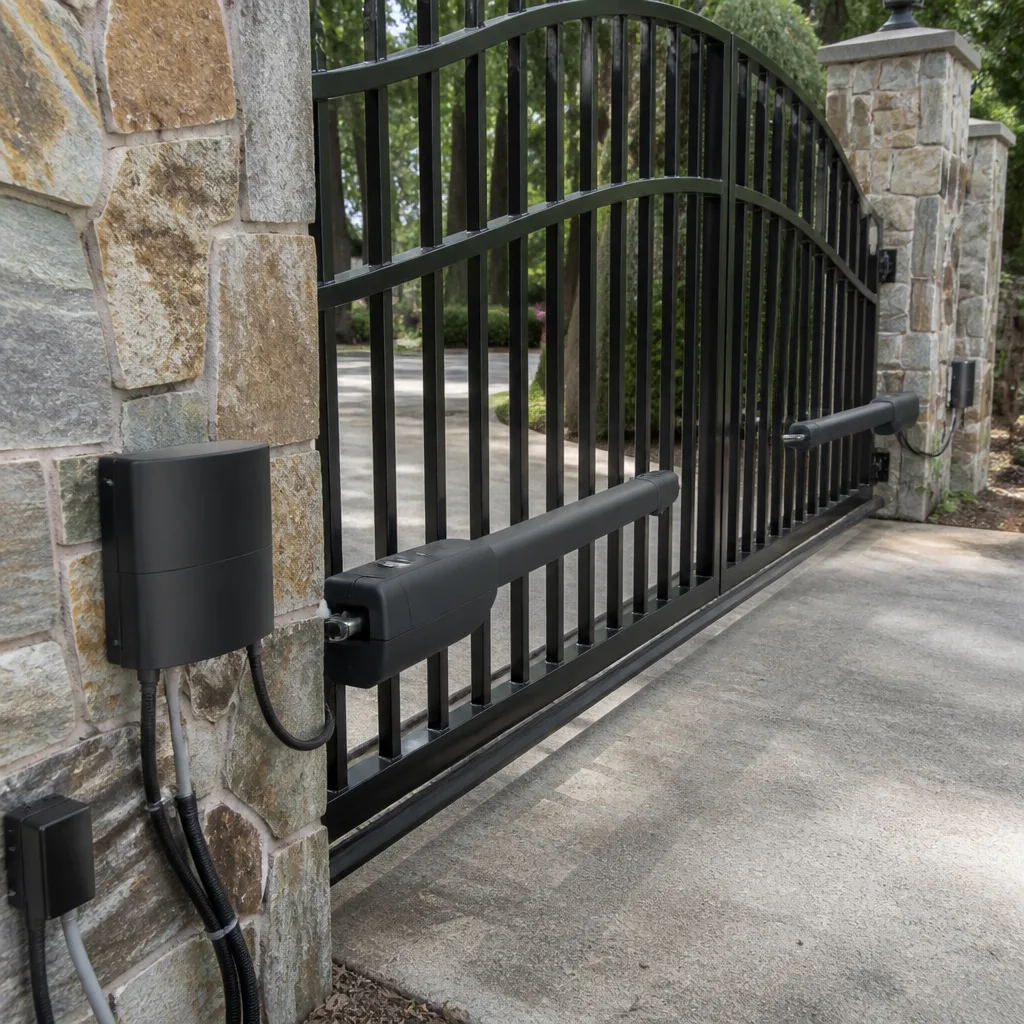 LiftMaster operators
Free on-site gate assessment - hinges, posts, and your LiftMaster or Nice gate operator checked before anything is quoted
The assessment is free and the quote is the invoice.
Get your free estimateStyles & brands we work with
- Wrought iron
- Wood & steel frame
- Farm & ranch
- Sliding driveway gates
- LiftMaster operators
See the difference
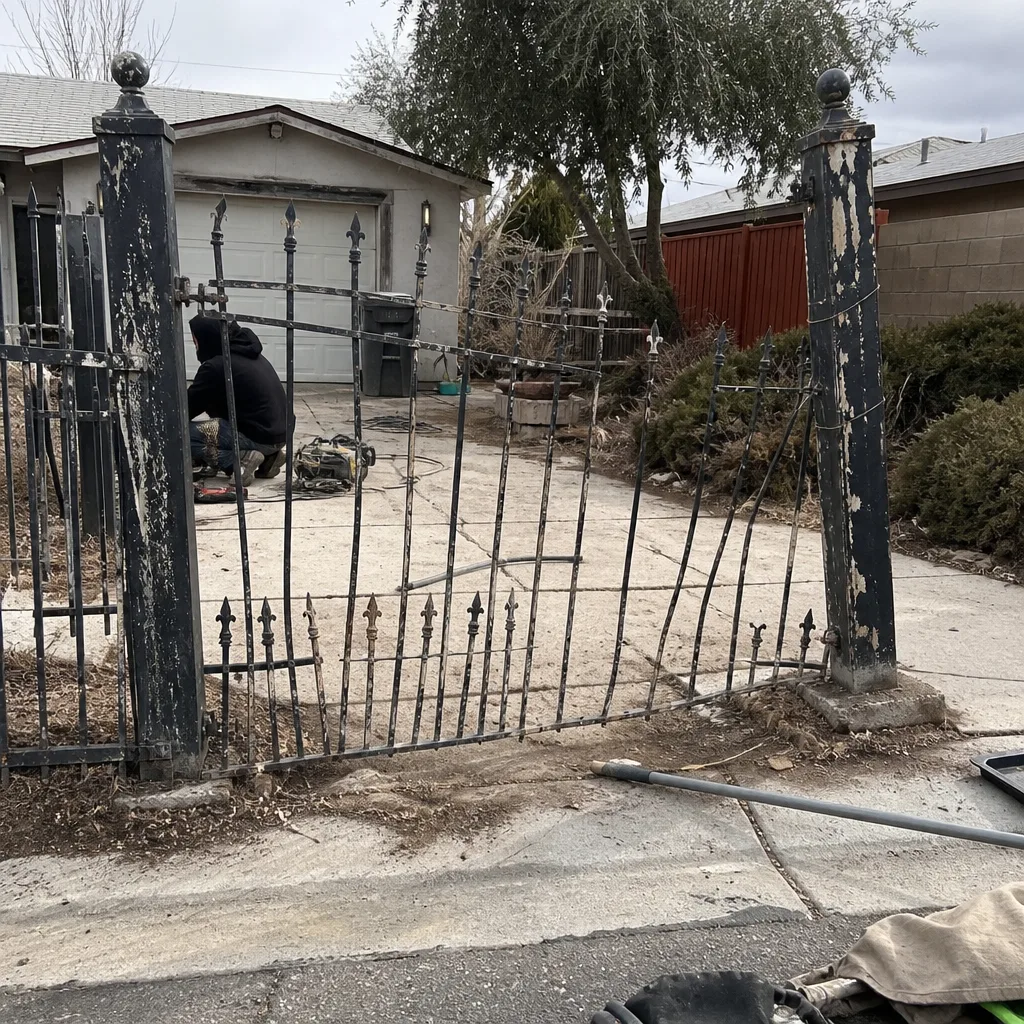 Before
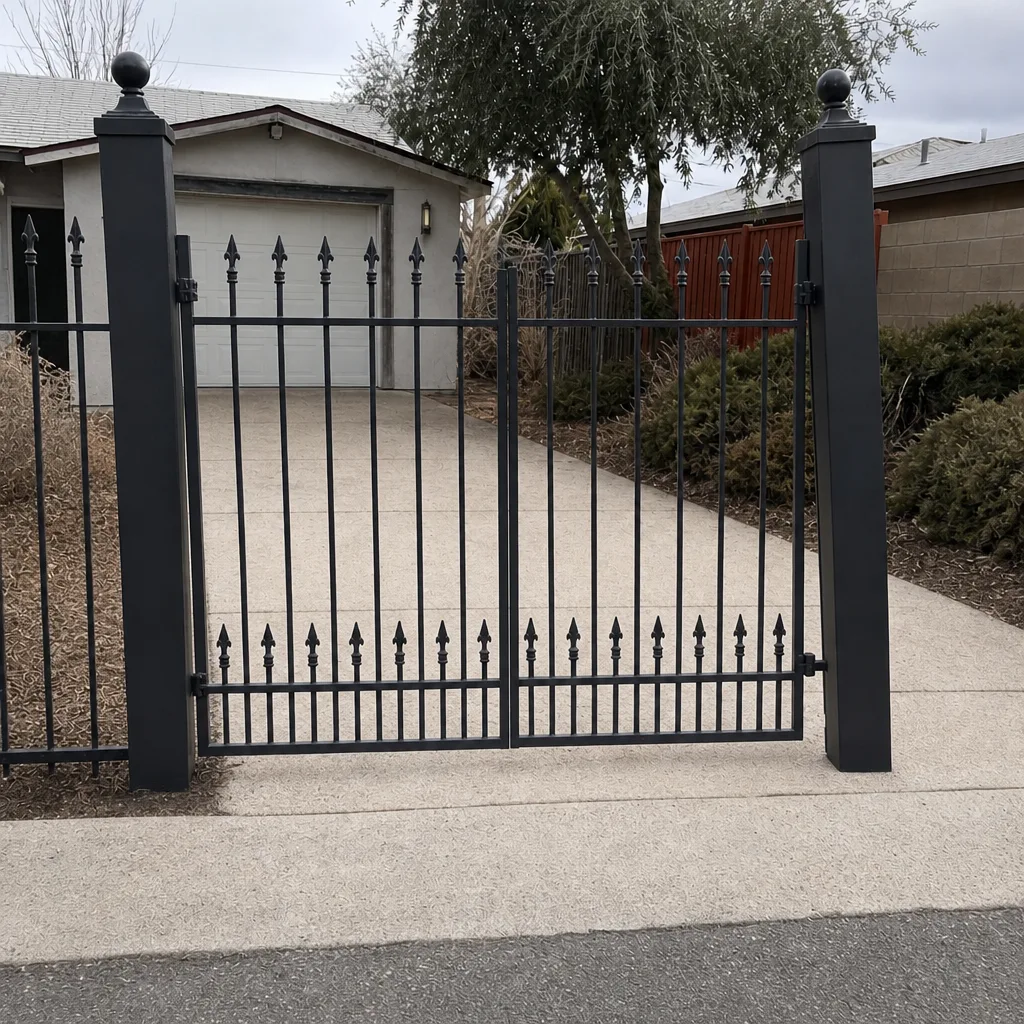 After
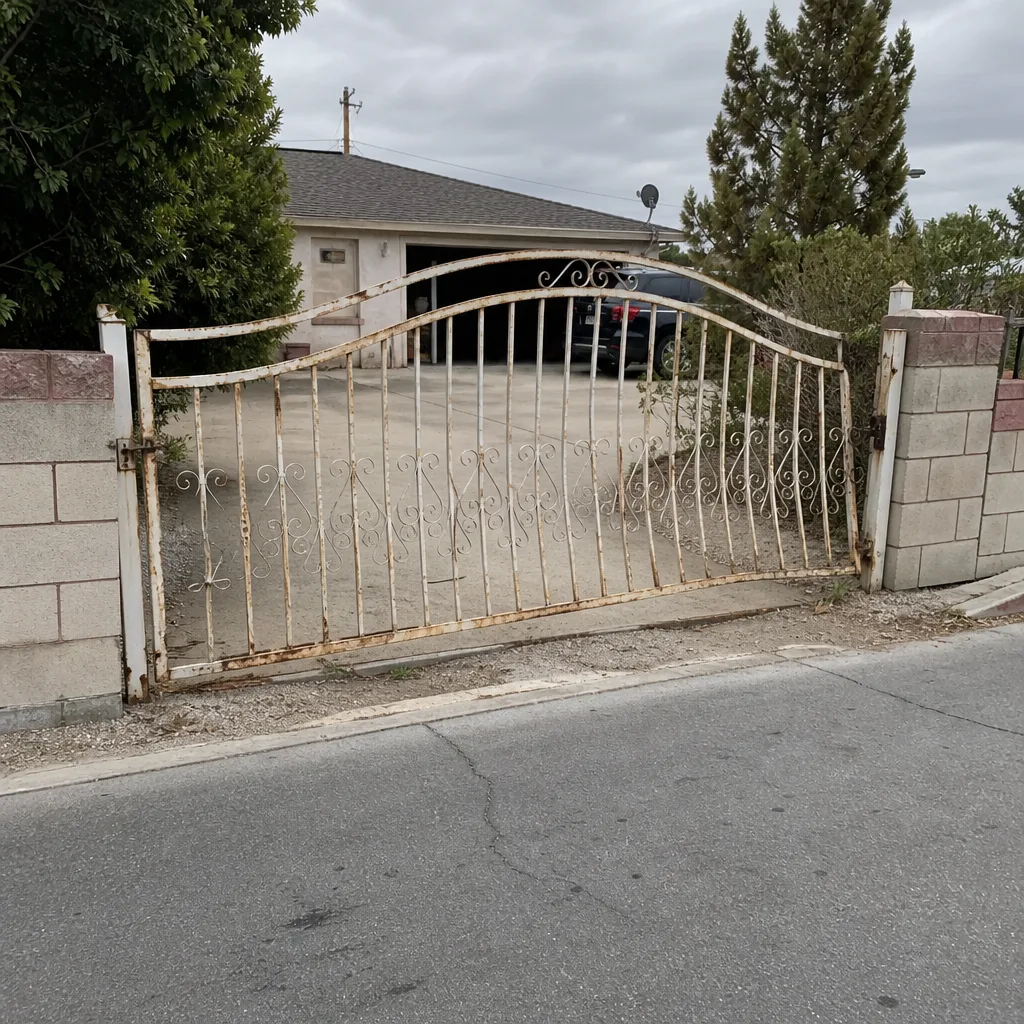 Before
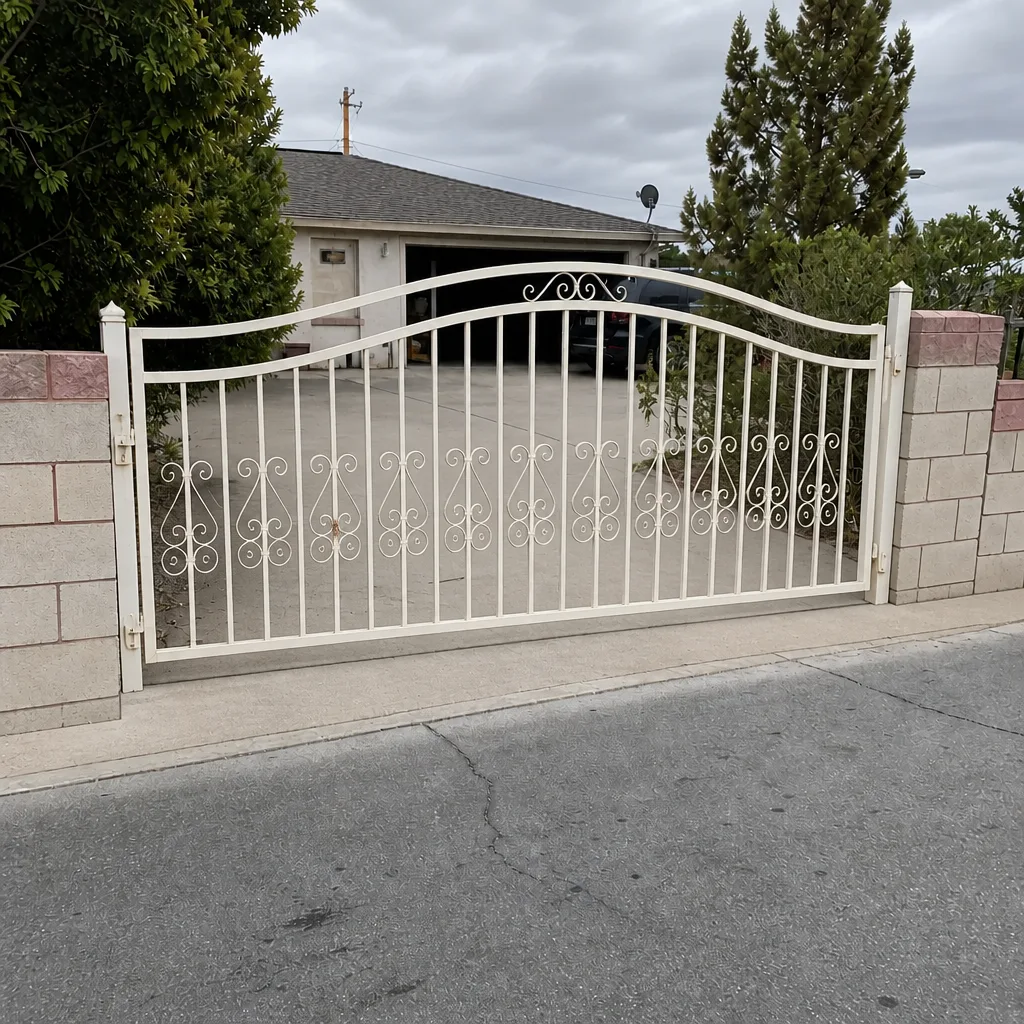 After
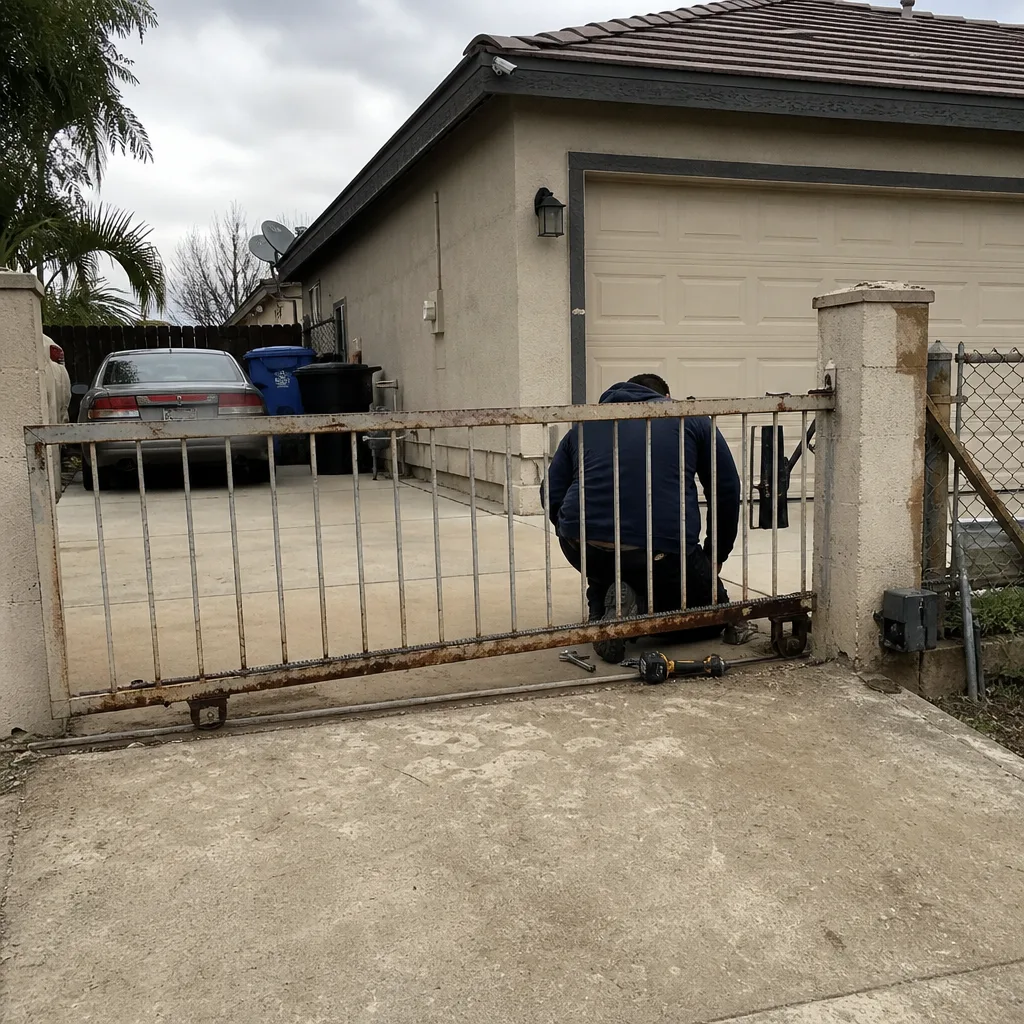 Before
 After
How to Reset an Automatic Gate in Spring Valley, NV
To reset an automatic gate, cut power at the breaker for a full 60 seconds, restore it, then let the operator run one complete open-and-close cycle before touching any button. That’s the short answer. But in Spring Valley the reset that fixes your gate depends on why it stopped: a monsoon surge, a July thermal cutout, and a dust-clogged sensor eye each need a different first move, and using the wrong one is how a cheap fix turns into a service call to (888) 300-3906 anyway.
We’re Gatewood Fence & Gate Spring Valley, and we’ve pulled apart enough control boards on this side of the valley to know that a reset done wrong is often worse than no reset at all. Here’s how to tell the three apart, what the gate looks like when it actually works again, and the point where you should stop pressing buttons and have someone look at it.
Why Spring Valley Gates Fail in Threes
Spring Valley was built almost entirely during the 1980s-2000s boom, which means most driveway and courtyard gates here are post-1997 decorative iron or vinyl swinging on the original hardware. Those gates are all arriving at their 20-plus-year wear-out window at the same moment. Hinge welds are fatiguing, swing arms are sagging, and builder-grade operator boards are dying across entire tracts, often within the same season.
The desert doesn’t help. Between the 100°F-plus summer days and the UV that bakes control boards and plastic keypads, gate electronics out here fail on a heat cycle, not a freeze cycle. Then monsoon season rolls through with dust that jams tracks and grit that blinds sensor eyes. The result is a gate that stops working for reasons that look identical from the driver’s seat and are completely different underneath.
Reset Scenario 1: Power-Surge Lockout
When a monsoon storm knocks the power or a surge hits the circuit, many operators lock themselves out on purpose. The board senses something wrong and refuses to move until it’s power-cycled cleanly. Fix: kill the breaker at the panel for a full minute (not five seconds), switch it back, and wait for the board to boot before pressing anything.
Here’s what most homeowners miss. After a full power cycle, many swing operators lose their open and close position memory. The gate will run, but it stops short of fully open or reverses at the wrong point, and it gets misdiagnosed as a motor problem when it’s really a limit-switch re-learn that never happened.
What a limit-switch re-learn actually does
The operator doesn’t “know” where your gate’s travel limits are after a hard reset; it has to be walked through them again. On most LiftMaster and FAAC swing units, that means putting the operator in learn mode and letting it run the gate through a full open and full close so the board can record the endpoints. Skip that step and the gate will do exactly what you told it: stop where the old memory says, which may be nowhere near where the gate actually ends.
If you’re not sure your operator has a re-learn mode or you can’t find the procedure for your model, that’s a two-minute phone call, not a guess. We service nine major brands, including LiftMaster, FAAC, BFT, and Mighty Mule, and we can walk you through the re-learn sequence for your specific unit over the phone.
Reset Scenario 2: Thermal Cutout After Heat Buildup
On a July afternoon, a gate that ran fine at 9 a.m. and quit by 2 p.m. is usually not broken. It’s hot. Operators have thermal protection built in, and when the motor or board hits its temperature ceiling, it shuts down to protect itself. The reset for that is not a power cycle. It’s time.
- Let it cool 20-30 minutes. Don’t cycle the breaker immediately; you’ll just re-trip the thermal cutoff the moment it powers back on.
- Check the obvious heat sources. A control box in direct afternoon sun, a plastic housing with no shade, or a board packed with dust all make thermal trips more frequent.
- Watch for repeat trips. If your gate shuts down at the same time every hot afternoon, the cooling fix buys you a day or two, not a season.
Thermal cutouts that happen once in a heat wave are normal. Thermal cutouts that happen weekly in July mean the operator is undersized for the gate, the board is degrading, or the gate itself is binding and forcing the motor to work harder than it should. That’s a repair conversation, not a reset.
Reset Scenario 3: Sensor-Eye Fault from Monsoon Dust
The safety sensors at the base of your gate are two small eyes that talk to each other across the driveway. When one gets coated in dust or mud from a monsoon downpour, the board reads it as an obstruction and refuses to close. Resetting the board without cleaning the eyes first just makes the gate re-trip within seconds, which is why so many homeowners think the operator is dead when the real problem is a dirty lens.
- Power the gate down at the breaker.
- Wipe both sensor lenses with a dry cloth until they’re clear.
- Check that neither sensor has been knocked out of alignment by the gate or a car.
- Restore power and watch the sensor indicator lights; both should read clear before you call it fixed.
If the eyes are clean, aligned, and the gate still won’t close, the problem is upstream in the board or the wiring, and that’s where a quick look from someone who knows your operator saves you a wasted afternoon.
How to Tell a Good Reset from a Bad One
A successful reset has two signatures. First, the gate completes a full open-and-close cycle without stopping short, reversing at the wrong point, or flashing a fault code on the board. Second, it responds correctly to every input: your remote, the keypad, the wall button, and the safety sensors. If all four work, you’re done.
A failed reset is sneakier. The gate runs a clean cycle, but a fault code keeps blinking on the control board. That blinking code means the fault log cleared, not the underlying cause. The gate is telling you something is still wrong and it’s waiting to trip again. Wiping the log and walking away is how a $300 board repair becomes a $900 operator replacement six weeks later.
The HOA Access-Control Wrinkle in Spring Valley
Many Spring Valley communities run shared access gates controlled by an HOA management company, and full resets there have a step most homeowners don’t expect. After you reset the individual operator at your entry, the community controller may still not recognize your gate until it’s re-paired. That pairing is on the HOA side, not on ours, so a call to your HOA management company is part of completing the fix.
It’s also worth knowing that because Spring Valley is unincorporated Clark County, gate permits and inspections run through the county, and HOA architectural rules, not municipal code, are what usually dictate gate height, style, and color. If a repair touches the gate’s structure, the HOA is often the first call, not the last.
When a Reset Is a Delay, Not a Fix
If your gate has tripped the same fault three times in one month, a reset is not a fix. It’s a postponement, and the repair you’re avoiding is usually smaller now than it will be later. We’d rather weld a fatiguing hinge post today than replace the whole swing arm in six months.
Our approach is repair-first. We weld on site so the gate stays in your driveway, we don’t swap parts that don’t need swapping, and every job comes with the 90-Day Done Right Promise in writing: if it’s not right, one call brings us back. Upfront pricing means the number you’re quoted is the number you pay. Our technicians have up to 25 years of experience, and a live person answers every call, day or night. If your operator needs more than a reset, our Gate Motor & Opener service covers board repair, motor replacement, and full diagnostics.
FAQs
Cut power at the breaker for a full 60 seconds, restore it, and let the operator boot before pressing anything, then run one complete open-and-close cycle and re-learn the limit switches if your model requires it. Skipping the 60-second wait is the most common reason a post-outage reset doesn’t take; the board needs time to fully discharge and clear its fault state.
Because the reset cleared the fault log but not the cause, which usually means a binding hinge, a failing board, or an out-of-alignment sensor. Three same-fault trips in a month is the point where a reset is just buying time; that’s a repair, not a reset.
Often yes. Most reset and diagnostic calls on LiftMaster, FAAC, BFT, and Mighty Mule units get handled the same day, and we’ll tell you honestly on the phone whether it sounds like a reset or a repair.
Doing the reset yourself costs nothing and is worth trying first, especially on a post-surge or heat-tripped operator. Call for service when the reset doesn’t hold, when you see a blinking error code afterward, or when the gate won’t complete a full cycle; at that point the reset has done its job by confirming there’s a real problem.
Contact Gatewood Fence & Gate Spring Valley
If you’d rather have it looked at than spend another afternoon guessing, Gatewood Fence & Gate Spring Valley offers a no-pressure assessment in Spring Valley. We’ll tell you straight if it’s a reset or a repair, and we’ll show up when we say we will. Call (888) 300-3906 for a free estimate.
Written by the team at Gatewood Fence & Gate Spring Valley, serving Spring Valley, NV.