
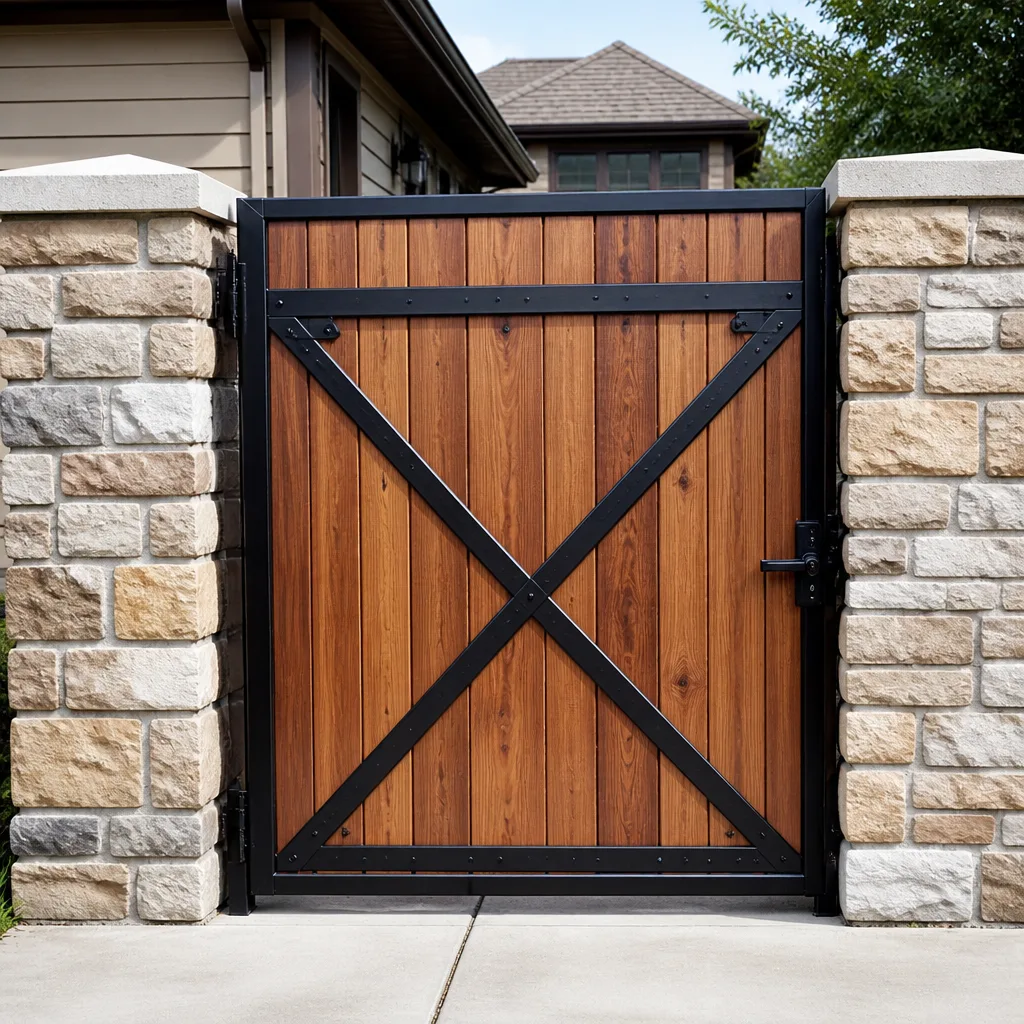
 Wood & steel frame
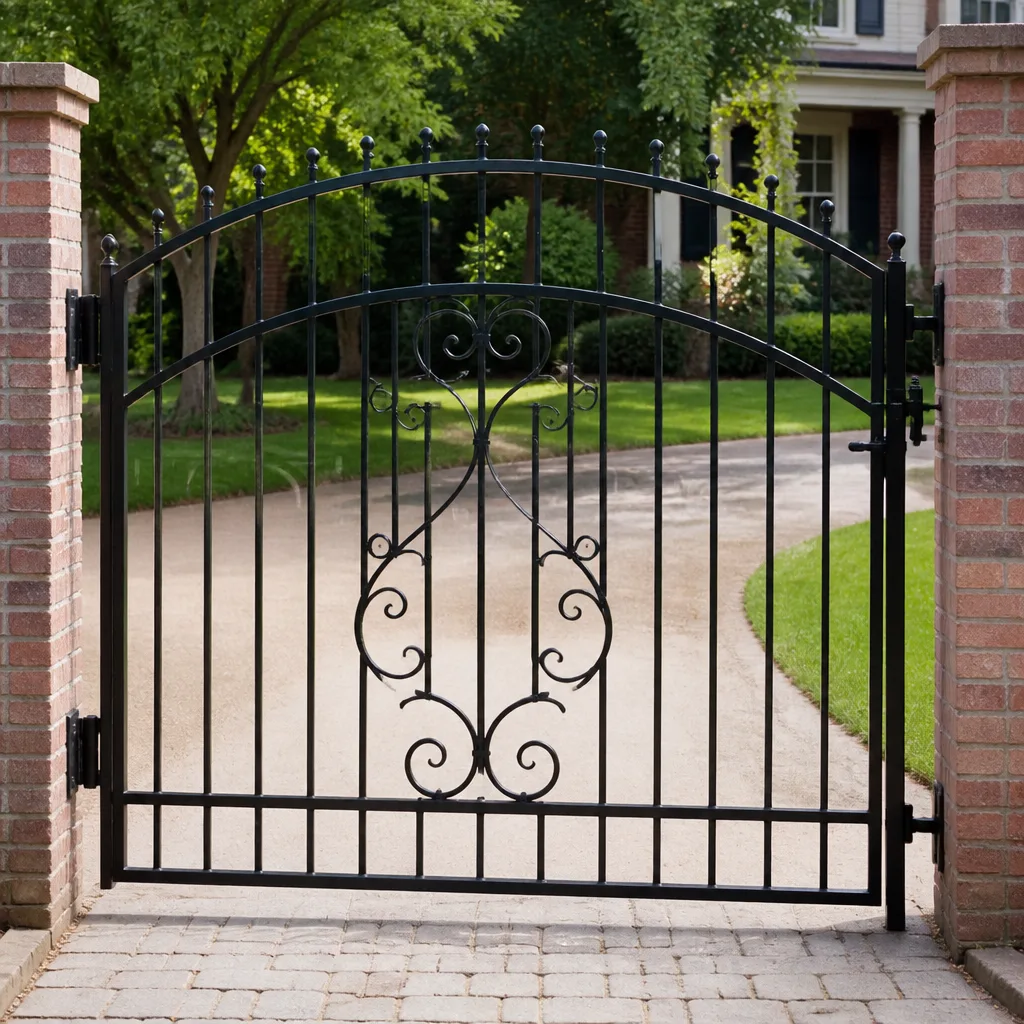 Wrought iron
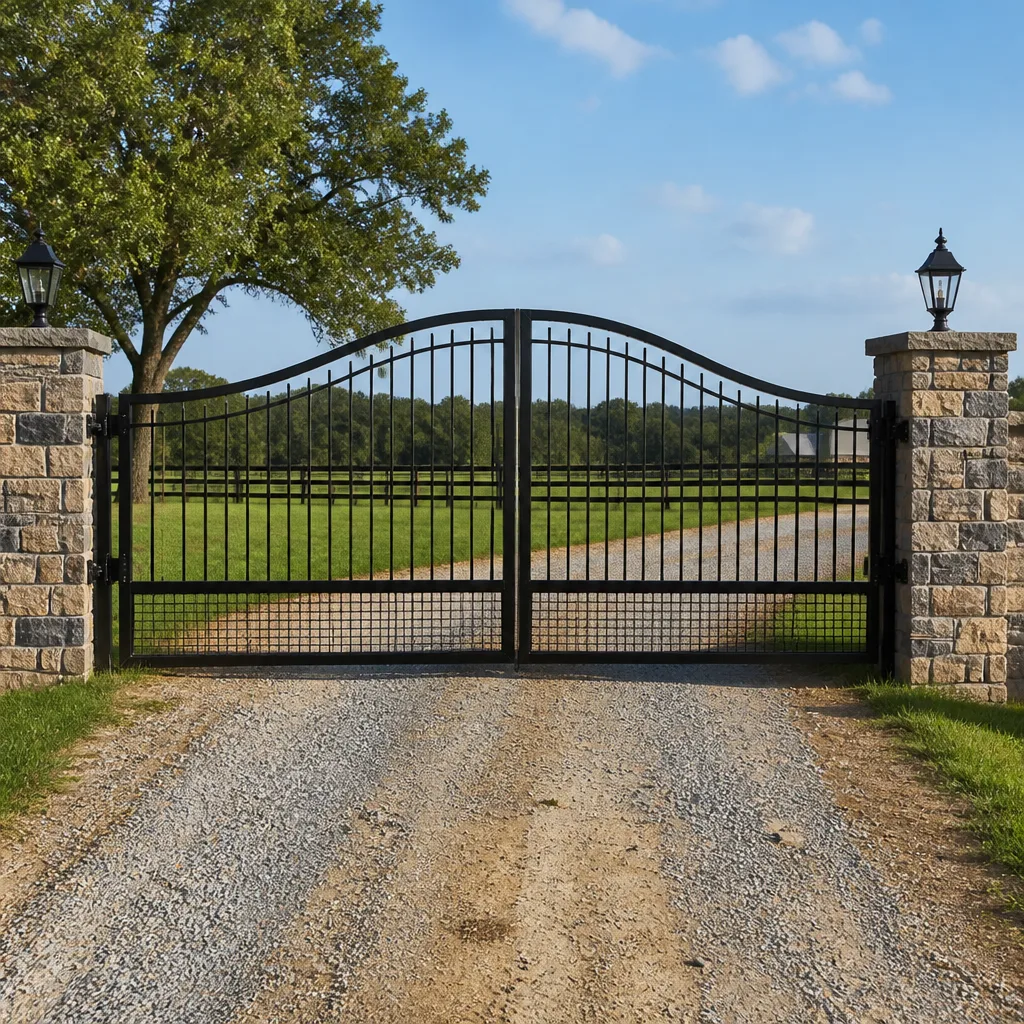 Farm & ranch
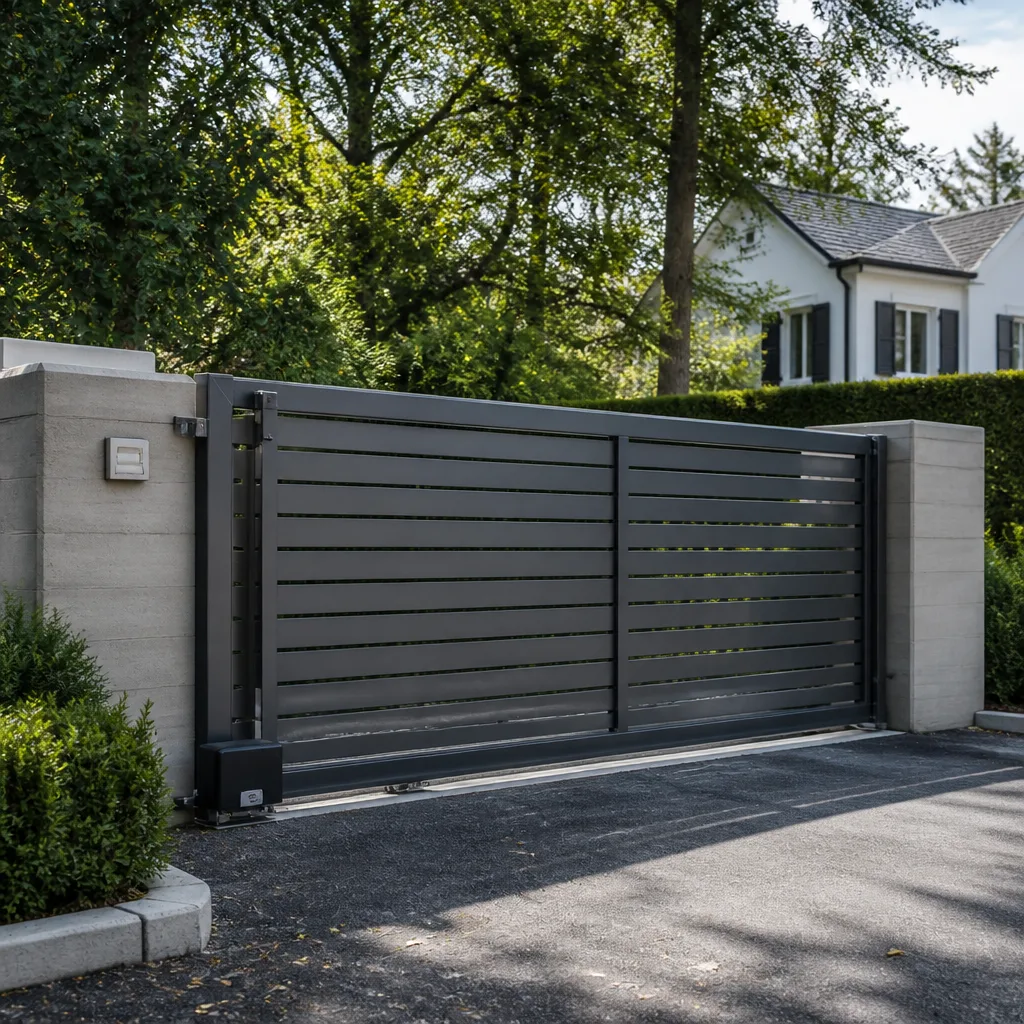 Sliding driveway gates
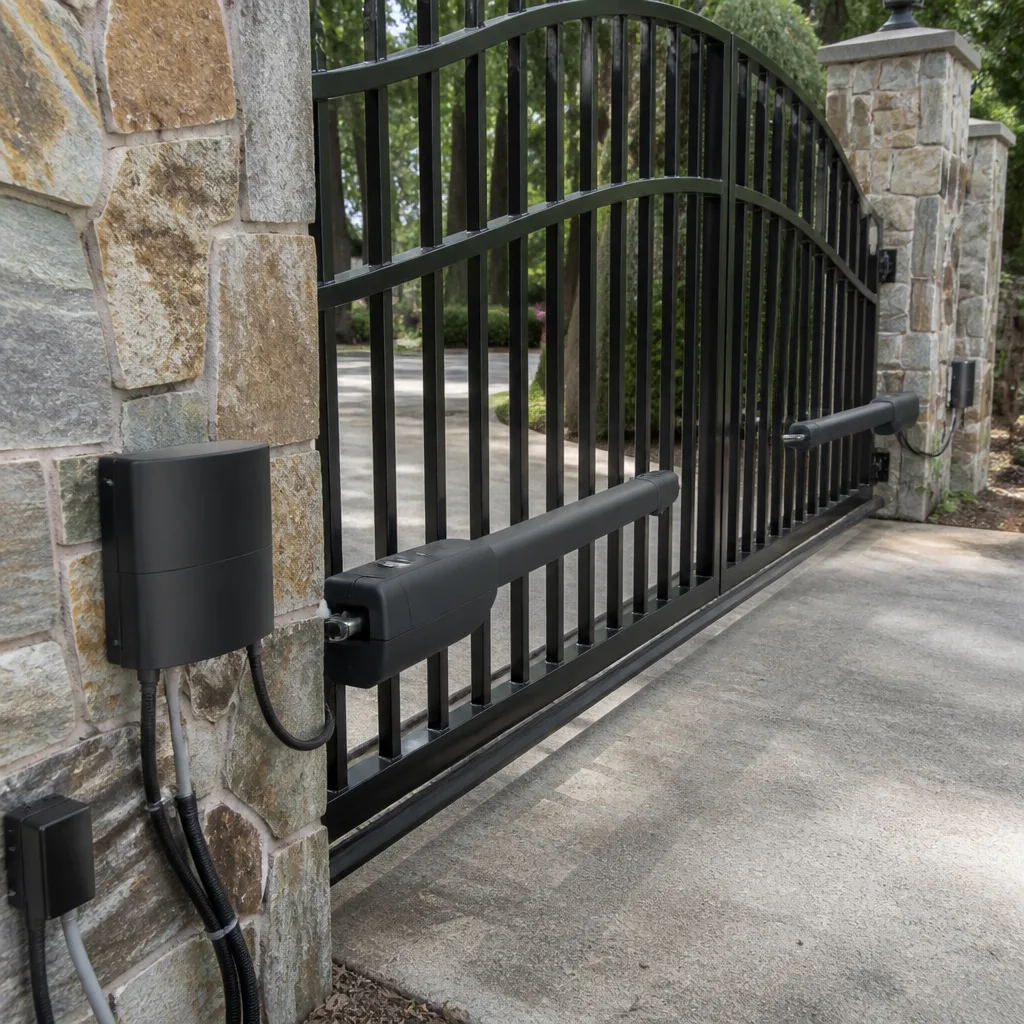 LiftMaster operators
Free on-site gate assessment - hinges, posts, and your LiftMaster or Nice gate operator checked before anything is quoted
The assessment is free and the quote is the invoice.
Get your free estimateStyles & brands we work with
- Wrought iron
- Wood & steel frame
- Farm & ranch
- Sliding driveway gates
- LiftMaster operators
See the difference
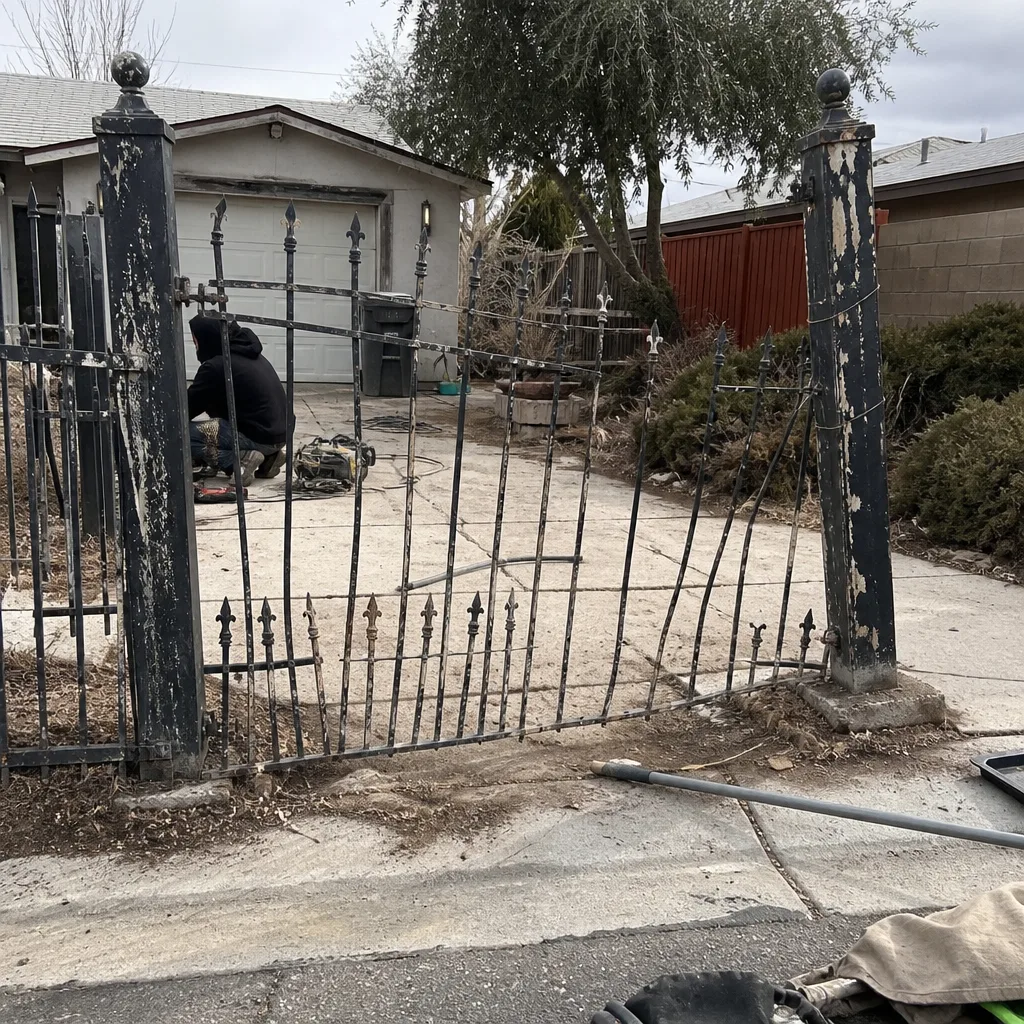 Before
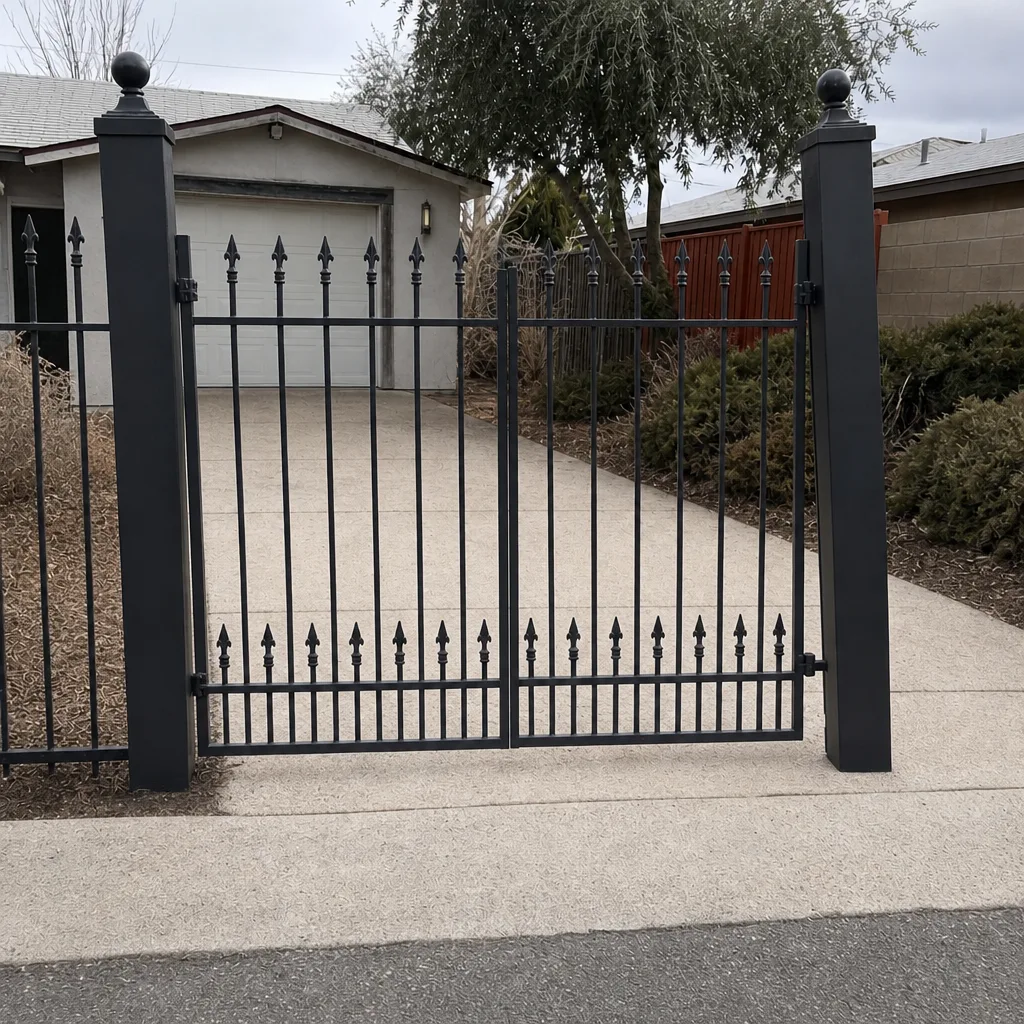 After
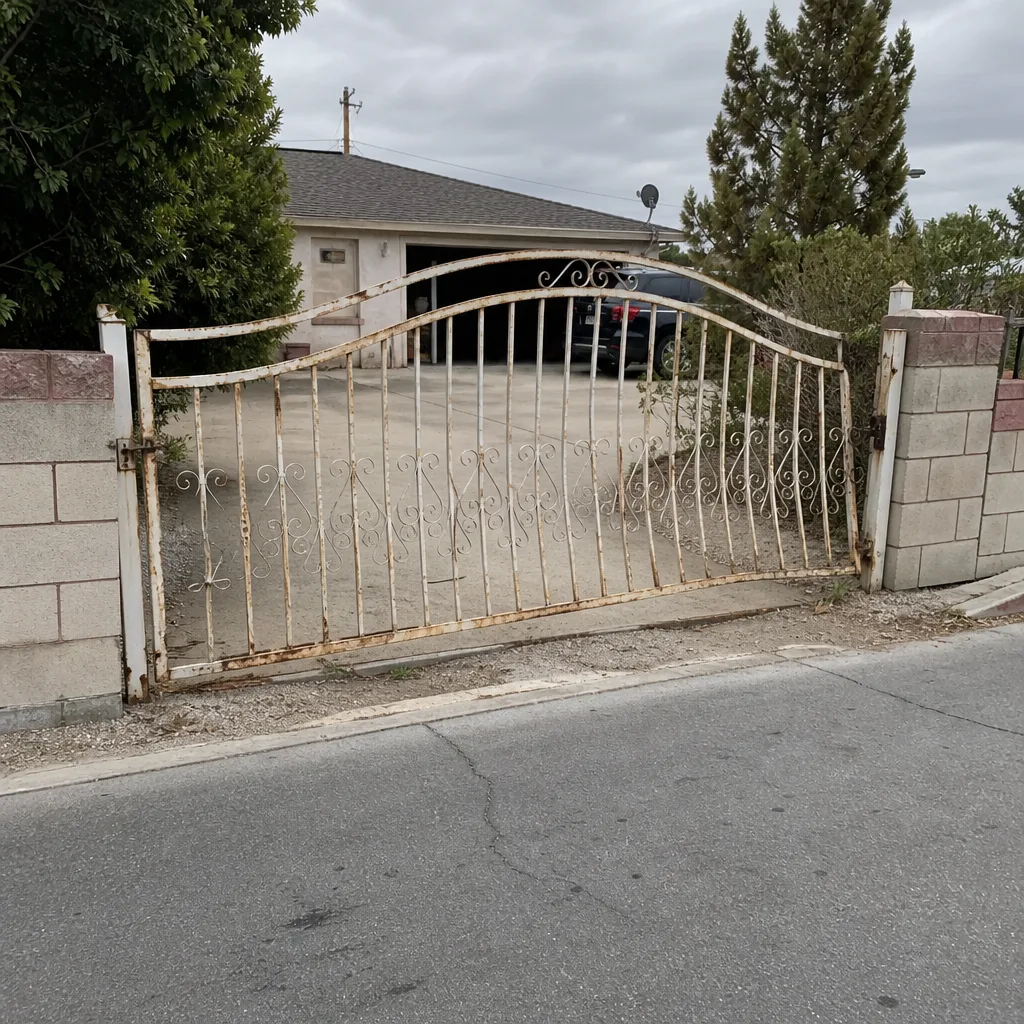 Before
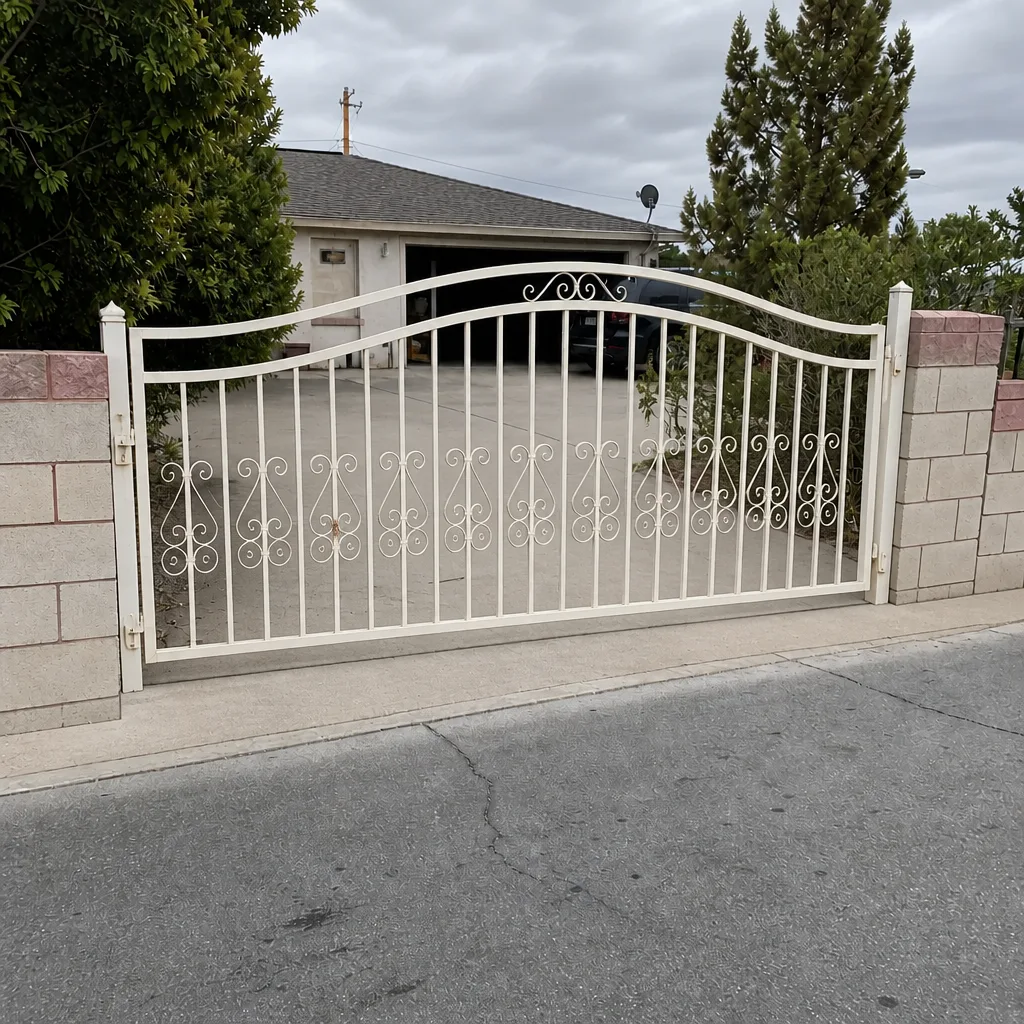 After
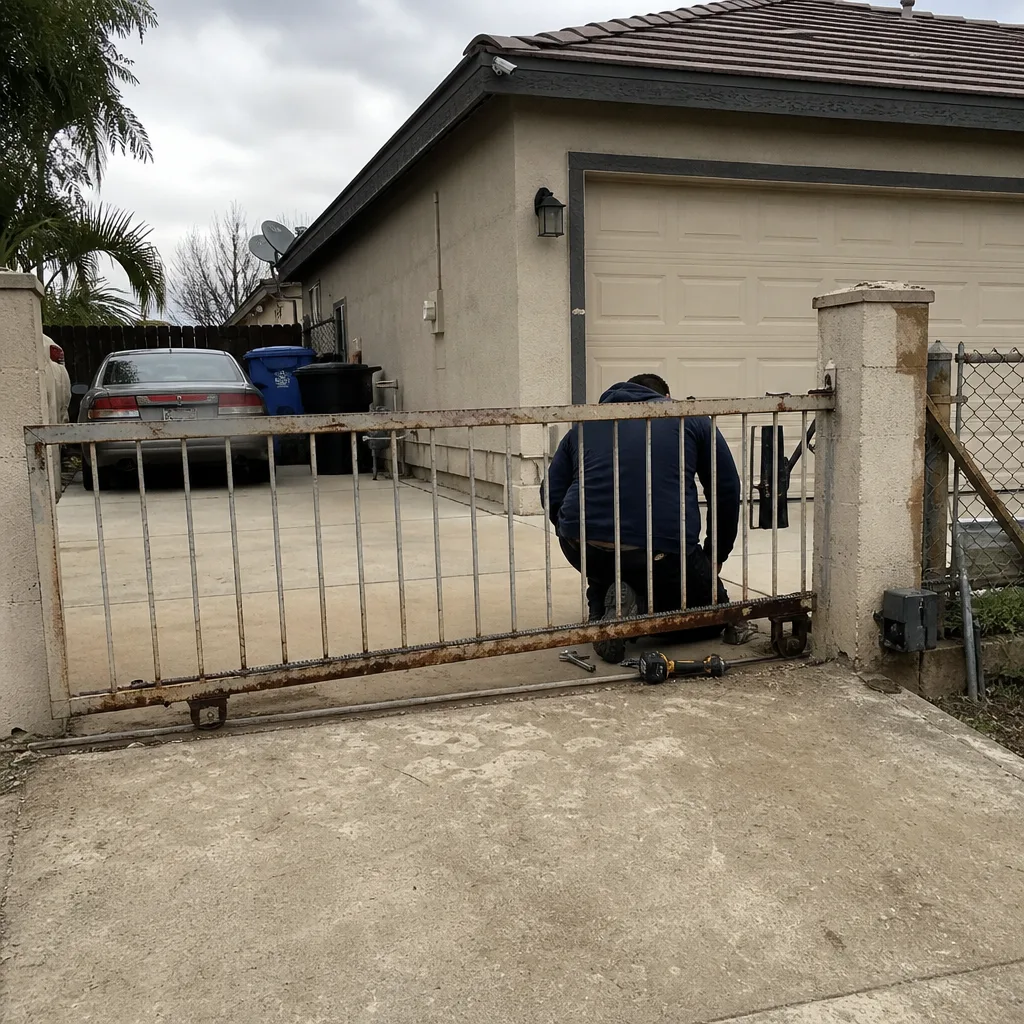 Before
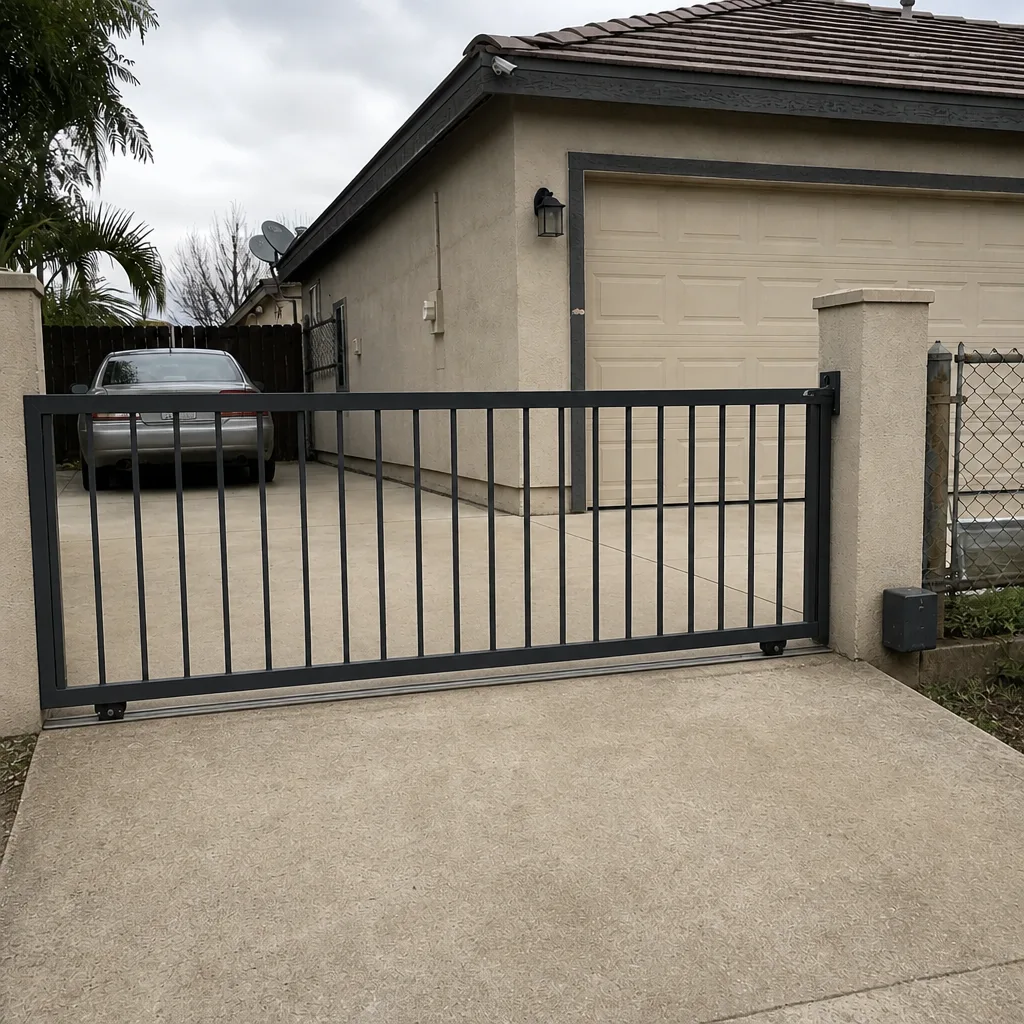 After
Solar Gate Opener vs Electric in Spring Valley, NV: Pick Solar Unless the Pilaster Faces the Wrong Way
Choose solar when your Spring Valley gate pilaster gets direct sun from roughly 9 a.m. to 3 p.m. and running a 120V circuit through finished pavers, decomposed granite, or stamped concrete would cost more than the opener itself. Choose hardwired electric when the pilaster is shaded by the house or block wall for part of the day, when you want a keypad, intercom, and camera running off the gate’s power, or when the trench is short and the ground is unfinished. In Spring Valley specifically, wiring a detached block-wall gate to the house panel often runs $800-$1,500 in finished hardscape before anyone touches a solenoid. Call (888) 300-3906 and we’ll tell you which one your gate actually needs, free.
Why Trench Cost Decides This Before Brand Ever Does
Most of Spring Valley was built out during the 1980s-2000s boom, and that means the vast majority of gates here sit 30 to 60 feet from the house on a south or west property line. Between the air conditioner and the gate pilaster you usually find one of three surfaces, and each one adds its own cost to a hardwired install:
- Paver driveway (the most common): Lift, cut, trench, run conduit, sand-set, and re-lay. Expect $18-$35 per linear foot in labor and material alone, before electrical.
- Decomposed granite or gravel: Cheaper to cut but it doesn’t stay put. Re-trenching after a monsoon downpour is a real, recurring job, and the conduit has to be buried below the scour line.
- Stamped or poured concrete: Sawcut, break out, trench, backfill, and pour a matching patch. A 40-foot run through a stamped apron frequently lands in the $1,200-$1,500 range by itself.
Add the licensed electrician, the conduit, the weatherproof junction box, and the permit through Clark County (Spring Valley is unincorporated, so there’s no city building department), and the “cheap” hardwired opener often costs $2,000-$2,800 installed. A solar opener on the same block-wall pilaster usually runs $1,100-$1,900, mounted and done in a single visit. That’s the math most comparison articles skip right over.
The Pilaster Azimuth Problem Nobody Talks About
Here’s where solar gets honest. Spring Valley’s Mediterranean tract layouts frequently put the main driveway gate on the north side of the driveway apron, with the pilaster shaded by the house or by a return wall through late morning and mid-afternoon. A panel mounted there gets maybe three hours of usable light a day, and in December, when the sun angle drops below 35 degrees, those three hours turn into one and a half.
A gate opener that undercharges its battery doesn’t fail dramatically. It limps. It opens slowly in the morning, then stops mid-travel, then repeats until the controller throws a fault. Homeowners call us in February convinced the motor died when the real problem was a panel that captured the wrong slice of the day.
Before we quote a solar install in Spring Valley, we do two things in person: measure shade coverage across the pilaster through the working day, and check where the gate actually faces. A west-facing pilaster under a wide tile overhang will shade out. A south-facing pilaster on a freestanding return wall usually produces plenty. If hardwired is genuinely the better call, we’ll say so. Fixing the panel without fixing the orientation is like repairing a sagging gate without the post: you’ll fix it twice.
Spring Valley’s UV Advantage, and the Bill It Hands You Later
Spring Valley gets 300-plus sunny days a year. That’s a real advantage and it’s why solar openers work here when they struggle in cloudier parts of the country. But UV doesn’t just charge panels. It eats them.
The budget solar panels sold on national sites use ABS or polycarbonate housings that yellow and crack under this much sun in 18-36 months. Panels rated for desert UV use a UV-stabilized housing and a tempered glass face, and they last five to ten years before they need attention. This is where the $300 opener and the $700 opener part ways, and it almost never shows up on the spec sheet at the big-box store.
The same UV cycle takes out control boards, plastic keypads, and the sun-facing side of any finish on the gate itself. A gate opener in Spring Valley fails on a heat cycle, not a freeze cycle, and the operator electronics feel it before the mechanical parts do. That’s also why we lean on operators from brands that build for desert installs when we’re recommending one: Ghost Controls, Elite, and Mighty Mule all have solar-ready units that hold up here, and we’re certified to service all three along with LiftMaster, FAAC, BFT, Linear, Viking, DoorKing, and Mighty Mule for hardwired work. For a fuller rundown on operator types and which fits a block-wall pilaster, see our Gate Motor & Opener in Spring Valley page or the main Gate Motor & Opener guide.
The Battery Replacement Cycle That Changes the ROI
Most solar gate opener batteries are sealed lead-acid, and the honest number is 3-5 years in ideal conditions. In Spring Valley, summer heat pushes the case temperature on a sun-exposed pilaster well past 110°F, and heat accelerates sulfation, the chemical process that kills a lead-acid cell. Expect 2-3 years from a battery mounted in full afternoon sun here. In a shaded enclosure or inside a protected housing, you’ll get closer to four.
So budget $80-$160 every two to three years for a replacement battery, and another $40-$80 if the panel housing has to come off to get to it. Over ten years that’s $300-$500 in batteries alone. Factor that against the electric bill, which for a typical swing opener runs roughly $3-$6 a month. Solar doesn’t win on electricity cost. It wins on installation cost, and only when the trench is expensive.
| Item | Solar Install | Hardwired Install |
|---|---|---|
| Opener + mount + labor | $1,100-$1,900 | $800-$1,400 |
| Trench, conduit, restore hardscape | $0 | $800-$1,500 |
| Licensed electrician + permit (Clark County) | $0 | $250-$500 |
| Battery replacements over 10 years | $300-$500 | $0 |
| Monthly electric cost | $0 | $3-$6 |
| 10-year total | $1,400-$2,400 | $2,200-$4,100 |
The crossover is clear: on a long run through finished pavers, solar wins on cost by a wide margin. On a short run through dirt, hardwired wins because the battery replacement cycle never goes away. We check both numbers with you before recommending anything.
Keys to a Solar Setup That Actually Holds Up Here
When solar is the right answer for your Spring Valley gate, these are the things we check every time:
- Confirm actual sun hours on the pilaster across the day, not just at noon.
- Measure the panel’s tilt against the December sun angle, not the June one.
- Verify the panel housing is rated for desert UV, not just “outdoor rated.”
- Mount the battery where the housing itself shields it from afternoon sun.
- Run a full open-close-open cycle and check voltage drop under load before we leave.
We weld on site and we repair rather than swap parts, so if the existing hinge plate or block-wall pilaster needs attention before a new opener goes up, that gets handled in the same visit. That’s the difference between fixing the gate and installing an opener on a gate that’s already failing.
Safety Note on Hardwired Work
Running a 120V circuit to a gate pilaster means working in an outdoor junction box exposed to rain, dust, and 115°F heat. It’s a job for a licensed electrician working to code, not a homeowner with a spool of landscape wire. The same rule applies to the spring and cable side of any gate work: those are under load and a failed tension assembly can hurt someone badly. Our technicians have up to 25 years of experience and we handle the gate side; the electrical side goes to a licensed trade we trust. If you’re weighing a repair-first approach on the gate itself, that’s a conversation we can have over the phone in five minutes.
FAQs
Solar is better when the pilaster gets 5+ hours of direct sun and the trench to the house would run through finished pavers or concrete; hardwired is better when the gate is shaded or the run is short. The deciding number is the trench cost, not the opener price. Call (888) 300-3906 and we’ll give you both quotes side by side, free.
Solar gate opener installation in Spring Valley typically runs $1,100-$1,900 for a residential swing gate on an existing pilaster, plus $80-$160 every two to three years for a replacement battery. Hardwired adds $800-$1,500 in trench and hardscape restoration on most finished lots here. Call (888) 300-3906 for an exact quote on your gate.
Usually not reliably. A north-facing or partly shaded pilaster in Spring Valley will undercharge in December and the gate will start failing mid-morning as the battery drains. We measure shade across the day before quoting solar. If the panel won’t get real sun, we’ll say hardwired. Call (888) 300-3906 to schedule the assessment.
Sealed lead-acid batteries in a solar gate opener last 2-3 years in Spring Valley’s summer heat and 3-5 years in cooler climates. Heat accelerates sulfation, so a sun-exposed battery is the one that fails first. Call (888) 300-3906 if your gate is opening slowly; it’s often the battery, not the motor.
If you’d rather have it looked at, Gatewood Fence & Gate Spring Valley offers a no-pressure assessment in Spring Valley - call (888) 300-3906. We answer live around the clock, we’ll tell you honestly which way your pilaster should go, and every job carries our 90-Day Done Right Promise in writing.
Written by the team at Gatewood Fence & Gate Spring Valley.