
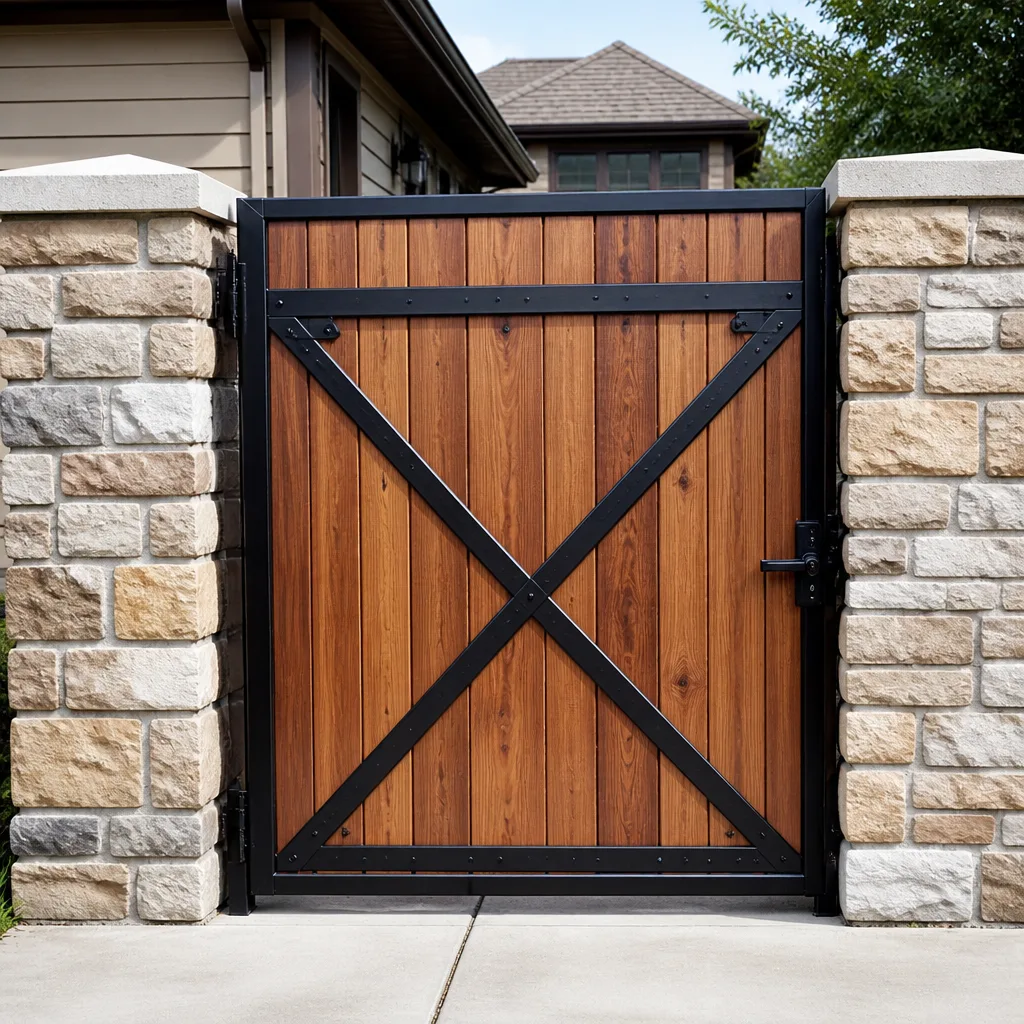
 Wood & steel frame
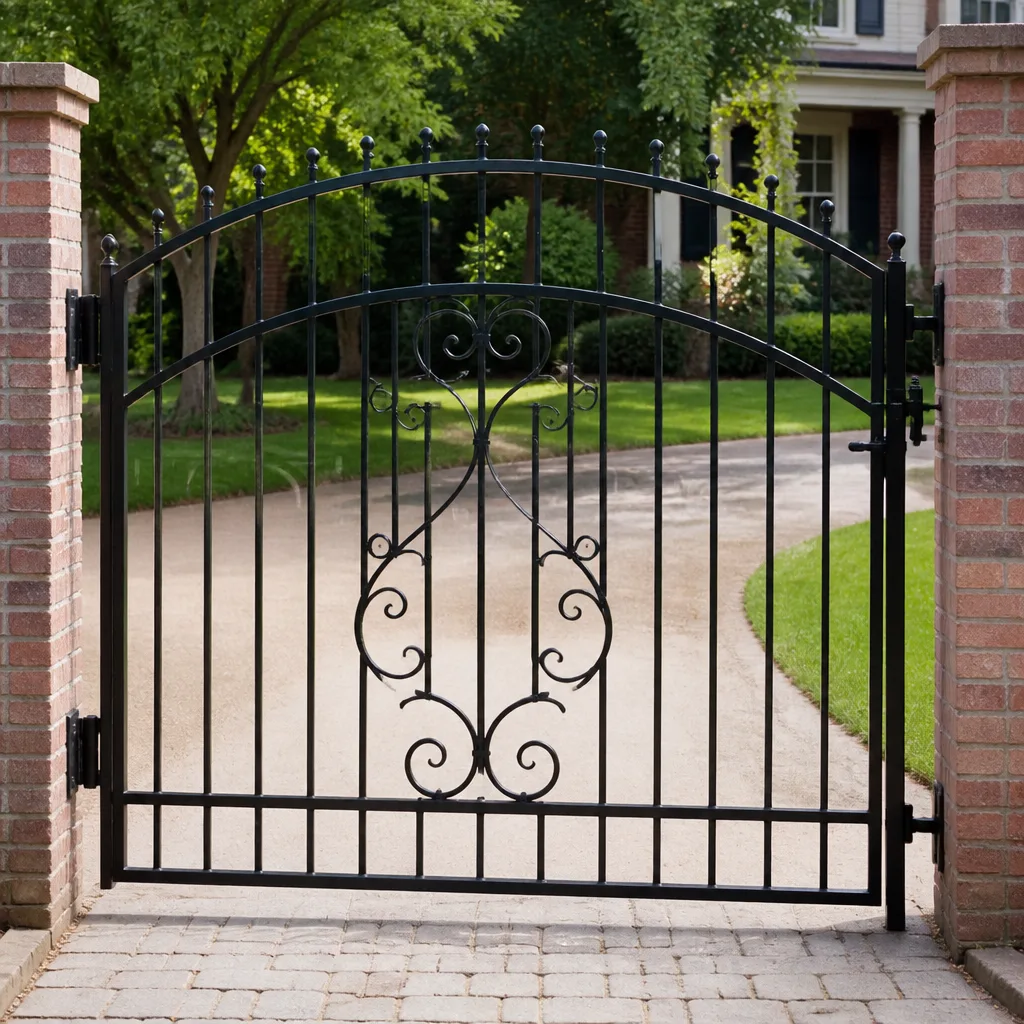 Wrought iron
 Farm & ranch
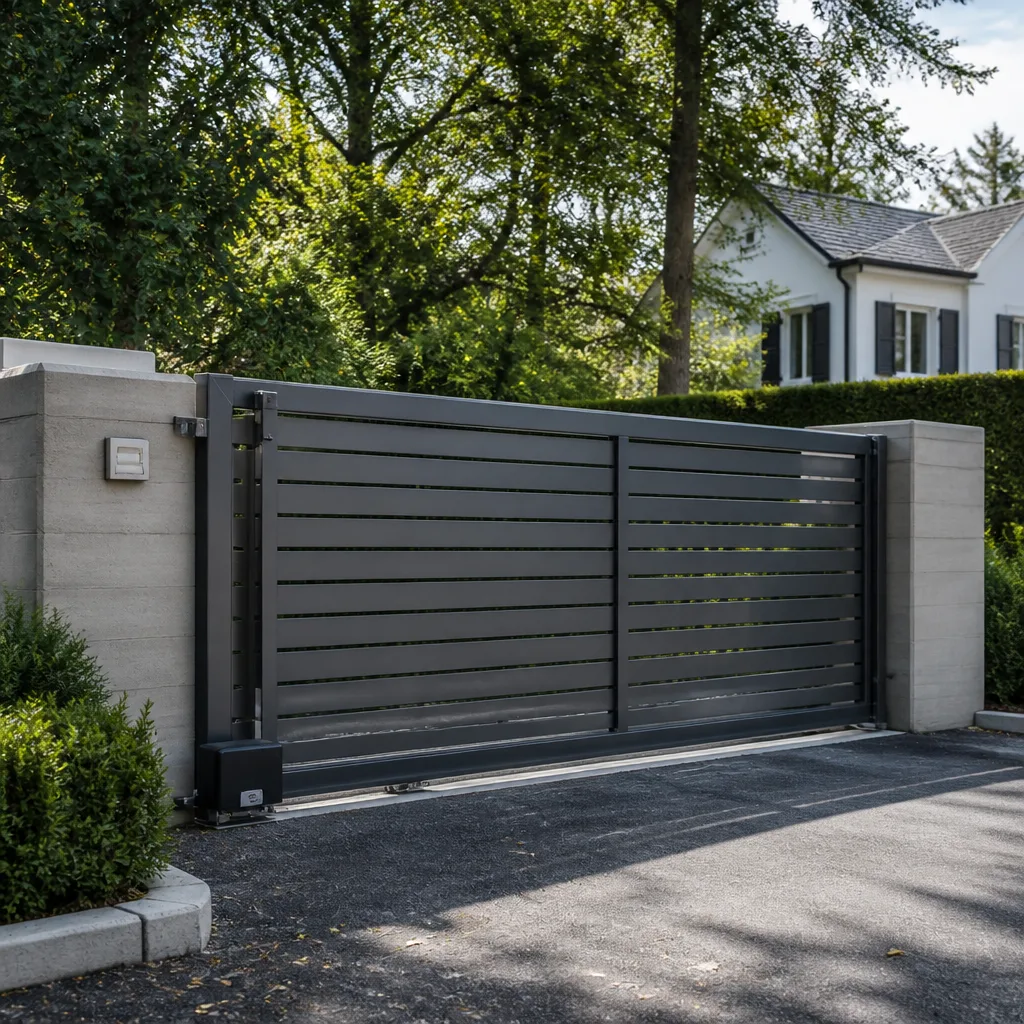 Sliding driveway gates
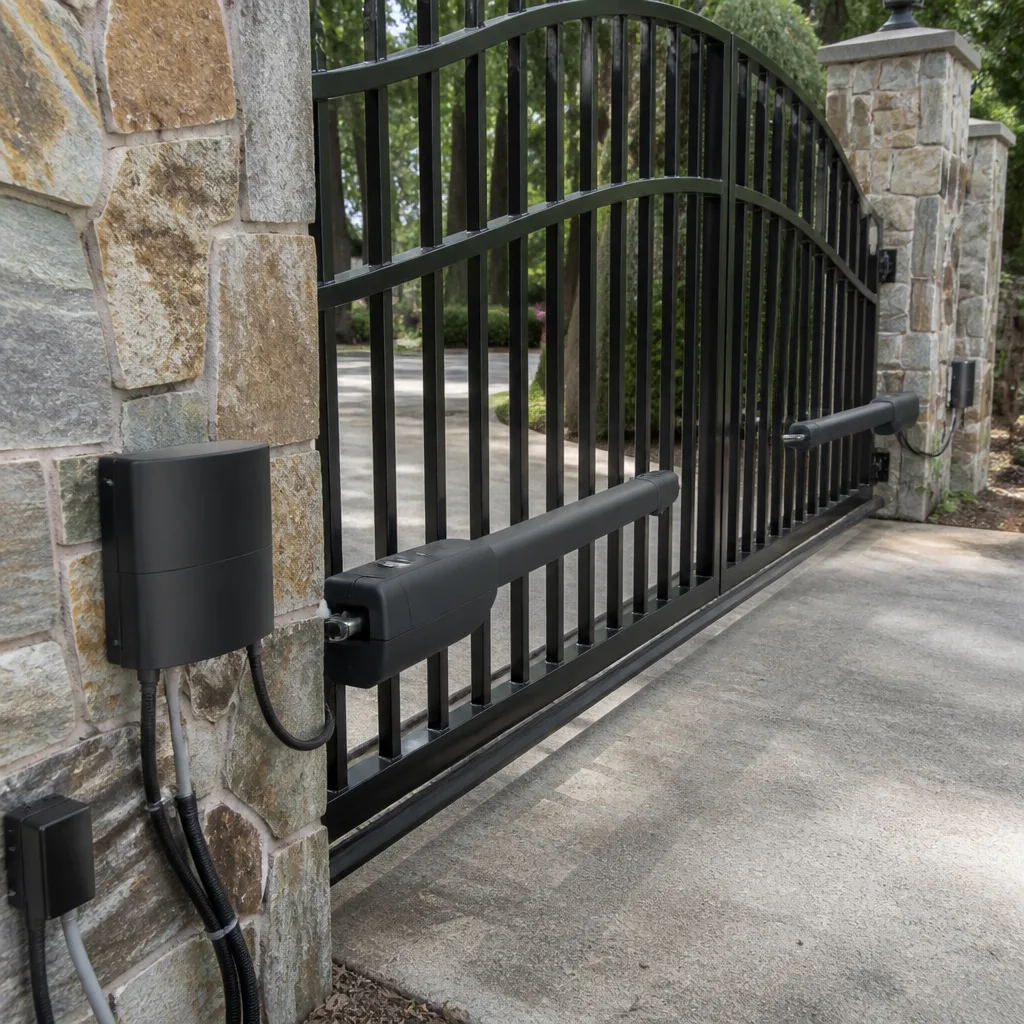 LiftMaster operators
Free on-site gate assessment - hinges, posts, and your LiftMaster or Nice gate operator checked before anything is quoted
The assessment is free and the quote is the invoice.
Get your free estimateStyles & brands we work with
- Wrought iron
- Wood & steel frame
- Farm & ranch
- Sliding driveway gates
- LiftMaster operators
See the difference
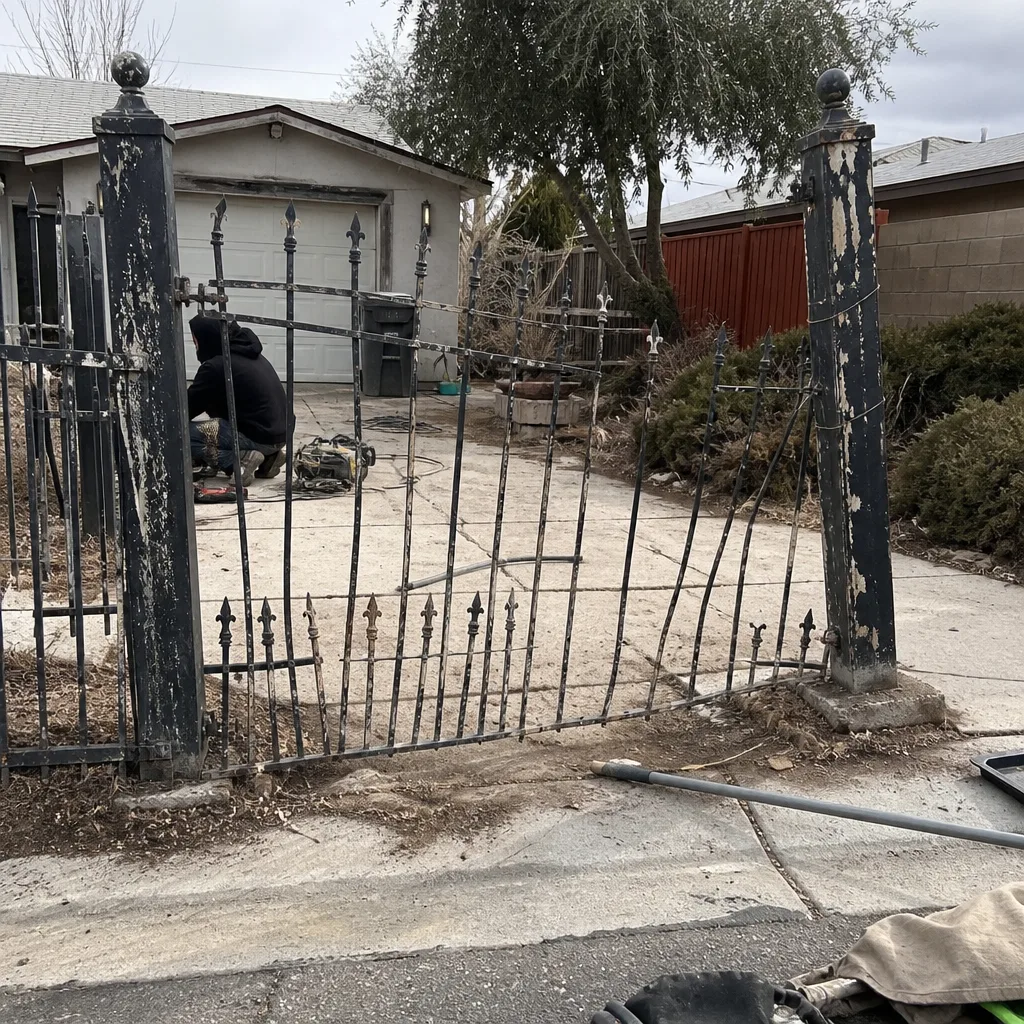 Before
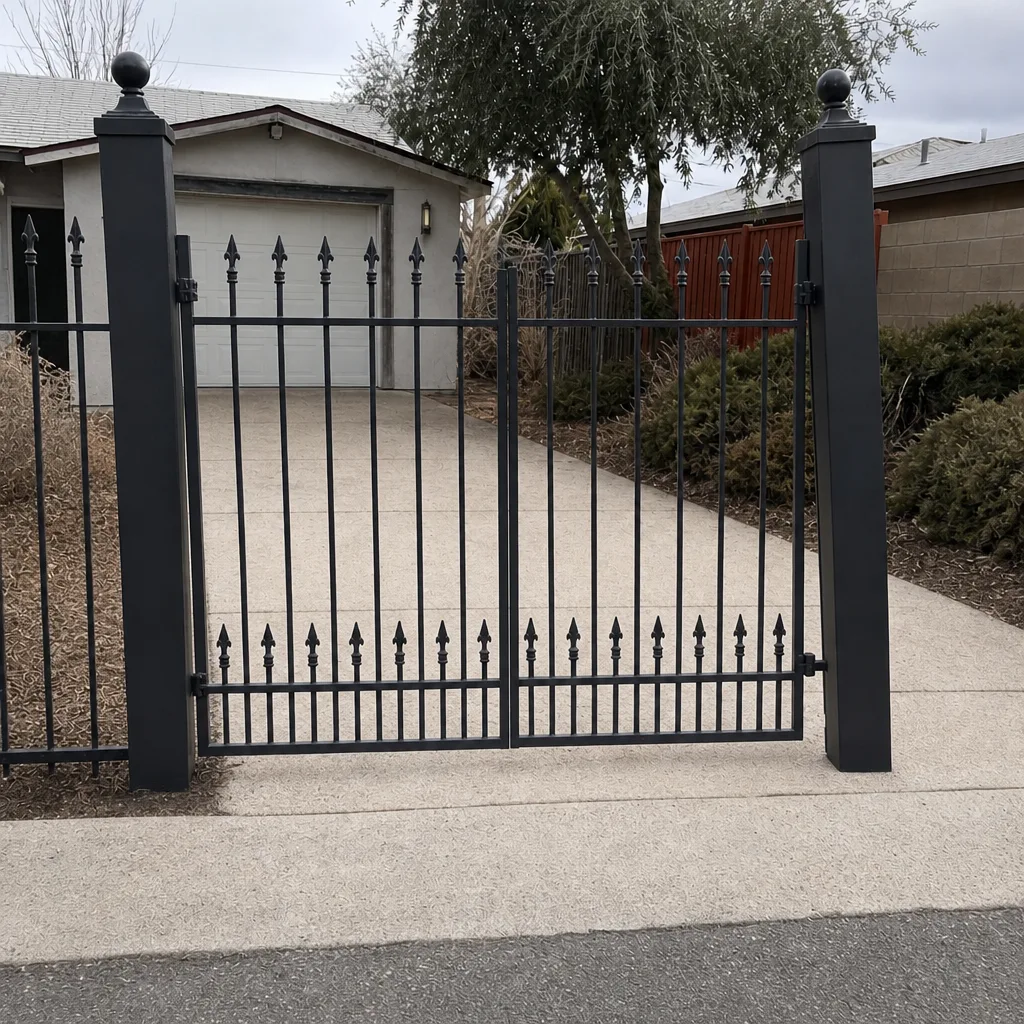 After
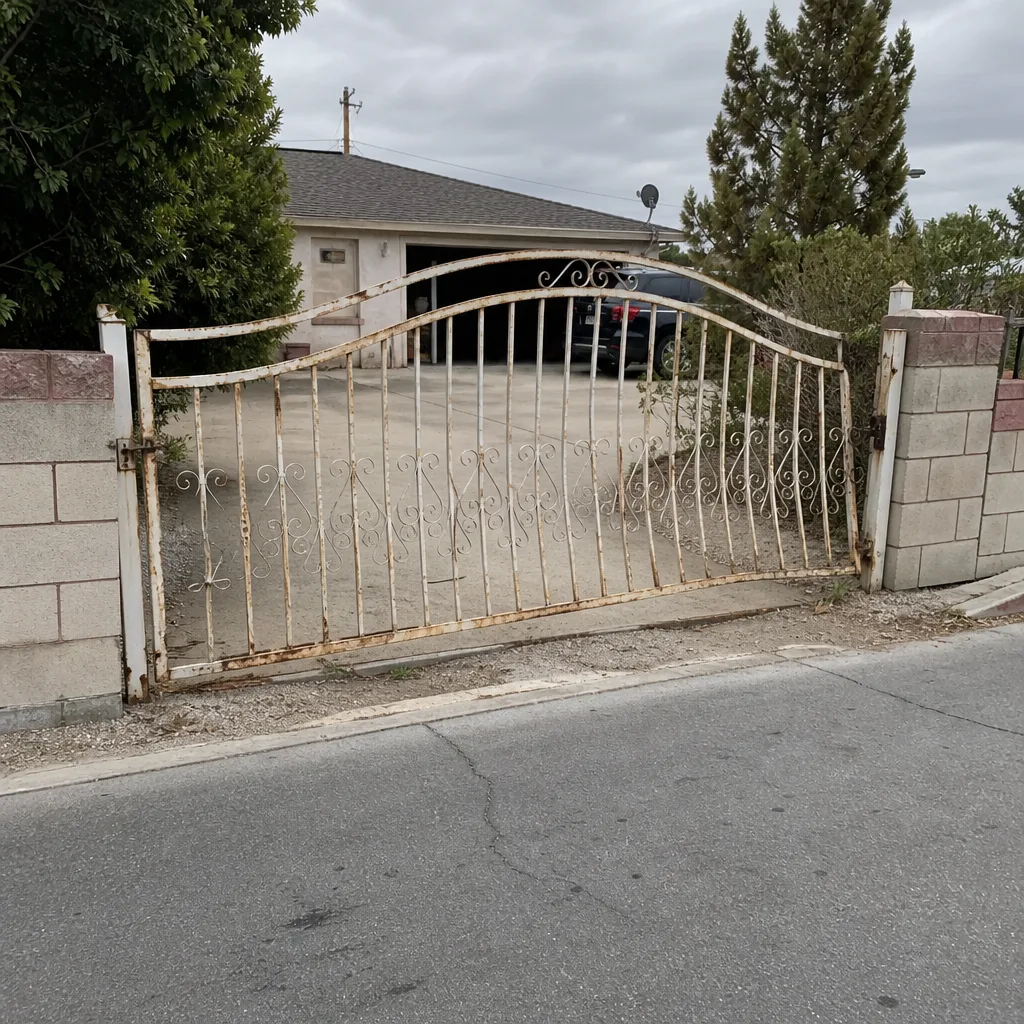 Before
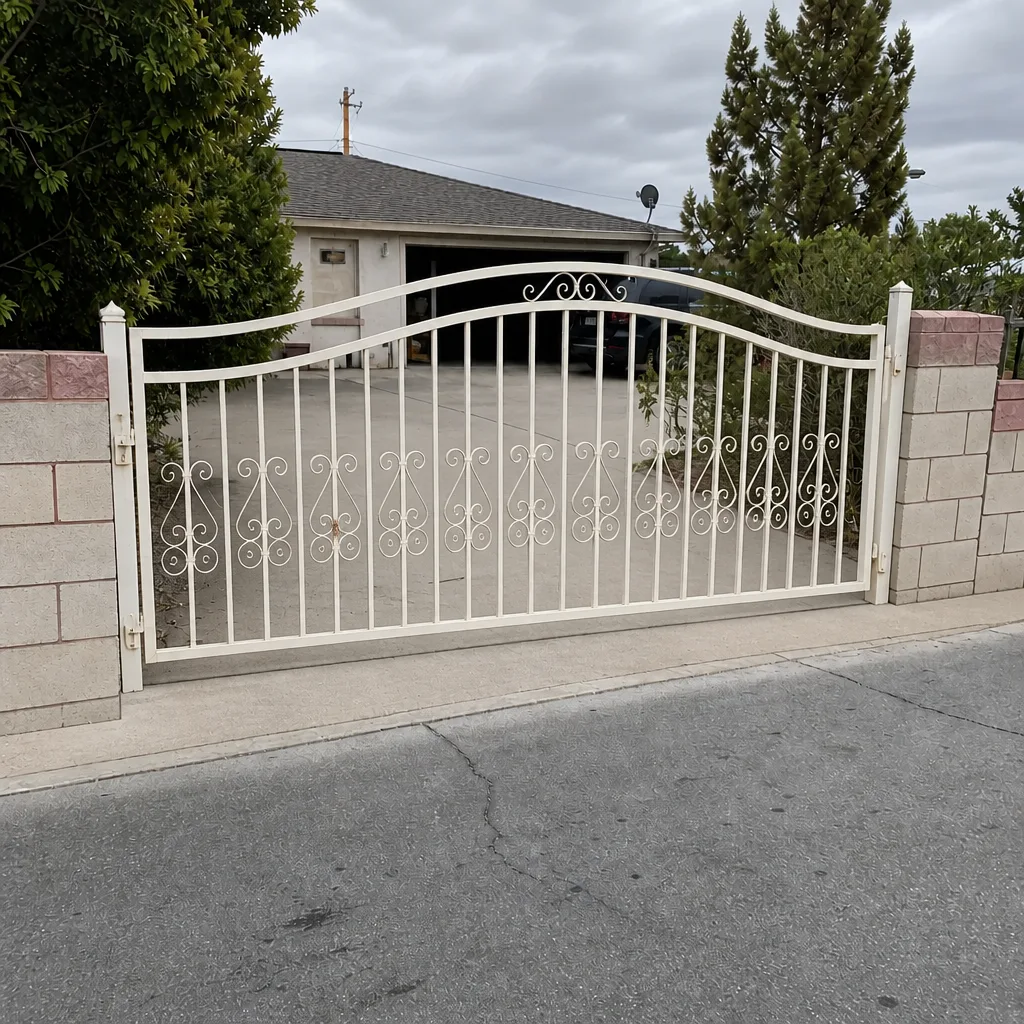 After
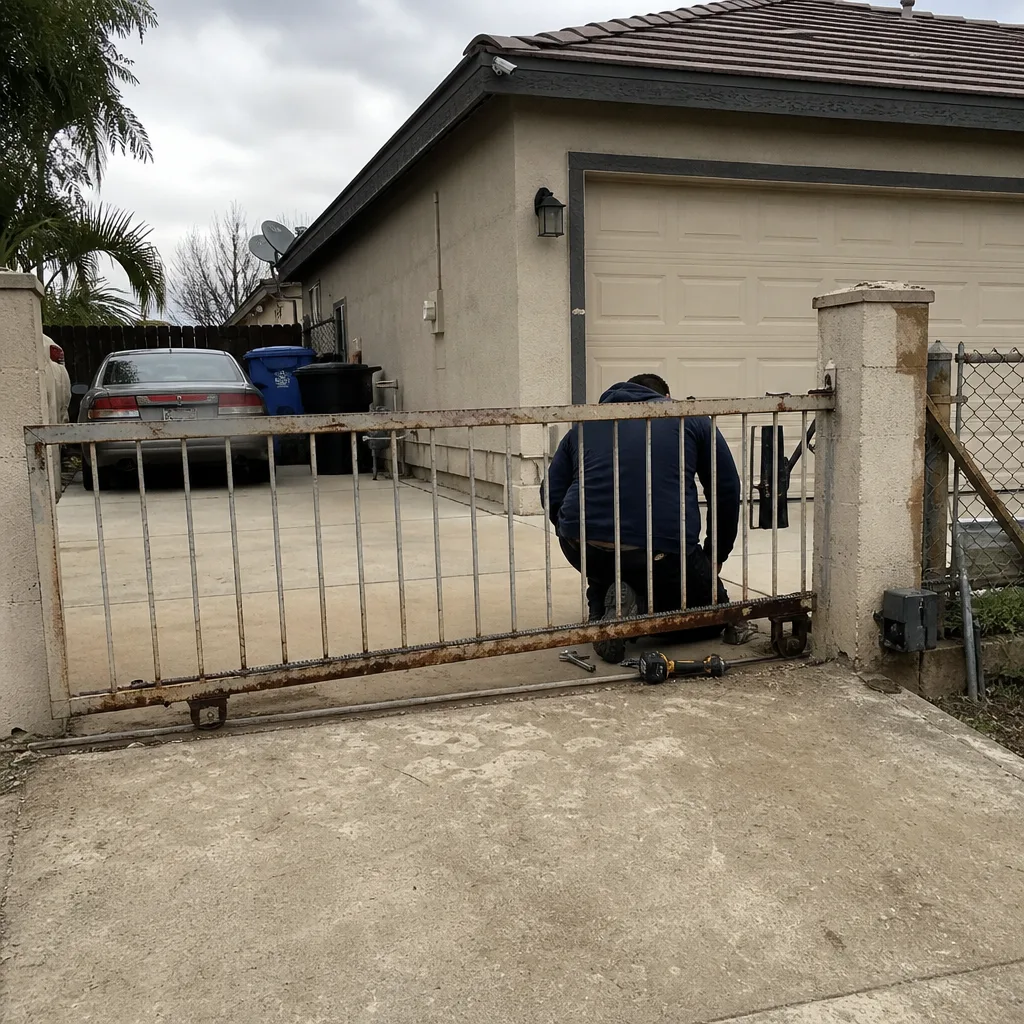 Before
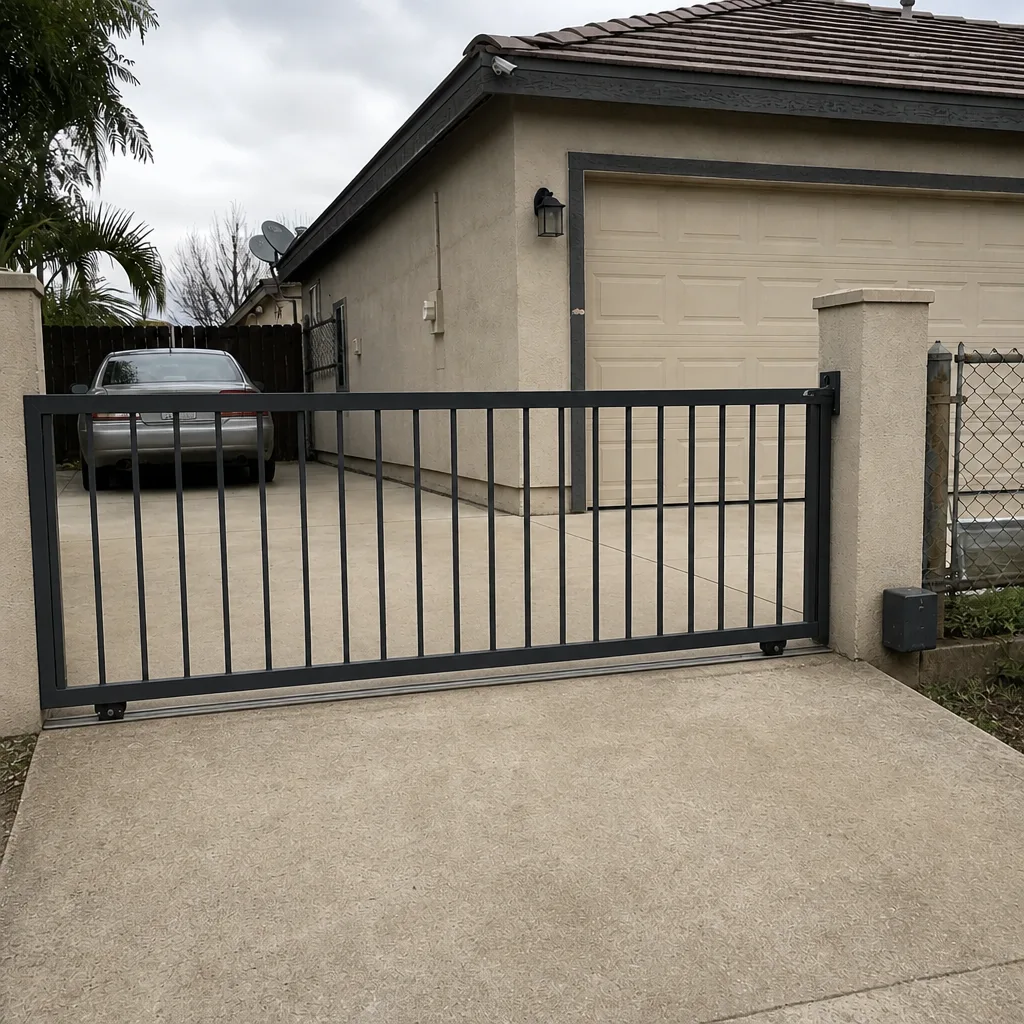 After
How Does an Automatic Gate Opener Work? A Spring Valley Owner’s Guide to the Five Subsystems
An automatic gate opener turns a small electric motor into a controlled swing by running five subsystems in sequence: the motor and gearbox move the arm, the control board decides when and how far, the limit switches tell the board where open and closed are, the safety edges and sensor eyes stop the gate when something is in the way, and the access control interface (remote, keypad, loop detector) is how you tell it to start. When a gate in Spring Valley stops working, the failure is almost always in one of those five, not all of them – which is why a proper diagnosis costs far less than a motor swap. If you’d rather have someone walk the system with you, call (888) 300-3906 and we’ll talk it through.
The manual that came with your swing gate operator was written for a climate where the problem is freezing, not baking. That single fact explains a lot of what goes wrong on a Spring Valley gate, so let’s walk the system the way you’d actually troubleshoot it in the desert.
The five parts of a swing gate operator, and how they talk to each other
Think of the operator as a small chain of command. Each part has one job, and when one part lies to the next, you get the symptom you’re chasing.
- Motor and gearbox. Converts electricity into torque. On a swing gate, that torque drives an arm that pushes or pulls the gate leaf through its arc. A gearbox full of dried grease or a failing start capacitor will make a healthy motor look dead.
- Control board. The brain. It receives a command, starts the cycle, checks the safety inputs mid-travel, and confirms the gate reached its target. Most “the gate has a mind of its own” behavior lives here, not in the motor.
- Limit switches. Tell the board where open and closed actually are. When a limit slips, the gate over-travels, reverses, or stops halfway – and the board looks broken when it isn’t.
- Safety edges and sensor eyes. The edge is a pressure strip on the gate leaf; the eyes are an infrared beam across the opening. Both are entrapment protection, and both get tested by the board every cycle.
- Access control interface. The keypad, the remote, the loop detector buried in the driveway. This is how you issue the command. A weak remote battery or a dusty keypad can mimic a board failure.
The parts talk to each other in a fixed order: you press a button, the board reads the limit switches to know where the gate sits, it commands the motor, it watches the safety inputs the whole way, and it stops when the limit switch reports “closed.” Break any one link and the symptom usually points somewhere other than where you’d guess.
Why a Spring Valley gate fails on a heat cycle, not a freeze cycle
Spring Valley is an unincorporated Clark County suburb built almost entirely during the 1980s through 2000s boom. Nearly every driveway and courtyard gate here is a post-1997 decorative iron or vinyl gate still turning on original builder-grade hardware, and those operators are now hitting their wear-out cycle across whole tracts at once. What kills them isn’t cold – it’s heat, and it happens in three predictable places.
Above 90°F, the motor’s thermal protection kicks in more often. That’s the operator telling you it’s been working too hard, and it’s usually a sign of a binding gate or a tired capacitor rather than a motor on its way out. Meanwhile the control board’s capacitors run at reduced efficiency in sustained heat, which is why an otherwise healthy board starts acting erratic in July and settles down in November. And the sensor eye lenses attract desert dust that scatters the infrared beam, so the gate reverses on a phantom obstruction that isn’t there. That last one is worth testing after every monsoon season, because a dust storm can reset sensor alignment overnight.
None of this is in the manual, because the manual was written for a gate that spends its winter fighting frost, not a gate in Spring Valley baking on a block wall through 100°F+ afternoons.
The pilaster is the part nobody warns you about
Most Spring Valley gates don’t hang on wood posts – they hang on masonry pilasters and block walls. The operator arm anchors to that pilaster, and every open and close cycle transfers torque into the anchor point. Do that a few thousand times and you get loosened anchor bolts and hinge weld fatigue. That’s why a gate that “won’t close right” often turns out to be a gate opener problem that’s really a structural one: fix the arm without addressing the pilaster and you’ll fix it twice.
If you ever change the gate, know that Clark County handles gate permits and inspections for Spring Valley since there’s no city building department, and your HOA’s architectural rules – not municipal code – usually decide gate height, style and color. That matters before any replacement, not after.
UL 325 in plain language: what every gate opener is required to do
Every automatic gate opener sold in the US must reverse if it contacts an obstruction – that’s the UL 325 standard, and it’s not optional. The sensor eyes provide the secondary entrapment protection, so if the beam is broken mid-travel, the gate should stop and reverse. Homeowners should test both functions once a year, and in Spring Valley, re-test after every monsoon season because blowing dust is the most common cause of a misaligned eye.
One more thing worth saying plainly: a gate operator under tension, attached to a heavy iron leaf on a masonry anchor, is not a do-it-yourself repair. A gate that reverses unexpectedly or stops mid-travel should be looked at by someone trained on the system before anyone starts loosening bolts.
What a proper diagnosis looks like (and why it beats a replacement quote)
At Gatewood Fence & Gate, the approach is repair-first – test each subsystem individually before quoting a new operator. Here’s the order we work through when a swing gate operator acts up in Spring Valley:
- Command the gate and watch the whole cycle – where it stalls, whether it reverses, where the eyes break.
- Test the control board’s limit-switch readings against the actual gate position.
- Meter the start capacitor and check the gearbox for binding before condemning the motor.
- Test both the safety edge and the sensor eyes, then check alignment and clean the lenses.
- Inspect the pilaster anchor and hinge welds – on-site welding keeps the gate in your driveway instead of hauling it off.
- Confirm access control: remote batteries, keypad contacts, loop detector.
A motor that won’t run is very often a failed capacitor or a binding gate, not a failed motor – and that difference in cost is the whole reason to test before you replace. We’re certified to service nine major gate brands, including DoorKing, Elite and LiftMaster, so the odds are good we can diagnose what’s already on your pilaster.
Every job carries our Gate Motor & Opener work in writing with the 90-Day Done Right Promise, and a live person answers every call 24 hours a day, 7 days a week. Standing offers include $40 off any repair over $200, no trip charge inside the county, a free second opinion on any written estimate, and a permanent 10% discount for seniors and veterans.
Key Takeaways
- A swing gate opener is five subsystems – motor, control board, limit switches, safety edges/sensor eyes, and access control – and a failure in one imitates a failure in another.
- In Spring Valley’s heat, thermal protection and dusty sensor eyes cause most phantom faults that look like a dead board.
- The operator arm transfers torque into the masonry pilaster, so hinge and anchor problems are gate opener problems.
- Testing subsystems individually is far cheaper than replacing a motor that may only need a capacitor.
FAQs
That’s almost always a safety input – a dusty or misaligned sensor eye, or a pressure edge reading an obstruction mid-travel – not a motor fault. It’s the most common call we get in Spring Valley after a dust storm, and it’s usually a lens cleaning and alignment fix. Call (888) 300-3906 if it keeps happening after a monsoon.
Most swing gate opener repairs here land somewhere between a small sensor or limit adjustment and a control board or capacitor replacement, and the range depends on which subsystem failed. We quote upfront before any work begins, and the difference between a capacitor and a full motor matters enormously – which is why we test first. Call (888) 300-3906 for a free estimate.
Command the gate to close and, using a firm board or the manufacturer’s test method, confirm it reverses when it contacts an obstruction, then break the sensor beam to confirm it stops and reverses too. Do this once a year and again after monsoon season. If either test fails, don’t keep operating the gate – call (888) 300-3906 and have it serviced.
Most of the time it’s repaired on site, especially when the fault is a capacitor, a limit switch, a sensor eye, or a loose anchor on the pilaster. We test each subsystem instead of quoting a whole new operator, and on-site welding keeps the gate in your driveway. Call (888) 300-3906 and we’ll walk through what you’re seeing.
If you’d rather have it looked at, Gatewood Fence & Gate Spring Valley offers a no-pressure assessment in Spring Valley – call (888) 300-3906. Understanding how the system works puts you in a better seat for that conversation, and we’re glad to explain any diagnosis in plain terms while you decide.
Written by the team at Gatewood Fence & Gate Spring Valley.