
Last updated November 18, 2026
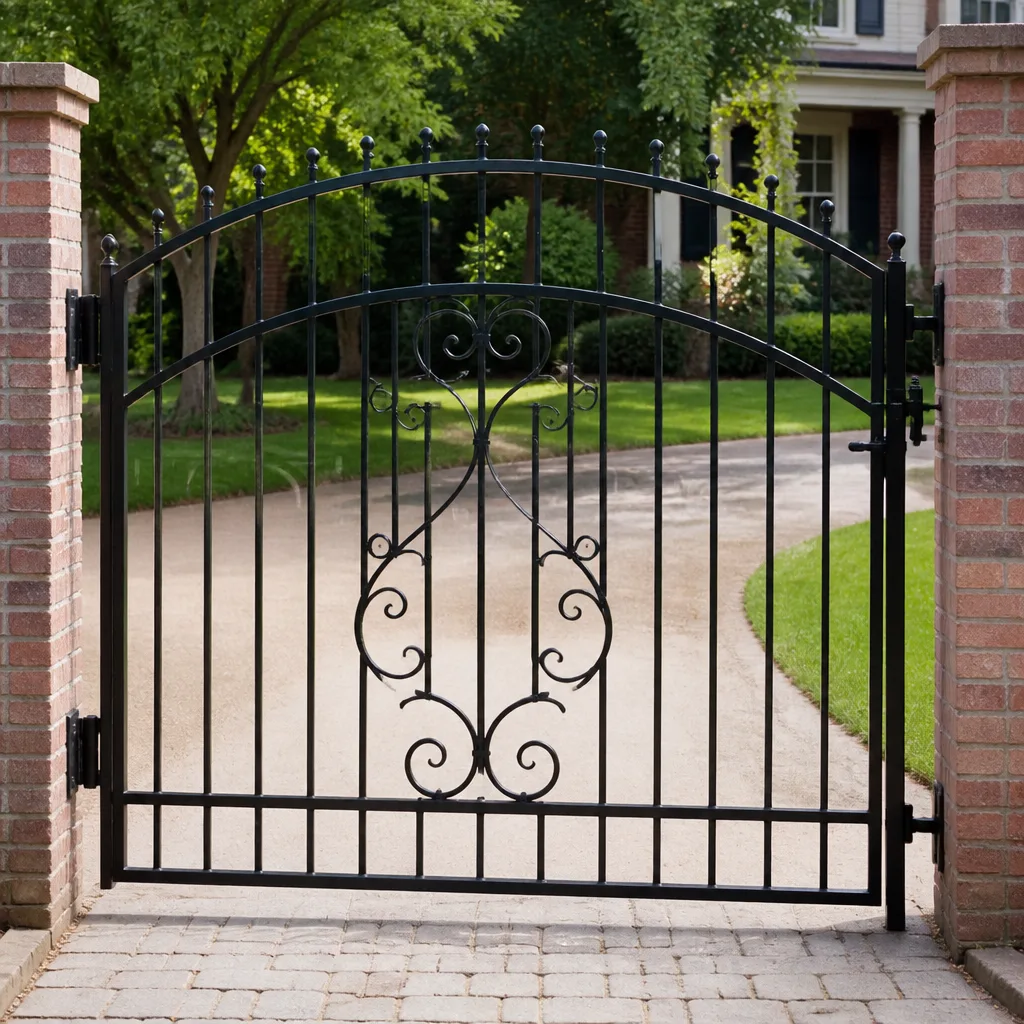 Wrought iron
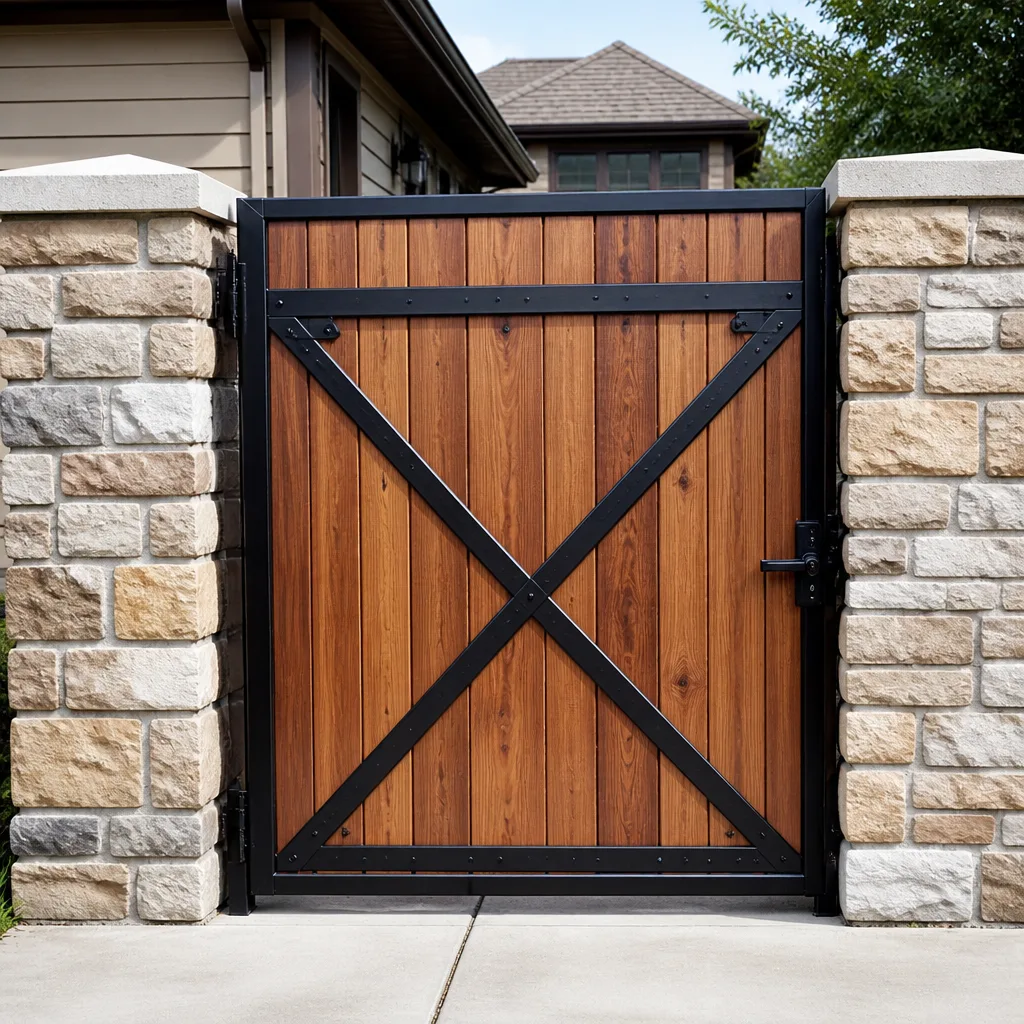 Wood & steel frame
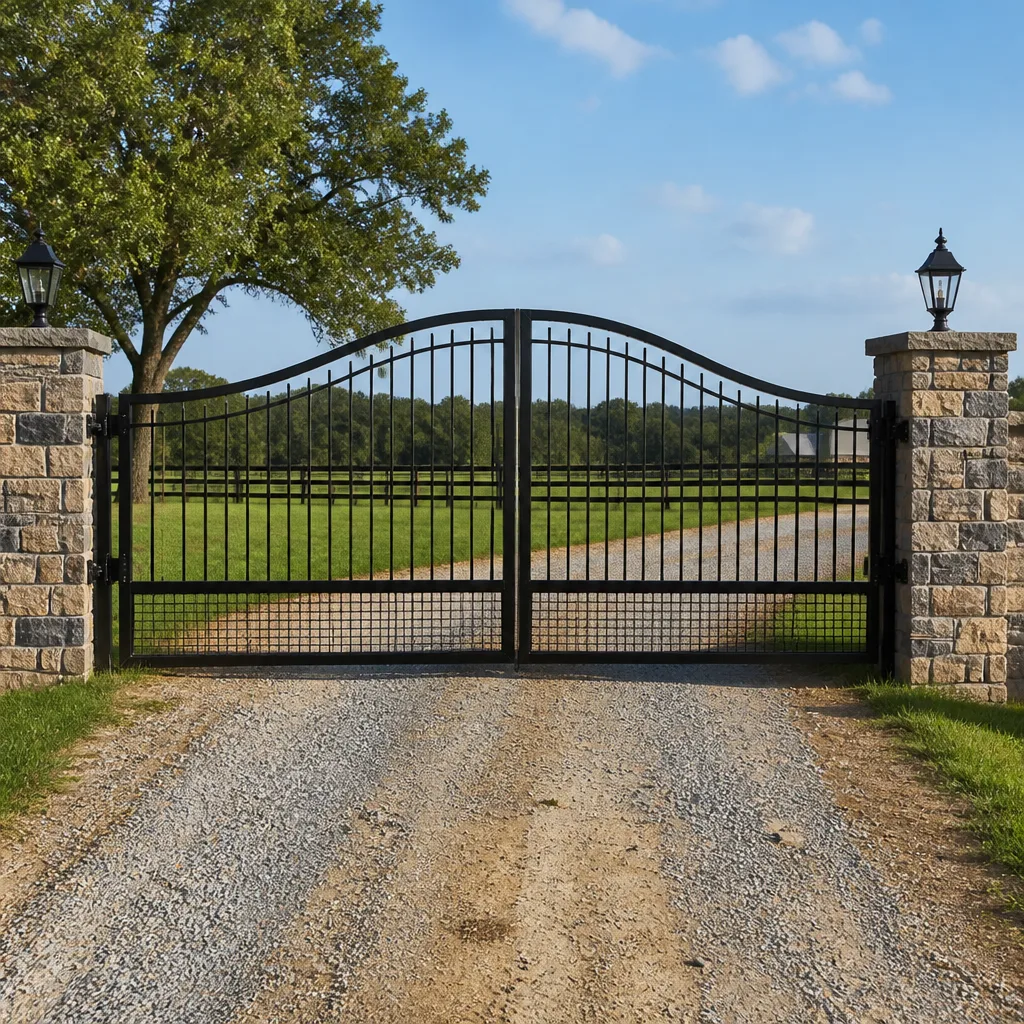 Farm & ranch
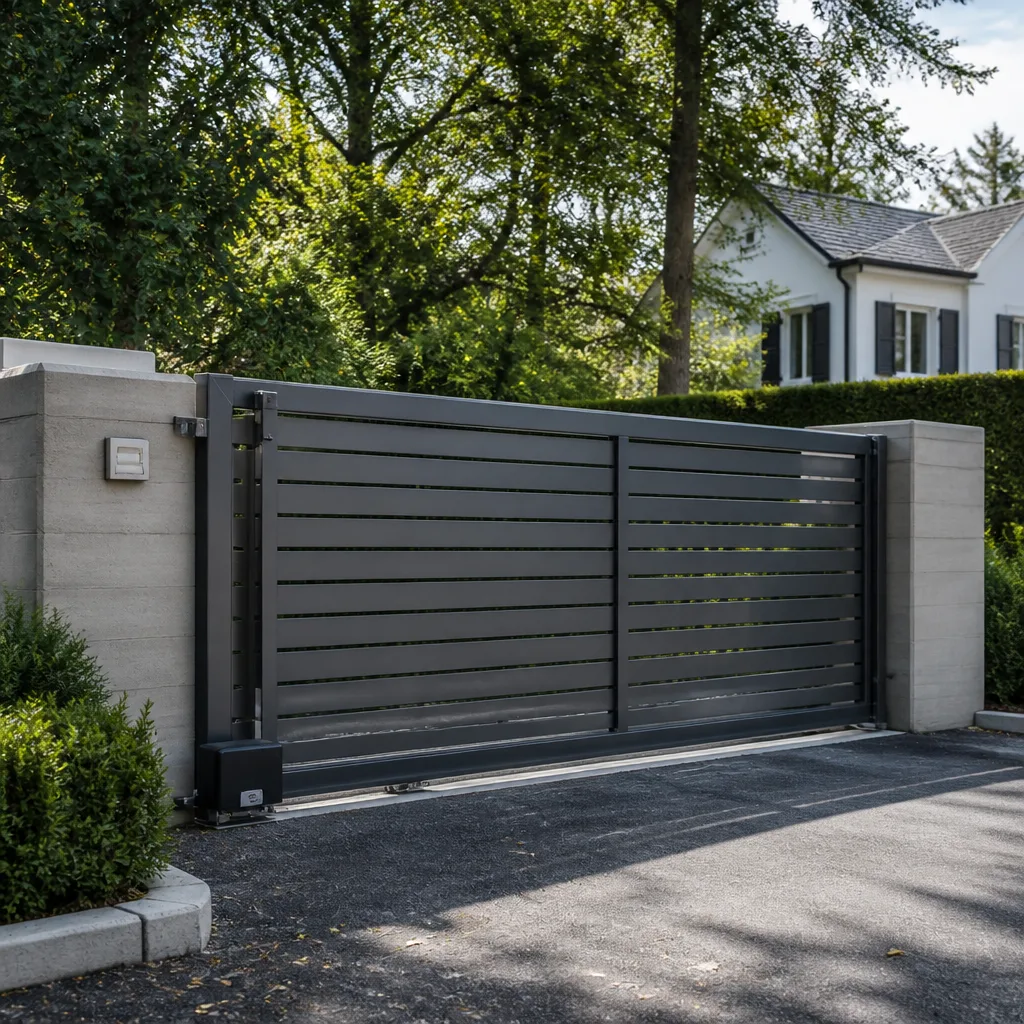 Sliding driveway gates
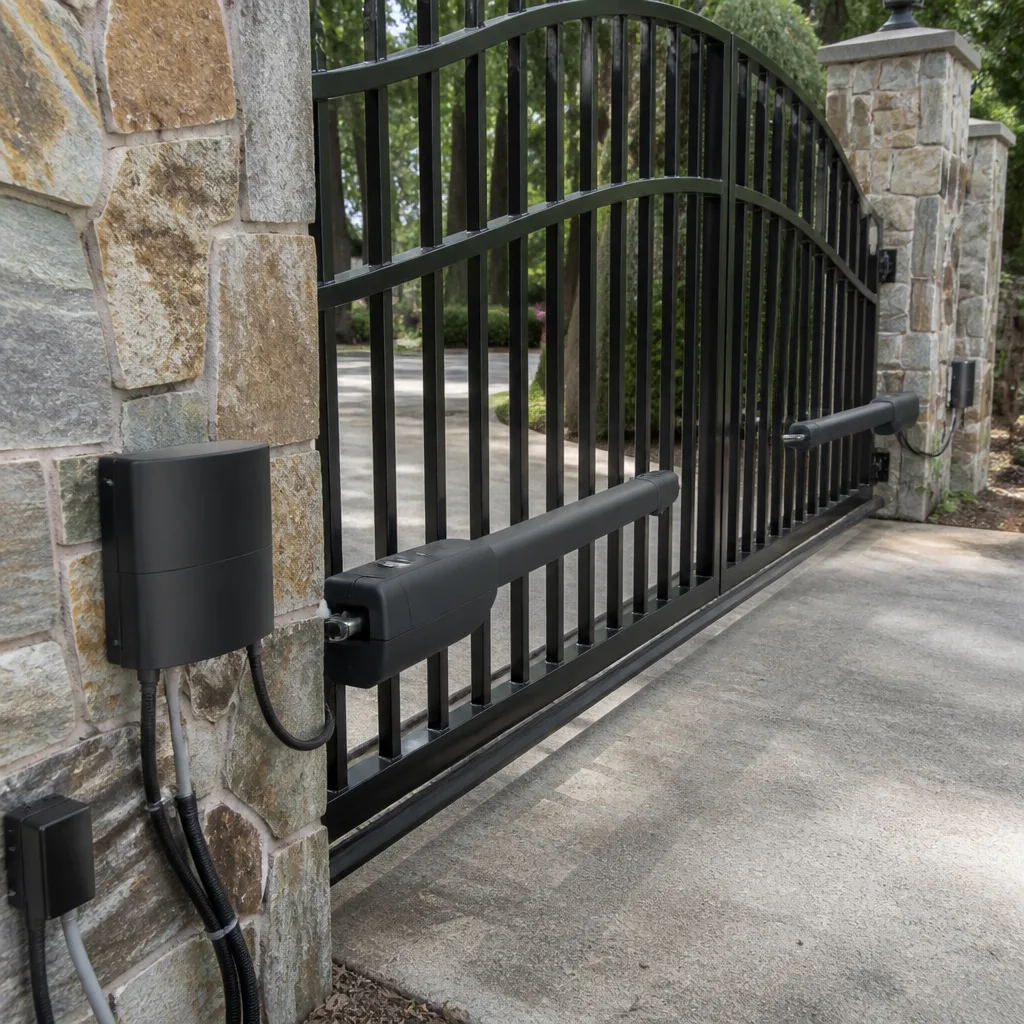 LiftMaster operators
Free on-site gate assessment - hinges, posts, and your LiftMaster or Nice gate operator checked before anything is quoted
The assessment is free and the quote is the invoice.
Get your free estimateThe Complete Gate Parts & Welding Guide for Spring Valley Homeowners
Caliche soil under a gate post behaves nothing like the soil in the instructional video your installer watched. In Spring Valley, that hardpan layer starts shallow and turns concrete-hard when it dries, so a post set the standard way – dug to two feet with a bag of quick-set and a prayer – can start leaning inside two years. We’ve pulled posts out of neighborhoods off Rainbow Boulevard that were set no more than 16 inches deep, and the caliche underneath was still untouched. The gate never had a chance. This guide covers the gate parts and welding decisions that actually work in Spring Valley’s soil, heat, and HOA configurations, from steel grades to footing depth to what we weld in your driveway versus what gets fabricated off-site.
Quick Answer
The right gate parts for a Spring Valley home depend on three local factors: steel that survives the Mojave heat cycle without going brittle, footings deep enough to punch through caliche, and hardware matched to the HOA configurations common in Spring Valley’s master-planned communities. On-site welding is almost always the faster, stronger choice for repairs because it keeps the gate in your driveway instead of a shop across the valley. Get those three right and a gate can last decades here. Get them wrong and you’ll be fixing it every two years.
Styles & brands we work with
- Wrought iron
- Wood & steel frame
- Farm & ranch
- Sliding driveway gates
- LiftMaster operators
Table of Contents
- Which steel grades hold up in the Mojave heat cycle
- How caliche and rocky soil affect post depth and footing design
- HOA gate configurations in Spring Valley and compatible parts
- Galvanized, powder-coated, or bare steel: what the climate decides
- What we weld on-site and what gets fabricated off-site
- The gate parts worth keeping on hand in Spring Valley
- How to inspect your gate before small problems become big ones
Which Steel Grades Hold Up in the Mojave Heat Cycle
Steel in Spring Valley goes through a punishing daily and seasonal swing. Summer afternoons push past 110°F, winter nights dip near freezing, and the metal expands and contracts across that range hundreds of times a year. The wrong grade doesn’t just rust – it gets brittle and cracks at the welds, especially where the frame meets the hinge post.
In our experience, the steel that holds up best here is mild carbon steel in the A36 range for gate frames, welded with proper penetration and finished well. It’s forgiving, it’s weldable on-site, and it bends before it breaks under wind load or a car bumper. Higher-carbon or heat-treated steels can harden and crack under thermal cycling unless they’re handled correctly, and thin imported tube steel sold at big-box stores is the usual suspect when we find a frame that has split at a corner within a few seasons.
What we avoid on Spring Valley gates:
- Thin-wall tube steel under 14 gauge – common in inexpensive pre-built gate panels and prone to buckling in the heat
- Mystery-metal imports with no grade stamp – you can’t weld what you can’t identify, and the weld is where it fails
- Cast pot-metal hinge brackets – they crack at the screw holes when the gate swells in summer
If you’re replacing panels or framing a new gate, ask what grade the steel is. A shop that can’t answer that question isn’t welding for this climate.
How Caliche and Rocky Soil Affect Post Depth and Footing Design
Post depth is where most gate failures in Spring Valley begin. The caliche layer under much of the valley is dense, calcium-cemented soil that drains poorly and expands and contracts with moisture. A footing that sits above it, or one that’s undersized for the gate load, will heave and shift. When a heavy gate hangs off a post that’s moving, the whole assembly fights itself.
For a typical residential swing gate, we set posts deep enough to anchor below the active soil layer, and we oversize the concrete footing rather than relying on a bag of quick-set poured into a shallow hole. For a wide driveway gate carrying a motor, the footing has to handle both the gate’s weight and the torque of the operator arm – that’s a different calculation than a walk gate.
The step-by-step we follow for a Spring Valley gate post:
- Probe the soil first to find where the caliche layer begins – this determines how deep the hole needs to go
- Dig or auger past the loose topsoil into stable ground, with a bell-shaped base to resist uplift
- Set the post plumb and brace it in all four directions before any concrete goes in
- Pour a proper concrete mix, not a fast-set patch, and let it cure before hanging the gate
- Re-check plumb after cure, because caliche movement can shift a post in the first weeks
One detail that gets skipped: a gate sags in the hinge post, not in the middle. That’s where we start every diagnosis. If the post is moving, welding the frame won’t fix anything – you’ll fix it twice.
HOA Gate Configurations in Spring Valley and Compatible Parts
Spring Valley’s master-planned communities often specify matching gate styles, finishes, and even operator brands across the neighborhood, which means the parts you can install are sometimes dictated before you’ve picked up a wrench. The most common setups we see are single-swing driveway gates with a residential operator arm, dual-gate entries with a shared access control panel, and pedestrian walk gates with self-closing hinges.
Where homeowners get stuck is brand compatibility. If your neighbor’s gate runs a LiftMaster operator, that doesn’t mean the control board or remote you buy at the hardware store will work on yours. The nine brands we’re certified to service – LiftMaster, FAAC, BFT, Linear, Viking, Ghost Controls, DoorKing, Elite, and Mighty Mule – each have their own control logic and accessory compatibility. A Ghost Controls arm and a DoorKing access panel, for example, don’t always talk to each other without the right interface.
Before you buy parts for an HOA gate in Spring Valley, confirm:
- The operator brand and model already installed (check the control box label)
- Any architectural review requirement for finish and style changes
- Whether the HOA owns the operator and access panel or you do
- Voltage and wiring at the gate location, since many communities pre-wire to a specific spec
Get those four answers and you avoid buying a part that’s the right shape and the wrong fit. If you’re putting in a new operator, our Gate Motor & Opener in Spring Valley page walks through brand and model selection for local conditions.
Galvanized, Powder-Coated, or Bare Steel: What the Climate Decides
Finish isn’t cosmetic in the Mojave. The summer sun here bleaches and chalks cheap coatings, the winter cold snaps them, and the swing in between opens hairline cracks where rust starts. The finish also affects how easily a gate can be welded later, which matters more than most homeowners realize.
Bare steel is weldable and repairable on the spot, but it rusts fast in Spring Valley’s dry-then-wet pattern and needs paint within days of installation. Galvanized steel – the hot-dip kind, not the spray-can version – gives the best corrosion protection for posts and frames, but the zinc coating has to be ground back before welding and re-protected afterward. Powder coating looks the best on day one but chips at corners and hinge points, and once moisture gets under the coating it rusts from the inside out. We’ve seen powder-coated gates in Spring Valley look perfect for four years and then rust through at every weld.
For most residential gates here, we recommend hot-dip galvanized frames with a paint topcoat over the field welds. It’s repairable, it survives the heat cycle, and it holds up to the sun without chalking. If the HOA requires a specific color or finish, that decision often dictates the rest – just make sure the finish leaves room for future welding.
What We Weld On-Site and What Gets Fabricated Off-Site
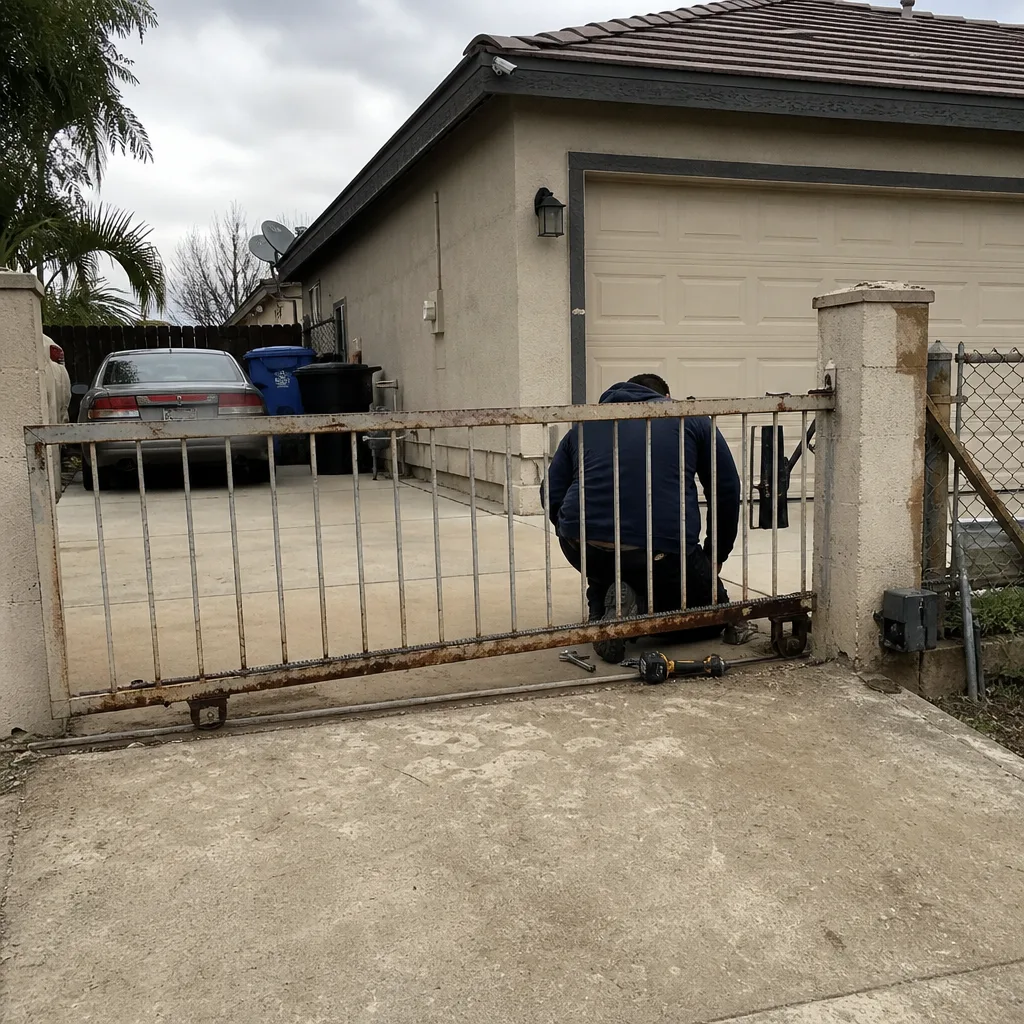
Most gate repairs we see in Spring Valley don’t need to leave the property. If the frame is cracked, a hinge has torn loose, a bracket has failed, or a post needs a repair plate, that’s on-site welding work – done in your driveway with the gate still hanging. That’s faster than hauling it off, and it keeps the gate on its existing footings so nothing gets re-aligned unnecessarily.
What gets fabricated off-site are things that need bench work: building a new gate from the frame up, fabricating a custom infill panel, or prepping a section that has to be cut and measured precisely before it goes back on. Even then, the final fit and weld to the existing assembly happens in your driveway so the gate closes true on your posts, not on a jig.
On-site welding wins for these repair types:
- Cracked frame corners or welds that have split
- Hinge bracket repair or replacement
- Post-to-frame reinforcement plates
- Latch alignment and strike plate adjustments
- Operator bracket reinforcement
Why this matters: a repair done at the gate means the gate meets its own geometry when it’s welded. A section cut and welded in a shop and then bolted back on has to line up with everything it left, and that’s where repair timelines stretch. For a broader look at what to expect when something goes wrong, see our Gate Repair in Spring Valley page.
The Gate Parts Worth Keeping on Hand in Spring Valley
Every gate owner in Spring Valley eventually needs a part, and the wait for one to arrive is usually what keeps a gate stuck open for a week. If you’ve got a driveway gate, a pedestrian gate, or both, a small stash of common parts saves a lot of inconvenience.
- Hinge pins and bushings – the most common wear item, and cheap to keep on hand
- Latch and strike hardware – matches your gate’s existing brand; check the label
- Operator remote batteries and spare remotes – matched to the brand, not universal
- Photocell and safety edge replacement – these fail in sun and heat before the operator does
- Stainless fasteners – they won’t rust frozen into a Spring Valley gate the way zinc-plated bolts do
One caution: universal-fit parts are rarely fit for a Spring Valley gate with a specific operator and HOA style. If you don’t know the exact model, wait and confirm before buying. Fix the panel without the post and you’ll fix it twice, and the same goes for parts that almost fit.
How to Inspect Your Gate Before Small Problems Become Big Ones
A gate tells you it’s failing long before it stops opening. A walk-around every few months catches the cheap fixes before they turn into expensive ones. This is what we look at on a Spring Valley gate, and it’s what you can check yourself without touching anything dangerous.
- Push the gate from the hinge post side. If the post moves in the ground, that’s a footing problem, not a hardware problem.
- Watch the gate at rest. Show me the gate closing on its own and I’ll show you where it’s failing – it means a hinge or footing has shifted.
- Look for cracks at weld corners and hinge brackets. Small cracks grow fast once the gate starts flexing.
- Check the latch engagement. If the latch doesn’t fully seat, the gate is out of alignment.
- Test the operator’s safety reverse. Press the beam or the safety edge and confirm the gate stops or reverses. If it doesn’t, stop using the operator and call someone.
- Look at the finish around welds and corners. Hairline rust here is a warning, not a cosmetic issue.
Common Mistakes to Avoid
- Setting a post shallow into caliche. Standard footing depth for other parts of the country doesn’t cut it in Spring Valley. Short-change it and the post leans within a couple of seasons.
- Buying universal parts for an HOA gate. A remote or control board that “fits most” rarely fits the operator that’s actually on your gate. Check the model first.
- Welding over rust without treating the steel. The weld looks fine for a month and fails sooner than the original because the rust was never removed.
- Powder-coating over field welds without re-sealing. Powder coating chips at hinge points and weld edges; once water gets under it, the frame rusts from inside out.
- Forcing a sagging gate back into alignment with the operator. If the operator is straining to open a gate, the gate has a mechanical problem that a stronger operator won’t fix.
- Ignoring a failing safety edge or photocell. These are the parts that protect kids, pets, and cars. Don’t wait on a replacement.
- Hiring a shop that can’t weld on-site. Hauling a gate off means it comes back off-alignment with the posts it has to close against.
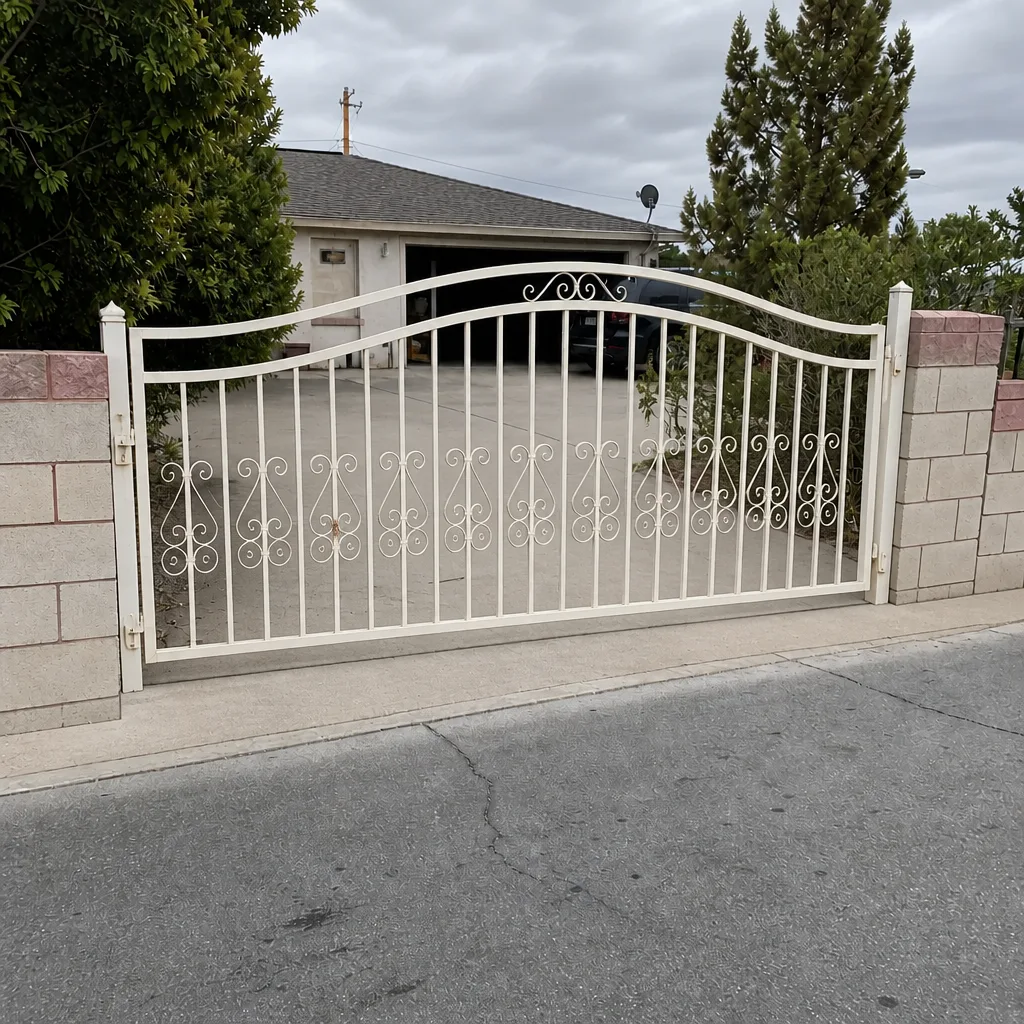
See the difference
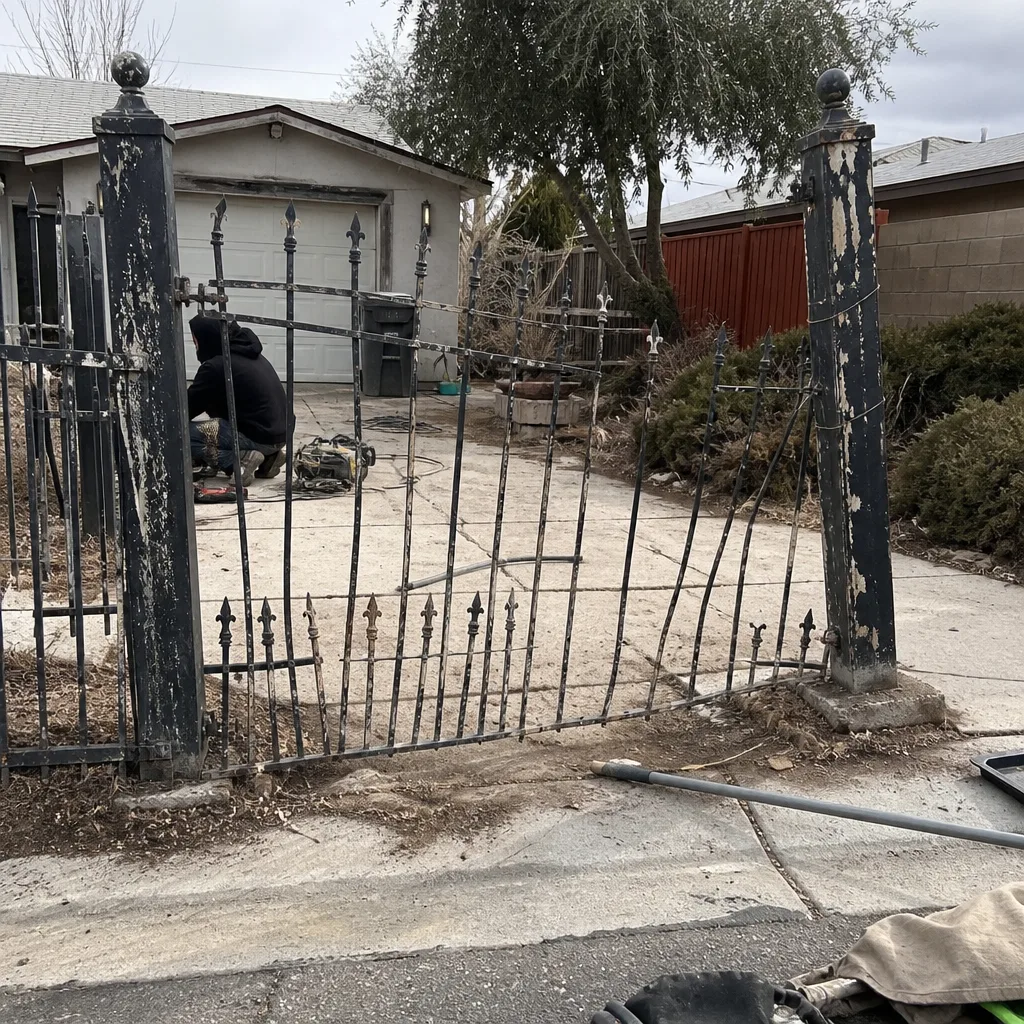 Before
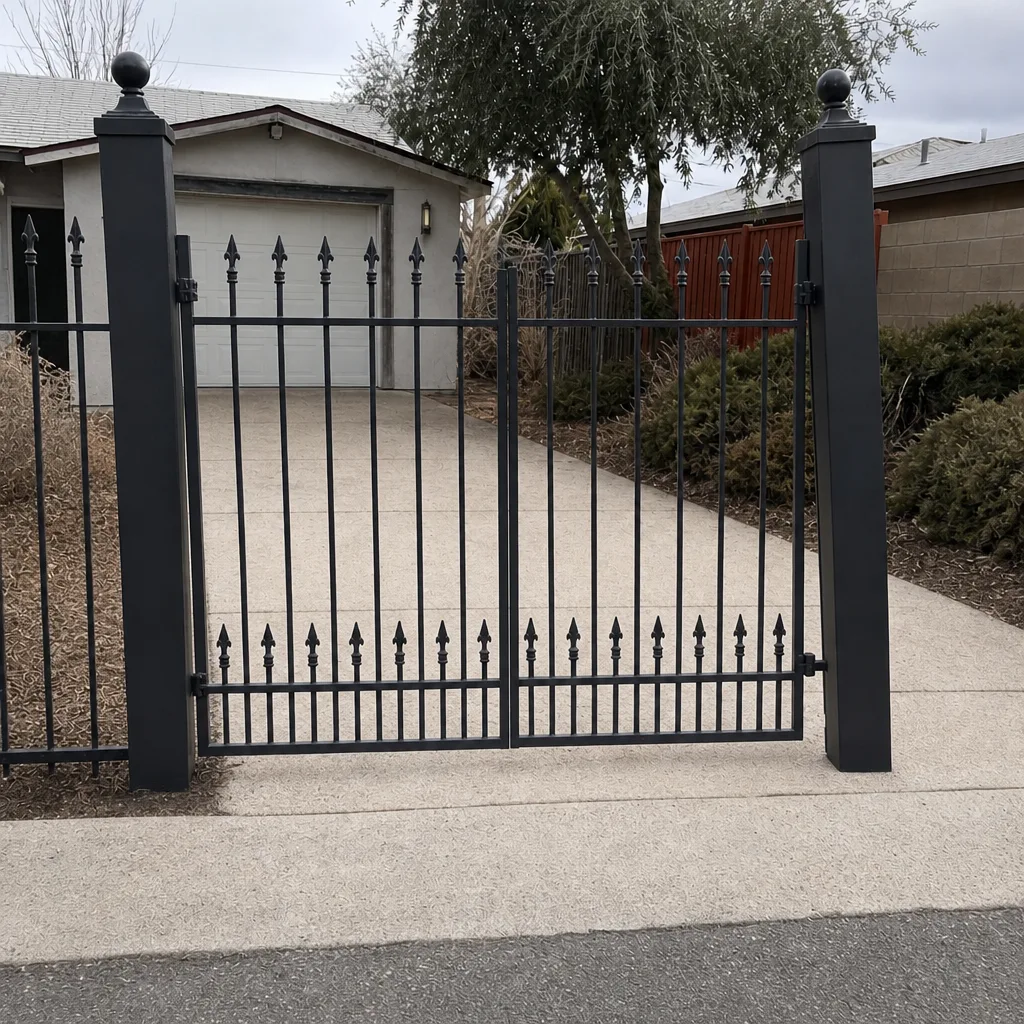 After
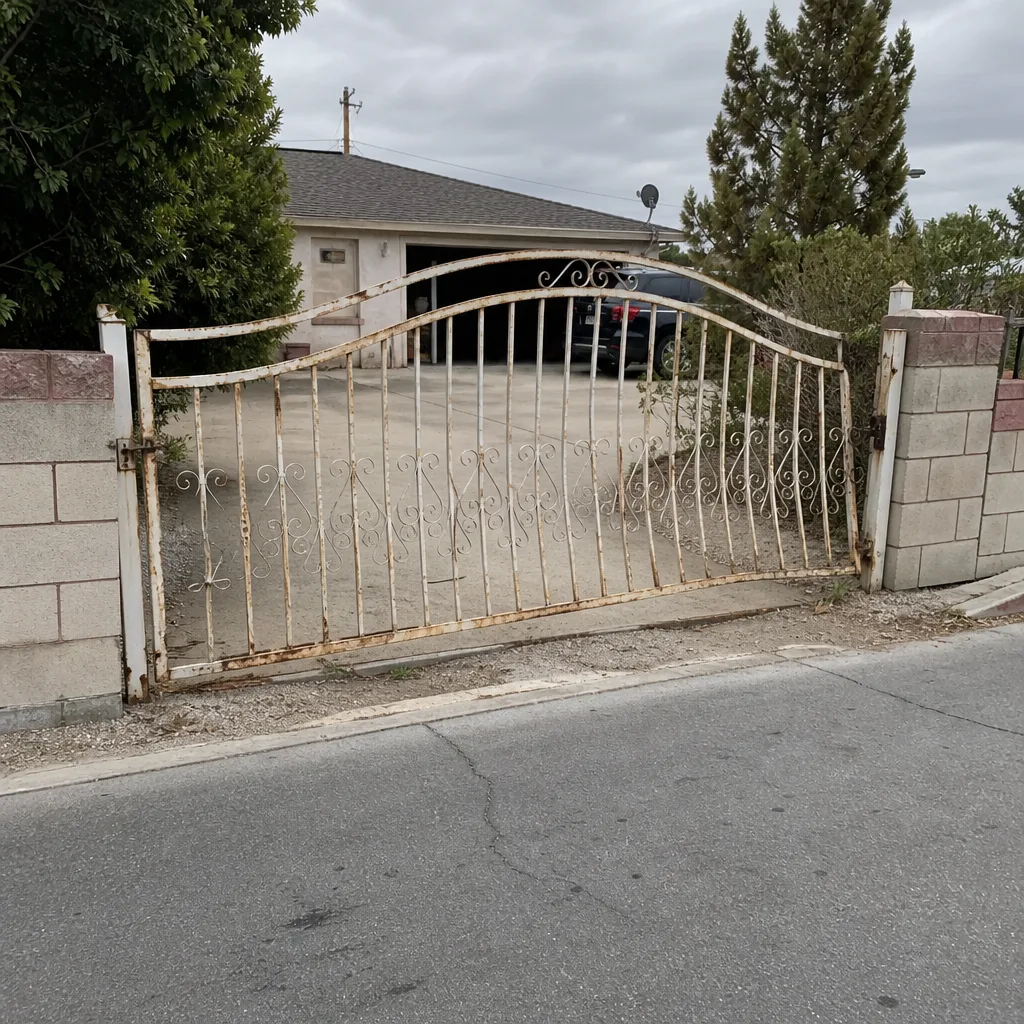 Before
 After
 Before
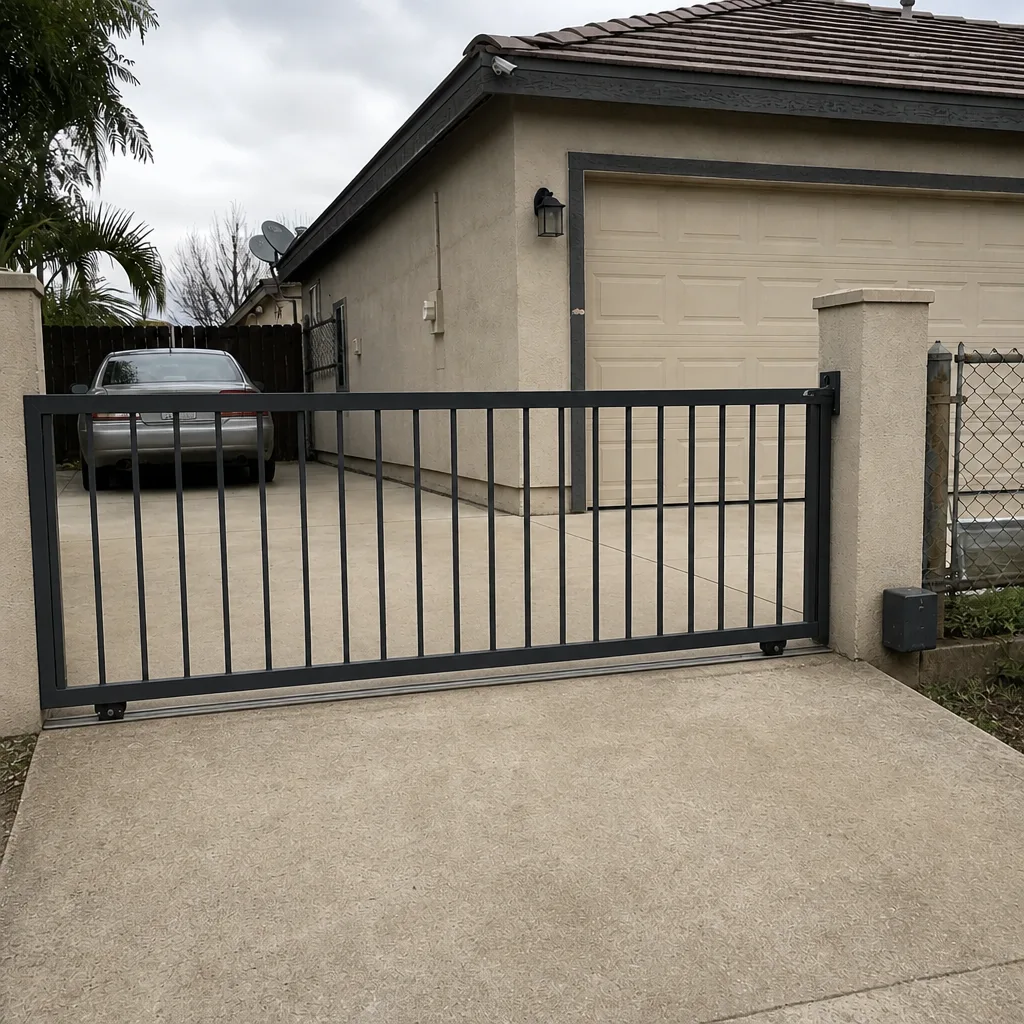 After
When to Call a Professional
Some gate problems are safe to spot and call about. A gate that’s leaning, a weld that’s cracked, a hinge that’s torn loose, an operator that’s straining or reversing wrong, or a safety edge that’s stopped working all need a trained welder and gate mechanic before they get worse. High-tension spring, cable, and electrical work at the gate operator head shouldn’t be a homeowner project – a gate under motor load and tension can hurt someone in a hurry. If you’re inside Spring Valley, call and we’ll take a look. Gatewood Fence & Gate Spring Valley offers free estimates in Spring Valley – call (888) 300-3906, and a live person answers, day or night.
Frequently Asked Questions
Mild carbon steel in the A36 range is the best all-around choice for gate frames here because it welds well, bends before it breaks under load, and survives the Mojave heat cycle without going brittle. Avoid thin-wall tube steel and unmarked imported metals, which crack at welds in this climate. Call (888) 300-3906 for a free estimate on your gate.
Posts in Spring Valley need to go deep enough to get below the active caliche layer and into stable ground, with an oversized footing, rather than the standard two-foot hole used in other parts of the country. The exact depth depends on the gate’s width and weight, so it’s a measurement we take on-site. If your post is leaning, call (888) 300-3906 – estimates are free.
Yes, most repairs happen on-site in Spring Valley – cracked frames, hinge brackets, post reinforcement, and latch alignment are all done at your driveway with the gate still hanging. That’s faster than hauling it off and keeps the gate aligned to its own posts. Call (888) 300-3906 to schedule.
The most common Spring Valley HOA gate needs are hinge pins and bushings, latch and strike hardware, operator remotes, and photocell or safety edge replacements, all matched to the brand already installed. Because HOA communities often standardize on one operator brand, buying the correct part means confirming the model on the control box before ordering. Call (888) 300-3906 and we’ll help you identify it.
Is pow
der-coated steel a bad choice for a Spring Valley gate?
Powder coating looks great on day one but chips at hinge points and welds, and once moisture gets under the coating it rusts from the inside out. In Spring Valley’s heat cycle, we’ve seen powder-coated gates rust through at weld corners within a few years. Hot-dip galvanized with a paint topcoat holds up better and is easier to weld later. Call (888) 300-3906 for a second opinion on your existing finish.
In most Spring Valley cases, yes. Cracked frames, torn hinges, and misaligned latches are repair jobs, not replacement jobs, and we’d rather weld the gate in your driveway than sell you a new one. A gate sags in the hinge post, not in the middle, and that’s where we start. Call (888) 300-3906 for a free estimate before you decide to replace.
The Bottom Line
Gate parts and welding decisions in Spring Valley are shaped by factors that don’t show up in a national installation guide: caliche soil, a brutal heat cycle, HOA configurations, and finishes that either survive the sun or fail under it. Pick steel and hardware for these conditions and the gate lasts. Cut corners and you’ll fix it twice. A gate responds to good work, and good work here starts with the footing, moves into the weld, and ends with a finish that can be repaired later. If something on your gate is starting to lean, crack, or strain, we can take a look. See our full range at our Gatewood Fence & Gate Spring Valley home page, or for new gates see Gate Installation in Spring Valley.
For a free estimate on gate repair, welding, or new hardware in Spring Valley, call (888) 300-3906. A live person answers around the clock, and every job carries the 90-Day Done Right Promise in writing.
Written by the team at Gatewood Fence & Gate Spring Valley.