
Last updated November 18, 2026
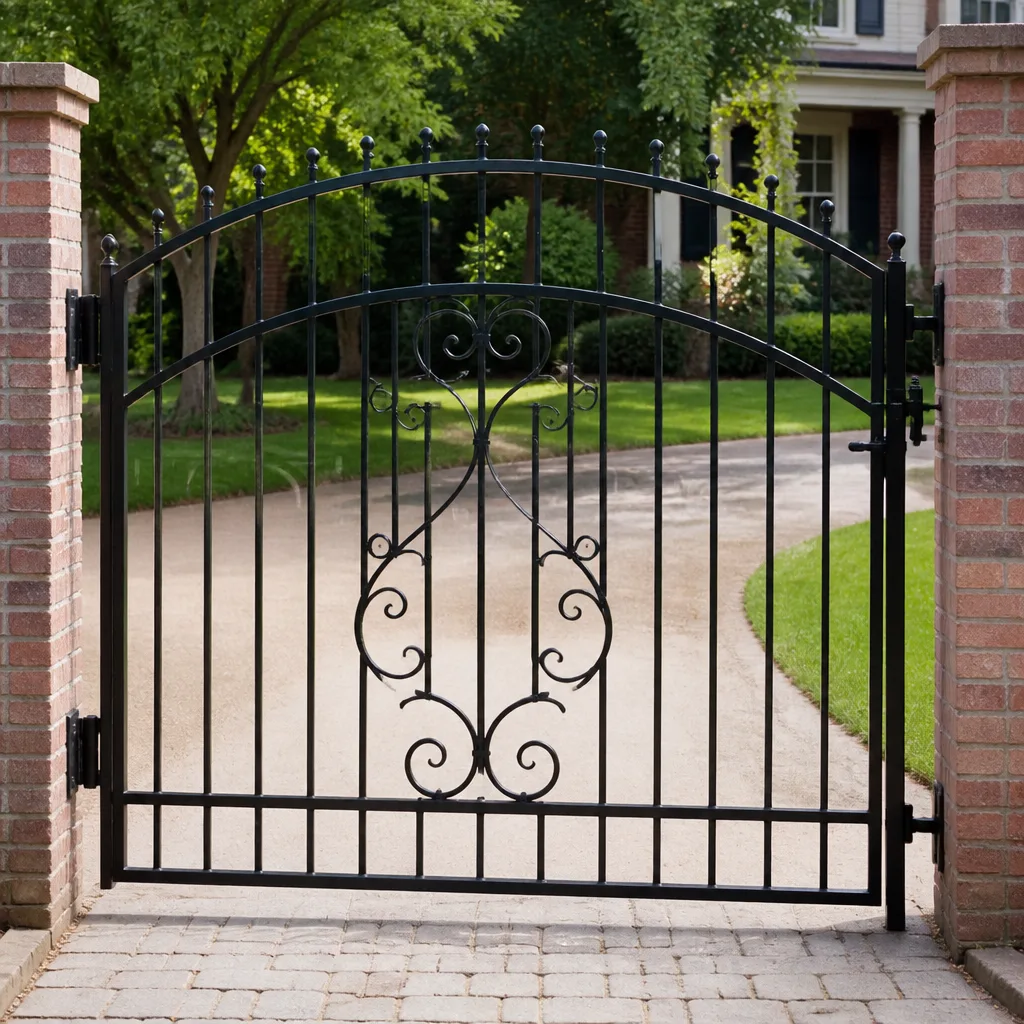 Wrought iron
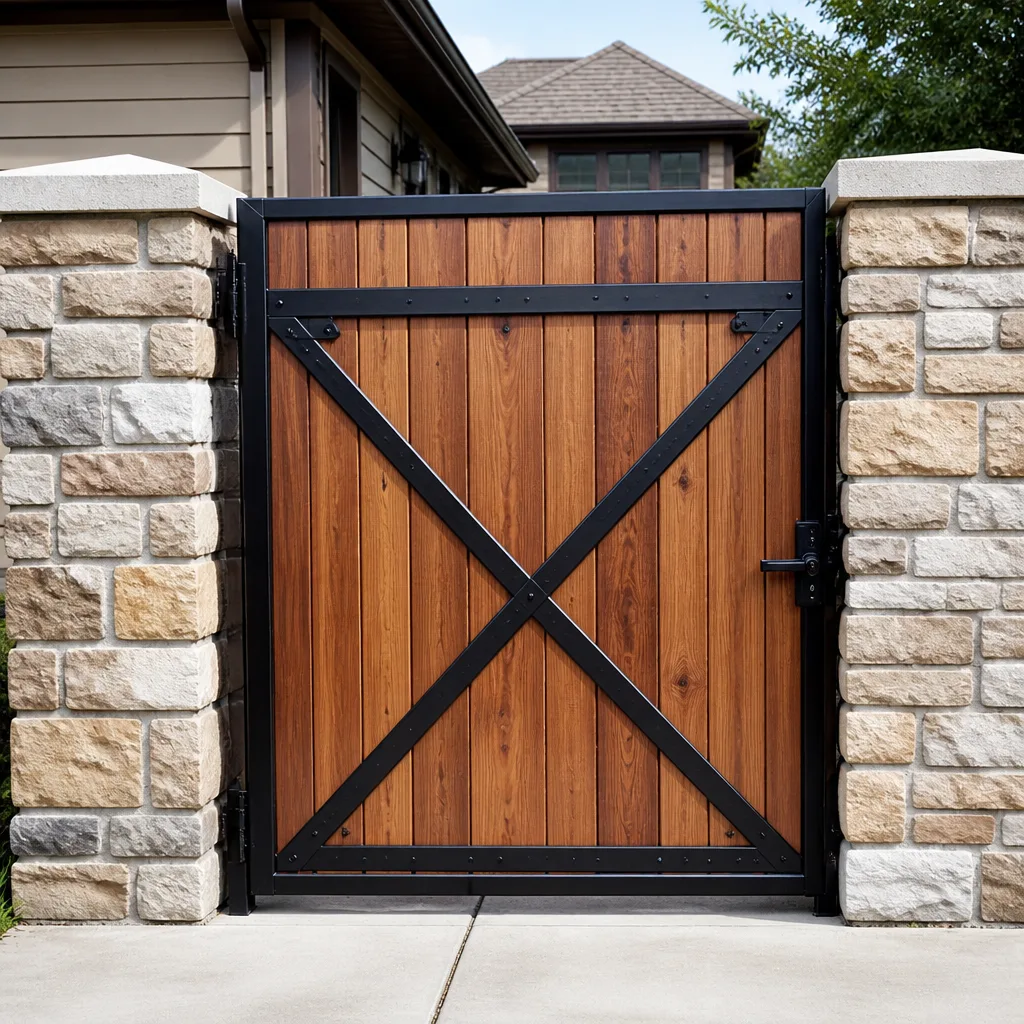 Wood & steel frame
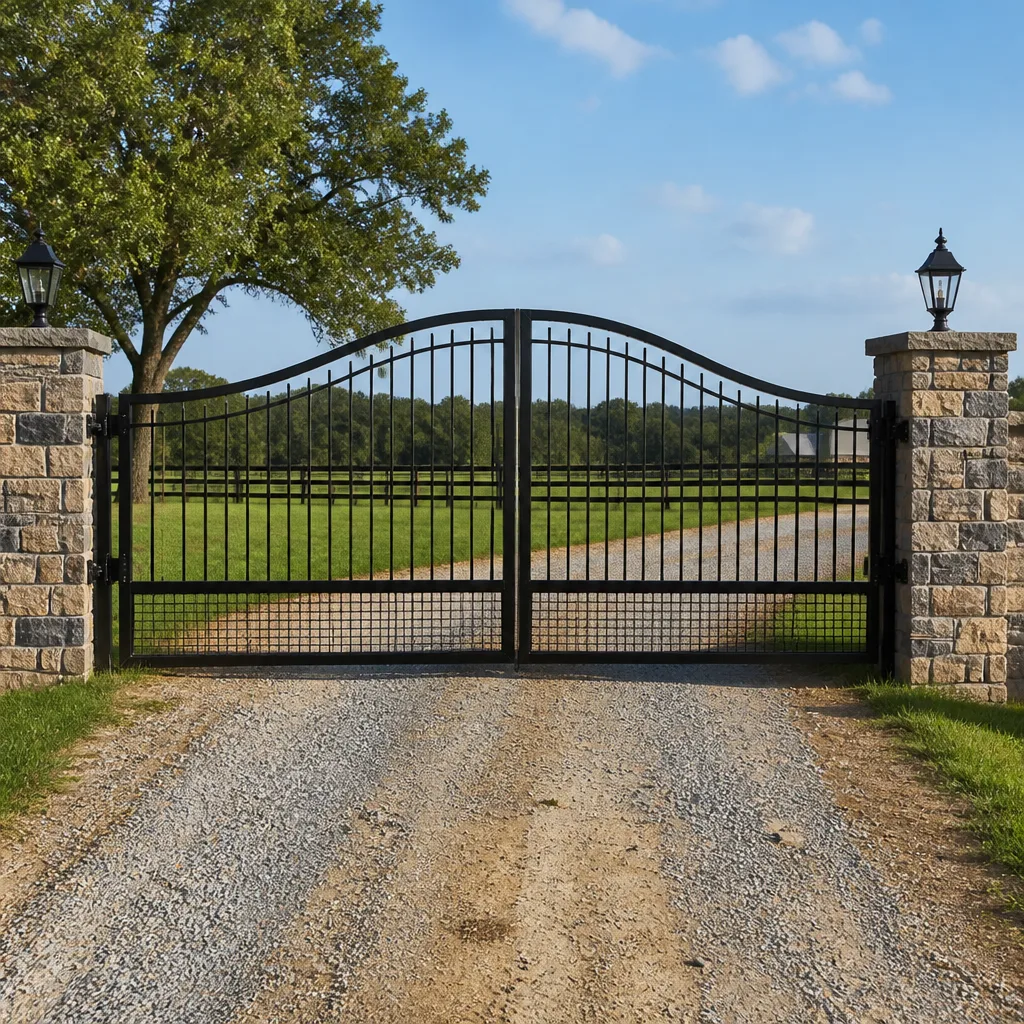 Farm & ranch
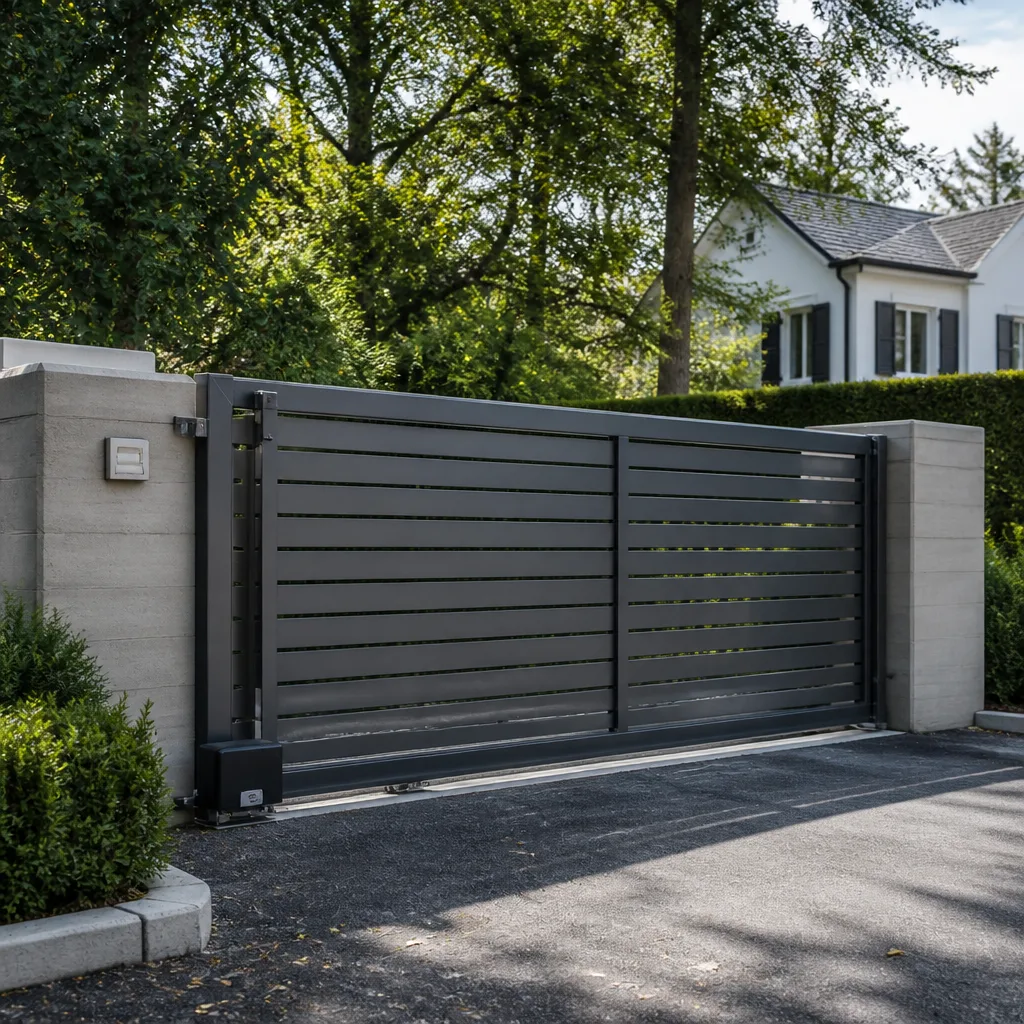 Sliding driveway gates
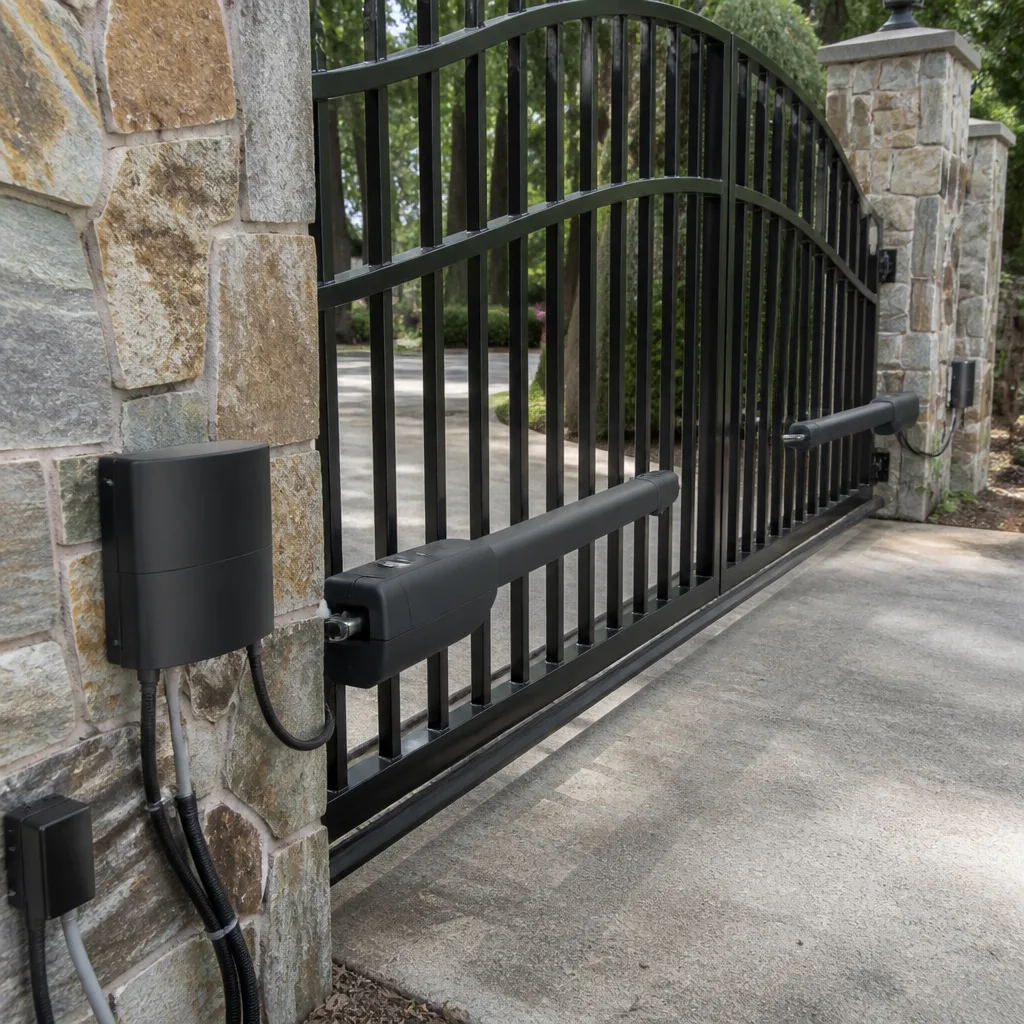 LiftMaster operators
Free on-site gate assessment - hinges, posts, and your LiftMaster or Nice gate operator checked before anything is quoted
The assessment is free and the quote is the invoice.
Get your free estimateDIY vs Professional Gate Installation: What’s Safe to Do Yourself
The cheapest part of a gate installation is the hardware. The expensive part is the labor to fix a post that’s two inches out of position after the concrete has cured for a week, a mistake that costs twice as much to correct as it would have cost to hire it done right the first time. In our experience around Spring Valley, that scenario plays out more often than anyone expects going in. This guide walks through what a competent homeowner can safely handle, what should be left to a trained hand, the Clark County permit picture, and how to run the real numbers on DIY versus professional. You’ll finish knowing exactly where you stand.
Quick Answer
A simple wood pedestrian gate on flat ground with no opener is fully within reach for a careful DIYer. A driveway gate, especially one with an automatic opener, usually isn’t. The tolerances are tighter than most people realize, and a gate that’s a quarter inch out of square will work fine until the concrete settles and the opener starts straining against it. In Spring Valley, where the desert shrink-swell soils move more than people expect, that settling comes sooner rather than later.
Styles & brands we work with
- Wrought iron
- Wood & steel frame
- Farm & ranch
- Sliding driveway gates
- LiftMaster operators
Table of Contents
- What Skills Does a Gate Installation Actually Require?
- Do You Need a Permit in Clark County?
- What Happens to Your Insurance If the Work Is Unpermitted?
- How Do You Calculate the True Cost of DIY?
- When Does DIY Actually Make Sense?
- When DIY Rarely Pencils Out
- What to Ask the Installer While They Work
- Common Mistakes to Avoid
What Skills Does a Gate Installation Actually Require?
Three trades, minimum. Concrete work, metalwork or woodwork depending on the material, and – if there’s an opener – basic electrical. Most homeowners are strong at one of those and shaky on the other two. That’s the honest starting point.
Concrete is where most first-timers get humbled. A gate post needs a footing deep enough to resist frost heave (rare in Spring Valley) but more importantly wide enough and heavy enough to resist lateral pull from the gate swinging day after day. In our experience, a driveway gate post wants a footing around 24 inches deep and 12 inches in diameter in this soil, and that number isn’t universal – it depends on gate weight, wind exposure, and whether the post carries an opener arm. Pour it too shallow and the first summer of 105-degree afternoons followed by a cool night will stress the soil, and the post will lean.
Metalwork is the second skill. If you’re installing a galvanized steel or wrought-iron gate, you’re either welding on site or bolting pre-drilled components. Bolting seems easier until you discover that gates aren’t perfectly square from the fabricator, and a quarter-inch of slop at the hinge translates to two inches of swing sag at the latch. Welding on site lets a careful installer correct for those tolerances in real time. We do our welding on site for exactly that reason.
Electrical is the third, and only applies to opener installations. You’ll need either a nearby power source or a low-voltage run. Brands like Ghost Controls and Mighty Mule make solar-friendly units that skip the trench entirely, but even those need proper battery placement, a control board location protected from sun, and correct wire routing. DoorKing units for driveway gates that see frequent cycles have their own spec sheets.
Do You Need a Permit in Clark County?
For most gate installations in Clark County – particularly new driveway gates over four feet tall, or any gate carrying an electric opener – yes, you need a permit. Pedestrian gates under a certain height on private property often fall under the exemption. The specific threshold depends on the jurisdiction and the current code cycle; call the county building department before you dig, not after. They answer the phone and they don’t bite.
Here’s what the permit process actually gives you:
- Frost and footing inspection: The county may want to see the footing depth before the concrete goes in. Skip this and you’ve voided the whole point of the permit.
- Electrical rough-in inspection: For openers, a low-voltage inspection catches wiring errors before the wall is closed up.
- Final inspection: Verifies the gate operates within spec, opens to the required angle, and (for openers) reverses on obstruction as required for safety.
That last item matters. An automatic gate opener without a functioning safety reverse is a genuine hazard to kids, pets, and anyone backing into the driveway. The county inspection exists for a reason, and “my buddy wired it” doesn’t replace it. A properly permitted installation in Spring Valley also keeps your resale clean, because a buyer’s inspector will absolutely notice an unpermitted gate opener.
What Happens to Your Insurance If the Work Is Unpermitted?
If unpermitted gate work causes property damage or injury, your homeowner’s insurance may deny the claim. That’s not a scare tactic, it’s the plain language in most policies. Carriers tend to draw a hard line between “maintenance” and “structural modification,” and a new gate with an opener usually lands in the second bucket.
Two scenarios worth walking through:
- A gate falls on a delivery driver: If the hinge failed because the post footing was undersized and the work was unpermitted, the carrier can argue the loss stems from non-compliant construction. Your liability exposure is on you, personally, not on the policy.
- An opener arm strips and damages the gate: Manufacturer warranty is often void when the unit is installed outside the manufacturer’s installation spec or without a permit. You’ve paid for the hardware and the warranty both. That’s a familiar outcome for the wrong kind of DIY.
The fix is simple. Pull the permit, use a licensed installer, and keep the paperwork. It costs a few hundred dollars in Spring Valley and it’s worth every penny the day something goes sideways. If you’re wondering whether a specific installation needs a permit, call us – we’re happy to tell you over the phone, free.
How Do You Calculate the True Cost of DIY?
Most DIY budget estimates stop at materials. Real budgets include every line below, and skipping any of them makes the comparison dishonest.
- Materials: gate, posts, hinges, latch, concrete, gravel, fasteners. A basic wood pedestrian gate with pressure-treated posts runs roughly $250-$500 all-in for a homeowner.
- Tool rental: post-hole digger or auger ($50-$90/day), concrete mixer ($60-$100/day), a welder if you don’t own one ($75-$150/day). Total realistic rental line: $150-$350.
- Permit fees: Clark County residential gate permits typically land in the $150-$400 range depending on scope and whether the opener is included.
- Your time: A weekend minimum for a walk gate, two or three weekends for a driveway gate. Be honest with yourself about how the second weekend actually goes.
- The re-do cost: This is the line people forget. If the post is out of position, the footing comes out, the concrete breaks up, and you buy a new post, new concrete, and another tool rental. Realistic re-do cost for a driveway gate: $400-$900.
Stack those numbers for a driveway gate with opener and you’re honestly in $1,400-$2,600 territory as a DIYer, and that’s before the first mistake. A professional quote for the same work typically lands in a similar range but includes the permit, the inspection, the warranty, and the skilled eye that catches problems before the concrete sets. When we quote a job in Spring Valley, the price is agreed in writing before the first shovel hits dirt. That’s not a sales pitch – it’s how the math stays honest on our end.
When Does DIY Actually Make Sense?
DIY is a good call when all of these are true:
- Pedestrian gate, not a driveway gate. You’re replacing an existing gate on existing posts that are already plumb and set, or installing a new one under four feet tall where the county doesn’t require a permit.
- Flat ground. No slope across the opening, no drainage swale to negotiate. Sloped installs are where tolerances get tight fast.
- Wood, not metal. Wood handles forgiving. Metal does not. A quarter-inch of misalignment in a welded steel gate is visible and functional, and it’s much harder to correct than to install.
- No opener. Manual gates forgive imperfection. Automatic openers amplify it.
- No HOA review. Some neighborhoods in Spring Valley and surrounding communities require architectural approval for gate style, color, and placement. Check before you buy, not after.
- You have a second set of hands. A 6-foot wood gate weighs enough to be awkward alone. Two people, no exceptions.
If you tick every box, a weekend install is realistic and satisfying. You’ll save real money, you’ll know the gate intimately, and you’ll have a good story. If even one box is unchecked, keep reading.
When DIY Rarely Pencils Out
Driveway gates with automatic openers are where DIY almost never pays. The reason isn’t the gate itself – it’s the coordination across three systems that all have to be in spec at the same time:
- The post must be dead-on plumb after the concrete cures. Not after the pour. After the cure. Those are two different things, and the cure takes a week in Spring Valley heat.
- The gate must swing true within a tolerance of about a quarter inch over its length. Any more and the opener works harder, the hinges wear faster, and the cycle count you paid for starts dropping.
- The opener must be aligned to the gate leaf, not the other way around. If the arm binds anywhere in the travel, the unit will fail early – and the manufacturer will point to the install, not the hardware.
Brands like Elite and DoorKing build excellent openers, and they’ll both tell you the install is what determines lifespan. “I installed my own Elite unit and it worked fine for two years and then started binding” is a call we get several times a season around Spring Valley. It’s fixable – we’ve fixed plenty – but it’s more expensive than the original install would have been. If you’re going that route anyway, see our guide to gate motor and opener service in Spring Valley for what to expect when the unit needs help.
What to Ask the Installer While They Work
Even if you hire out the job, you can walk away educated. Ask these questions during the install – anyone worth hiring will answer them happily while they work.
- “How deep will you go with the footing, and why that depth?” The answer tells you whether they’re thinking about gate weight and wind load, or just hitting a standard number.
- “What’s the swing tolerance you’re aiming for?” Anything tighter than a quarter-inch over the gate length is a good sign of care. Anything looser is a red flag.
- “How will you protect the opener control board from our summer heat?” This is a real concern in Spring Valley, and the answer should reference shaded mounting, ventilation, or a specific location on the property.
- “What’s the safety reverse test, and can I see you run it?” Watch them do it. The final inspection should too, but you want to know how to test it yourself every year.
- “What’s the maintenance interval on the hinges and latch?” Some hinges want annual lubrication, some want every six months in desert dust. Get the schedule in writing.
That last question is the one that pays dividends for years. A gate that’s correctly installed still needs care – and knowing the interval means you’re not the one calling for an emergency repair on a Saturday. Speaking of which: our gate repair in Spring Valley page covers what a repair visit actually includes and how we handle the fix-in-place work we’re known for.
Common Mistakes to Avoid
- Pouring a shallow footing because the ground is “just dirt” here. Spring Valley’s soil is caliche-heavy in places and shrink-swell in others, and neither forgives a shallow pour. The post will lean within a year.
- Skipping the permit because “it’s just a gate.” See above. A few hundred dollars in fees protects your homeowner’s policy. That’s the cheapest insurance you’ll ever buy.
- Hanging the gate before the concrete fully cures. Twenty-four hours feels like a long wait. Wait longer. A week is honest. Hang the gate early and the post shifts under the weight.
- Bolting the opener to a post without checking plumb after cure. The opener manufacturer will tell you the unit is within spec. It isn’t. The post moved. This gets diagnosed wrong more than any other issue we see around Spring Valley.
- Mounting the opener control board in full afternoon sun. It’s a $300-$600 part on most units. In our summers, a control board that sits in direct sun will fail long before one mounted in shade.
- Using a solar opener without checking the panel’s winter sun hours on that specific spot. Ghost Controls units are reliable, but they need real sunlight. A panel shaded by a fence in December means a dead battery in January.
- Not test-cycling the safety reverse after installation. This is a genuine hazard, not a compliance checkbox. A gate opener without a working reverse can seriously injure a child or pet. Test it, then test it again next month.
One more, specific to new installs: don’t skip the warranty registration. Elite and DoorKing (and everyone else) track coverage by serial number, and you’ll want that on file the first time you call for parts. Installing a gate safely is one thing; installing a gate that gets its full warranty is another.
When to Call a Professional
Call a professional when any of these is true:
- The gate is a driveway gate (any material) fed by an automatic opener.
- The opening is on sloped ground or crosses a drainage path.
- Existing posts are leaning, cracked, or set in soil that’s failed before.
- The gate is over about six feet tall and pedestrian – wind load matters more than you think in Spring Valley’s afternoon gusts.
- Your HOA or the county requires a permit or architectural review you don’t want to navigate alone.
- You want the safety reverse, footing, and electrical all inspected and documented.
We offer free estimates in Spring Valley, and we can give you a written price over the phone or on site once we’ve seen the gate. Gatewood Fence & Gate Spring Valley – call (888) 300-3906. A live person answers, day or night. If we quote you a number, that’s the number – it’s agreed in writing before the first shovel hits dirt.
See the difference
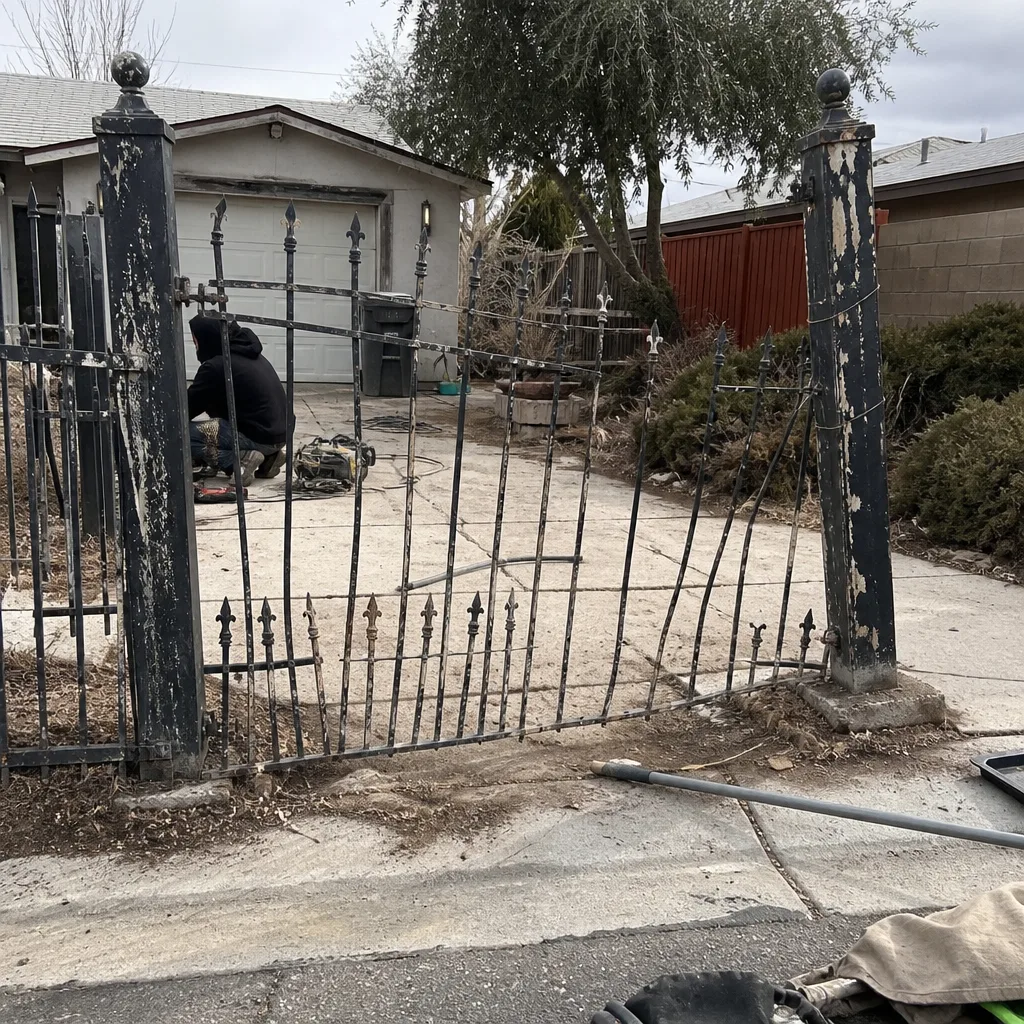 Before
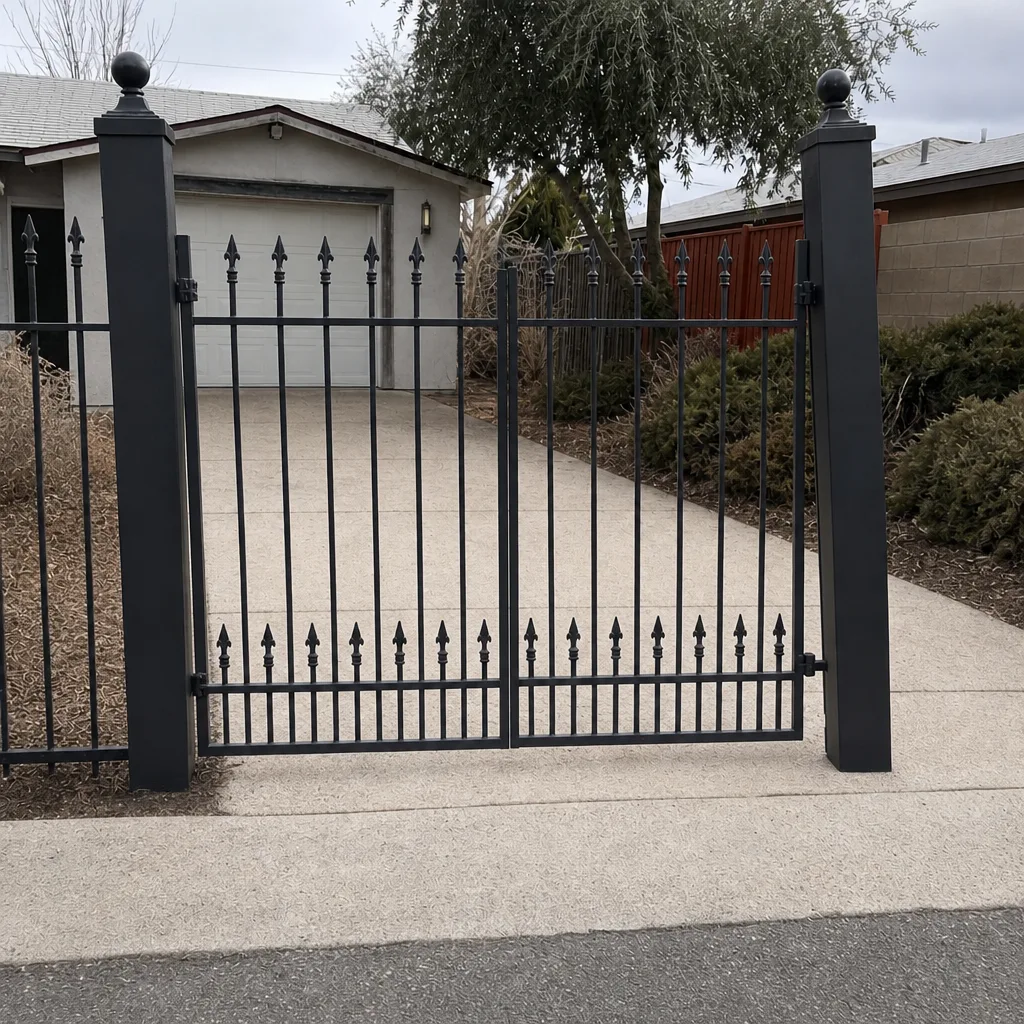 After
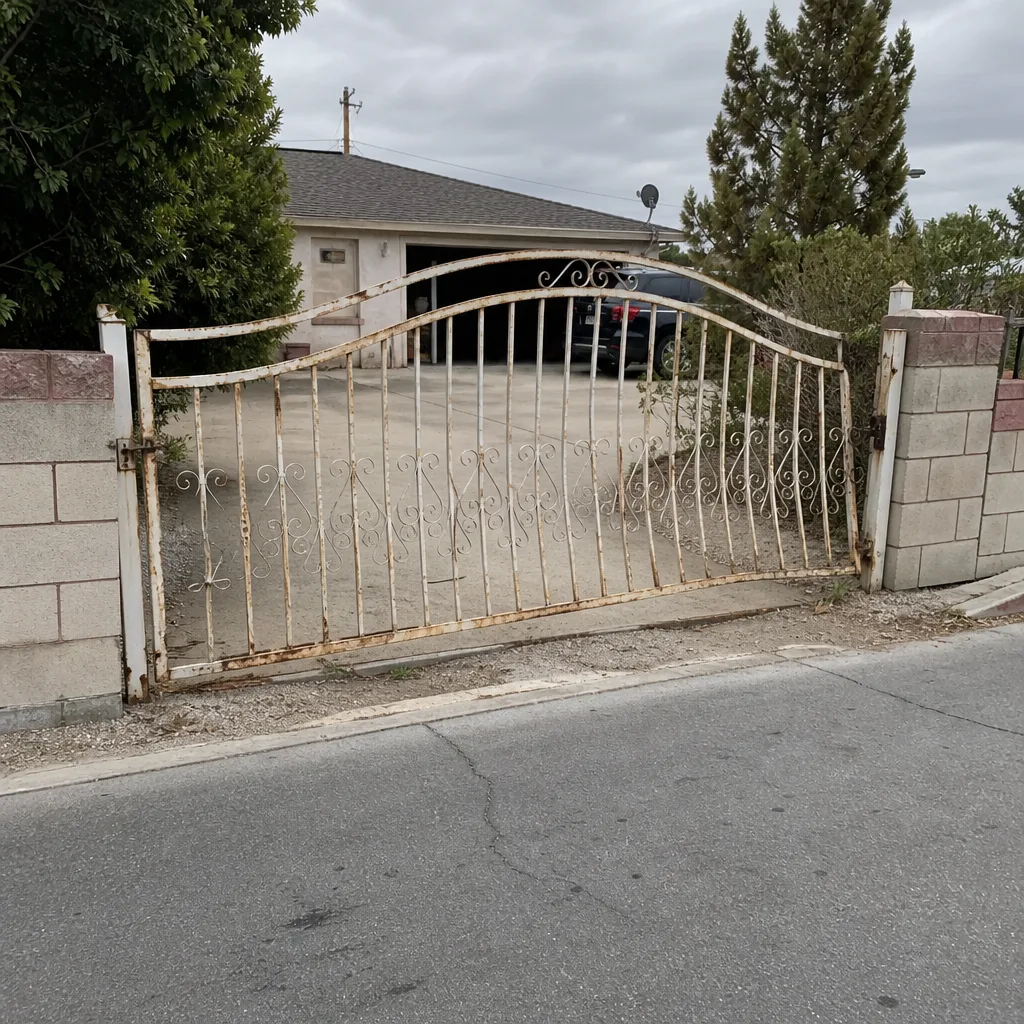 Before
 After
 Before
 After
Frequently Asked Questions
You can, but it rarely pays. The post has to be dead-on plumb after the concrete cures, the gate has to swing within about a quarter inch over its length, and the opener has to be aligned to the gate leaf, not the other way around. If any one of those three is off, you’ll be back at the drawing board, and the fix costs more than the original install. Call (888) 300-3906 if you want a free estimate before deciding – no obligation either way.
For most driveway gates, particularly any with an opener, yes. Clark County requires a permit and typically an inspection of the footing and the electrical rough-in, plus a final. Pedestrian gates under a certain height are often exempt, but the threshold depends on current code and jurisdiction. Call the county building department to confirm before you dig; it costs nothing and saves a lot.
Possibly. Most policies exclude damage or liability stemming from non-compliant construction, and an unpermitted gate likely falls in that bucket. It may also void the manufacturer’s warranty on your opener. The fix is to pull the permit and keep the paperwork on file – the fee is small compared to the risk.
It depends on gate size, material, and whether an opener is included. A basic wood pedestrian gate with posts typically runs $400-$900 installed. A driveway gate with an opener is usually $2,500-$6,500 depending on hardware brand (Elite, DoorKing, and similar come with their own pricing tiers) and whether the electrical run is short or long. We quote in writing, up front, before any work starts.
Hanging the gate too soon on freshly poured concrete. The post seems solid at 24 hours, but it’s still moving. Wait the full week, verify plumb, and only then hang. The second most common is skipping the safety reverse test on the opener – that one’s genuinely dangerous, not just expensive, and it’s the reason a professional install is worth the money on any automatic gate.
We install and service LiftMaster, FAAC, BFT, Linear, Viking, Ghost Controls, DoorKing, Elite, and Mighty Mule. It matters for DIY in one specific way: each brand has its own install spec, and the warranty follows that spec exactly. If you install a Ghost Controls unit outside their mounting guidance, the warranty is void regardless of whether the unit works. If you’d rather not read the spec sheets, that’s what we’re for.
The Bottom Line
A pedestrian gate on flat ground with no opener, no HOA, and existing posts that are plumb is a satisfying weekend project and a real money-saver. Anything more – driveway gate, automatic opener, sloped ground, new posts in Spring Valley’s unpredictable soils – almost always costs less to have done right the first time than to fix after a year of drift. Run the real numbers (materials plus tools plus permit plus the honest cost of a re-do), and decide from there. If the math tips toward professional, or you just want a second opinion before you commit either way, our team can help. For a deeper look at our full capability, see our gate installation in Spring Valley page, or start at the Gatewood Fence & Gate Spring Valley home page.
Contact
Call (888) 300-3906 for a free estimate on any gate installation, repair, motor, or opener question in Spring Valley. A live person picks up around the clock. Every job carries our 90-Day Done Right Promise in writing, our pricing is agreed up front before any work starts, and our standing offers include $40 off any repair over $200, no trip charge inside the county, a free second opinion on any written estimate, and a permanent 10% discount for seniors and veterans. The name is on the shop and the shop is down the road – that’s the oldest accountability there is.
Written by the team at Gatewood Fence & Gate Spring Valley.