
Last updated November 18, 2026
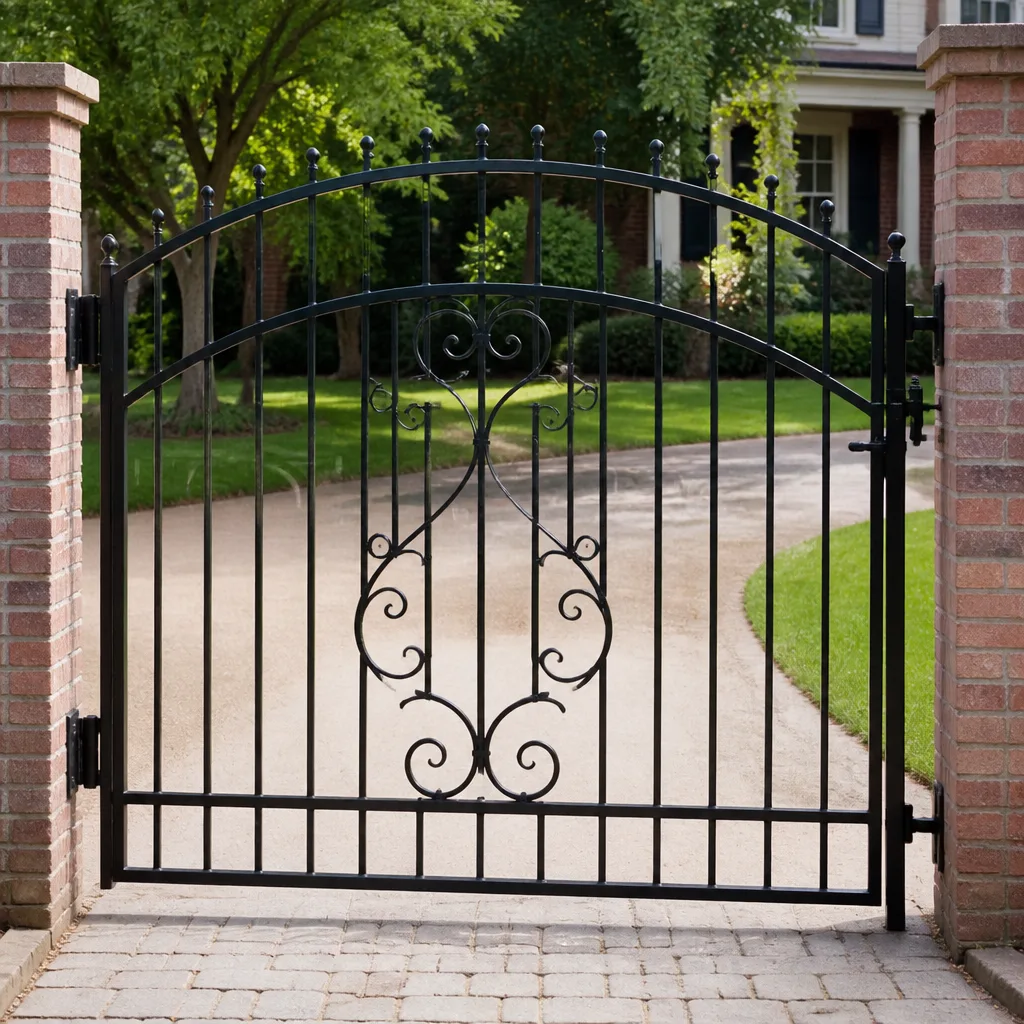 Wrought iron
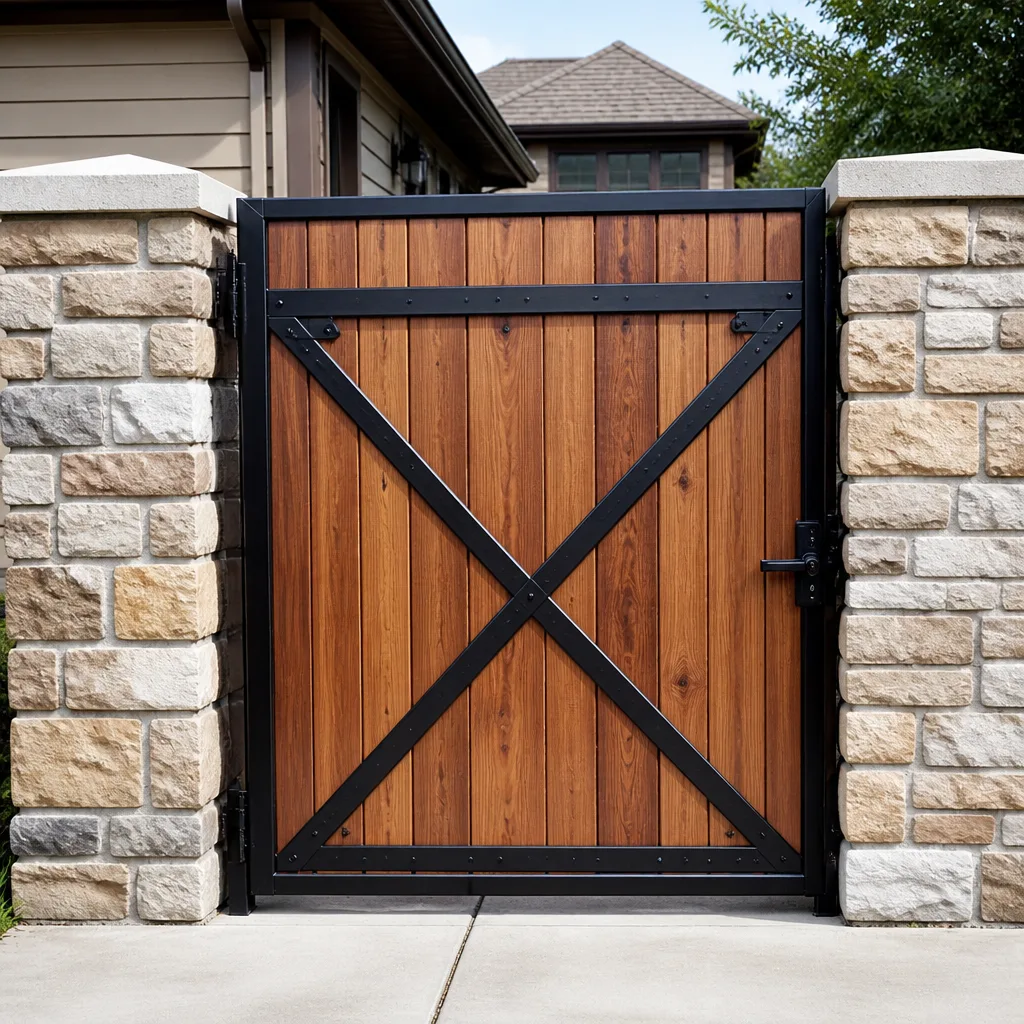 Wood & steel frame
 Farm & ranch
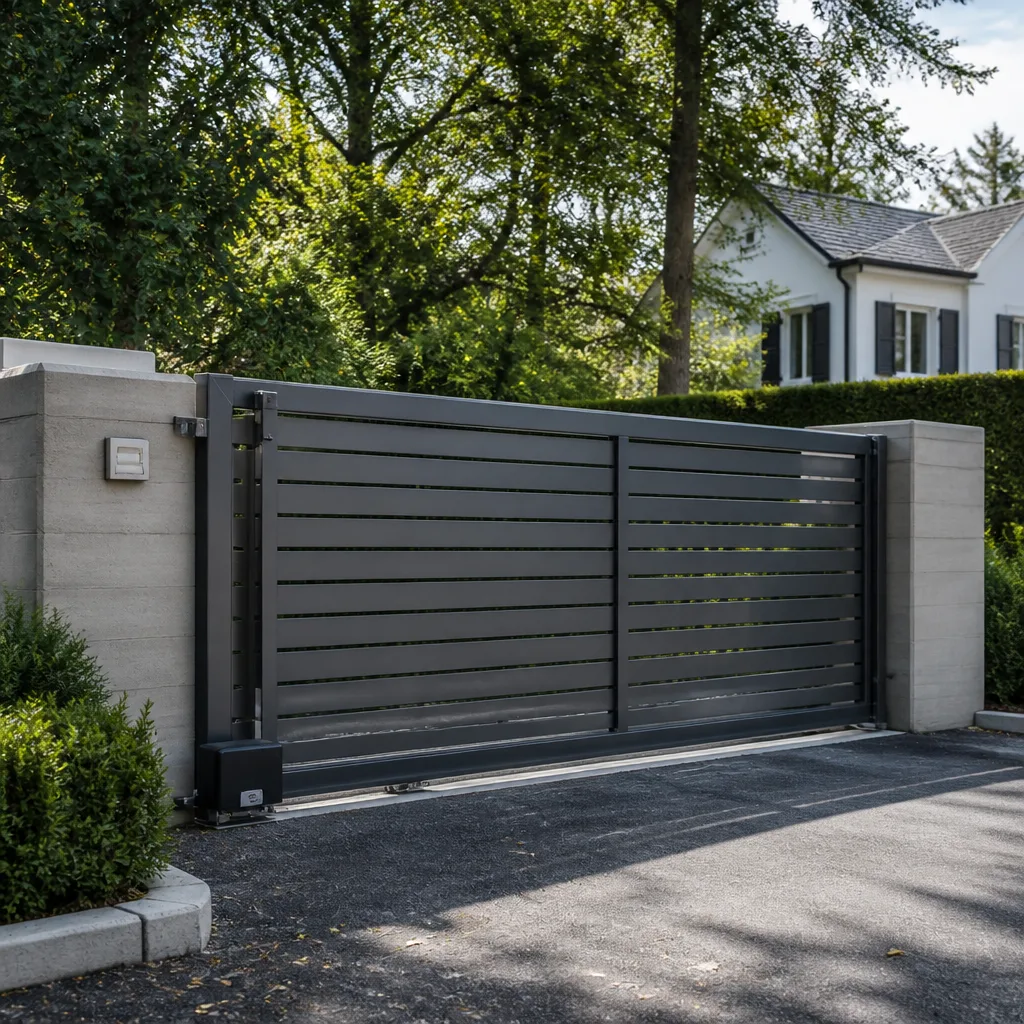 Sliding driveway gates
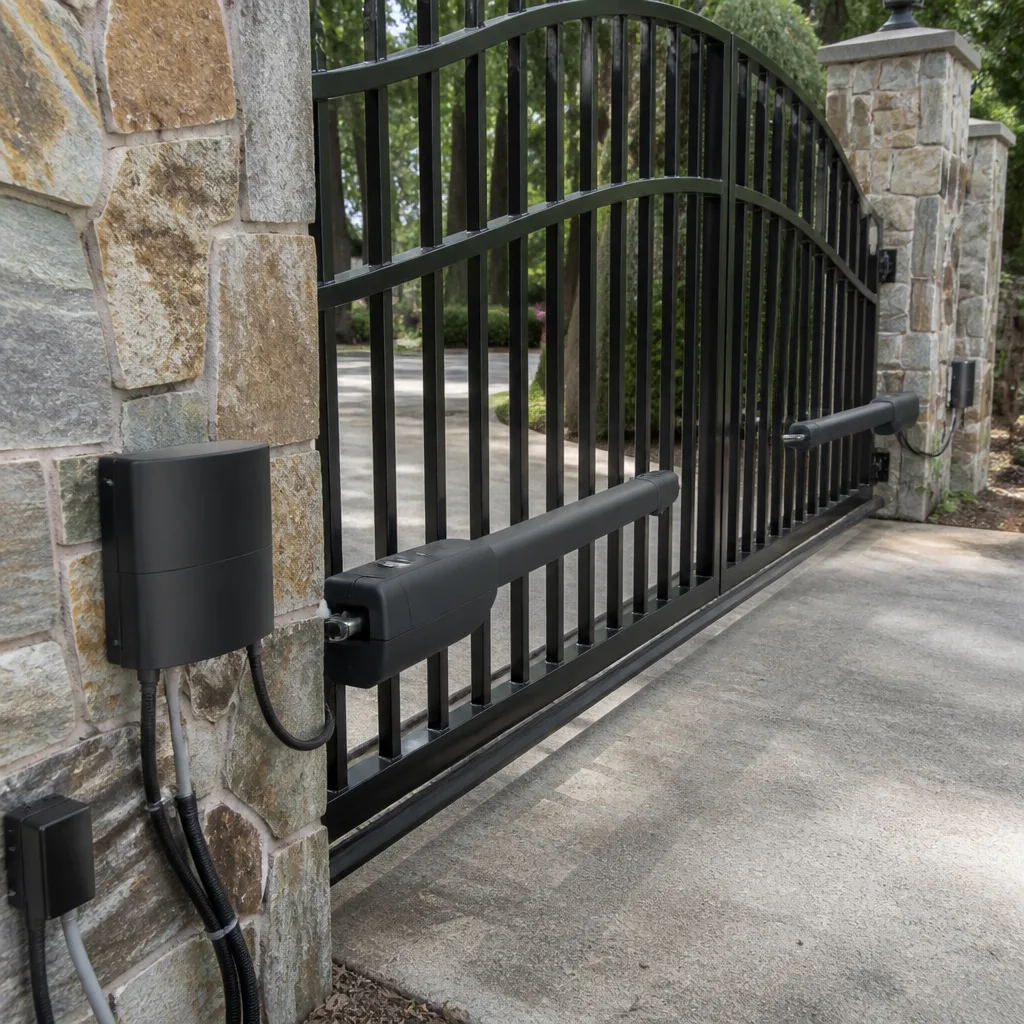 LiftMaster operators
Free on-site gate assessment - hinges, posts, and your LiftMaster or Nice gate operator checked before anything is quoted
The assessment is free and the quote is the invoice.
Get your free estimateThe Complete Gate Repair Guide for Spring Valley Homeowners
Most gate repair guides are written by people who have never set foot in the Mojave. They tell you to grease your hinges without mentioning that the wrong grease turns to varnish at 115°F and locks the pin solid by August. They talk about “seasonal maintenance” as if Spring Valley had four seasons instead of two: hot and hotter. This guide is different. We’ve spent years pulling bent hinges and heaving posts out of Spring Valley yards, and we know exactly what fails here, why it fails, and how a repair should actually be done in this climate. Read on and you’ll spot a bad repair before you pay for it.
Quick Answer
Gate repairs in Spring Valley usually trace back to three things: caliche hardpan that heaves posts out of plumb, extreme UV and heat that destroy cheap coatings and wrong-weight grease, and drip irrigation that quietly rots steel and wood at the base. A proper Spring Valley repair starts at the hinge post, not the gate panel, and it should be quoted in writing before anyone touches a wrench. Most residential repairs run $200 – $600 depending on whether posts, hardware, or automation are involved.
Styles & brands we work with
- Wrought iron
- Wood & steel frame
- Farm & ranch
- Sliding driveway gates
- LiftMaster operators
Table of Contents
- Why Gates Fail Differently in Spring Valley
- Caliche, Post Heave, and the Alignment Problem
- Which Metals and Coatings Survive Spring Valley Heat
- Drip Irrigation: The Hidden Rust Engine
- HOA Rules and Clark County Permits: Repair In Place or Pull a Permit?
- What a Correct Repair Looks Like (Step by Step)
- Choosing a Local Gate Repair Contractor vs. a Regional Chain
- A Spring Valley Maintenance Calendar That Actually Works
Why Gates Fail Differently in Spring Valley
Spring Valley sits in a pocket of the valley where the ground is old, the soil is alkaline, and the summer sun does things to metal that coastal repair guides never account for. A gate that would last fifteen years in a milder climate can start sagging in three or four here if the installer didn’t plan for what’s underneath it. We see the evidence on almost every call.
Three forces do most of the damage. First, the ground moves. Caliche hardpan – that cemented layer of calcium carbonate just below the surface – doesn’t drain like normal soil. Water pools on top of it, softens the soil above, and then the post shifts. Second, the heat. Surface temps on dark metal gates routinely climb past 150°F in July. That’s hot enough to soften cheap welds, cook lubricants, and expand wood until it splits at the fasteners. Third, the sun. Spring Valley gets roughly 290 sunny days a year, and UV breaks down paint, powder coat, and plastic components at a rate that surprises people who moved here from wetter places.
What that means practically is that a gate failure in Spring Valley is rarely a single broken part. It’s usually a hinge that wore because the post tilted, or a latch that stopped catching because the gate swelled in the heat. Fix the visible symptom without addressing the post and you’ll be back on the phone in six months. If you want a deeper look at what repair actually covers, our Gate Repair in Spring Valley page lays out the service scope.
The three most common Spring Valley failures we see
- Hinge-post heave. The post lifts or tilts because water sat on the caliche and softened the footing. The gate looks “sagging” but the hinge is fine.
- Seized hinge pins. Wrong grease or no grease, baked at high heat, turns to a gummy varnish that locks the pin.
- Rotted or rusted base. Drip emitter aimed at the post, or a sprinkler head hitting it, keeps the bottom six inches wet year-round.
Caliche, Post Heave, and the Alignment Problem
Caliche is the reason a gate that was installed perfectly can be dragging on the ground two summers later. That hardpan layer sits anywhere from a few inches to a couple of feet down, and it doesn’t absorb water the way ordinary soil does. Rain and irrigation collect above it, the ground gets soft, and a post that was set in a shallow footing starts to lean. Once the hinge post leans even a quarter inch, the whole gate swings out of alignment.
Here’s the part most homeowners miss: a gate sags in the hinge post, not in the middle. If you look at a dragging gate and see the panel bowed, your instinct is to fix the panel. That’s backwards. The panel bows because the post moved and the gate is fighting gravity. Straighten the panel without addressing the post and you’ll fix it twice. We start every alignment call at the post.
What a correct fix looks like depends on how far the post has moved and what it’s set in. Three scenarios:
- Minor lean, concrete footing intact. The post can sometimes be straightened and re-braced, then the footing reinforced with additional concrete at the base. No full dig-out.
- Post loose in the ground. The old footing gets broken out, the hole is dug deeper and wider to get below the active soil layer, and the post is reset in concrete with proper drainage so water can’t pool on the caliche.
- Caliche directly under a shallow footing. This is the hard case. The footing has to go through the caliche layer, not sit on top of it, or the same heave will happen again. This is where a lot of quick-fix installations fail – they never got below the hardpan.
In our experience, the neighborhoods with the worst caliche problems are the ones where the lots back up to undeveloped desert and the natural soil profile is intact – places like the edges of Spring Valley toward the foothills. Newer subdivisions where the ground was graded and amended tend to have less heave, but they have their own issues with irrigation runoff. If you’re seeing this on your property and want a second set of eyes, we offer a free second opinion on any written estimate.
Which Metals and Coatings Survive Spring Valley Heat
Not all gate materials are built for this valley. A gate that looks great on a showroom floor can be a rusted, faded mess after two summers in Spring Valley. Here’s the honest breakdown of what holds up and what doesn’t.
Holds up well
- Hot-dipped galvanized steel with a proper topcoat. The zinc layer takes the corrosion hit, and the topcoat handles UV. Expect ten-plus years with normal care.
- Powder-coated aluminum. Doesn’t rust at all and handles heat well. Powder coat is far better than liquid paint for UV resistance, but cheap powder coat still chalks and fades.
- Ornamental iron with a real primer system. Cast and wrought iron hold up for decades if the primer and topcoat are done right. Skip the primer and you’ll see rust blooms within a year.
Fails fast here
- Thin-wall steel with a single coat of paint. Usually rust-through at weld points and the bottom rail within two seasons.
- Untreated or thinly stained wood. Spring Valley’s dry heat and intense sun pull moisture out fast, causing checking, splitting, and fastener pull-out.
- Cheap vinyl or plastic components. UV embrittles them. Hinges, latches, and decorative caps crack and fall off.
If you’re weighing a repair against a new gate, this is the question to ask: is the failing material the kind that will keep failing? A galvanized steel gate with a bad hinge is a repair. A thin painted steel gate rusted through at every weld is a replacement conversation. For that decision, look at our Gate Installation in Spring Valley page – it covers what materials we recommend for this climate.
Drip Irrigation: The Hidden Rust Engine
This one surprises almost everyone. The single most common cause of accelerated rust and post rot we find in Spring Valley isn’t rain – it’s drip irrigation. Homeowners set a drip emitter or a sprinkler head near a gate post to keep the landscaping alive, and that plant gets watered every day. So does the post.
Standing moisture at the base of a steel post does what it always does: it rusts from the inside out. Wood posts rot from the buried end up. By the time you see rust bubbling paint or a soft spot at the base, the damage has been building for a year or more. In this climate, a post kept damp year-round can fail in half the time of an identical post in dry ground.
What to check – and this is a look-and-see, not a do-it-yourself fix:
- Any emitter or sprinkler head within about three feet of a gate post. That’s too close. Redirect it.
- Water pooling at the base after irrigation runs. If you see a puddle that lasts more than a few hours, you have a drainage problem.
- Rust bubbling or paint blistering near the bottom of the post. That’s active corrosion, not surface discoloration.
- Soft wood or a hollow sound when you tap the base of a wood post. That’s rot starting.
If you catch it early, redirecting the water and re-coating the base can save the post. If the corrosion has gone deep, the post needs replacing, and that’s a job for someone who can reset it properly. A Gate Motor & Opener in Spring Valley retrofit that mounts to a compromised post will fail the same way – the automation is only as good as the post it’s bolted to. Fix the post first.
HOA Rules and Clark County Permits: Repair In Place or Pull a Permit?
This is the question that stops a lot of Spring Valley homeowners in their tracks, and the honest answer is: it depends on what “repair” means. Clark County and most Spring Valley HOAs draw a clear line between maintenance and new construction, and it affects whether you can repair in place or need to pull a permit.
What usually does NOT require a permit
- Replacing a hinge, latch, or roller on an existing gate in the same location.
- Straightening or re-bracing a leaning post without changing its footprint.
- Servicing or replacing a gate opener on an existing gate frame.
- Repainting or re-coating an existing gate.
What usually DOES require a permit or HOA approval
- Replacing a gate post with one in a different location or a different size.
- Adding a new gate, widening an opening, or changing the gate height.
- Changing the gate material or style in a way that affects the HOA’s design standards.
- Adding electrical service for an automated gate, in some cases.
Spring Valley has dozens of HOAs, and they’re not all the same. Some require approval for any visible change to a front-facing gate, including a repaint in a different color. Others only care about structural changes. Before you start, find the HOA architectural guidelines for your community and read the gate section – or call and ask. Getting a slap-on-the-wrist letter after the fact is a lot more hassle than a quick phone call before. For anything that crosses the “new construction” line, a permit is the safe move, and a contractor who won’t tell you that is a contractor to skip. For a broader look at the whole property, see our Gatewood Fence & Gate Spring Valley home page.
What a Correct Repair Looks Like (Step by Step)
We don’t give step-by-step instructions for anything that could hurt you – high-tension springs, live wiring, and overhead gate work are jobs for a trained professional, full stop. But it helps to know what a correct repair looks like so you can tell when someone is cutting corners. Here’s the sequence a proper Spring Valley gate repair follows.
- Assess the post first. The technician should check the hinge post for plumb and stability before touching the gate panel. If the post is moving, the panel is a symptom, not the problem.
- Check the ground and drainage. Look for water pooling at the base, irrigation aimed at the post, and evidence of caliche right under the footing.
- Inspect the hardware and moving parts. Hinges, rollers, latches, and the opener arm (if there is one) get checked for wear, corrosion, and correct lubrication. Wrong grease is worse than no grease here.
- Identify the failing material honestly. Is the rust surface-level or structural? Is the wood rot cosmetic or deep? The answer determines repair vs. replace.
- Weld on site if needed. A cracked weld or bent frame is repairable in place. Hauling the gate off to a shop turns a small job into a big one, and a good local repair keeps the gate in your driveway.
- Re-align, re-hang, and test. The gate should swing freely and close on its own under its own weight, without dragging, binding, or slamming.
- Put the price in writing before the work starts. Every repair should be quoted upfront, agreed before a tool comes out of the truck, and backed by a written 90-Day Done Right Promise.
Notice what’s not on that list: swapping parts that don’t need swapping. A repair-first approach fixes what’s broken and leaves the rest alone. That’s the difference between a $180 hinge job and a $2,000 replacement you didn’t need.
Choosing a Local Gate Repair Contractor vs. a Regional Chain
This is the part of the guide where most homeowners get burned, and it’s worth slowing down for. A regional chain that sends a different technician every visit can’t know your gate, can’t remember the fix they did last year, and usually can’t quote you a firm price until they’re standing in your driveway with a clipboard. Then the number changes.
Here’s what to look for in a Spring Valley gate repair contractor:
- A verifiable local presence. A published address, a license number anyone can look up, and a name on the shop. If you can’t verify it, don’t hire it.
- Firm, upfront pricing. The price should be quoted and agreed before any work starts. No “we’ll see when we get there.”
- On-site welding and a repair-first approach. The gate stays in your yard. It doesn’t go on a truck to some shop out of state.
- A written guarantee. Ask what happens if the repair fails. A real warranty is in writing, stated plainly, not buried in fine print.
- A live person on the phone. Not a voicemail, not a call center three states away. Someone who can actually answer a question about your gate.
- Breadth of brand knowledge. A shop that knows the major automation brands – LiftMaster, FAAC, BFT, Linear, and the rest – can diagnose an opener problem instead of guessing. If you want a sense of what we mean, our motor and opener service covers it in detail.
The name on the shop and the shop down the road is the oldest accountability there is. In Spring Valley, that still means something. If you’re comparing estimates, we offer a free second opinion on any written one – no charge, no pressure.
A Spring Valley Maintenance Calendar That Actually Works
Generic maintenance advice doesn’t fit this climate, so here’s a calendar built for Spring Valley’s two-season reality. Five minutes a month in the cooler months can head off the expensive failures in the summer.
Spring (March – May): the setup season
- Walk the gate line and check every post for plumb. A quarter inch of lean now becomes a dragging gate by July.
- Look at your irrigation emitters. Any aimed within three feet of a gate post, redirect now.
- Inspect paint and powder coat for chips or blisters, especially at the base and welds. Touch up before summer.
Summer (June – September): the failure season
- Check hinges and pins for stiffness. Use the correct heat-stable lubricant – wrong grease turns to varnish at 115°F.
- Listen to the opener. Grinding, stuttering, or a gate that reverses mid-travel is a repair signal, not a “wait and see.”
- After any monsoon rain, check for pooling at post bases and clear it if you can.
Fall (October – November): the prep season
- Re-torque bolts and check the post footings. Ground move from summer heat cycles shows up now.
- Recheck drainage. Redirect emitters before winter watering.
Winter (December – February): the repair season
- This is the best time to schedule non-urgent repairs. It’s cooler, the ground is more stable, and you’re not fighting a gate that won’t close at 110°F.
- Get a professional inspection if anything moved over the summer. Better to fix it now than in July.
Common Mistakes to Avoid
- Fixing the panel instead of the post. A sagging gate is almost always a post problem in Spring Valley. Straightening the panel without addressing the footing means fixing it twice.
- Using the wrong grease. The grease you’d use in a milder climate can turn to varnish at 115°F. Ask what the tech is using; if they can’t tell you, that’s a red flag.
- Ignoring drip irrigation at the post base. A daily emitter aimed at a steel post will rust it out faster than anything the desert can throw at it.
- Hiring the cheapest phone quote without verifying the address. If there’s no published shop and no license number you can look up, the quote isn’t real until they’re in your driveway.
- Assuming “we’ll see when we get there” is normal. It isn’t. A firm price, agreed before work starts, is the baseline.
- Skipping the HOA conversation. Spring Valley HOAs vary wildly on what needs approval. A quick call before the work saves a letter after.
- Letting a small weld crack become a frame replacement. Small weld repairs done on site are cheap. Once the frame is bent, you’re into replacement territory.
See the difference
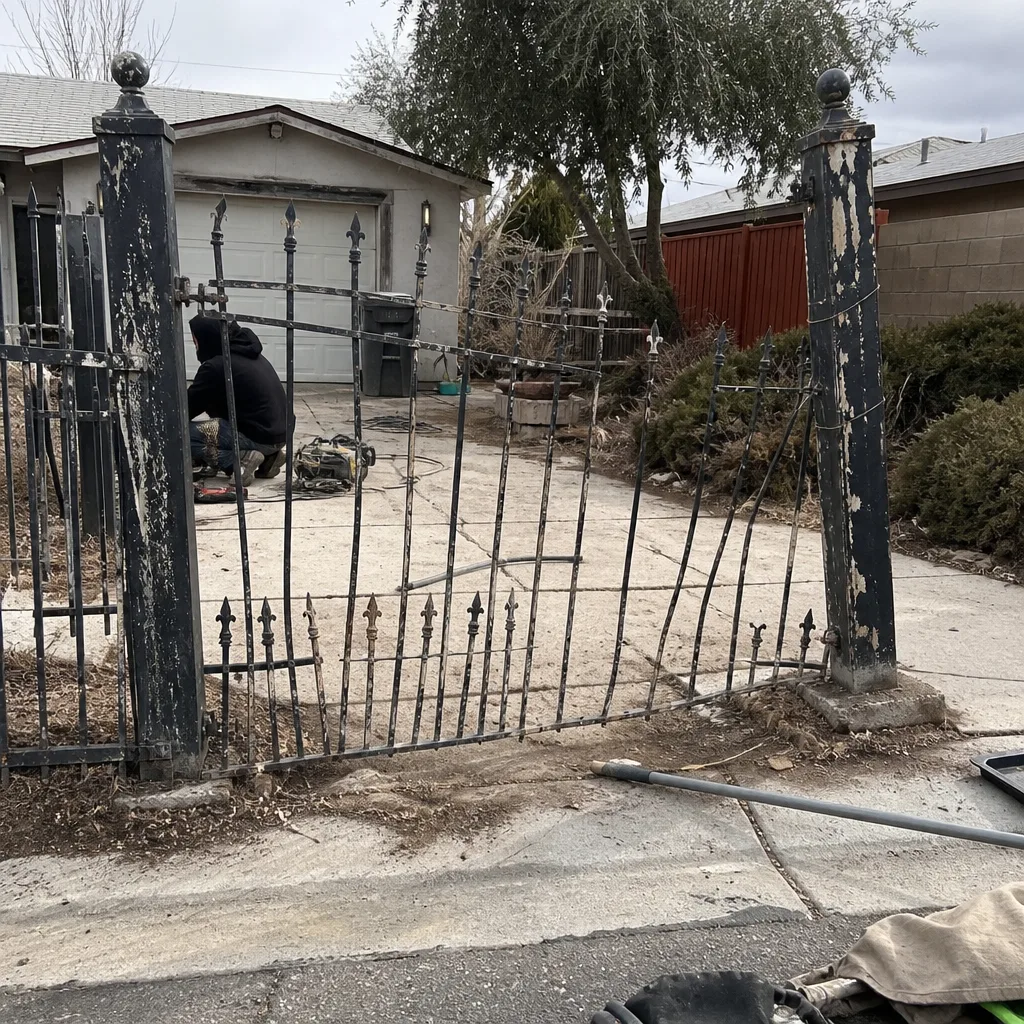 Before
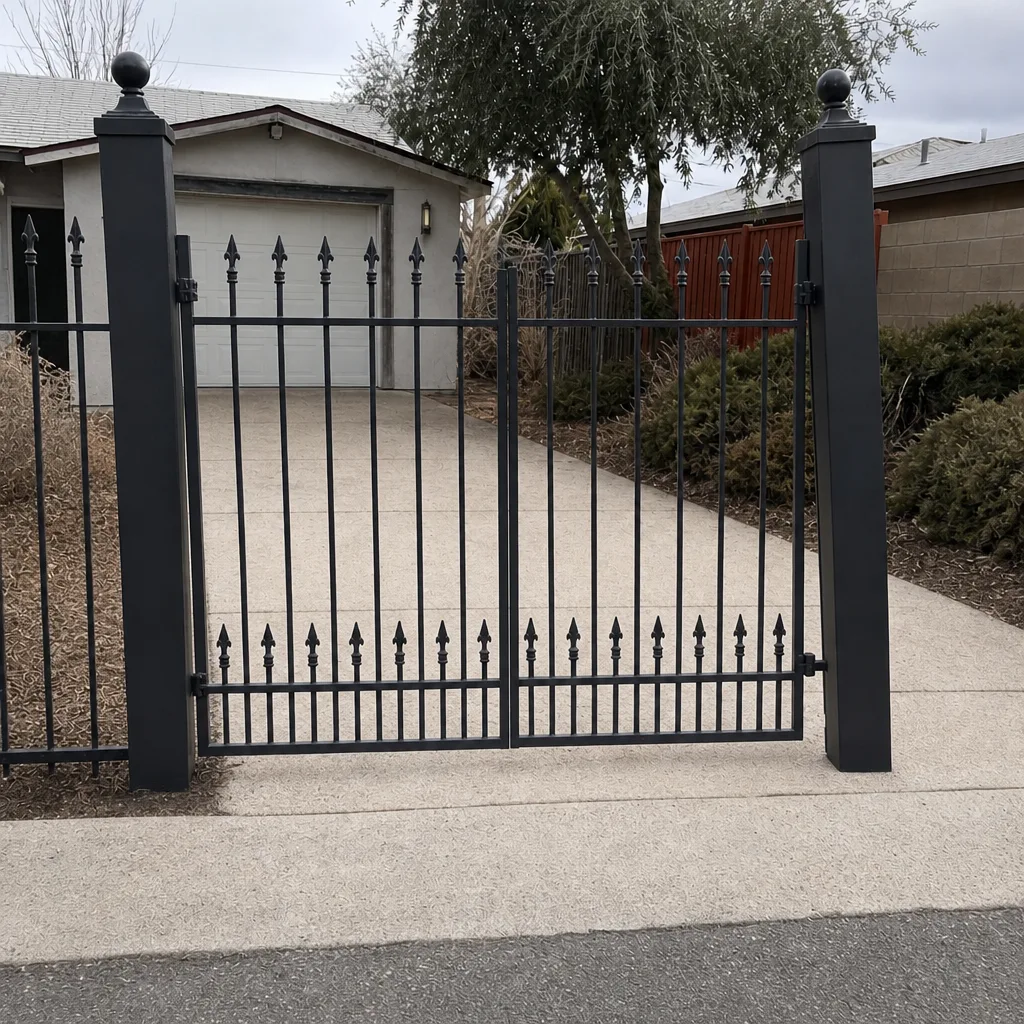 After
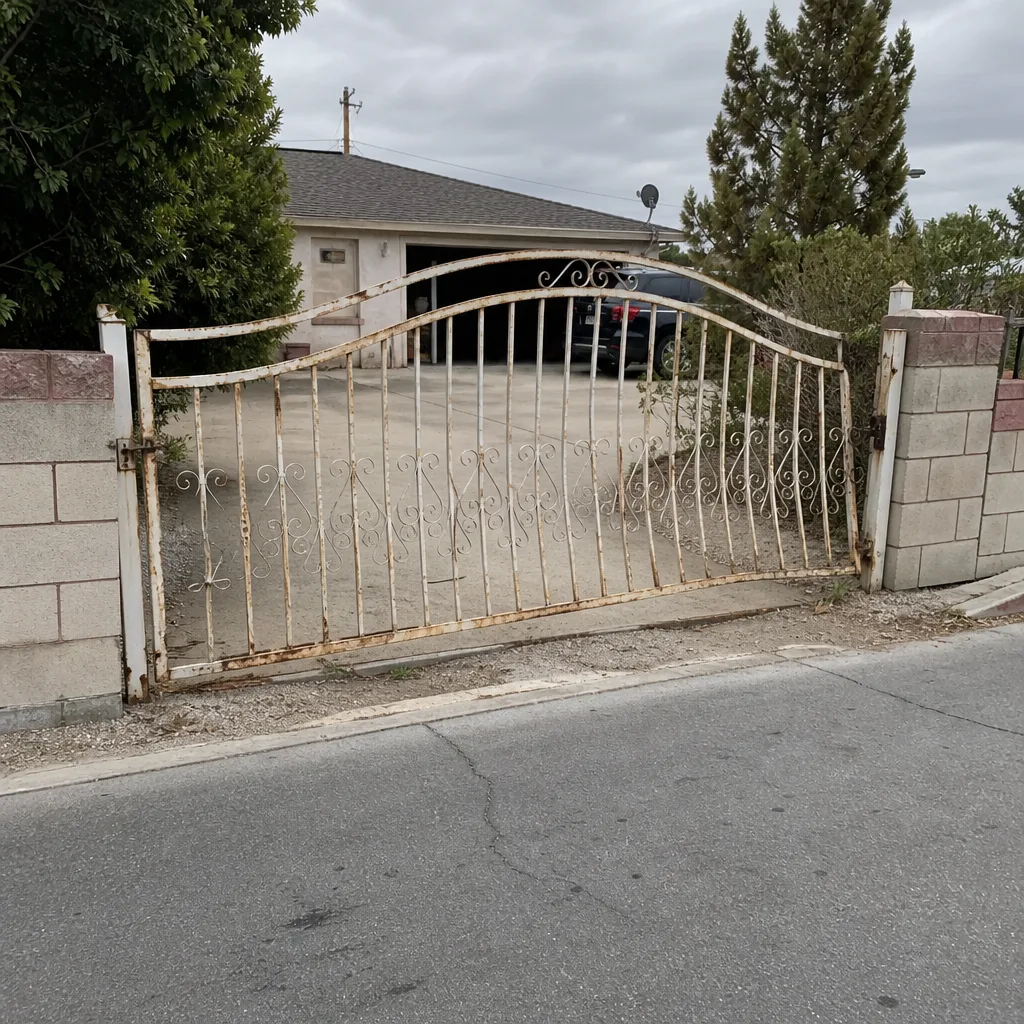 Before
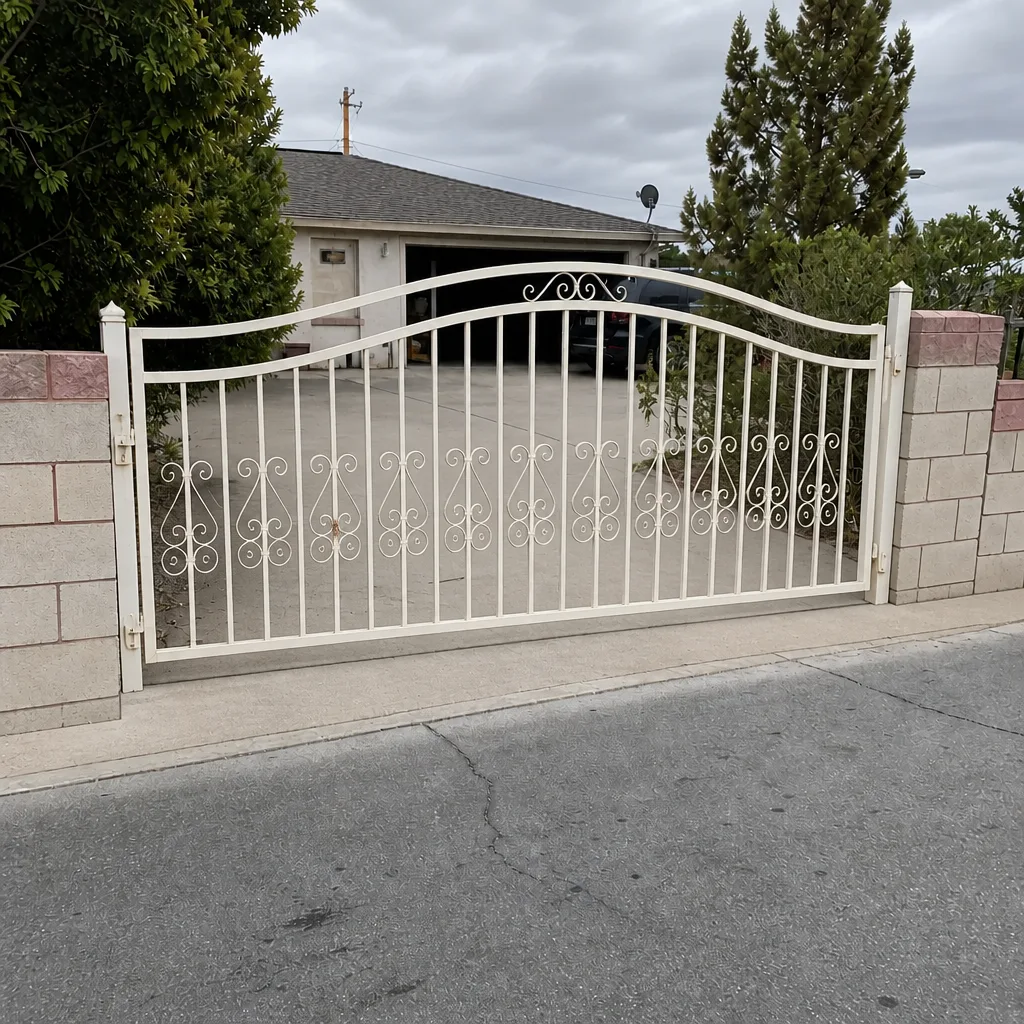 After
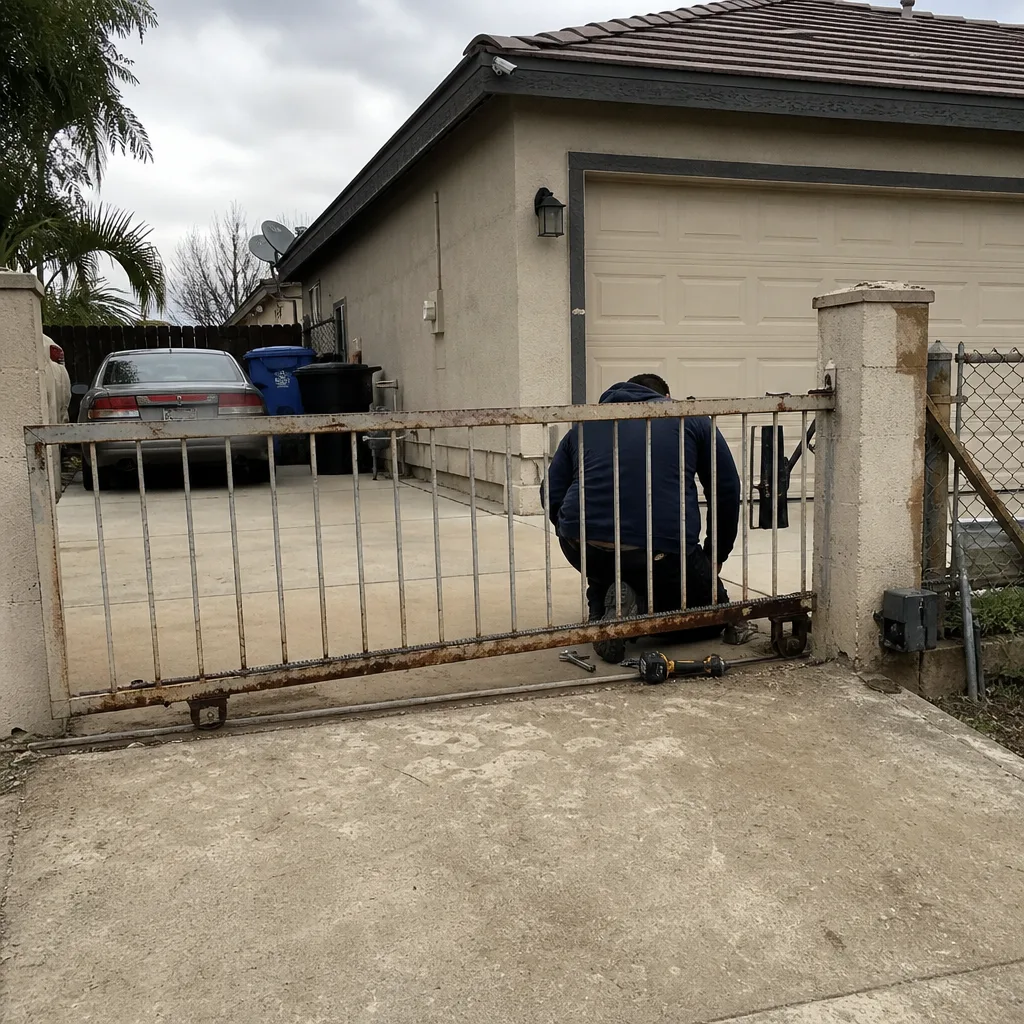 Before
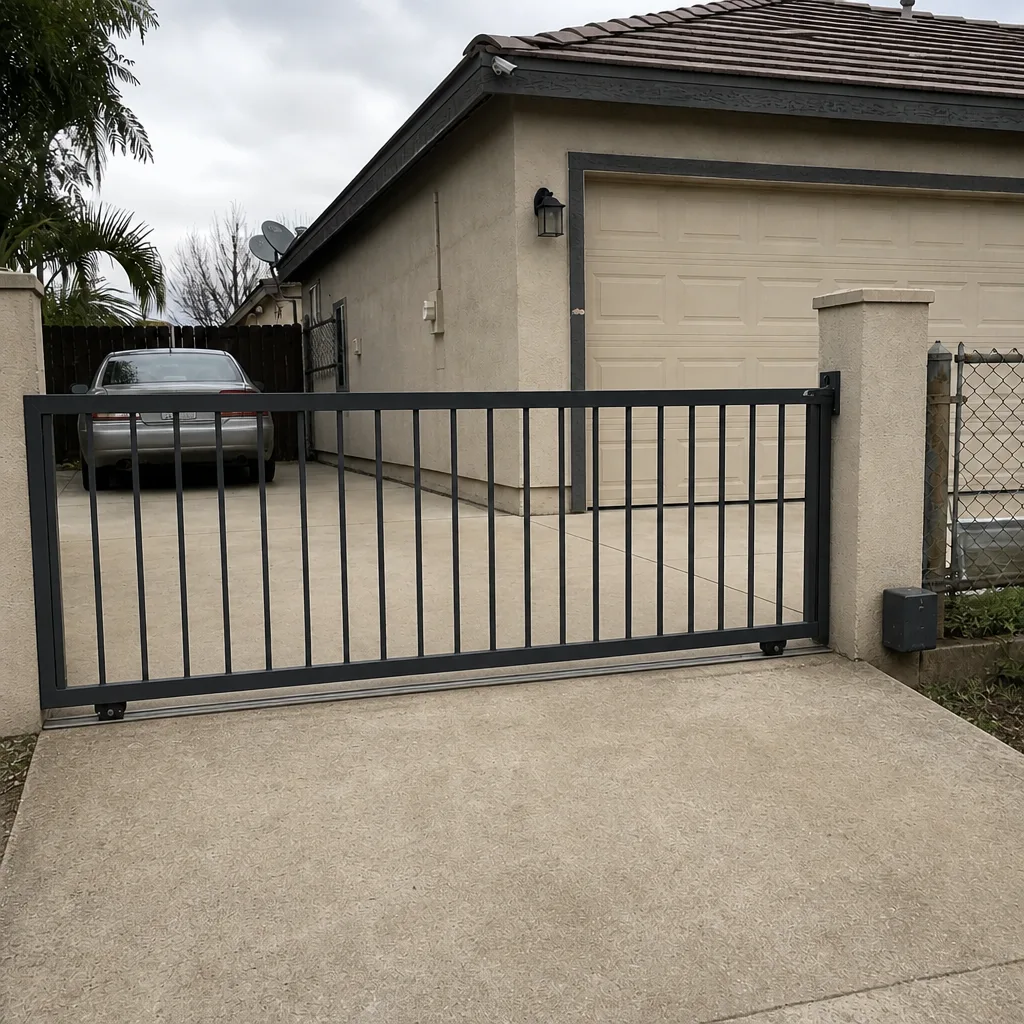 After
When to Call a Professional
Some gate repairs are safe to look at and unsafe to do yourself. Call a professional when the gate involves high-tension springs, an automated opener, electrical service, or overhead weight that could come down on you. Call when the hinge post has moved and you’re not sure how far it went or what’s underneath it. Call when you see structural rust, a cracked weld on a load-bearing joint, or a post that’s soft at the base. And call when a chain or regional outfit gave you a quote that changed between the phone and the driveway. Gatewood Fence & Gate Spring Valley offers free estimates in Spring Valley – call (888) 300-3906.
Frequently Asked Questions
Most residential gate repairs in Spring Valley run $200 – $600, depending on what’s involved. A hinge or latch replacement is usually at the low end; post resetting or opener service pushes toward the middle; a full post replacement with footing work can hit the high end or above. We quote the price in writing and agree it before any work starts, so the invoice matches the estimate. Call (888) 300-3906 for a free estimate – estimates are free.
We answer the phone with a live person 24 hours a day, and we get to as many same-day repair calls as we can. If your gate won’t close and the property isn’t secure, call and tell us – security-related repairs get priority. Call (888) 300-3906 and a live person will pick up.
Because the post moved and the fix didn’t touch the post. In Spring Valley, caliche hardpan causes post heave that makes the gate look like the problem. Any repair that doesn’t start at the hinge post is going to fail the same way. Call (888) 300-3906 for a free second opinion on any prior estimate.
Usually no, if you’re replacing hardware or straightening a post in the same location. You usually do need a permit or HOA approval if you’re moving a post, adding a gate, or changing the height or material in a way your HOA governs. Call (888) 300-3906 if you’re not sure which category your repair falls into.
We’re certified to service nine major brands, including LiftMaster, FAAC, BFT, Linear, Viking, Ghost Controls, DoorKing, Elite, and Mighty Mule. If your opener is on that list, we can diagnose and repair it in place. If it isn’t, call anyway – we’ll tell you straight whether we can help. Call (888) 300-3906.
Every job we do carries a 90-day written promise: if it isn’t done right, we make it right. One call brings us back, no runaround, no hedge language. It’s stamped in writing on every job, not buried in the fine print. Call (888) 300-3906 for a free estimate.
The Bottom Line
Spring Valley gate repair comes down to three things most guides skip: caliche that heaves posts, heat and UV that destroy the wrong materials and lubricants, and irrigation that quietly rots the base. Fix the post before the panel. Check your emitters. Use the right grease. Get a firm price in writing before anyone starts, and hold the contractor to a written guarantee. If the gate involves springs, automation, or electrical work, don’t touch it yourself – that’s a trained-professional job. Gatewood Fence & Gate Spring Valley is locally owned and owner-operated, offers a 90-Day Done Right Promise in writing, and answers the phone with a live person 24/7. Call (888) 300-3906 for a free estimate – we’d rather earn your business in Spring Valley than talk about it.
Written by the team at Gatewood Fence & Gate Spring Valley.