
Last updated November 18, 2026
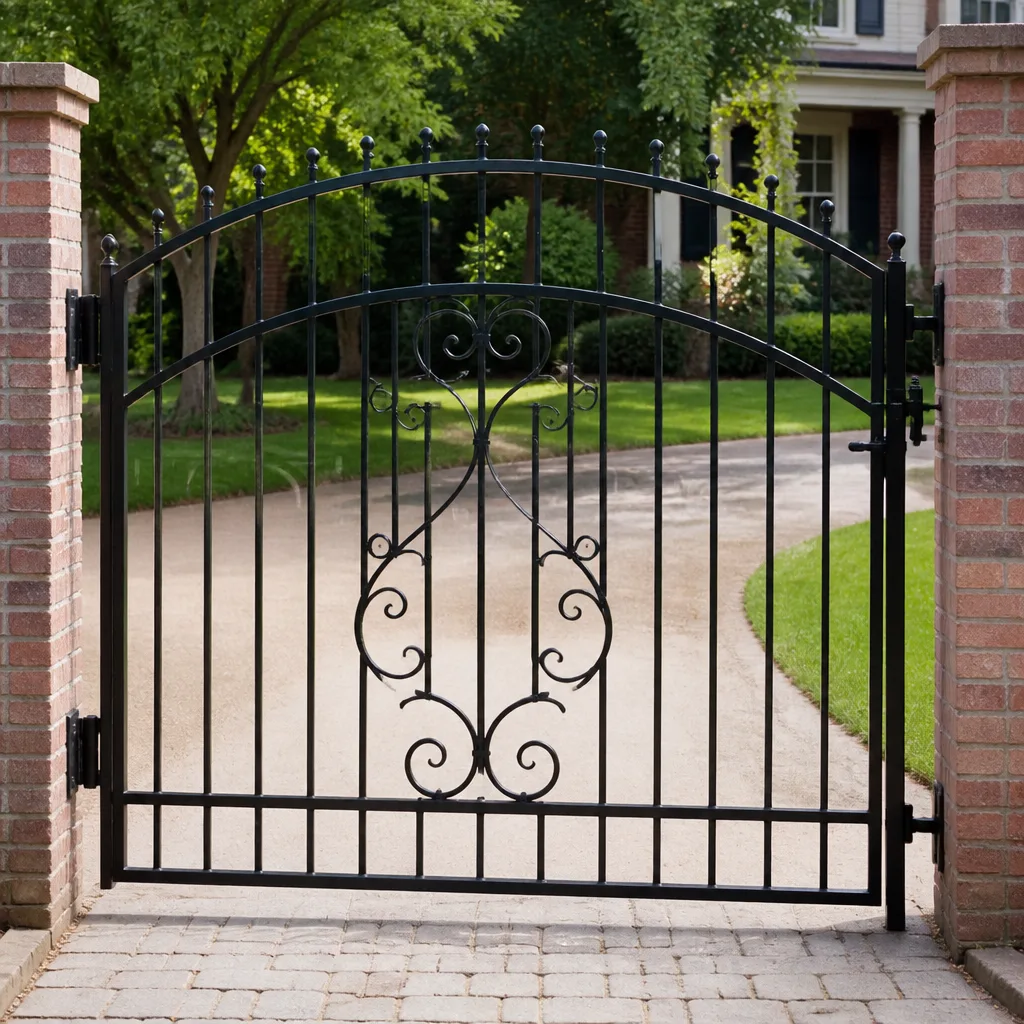 Wrought iron
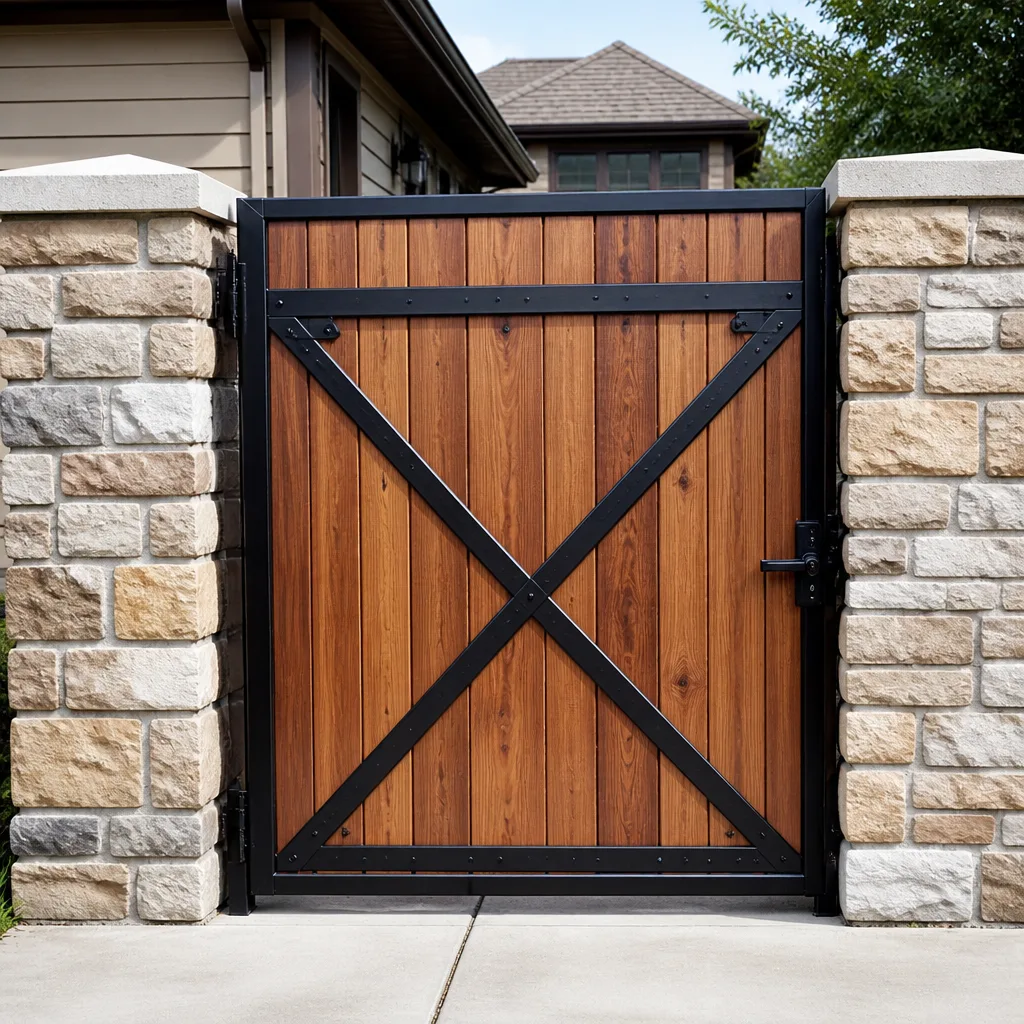 Wood & steel frame
 Farm & ranch
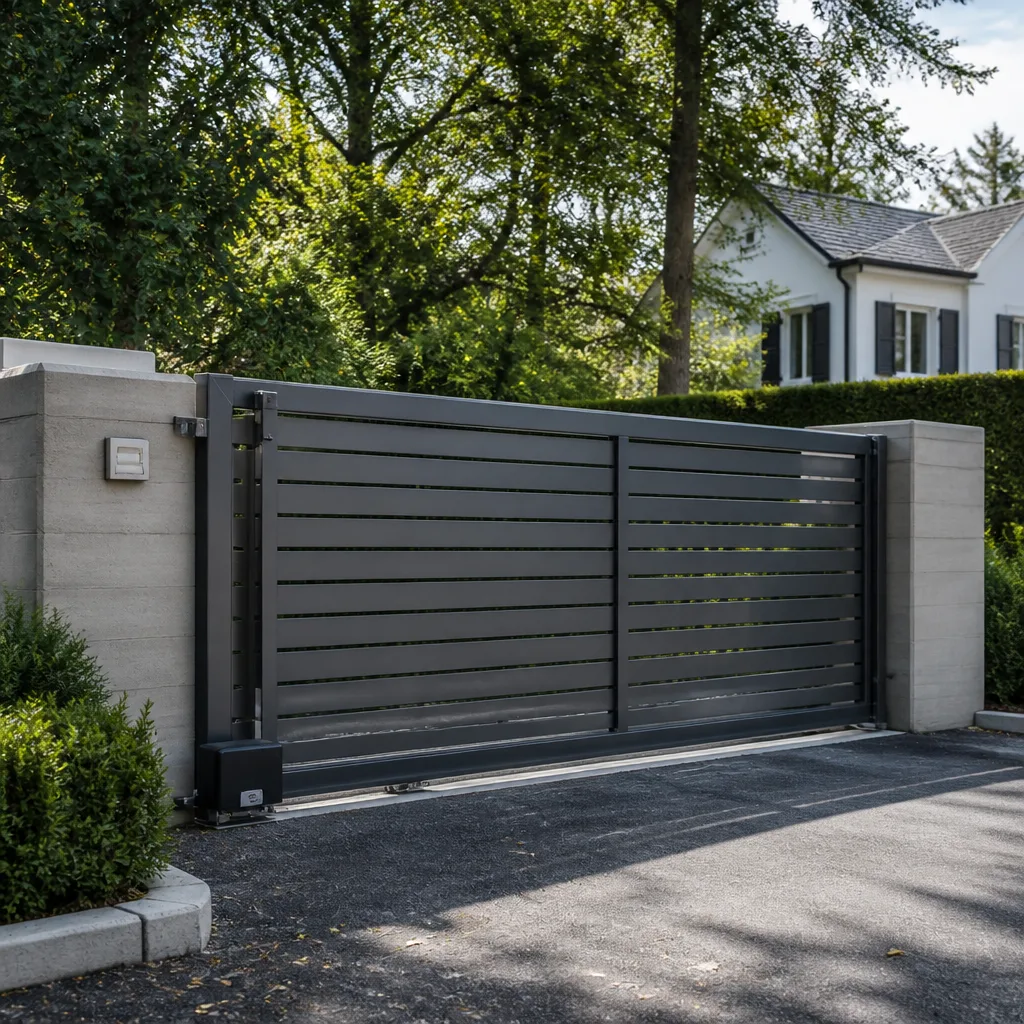 Sliding driveway gates
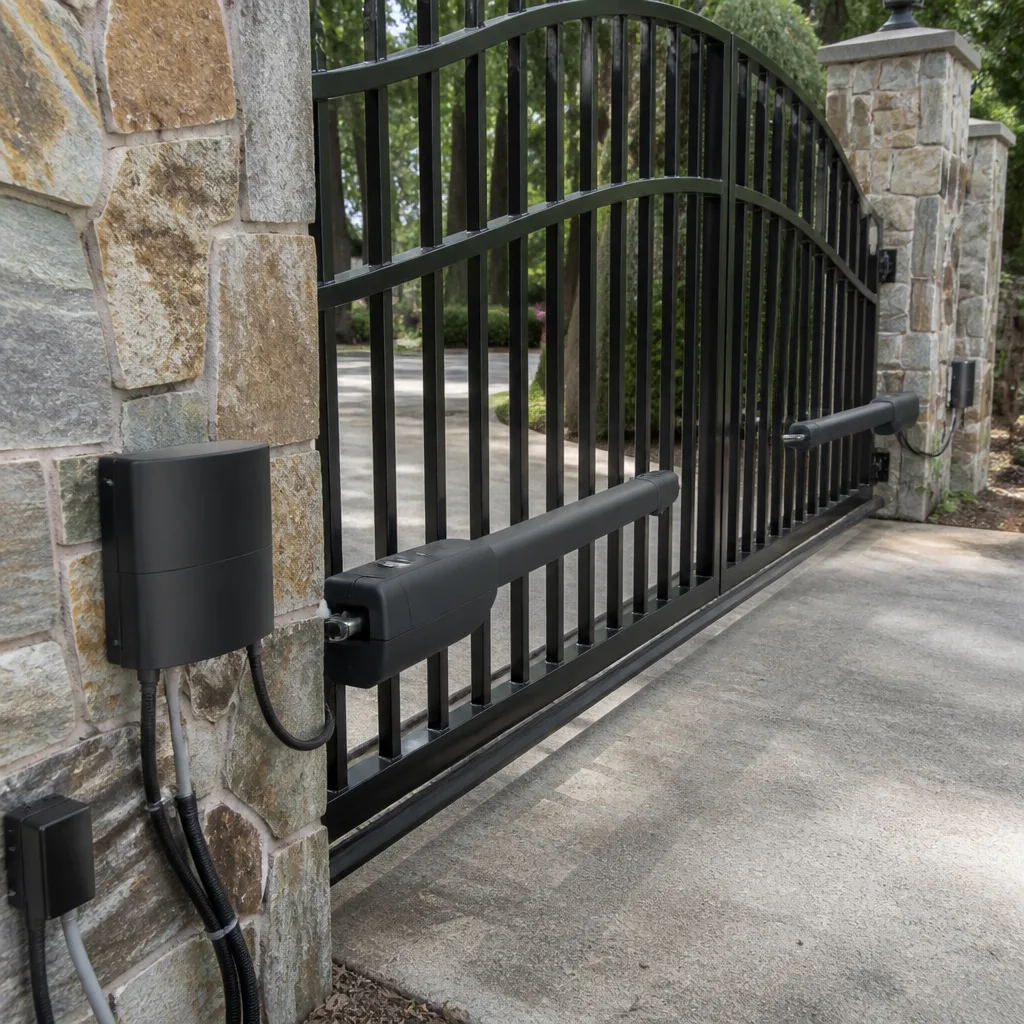 LiftMaster operators
Free on-site gate assessment - hinges, posts, and your LiftMaster or Nice gate operator checked before anything is quoted
The assessment is free and the quote is the invoice.
Get your free estimateGate Repair Emergency Preparedness Guide for Spring Valley Homes
Three situations happen more often than you’d think: a gate fails closed and traps a vehicle inside, a gate fails open the night before a vacation, and an operator dies during a family medical emergency. None of them are good moments to be Googling “gate repair near me.” What turns a nuisance into a genuine problem is the ten minutes of panic that happen before anyone finds a phone number. This guide walks through the scenarios Spring Valley homeowners actually face, how to release each common gate operator by hand, and what to have on a card in the garage so the first call on that card is the right one.
Quick Answer
Every residential gate operator sold in Spring Valley has a manual release you can use when the power dies or the motor fails. The trick is knowing where yours lives and testing it before you need it. If a gate fails closed and someone is stuck, or it fails open overnight and the property is left unsecured, that’s an emergency worth an after-hours call. If it’s just noisy or slow, it can usually wait until morning and be handled with a normal service visit.
Styles & brands we work with
- Wrought iron
- Wood & steel frame
- Farm & ranch
- Sliding driveway gates
- LiftMaster operators
Table of Contents
- How to Triage a Gate Failure Before You Call
- How to Manually Release Every Common Gate Operator
- Your Emergency Reference Card: What Goes On It
- How to Temporarily Secure a Failed-Open Gate
- How to Prop a Failed-Closed Gate Safely
- What Info to Have Ready When You Call After Hours
- The Spring Valley Conditions That Cause Most Gate Failures
How to Triage a Gate Failure Before You Call
Not every gate failure is an emergency, and treating them all like one is how you end up paying after-hours rates for something that could have been handled at 8 AM. Before you pick up the phone, answer one question: is the gate’s current position creating a risk right now?
Three scenarios are genuine security emergencies:
- The gate is stuck open and won’t close. Driveway open to the street, vehicles or equipment exposed, no way to close it manually. This is a 2 AM call.
- A person is trapped inside and can’t operate the release. An elderly family member, a visiting guest, anyone who can’t get to the manual release or doesn’t know how. This is a safety emergency, not a repair emergency.
- Vehicle trapped and blocking an emergency exit. If someone needs to leave the property in a hurry, that’s the priority over everything else.
Three scenarios feel worse than they are:
- Gate is closed but the operator is dead. If you can manually release it, you’re fine until morning.
- Gate is noisy, slow, or hesitant. Annoying, not dangerous. Book a normal visit.
- Remote stopped working. Almost always a battery or a pairing issue. Try a fresh battery and the wall-mounted control before assuming the motor is gone.
Spring Valley homes on sloping driveways near the foothills get a fourth category that doesn’t show up in most guides: a gate that drops out of alignment after a windstorm off the Spring Mountains and drags the ground. That gate isn’t an emergency unless it’s blocking an exit, but it will chew up the operator if you keep running it. Best to leave it alone and get it looked at during a normal visit.
How to Manually Release Every Common Gate Operator
The good news is that every major residential operator we work on – Viking, Ghost Controls, Elite, DoorKing, and the rest – has a manual release. The bad news is that the release lives in a different place on each style, and the manual is usually in a drawer somewhere you can’t find at 11 PM. Here’s the physical location for each of the three common residential styles in Spring Valley.
Swing Arm Operators
A swing arm operator is the one that pushes the gate open from a pivot arm mounted near the hinge post. Walk to the operator housing (usually on the hinge side) and look for a lever or a keyed knob near the top of the unit. Swing it (or insert the key and turn) and the arm will go slack, letting you push the gate by hand. If it won’t budge, don’t force it – older units can seize at the release if they haven’t been exercised in years.
Slide Gate Operators
Slide operators have a release on the motor housing itself, usually a keyed handle or a manual chain. Turn the key and pull the release lever; the gate will then roll free. Some slide units need the chain pulled and hooked before the gate moves. If the gate has a chain operator (common on longer driveways), the manual chain pull is the release – just pull and walk the gate along its track.
Overhead and Barrier Operators
Overhead gate operators (more common on commercial-style residential gates and long rural driveways) have a clutch or manual release on the motor housing at the top of the gate track. Turn the release and the boom arm will lift free. On bigger gates, overhead releases can be heavy – don’t try this alone if you’re not sure of the motion, and don’t stand under the boom arm.
If the Release Is Stuck
Don’t spray WD-40 on it and lean on it with a pipe wrench. A seized release usually means the mechanism inside has rusted or the gate has shifted on its hinges enough that the load is binding it. That’s a real repair – not a homeowner fix. Call us and describe the situation. One more safety note: if the gate uses high-tension springs or counterweight cables, don’t touch the spring or cable assembly to force anything loose. Those parts are under real load and can cause serious injury in a fraction of a second. That part of the repair is a trained professional’s job, every time.
Your Emergency Reference Card: What Goes On It
Here’s the thing about 2 AM gate emergencies: nobody can think straight. The sheet of paper taped inside the garage door frame is worth more than any app on your phone. Post one card near the gate, one in the garage, and text a photo of it to every adult in the household.
What goes on the card:
- Your gate repair number, written in pen, not typed. A direct cell number if you have one, the main line if you don’t. At 2 AM the person who answers matters more than the fancy voicemail greeting – our line is answered live, 24/7, and we tell every Spring Valley customer to save the number in their phone the day we finish the job.
- Gate brand and operator model, written next to the number. It’s stamped on the housing. This saves five minutes of the tech asking.
- Where the manual release is. One sentence: “Swing arm release is on the top of the operator housing, keyed knob.” Or whichever applies.
- Whether the gate uses springs or counterweights. This tells whoever answers the call whether there’s a safety concern before someone touches the hardware.
- The zone or access control code location, if you have one – the tech will need it and you won’t remember.
- Phone numbers for any neighbor who has a copy of your key or guest code.
Why the direct cell number matters: main business lines route through a front desk, a scheduler, or a queue. When your gate is stuck open at 2 AM, you want the person who is going to drive to your house to pick up the phone. Every Spring Valley job we finish, that’s exactly what we hand the customer – the shop has a published address and license number, and the person who answers the phone is the same person who repairs the gate.
How to Temporarily Secure a Failed-Open Gate
A gate stuck open overnight is a security problem more than a mechanical one. The motor failing is annoying; leaving the property accessible to the street is the real concern. Here’s how to tide things over with hardware most Spring Valley homeowners already have in the garage.
- Close the gate by hand and lock the latch first. If your gate has a manual latch or a padlock hasp, use it. That one step secures the property until morning in most cases.
- If no latch exists, park a vehicle close behind the gate. Not touching it, but close enough that the gate can’t be pushed open far. This works on swing gates; slide gates need a different approach.
- For slide gates, use a C-clamp on the track. Clamp it just behind a lower roller so the gate can’t be pushed further open. No C-clamp? A pair of locking pliers does the same job.
- Chain and padlock through the gate frame back to a post or fence section if you have chain available. Twenty feet of chain and a padlock is a five-minute fix that most driveways can accommodate.
- Add a motion light or a security light aimed at the open section. The gate is still ajar; the light is the deterrent.
The one thing not to do: don’t wire the gate shut, don’t jam a screwdriver into the operator housing, and don’t add a load to the gate arm to try to force it closed. Those shortcuts almost always turn a same-day repair into a multi-day one. In our experience, most failed-open gates in Spring Valley fall into one of two baskets: a dead battery in the operator (common on solar Ghost Controls units after a cold snap), or a limit switch that walked out of position. Neither one needs anything more than a phone call in the morning.
How to Prop a Failed-Closed Gate Safely
When a gate fails closed and someone needs vehicle clearance, the temptation is to force it. Don’t. The gate isn’t the fragile part – the operator arm, the hinge post, and the pivot hardware are, and you’ll cause damage that a pro would have to undo. Here’s the safe way.
- Release the gate manually first. If you can get the operator into manual mode using the release (see the section above), the gate will swing or roll by hand – no propping needed. This is the preferred path.
- If the release is stuck, brace, don’t push. Slide a wheel chock, a cinder block, or a piece of firewood under the leading edge of the gate in its current position. That keeps it from falling further if it’s sagging.
- For swing gates, tie the gate open with rope from the top rail back to a fence post. Use a proper knot you’d use for a boat – not a hair-tie loop that will slip.
- For slide gates, disconnect the gate from the operator chain link only if you can see the master link and know how to open it. If you can’t, don’t. Leave the gate where it is and call.
- If someone needs medical access out of the property, that’s a call to 911 first, then to us. Fire and EMS crews will get a vehicle through. We handle the repair after.
One more thing to have ready: the model number of the operator. If it’s a DoorKing unit and the gate is failing closed, the tech can sometimes talk you through a bypass on the phone in under two minutes. If it’s a Viking or an Elite, the answer is usually the same but the release location changes. Being able to read the model number off the housing saves a service call and a half hour.
What Info to Have Ready When You Call After Hours
The difference between a 20-minute phone call and a 2-minute one is having four things ready. Write them on the reference card, or keep them in a note on your phone. Here’s what we ask every time, and why.
- Gate brand. Viking, Ghost Controls, DoorKing, Elite, LiftMaster, FAAC, BFT, Linear, Mighty Mule – we service all of them, but the release procedure and the parts on the shelf are different. Brand is the first question.
- Operator model number. Stamped on the housing. This tells us whether you’re looking at a limit switch, a control board, or a motor issue before we get there.
- Failure description. Not “it’s broken.” Use: “gate opens fine but won’t close,” “gate makes a grinding noise then stops,” “remote works but the wall button doesn’t.” Each one points to a different diagnosis.
- Whether the gate’s current position creates immediate risk. Stuck open in a neighborhood with traffic – yes. Stuck open in a gated rural lot with a dog in the yard – maybe. Stuck closed with nobody needing out – no. Tell us the risk and we triage the call accordingly.
If you can send a photo of the housing and the model plate before we arrive, do it. If it’s a Ghost Controls unit and the sun has been on the panel, we might have a good guess within seconds. If the model isn’t visible, we can usually identify the operator from a photo of the housing shape and the gate style. That’s a lot faster than the tech crawling under a car in the dark at 2 AM – which has happened, and yes, it’s as fun as it sounds.
If you’re not sure whether your situation is an emergency or just an inconvenience, call anyway. The first question from anyone answering a gate repair phone at 2 AM in Spring Valley should be about safety, not about billing. If it’s not an emergency, we’ll tell you that and schedule it for morning. That’s the honest answer whether it’s our number or a competitor’s.
The Spring Valley Conditions That Cause Most Gate Failures
Every region has its gate killers. Spring Valley has three: dry heat, wind, and dust. Knowing what each one does to a gate helps you catch a failure before it happens on a Saturday night.
Dry heat. Southern Nevada summers cycle between 105°F afternoons and 70°F nights, which is harder on gate hardware than most people realize. Control boards in outdoor operators crack and fail at the solder joints. Plastic limit switch cams dry out and shatter. Batteries in solar Ghost Controls units that managed the winter suddenly don’t hold a charge by mid-July. If your operator is more than four years old and the summer has been hot, expect to lose a control board at some point. It’s one of the most common repairs we run in Spring Valley.
Wind. The gusts that come down off the Spring Mountains in spring and fall put stress on hinge posts. A gate that’s already slightly sagging will shift out of alignment in one afternoon. That shift is what causes the operator to strain, the track to bind, and eventually the limit switch to walk out of position. If you hear your gate rubbing the ground or the track after a windy day, get it looked at before you run the operator again – that’s the difference between a hinge repair and an operator replacement.
Dust. It gets into every moving part. Rollers on slide gates seize up. Hinge pins bind. Chain track stretches. A Spring Valley slide gate that hasn’t been lubricated in two years is a slide gate that’s going to fail. Not because the motor is bad, but because the gate isn’t moving freely and the motor is doing the work of a hinge that should be doing it itself.
If you’re already noticing any of these symptoms, it’s worth scheduling a service call while everything is still working. A gate that sags in the hinge post, not in the middle, is the one that fails on the night of a family medical emergency. Fix the panel without the post and you’ll fix it twice. Call us and we’ll do it once – the repair-first way, not the replace-first way. That’s the standalone difference between us and the outfit that quoted you $180 on the phone and $450 at the door.
Common Mistakes to Avoid
- Forcing a stuck manual release with a tool. A release that won’t budge means the mechanism inside is binding on a load – usually a sagging gate. Forcing it snaps something inside and doubles the repair.
- Spraying WD-40 into the operator housing. It attracts dust here in Spring Valley and gums up the release. Lubricant on the gate hinge and the track, never inside the operator.
- Ignoring a gate that stalls or reverses on the way open. That hesitation is a limit switch or a control board telling you it’s about to fail. It’s a 45-minute repair when it’s caught early and a same-week replacement when it’s not.
- Calling the first number on Google at 2 AM without checking who answers. A national call center will take your info and have someone call you “within 24 hours” – which means the gate is open all night. Save the direct number now.
- Assuming the motor is dead when the battery is dead. Ghost Controls and a few other solar-charged operators fail silently when the battery dies. Test the wall button and the manual lever before declaring the motor gone.
- Propping a failed-closed gate with a cinder block under the motor arm. That block gets eaten by the operator when power returns. Prop under the leading edge of the gate only.
- Skipping the reference card because “I’ll remember.” Nobody remembers at 2 AM. Write it down, put it on the wall, and forget about it until you need it.
See the difference
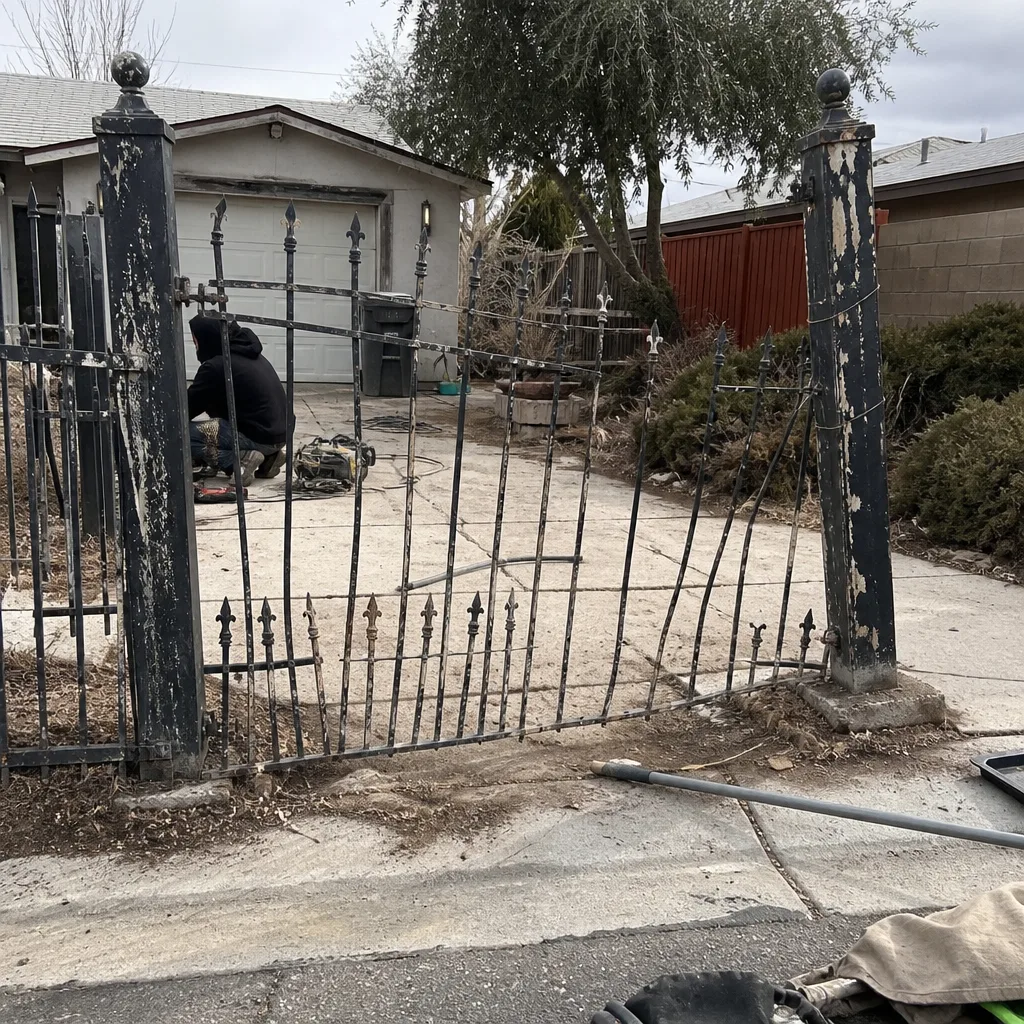 Before
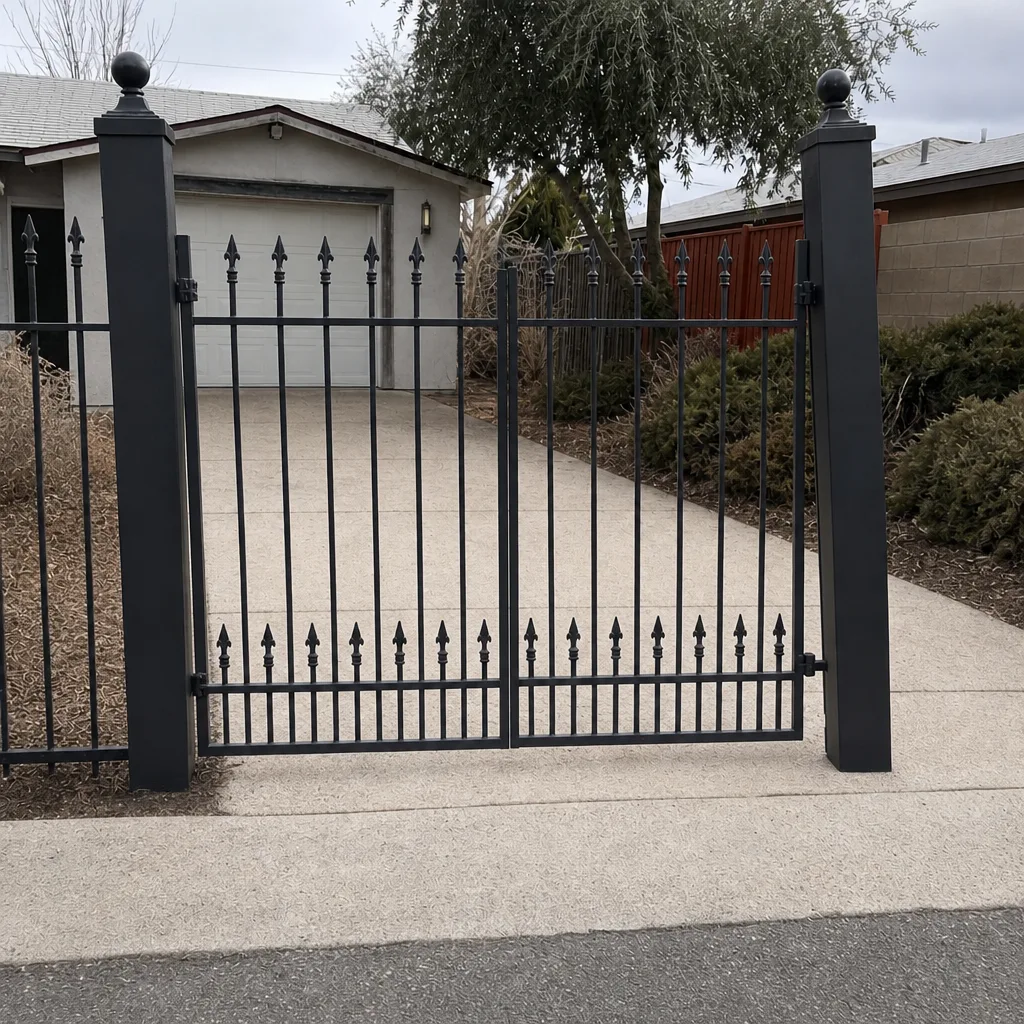 After
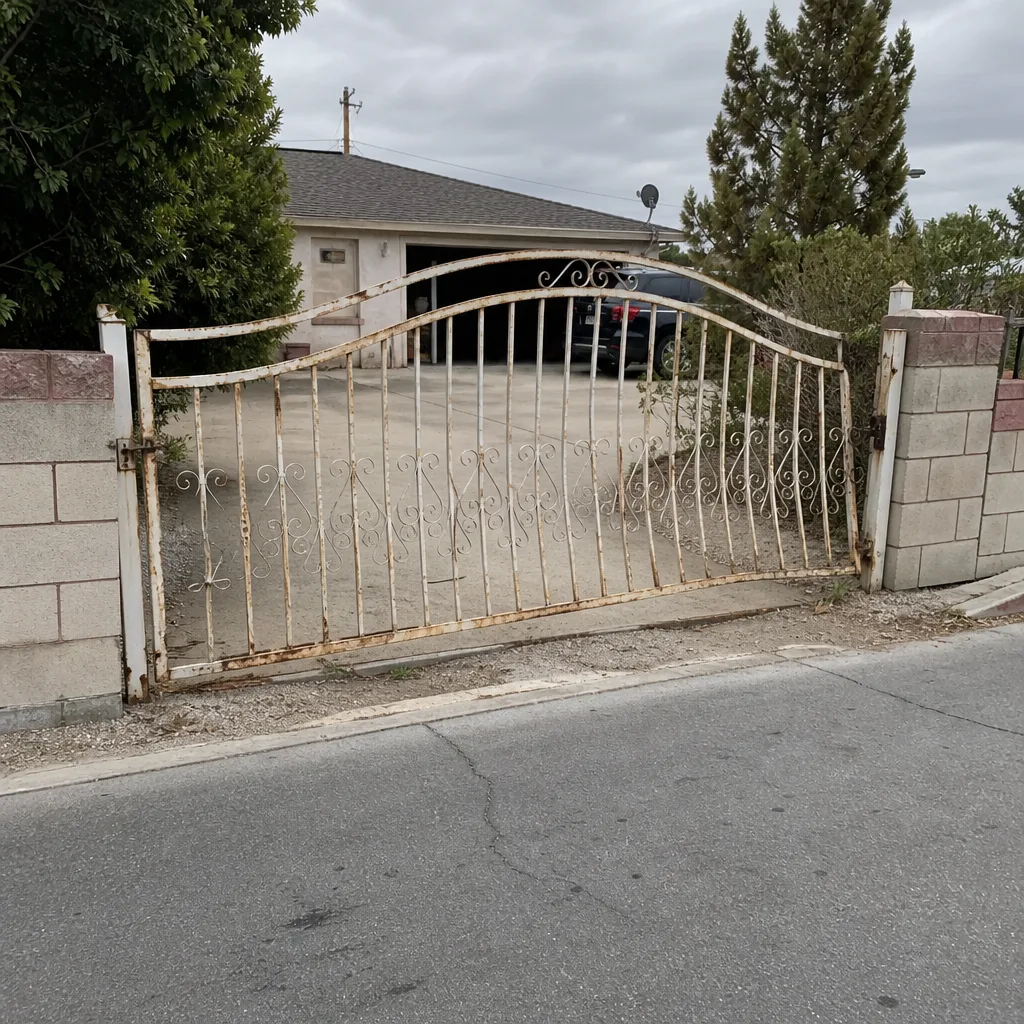 Before
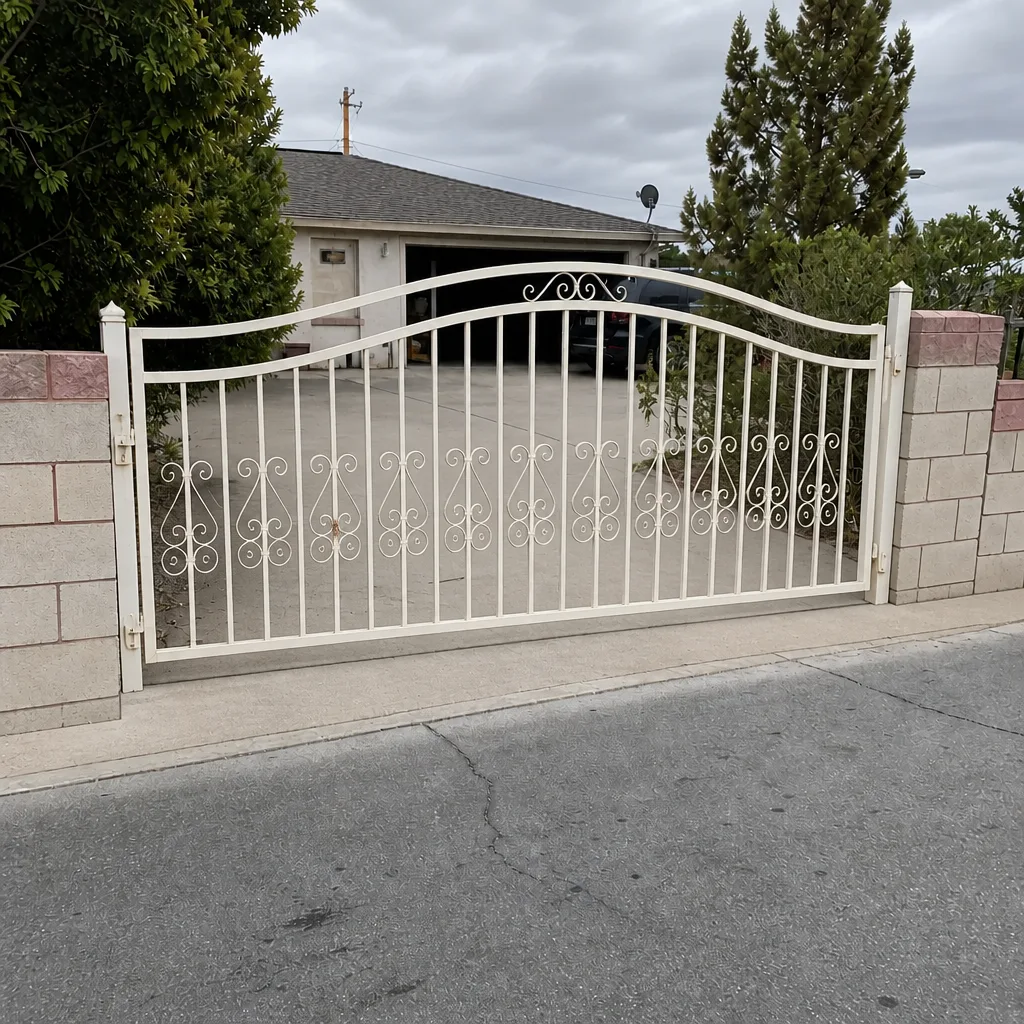 After
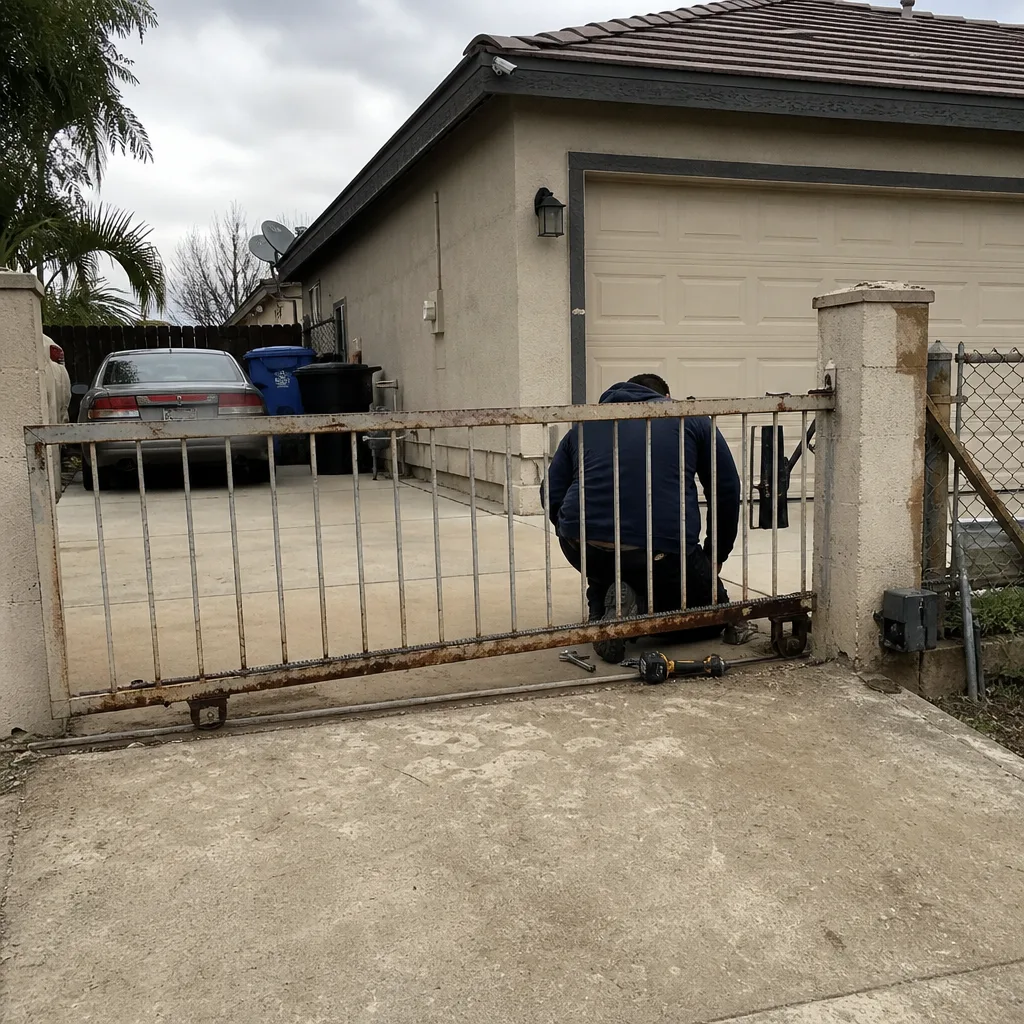 Before
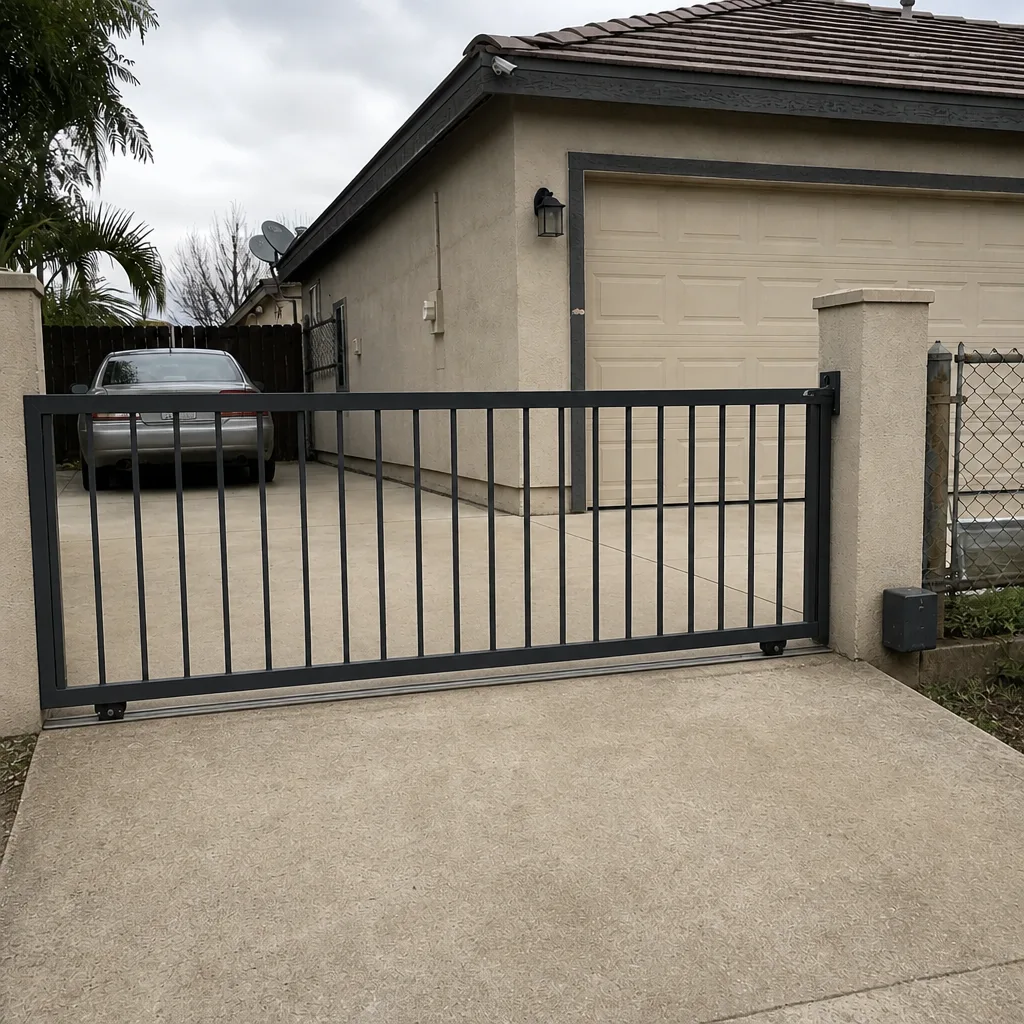 After
When to Call a Professional
Some gate repairs are homeowner jobs and some aren’t. A new battery in the remote, a fresh battery in a solar operator, a wipe-down and re-lube on a hinge – those are weekend projects. Anything involving the operator’s internals, the spindle on a high-tension spring, the counterweight cables on a slide gate, or an access control board that has failed is a professional call. Releasing your gate by hand is fine; repairing the mechanism that lets it release is not.
Call us if your gate is stuck in a position that creates risk, if the manual release is stuck, if the operator hesitates or reverses, if the hinges are sagging, or if you’ve had a failed board or a dead battery in the last year. Gate Repair in Spring Valley is what we do, and we offer free estimates across Spring Valley – call (888) 300-3906 and a live person picks up, any hour.
Frequently Asked Questions
Find the manual release on your operator housing. Swing arm units have a keyed lever near the top; slide gate units have a keyed release or a manual chain pull; overhead units have a clutch on the housing at the top of the track. Turn the release and push the gate by hand. If it won’t budge, don’t force it – a stuck release usually means the gate has shifted on its hinges, and forcing it will cause damage. Call (888) 300-3906 and we can talk you through the location on your specific brand.
A gate emergency is a gate failure that creates immediate risk: stuck open and unsecured, someone trapped inside, a vehicle blocking an emergency exit. A regular repair is anything that’s annoying but not dangerous – a slow gate, a noisy operator, a dead remote. If you’re not sure, call anyway. We triage on safety first and scheduling second. A normal repair visit in Spring Valley is billed at standard rates; an after-hours emergency is quoted upfront before we dispatch.
Leave it in whichever position secures the property better. A failed-open gate at a Spring Valley home on a busy street is a security problem; a failed-closed gate with someone needing out is a safety problem. If neither applies, leave the gate where it stopped and don’t force anything. Prop it with a wheel chock or firewood under the leading edge if weight is a concern. Don’t put anything under the operator arm – it’ll get eaten the moment power comes back.
We see all nine of the major residential brands, but in Spring Valley the most common are Viking and Ghost Controls on residential swing gates, with DoorKing and Elite on gates with access control. LiftMaster and Linear show up on older overhead installs. The brand matters because the release procedure, the control board, and the parts stock are all brand-specific. Once you know your brand and model, half the phone call is already done. If you’re not sure what you have, a photo of the housing sent to us before the visit usually identifies it.
Most Spring Valley emergency gate repairs land in the $180 to $450 range depending on the failure. A stuck manual release, a limit switch reset, or a battery replacement tends to sit on the low end. A control board replacement or a hinge post repair runs higher. After-hours dispatch adds a call fee. We quote before we dispatch, and the number we quote is the number on the invoice – no surprise at the door. If it’s not an actual emergency, we say so and schedule it for standard rates.
Usually yes for the common Spring Valley failures: dead batteries, out-of-adjustment limit switches, and binding hinges are typically handled the same day if the call comes in before the afternoon. Control board replacements and welding repairs sometimes need a parts run and might roll to the next day. When you call, we’ll give you a realistic window – not the “sometime this week” that sounds like a booking and turns into a no-show. That’s the reason our number gets saved on a card in the garage: it’s the same number that answers on the second call.
The Bottom Line
Most gate emergencies are avoidable, and the ones that aren’t get a lot less scary when you’ve planned for them. Learn where your manual release is and test it once this month. Write the reference card and post it in the garage. Keep a chunk of wood and a C-clamp near the track for a failed-open night. Save a gate repair number that gets answered by a live person, not a call center – that’s the real answer to “emergency gate repair Spring Valley,” and it’s the one thing a Spring Valley homeowner should never have to Google at 11 PM. If your gate has been hesitating, sagging, or slowing down, that’s the low-cost moment to have the motor & opener serviced in Spring Valley before the low-cost moment becomes the expensive one. If it’s a new build and you’re still choosing a system, gate installation in Spring Valley is where we start with a walkthrough of your driveway and a written plan. And when something does fail, you can always come back to Gatewood Fence & Gate Spring Valley and see our number posted where you’d expect it.
Contact Us
If your gate is stuck, stuck open, or just not sounding right, call (888) 300-3906 for a free estimate. A live person answers, any hour, any day. We’ll tell you honestly whether you’re looking at an emergency or a normal visit, quote you before any work starts, and stand behind it in writing with the 90-Day Done Right Promise. That’s how we’ve done it in Spring Valley – fix it without replacing anything that doesn’t need replacing, and be the name on the invoice when you call back. Repairs over $200 get $40 off, there’s no trip charge inside the county, and seniors and veterans keep a permanent 10% discount. No haggling, no fine print.
Written by the team at Gatewood Fence & Gate Spring Valley.