
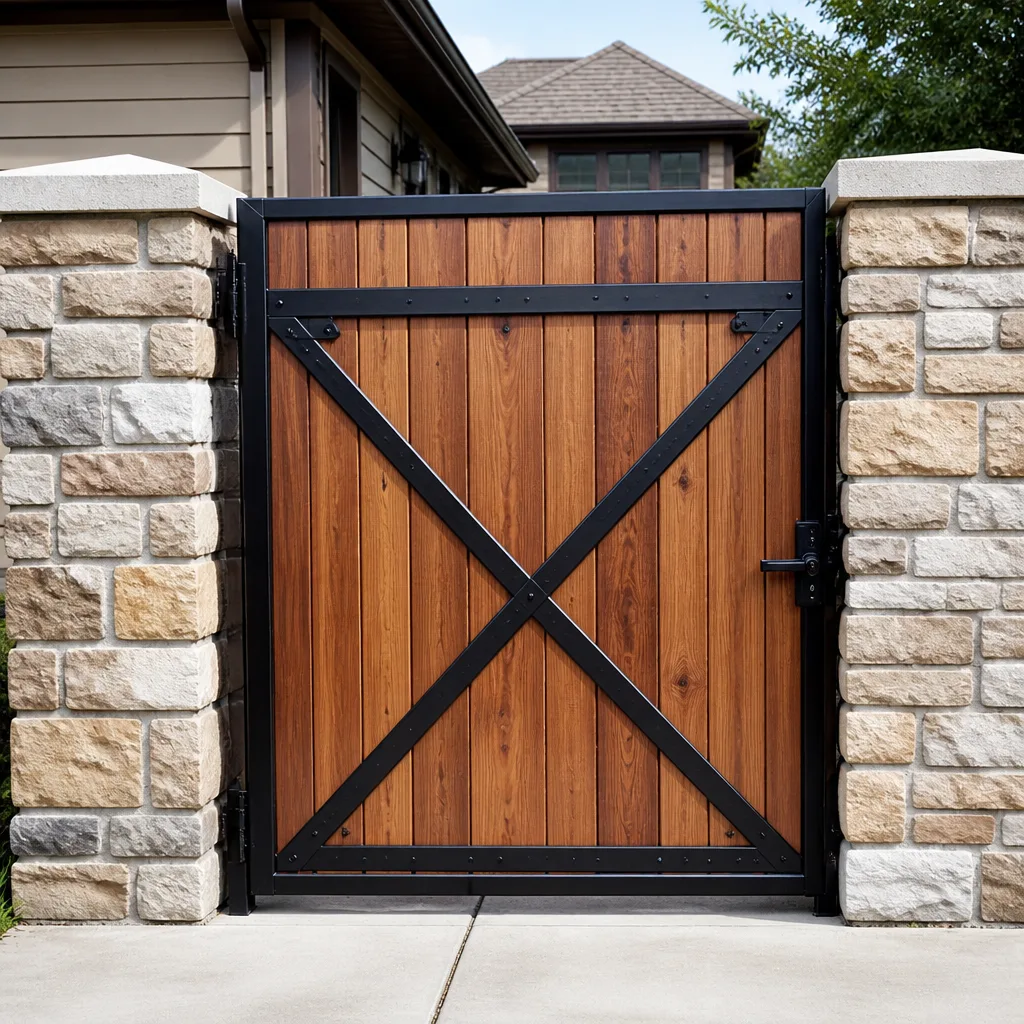
 Wood & steel frame
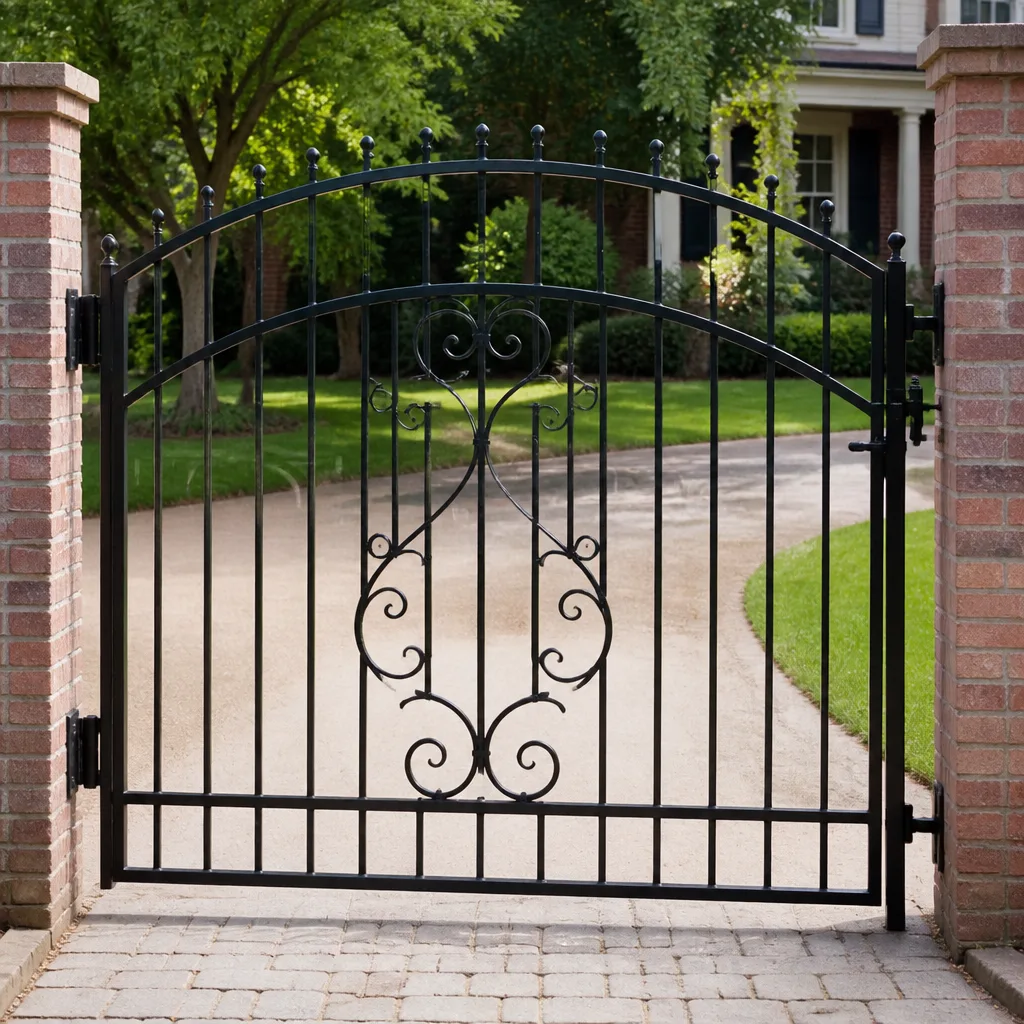 Wrought iron
 Farm & ranch
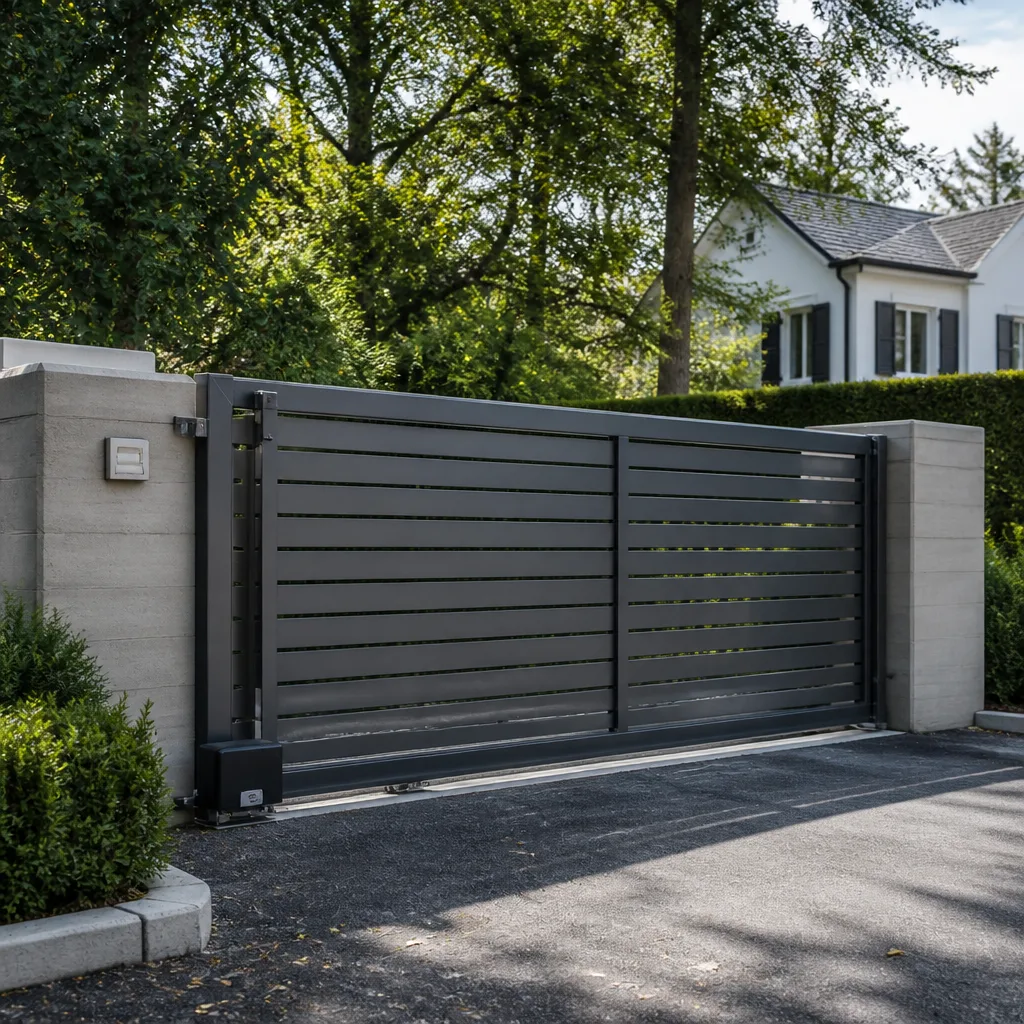 Sliding driveway gates
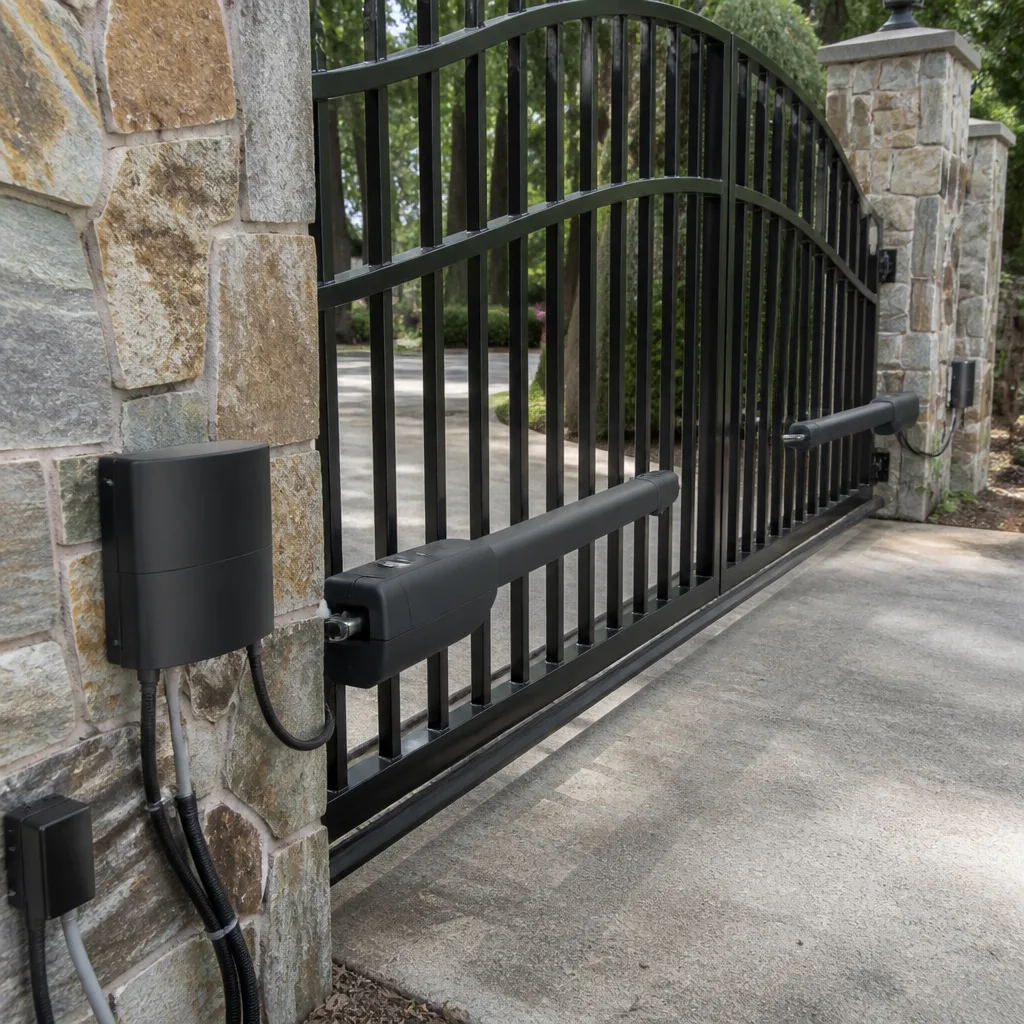 LiftMaster operators
Free on-site gate assessment - hinges, posts, and your LiftMaster or Nice gate operator checked before anything is quoted
The assessment is free and the quote is the invoice.
Get your free estimateStyles & brands we work with
- Wrought iron
- Wood & steel frame
- Farm & ranch
- Sliding driveway gates
- LiftMaster operators
See the difference
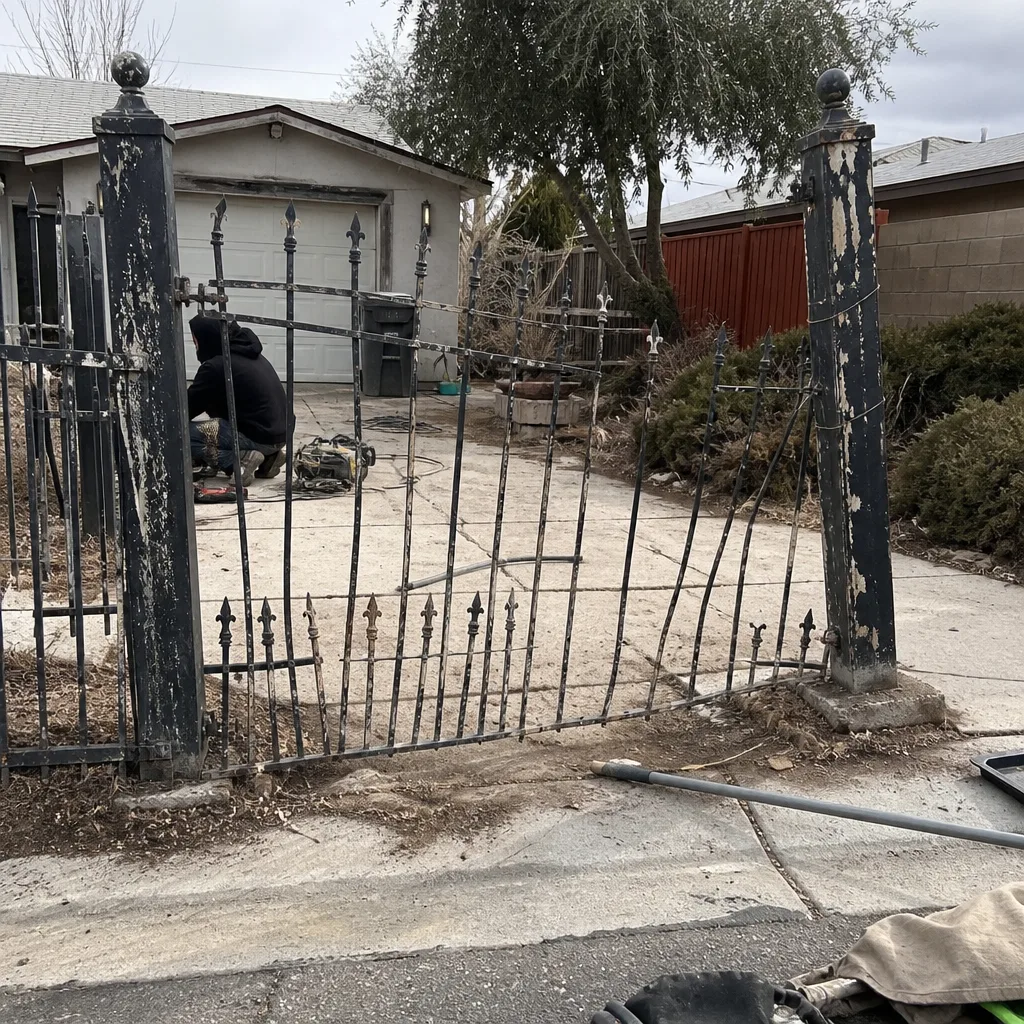 Before
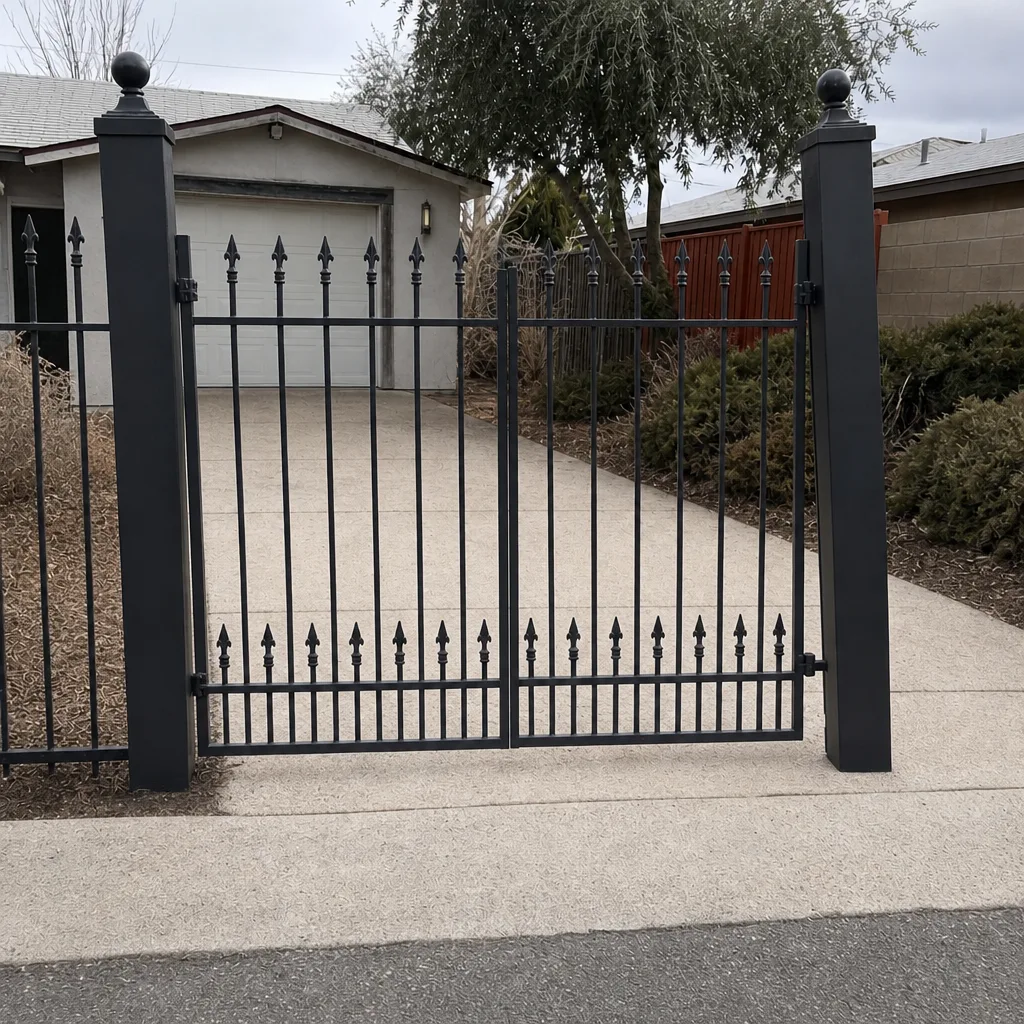 After
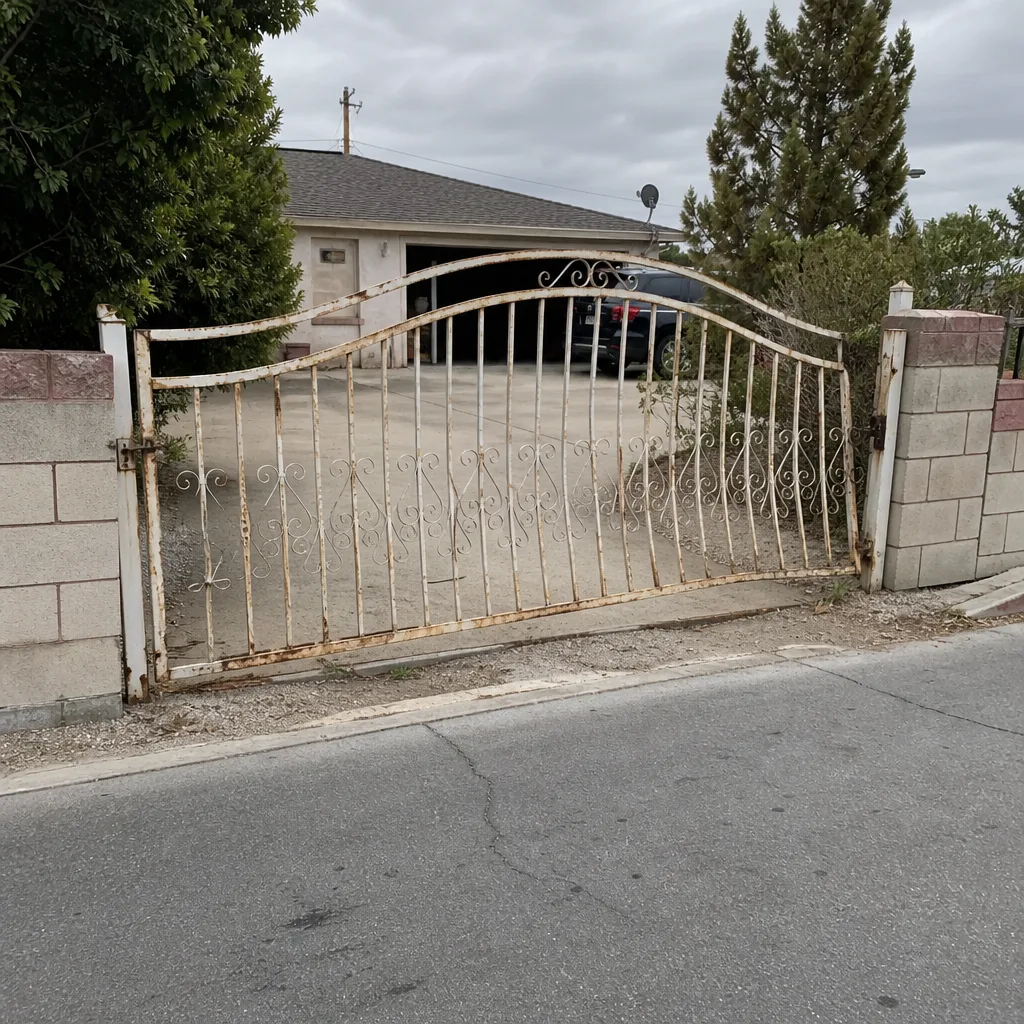 Before
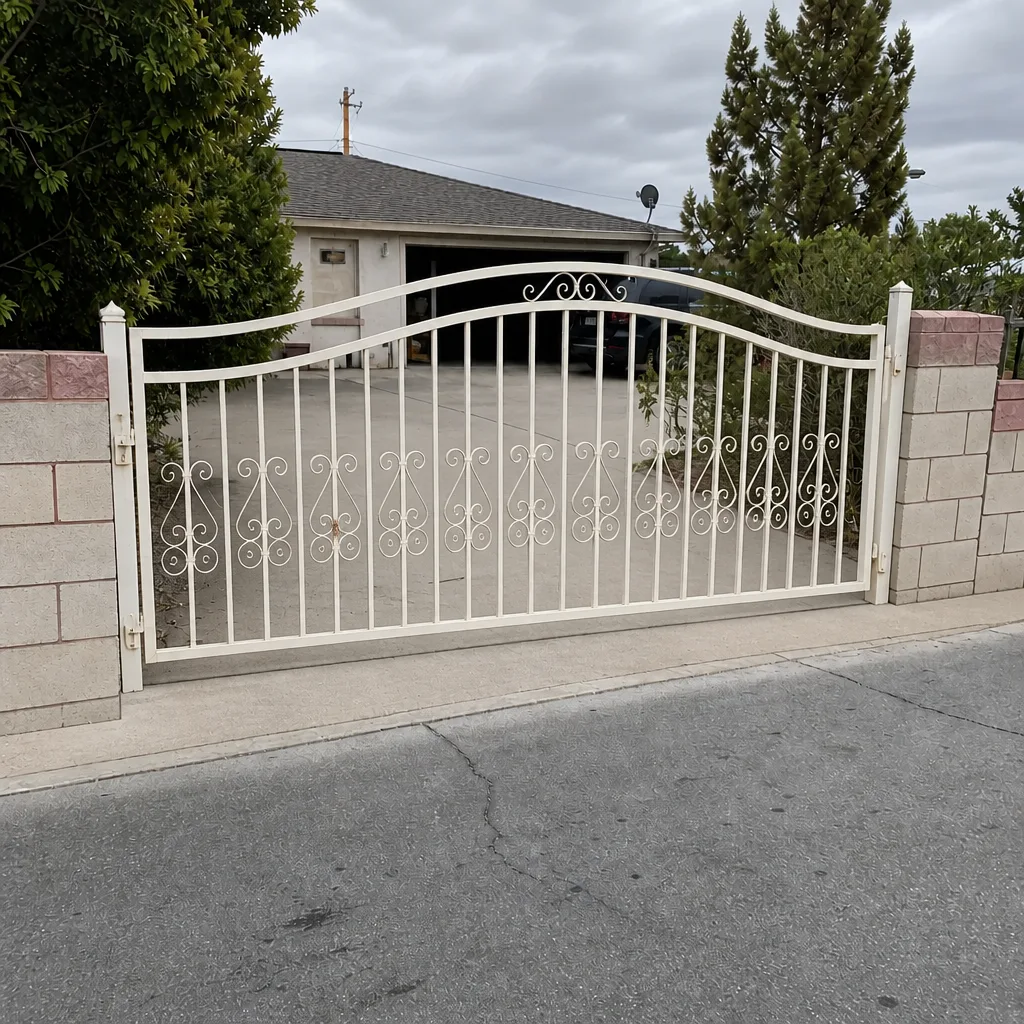 After
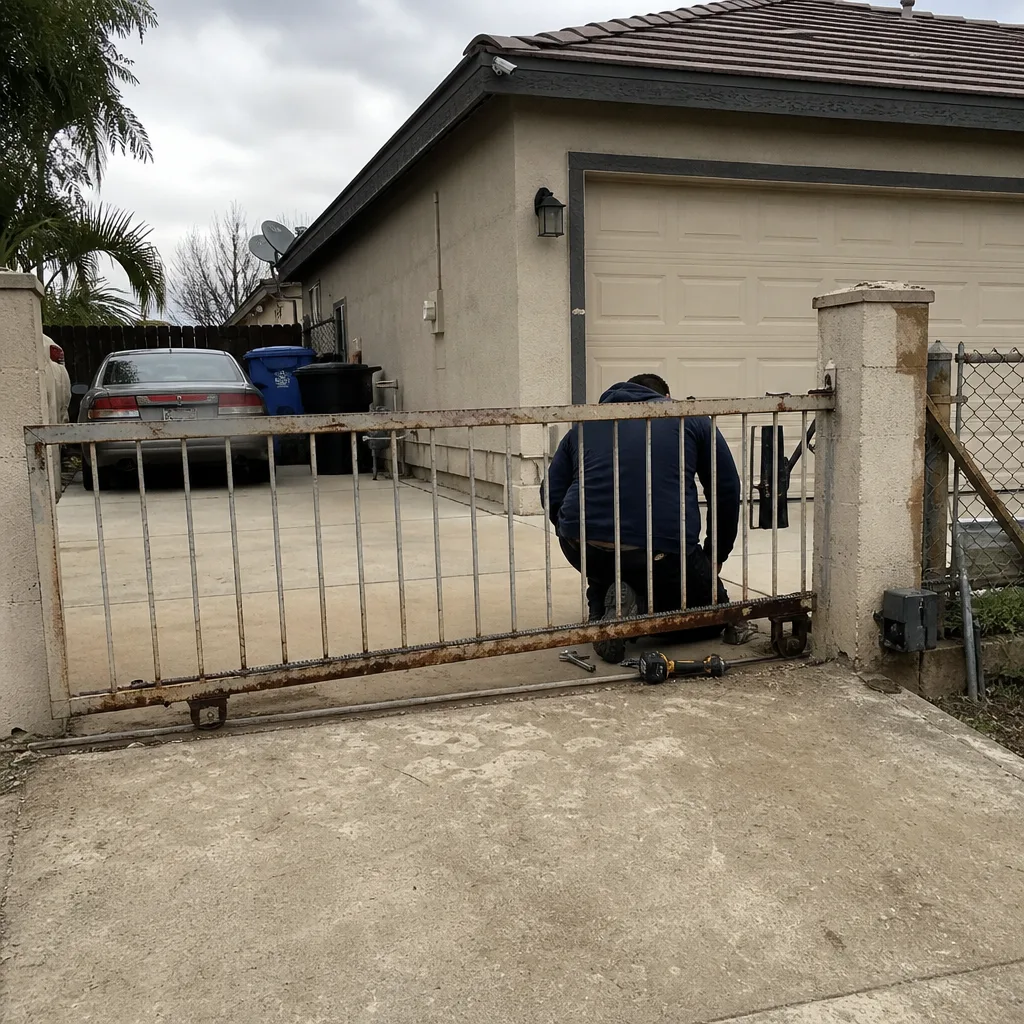 Before
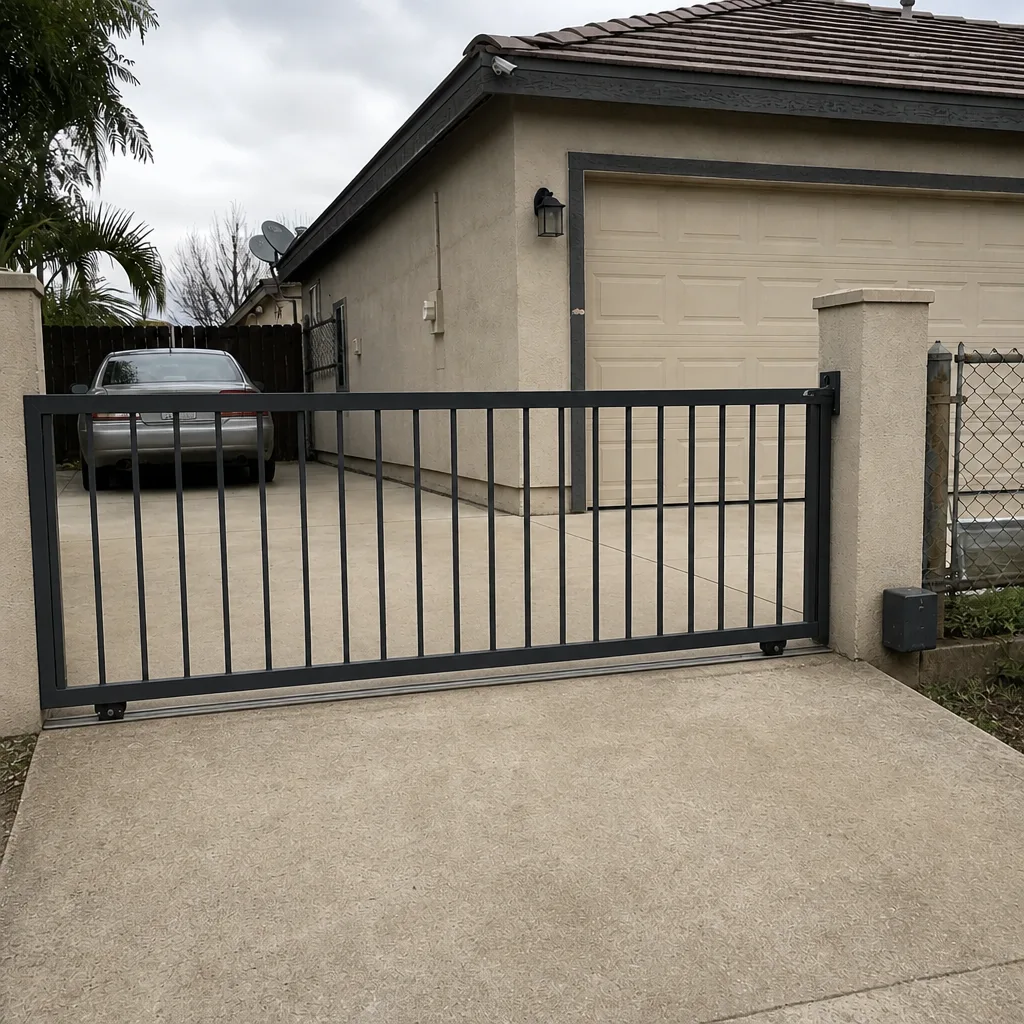 After
Why Won’t My Automatic Gate Open in Spring Valley, NV?
The most likely reason your automatic gate won’t open is a safety sensor fouled by desert dust or a control board that has tripped its heat or surge lockout, not a burned-out motor. In Spring Valley, those two failures account for most of the “dead gate” calls we get, especially from June through September when temperatures push past 100°F and monsoon dust rolls through the valley. Before you pay anyone to come out, there are four things worth checking in a specific order. If you’d rather talk it through, call (888) 300-3906 and a live person will pick up.
When a homeowner calls Gatewood Fence & Gate Spring Valley about a gate that won’t open, the first question is always the same: did you lose power in the last 24 hours, or was there a dust storm this week? One of those two answers solves a good share of the calls before anyone needs to drive out.
Key takeaways
- Dirty sensor eyes and heat-tripped control boards are the top two culprits in Spring Valley, not motor failure.
- Many swing operators have a thermal cutout that resets itself in 20-30 minutes once the board cools.
- A blinking error code after a power blink usually means a surge lockout, not a dead operator.
- If the motor hums but the gate doesn’t move, stop and call. That one needs hands on it.
The Spring Valley Diagnostic Order That Actually Matches the Failures
Most troubleshooting lists online were written for wet climates and cold-weather freeze cycles. Spring Valley doesn’t work that way. Our heat and dust break gates on a completely different schedule, so the order you check things matters. Here’s the sequence that matches what we actually find on Spring Valley driveways.
- Wipe the sensor eyes clean. The photo-eye pairs on either side of the gate collect a fine grit during monsoon season. A single dust film on one lens can make the operator think something is in the path, so it refuses to open. A soft cloth and five minutes clears most of these.
- Check the loop detector light on the control board. If you have an in-ground exit loop, a buried chunk of debris or a shifted loop wire can hold a fault. The board light tells you whether the loop is triggering when nothing is there.
- Look for a blinking error code after a power blip. Desert thunderstorms and summer grid strain cause short outages. Many boards lock out on a surge and sit there blinking until they’re power-cycled or reset.
- Try the manual release. If the gate still won’t respond, disengage the operator so you can move the gate by hand and confirm whether the problem is the operator or the gate itself binding in its track or hinges.
That order isn’t random. It follows failure frequency in this climate, so you spend your time on the likeliest cause first instead of starting with the motor, which is usually the last thing to actually fail. If you get through these four steps and the gate is still stuck, that’s when a real diagnostic visit makes sense. Our Gate Repair page covers what a full on-site assessment includes.
Why Desert Heat Locks Out Your Gate Operator (And Why It Isn’t Broken)
A gate operator that quits in the middle of a hot afternoon is often doing exactly what it was built to do: resting. Many swing operators, including common LiftMaster and FAAC units, have a thermal cutout that trips after repeated cycles in high ambient heat. On a south-facing Spring Valley driveway in July, a gate that cycles a dozen times before noon can hit that cutout by mid-afternoon. It isn’t broken. It’s protecting itself, and it will usually reset in 20-30 minutes once the board cools.
Here’s what that looks like in practice: the gate worked fine all morning, stopped responding around 2 or 3 p.m., and started working again after dinner. If that’s your pattern, you’re probably watching a thermal cutout, not a failing motor. The fix isn’t a new operator. It’s often a shade cover over the control box, better board ventilation, or adjusting the cycle count so the gate isn’t working harder than it needs to.
Spring Valley’s housing stock makes this worse in a specific way. The subdivisions built through the 1980s-2000s boom went up with builder-grade swing operators that are now 20-plus years old. Boards, plastic keypads and seals on those units were never designed for this many 100°F+ days, and they fail on a heat cycle rather than a freeze cycle. When a whole tract hits that wall at once, it looks like an epidemic of dead gates. It’s really just original hardware aging out together.
The HOA Access-Control Wrinkle Most Homeowners Miss
Some Spring Valley communities run a community-wide access control system tied to each home’s gate operator. When one of those gates stops responding to a remote or keypad, the problem is sometimes not in the gate at all. It may have lost its programming from the community controller. That reads to a homeowner like a broken gate, but the operator itself is fine. This is also where DoorKing and Linear entry systems show up, and they behave differently from a simple residential swing operator.
Because Spring Valley is unincorporated, there’s no city building department. Gate permits and inspections run through Clark County, and HOA architectural rules, not municipal code, usually dictate gate height, style and color. That matters when a repair turns into a replacement decision: the person doing the work needs to know what the HOA will actually approve. Our team is certified to service nine major gate brands, including LiftMaster, FAAC, BFT and Mighty Mule, so an HOA-tied system doesn’t send us scrambling for a manual.
Common Spring Valley Scenarios We See
- Gate dead after a thunderstorm. Power blip tripped a surge lockout. A power cycle or a board reset usually clears it, and a surge protector on the operator prevents a repeat.
- Gate won’t open only in the afternoon. Thermal cutout on a sun-baked board. Shade or ventilation fixes it. A new operator doesn’t.
- Gate opens partway and stops. Sensor eye blocked by dust or a misaligned lens, or the gate is binding on a hinge or track. Stop forcing it and have the alignment checked.
- Gate ignores the remote but the keypad works. That points to the remote or receiver, not the operator. Often a battery or a re-pairing, not a repair.
- Sagging iron gate on a block-wall pilaster. On these stucco homes, gates anchor into masonry pilasters, not wood posts. A sag here is often a wall-mount or pilaster issue, and hinge welding on site is the honest fix rather than swapping the whole gate.
How to Secure Your Gate Overnight Without Forcing It
If your gate is stuck and you need it secured before morning, the manual release is your tool. There are three common scenarios, and they call for different moves. First, an operator arm disconnect lets you free the gate from the motor so you can move it by hand. Second, a manual lock engagement secures the gate physically once it’s in the position you want. Third, if the gate is jammed mid-travel and won’t budge by hand, don’t force it. Forcing a stuck gate can bend the arm, crack a hinge weld, or damage the operator gearbox, turning a small repair into an expensive one. Leave it, secure what you can, and have it looked at.
| What you’re seeing | Likely cause | Rough cost range |
|---|---|---|
| Gate won’t open, eyes dirty | Dust on sensor lenses | Free (wipe clean) |
| Dead after storm, blinking code | Surge lockout on board | Reset or protector: $75-$200 |
| Quits mid-afternoon, returns later | Thermal cutout | Shade/vent fix: $100-$250 |
| Motor hums, gate won’t move | Binding, gear, or board fault | Diagnostic and repair: $150-$450 |
| Sagging iron gate on pilaster | Wall-mount or hinge weld fatigue | On-site weld repair: $200-$600 |
Those ranges reflect what we see on Spring Valley jobs. Standing offers apply: $40 off any repair over $200, no trip charge inside the county, a free second opinion on any written estimate, and a permanent 10% discount for seniors and veterans. Every job carries the 90-Day Done Right Promise in writing. For a fuller picture of what we handle, see our home page or the service page for Gate Repair in Spring Valley.
When It’s Really Time to Call
Some problems clear with a wipe and a reset. Others don’t, and guessing at them costs more than a diagnostic. Call for help if the board shows a persistent fault code that won’t clear after a power cycle, if the motor hums but the gate doesn’t move, or if the gate moves erratically. Those three point to issues inside the operator or the gate’s mechanicals that need a trained eye. Gate springs and heavy swing arms carry real tension, and adjusting a binding operator or a welded hinge without the right tools can hurt you. That’s a job for someone who does it every day.
If you’d rather have it looked at, Gatewood Fence & Gate Spring Valley offers a no-pressure assessment in Spring Valley. We repair what other companies want to replace, we weld on site so the gate stays in your driveway, and we answer the phone with a live person around the clock. Call (888) 300-3906 for a free estimate.
FAQs
The most common causes are dirty safety sensor eyes, a control board that tripped its heat or surge lockout, or a lost connection to a community access controller. Check the sensor lenses and the board’s error light first; those two solve most Spring Valley gate calls before anyone needs to come out.
That pattern usually means a thermal cutout on the operator board is tripping from heat and resetting once it cools, which takes about 20-30 minutes. On a south-facing Spring Valley driveway in July, the board can hit that limit by mid-afternoon. It’s a heat issue, not a dead motor, and shade or ventilation often fixes it. Call (888) 300-3906 if it keeps happening.
Yes, most operators have a manual release that disengages the arm so you can move the gate by hand. Once the gate is where you want it, a manual lock secures it. If the gate is jammed mid-travel and won’t budge, don’t force it, because that can bend the arm or crack a hinge weld. Call us and we’ll walk you through it.
Repair is usually the cheaper and correct choice, and on older builder-grade units a board reset, sensor cleaning or shade fix costs far less than a new operator. Replacement only makes sense when the motor itself has failed and the unit is already past its service life. Call (888) 300-3906 for a free second opinion on any written estimate before you decide.
Written by the team at Gatewood Fence & Gate Spring Valley, serving Spring Valley, NV.