
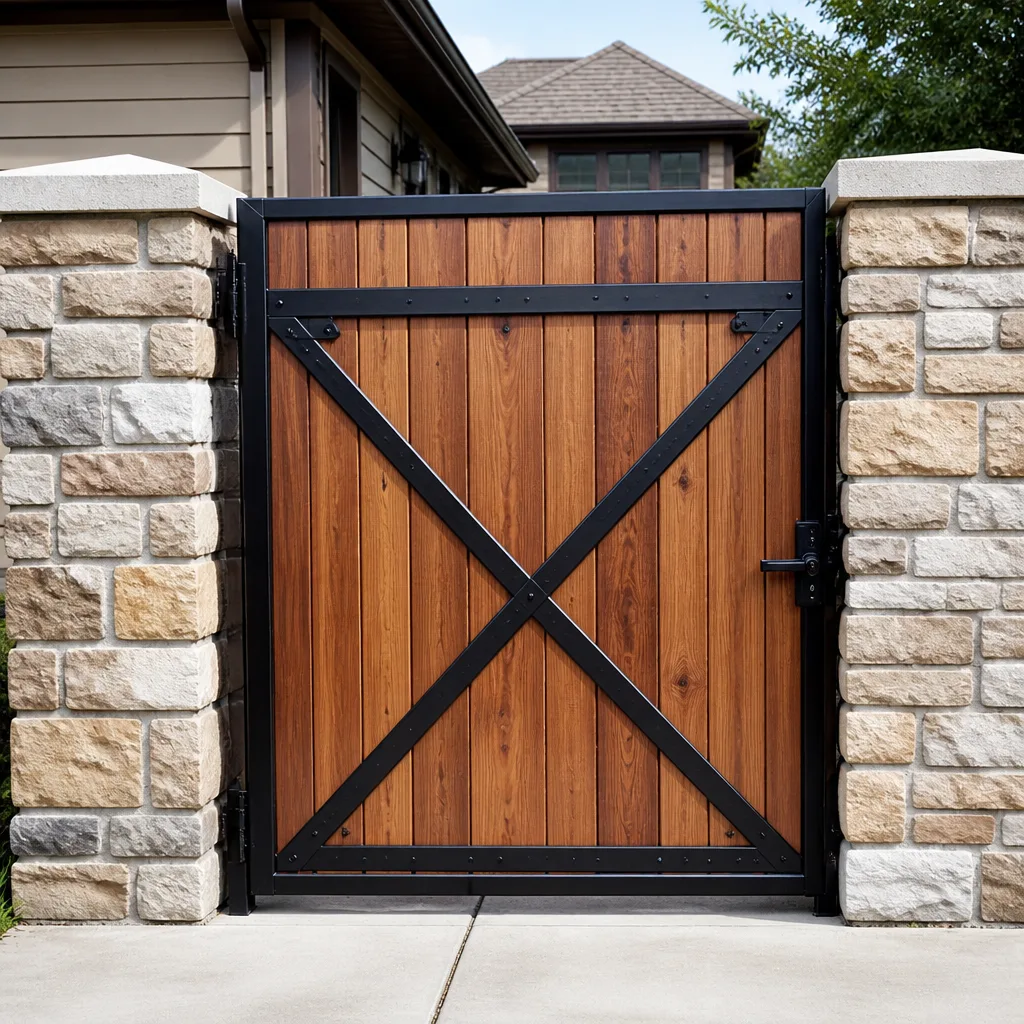
 Wood & steel frame
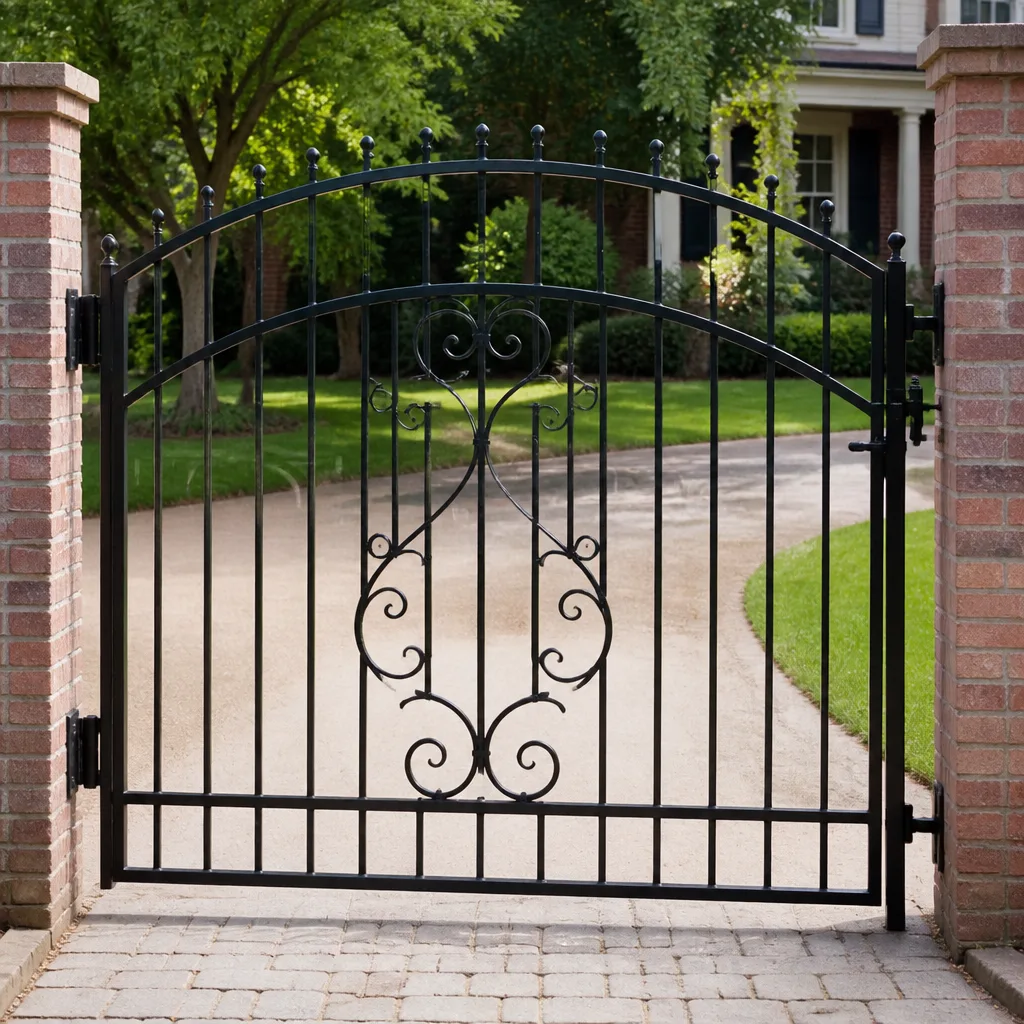 Wrought iron
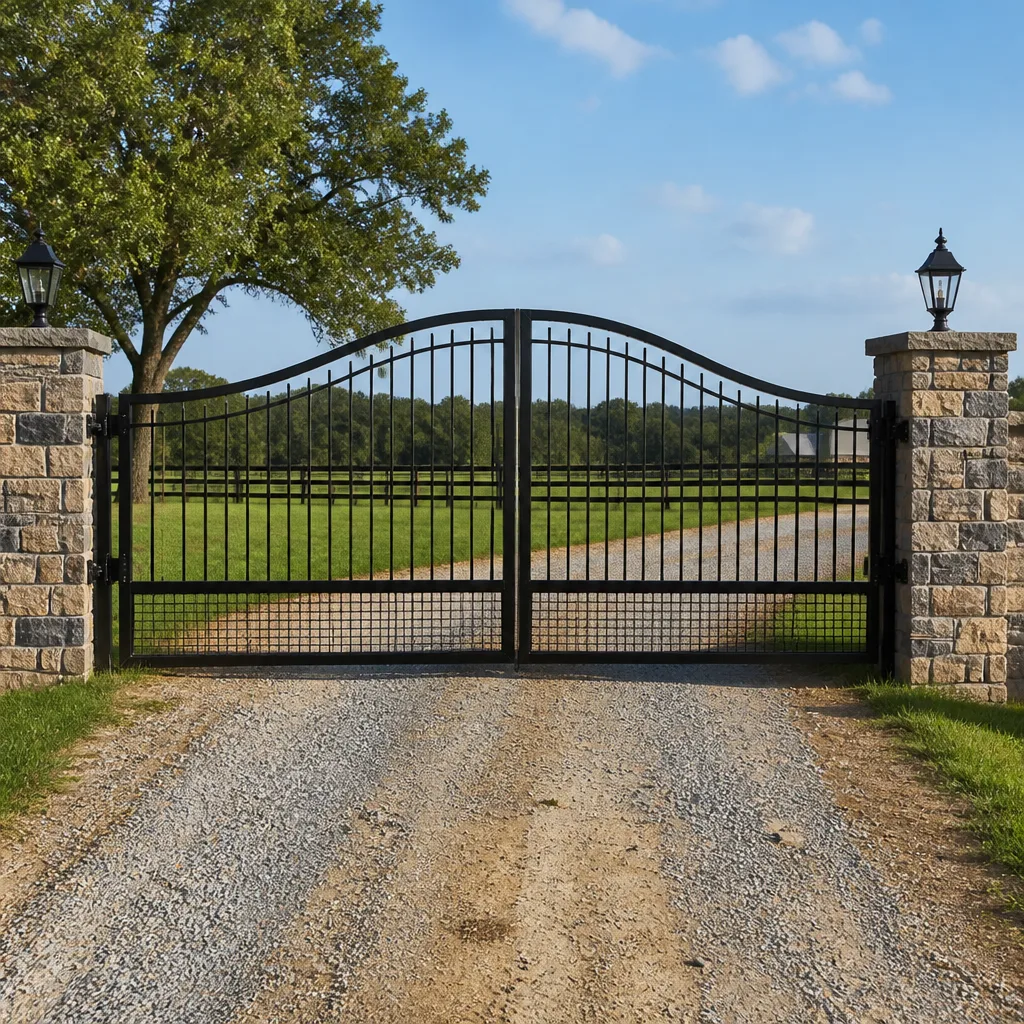 Farm & ranch
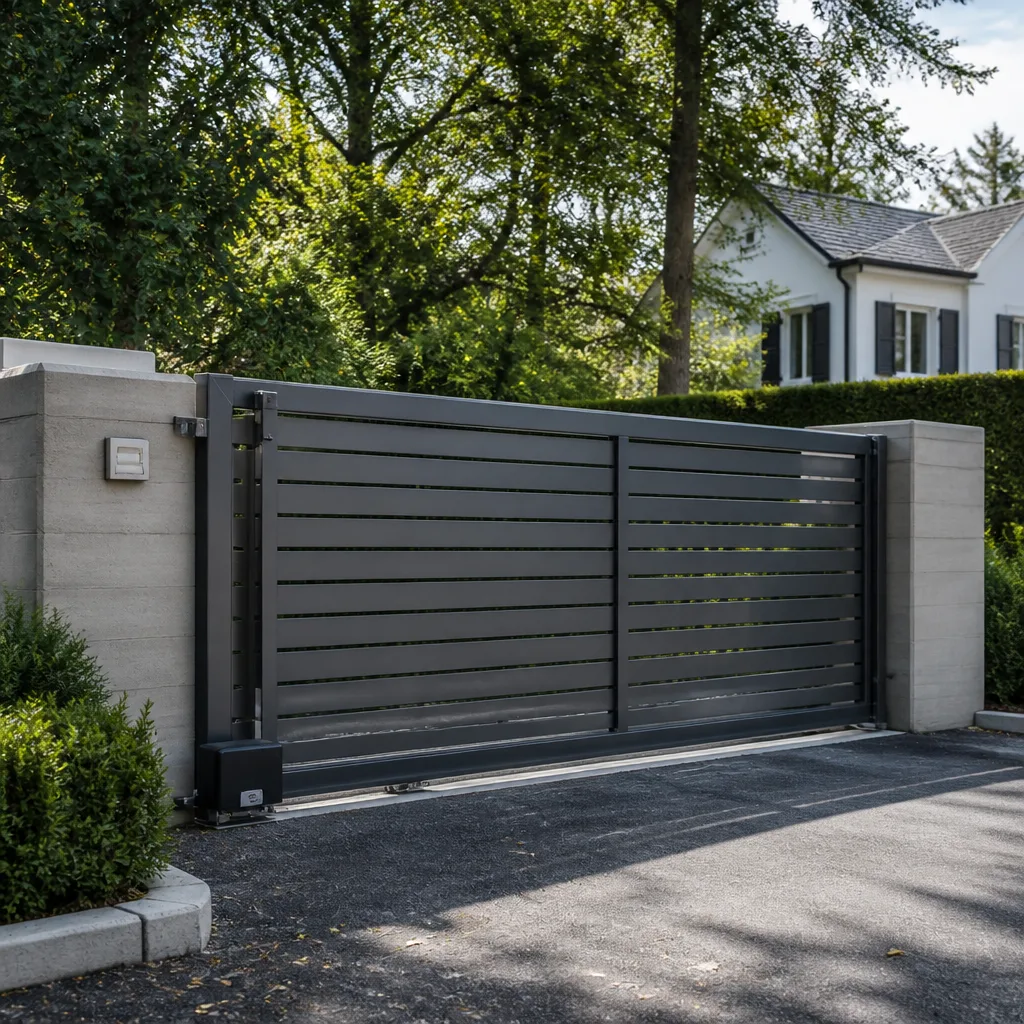 Sliding driveway gates
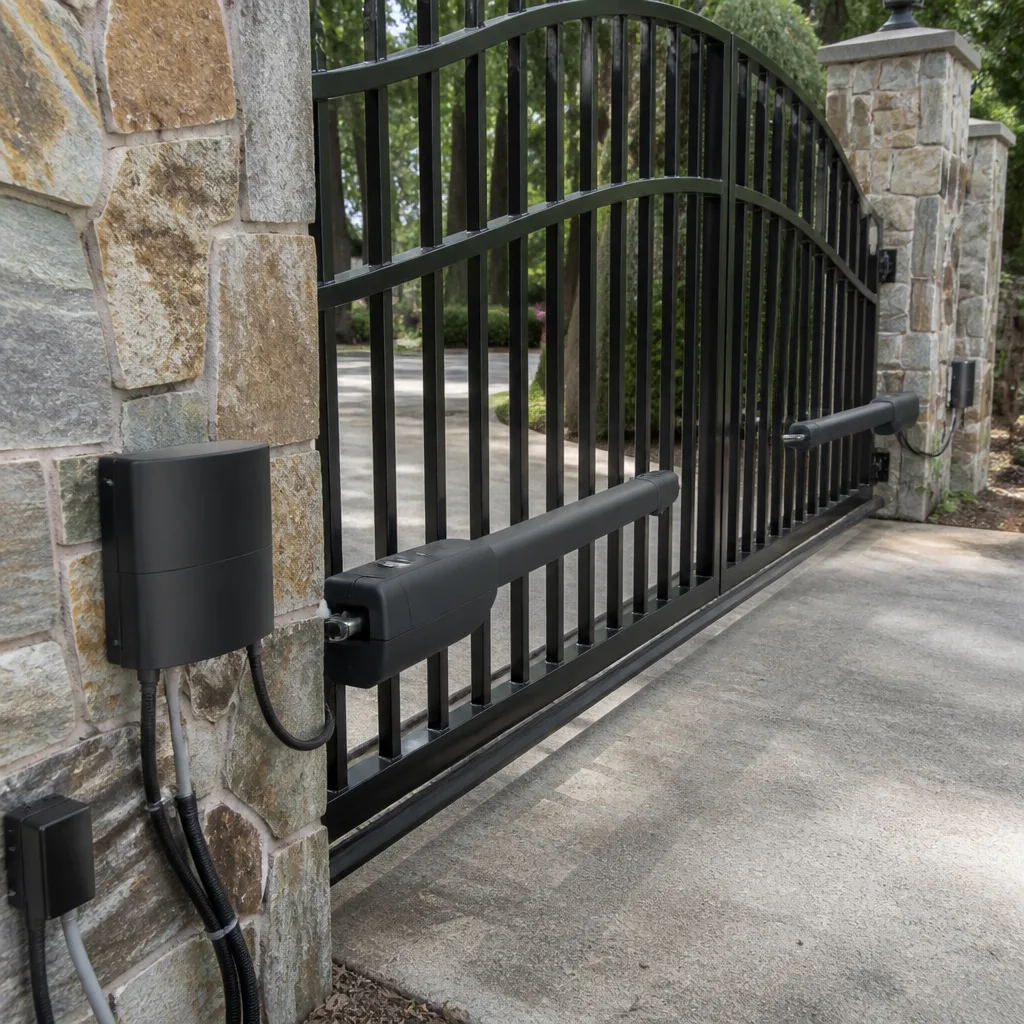 LiftMaster operators
Free on-site gate assessment - hinges, posts, and your LiftMaster or Nice gate operator checked before anything is quoted
The assessment is free and the quote is the invoice.
Get your free estimateStyles & brands we work with
- Wrought iron
- Wood & steel frame
- Farm & ranch
- Sliding driveway gates
- LiftMaster operators
See the difference
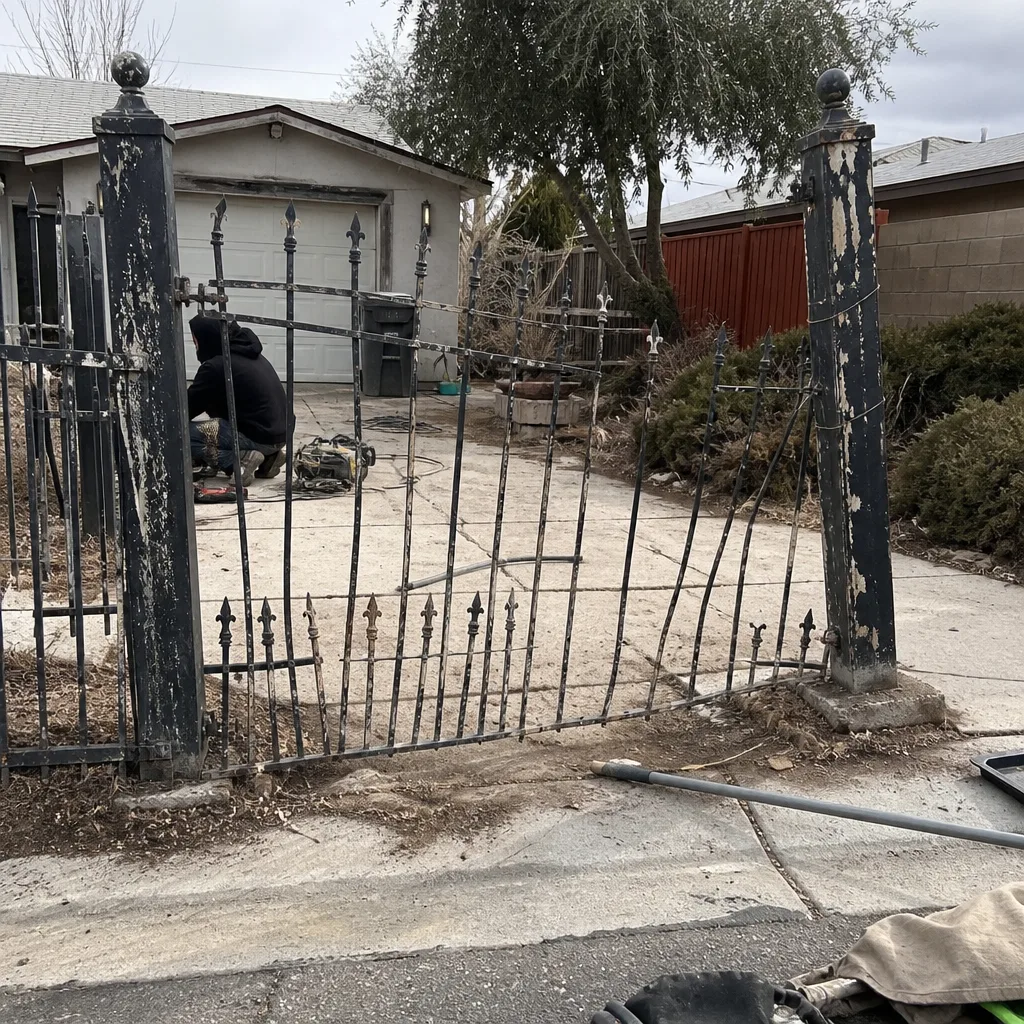 Before
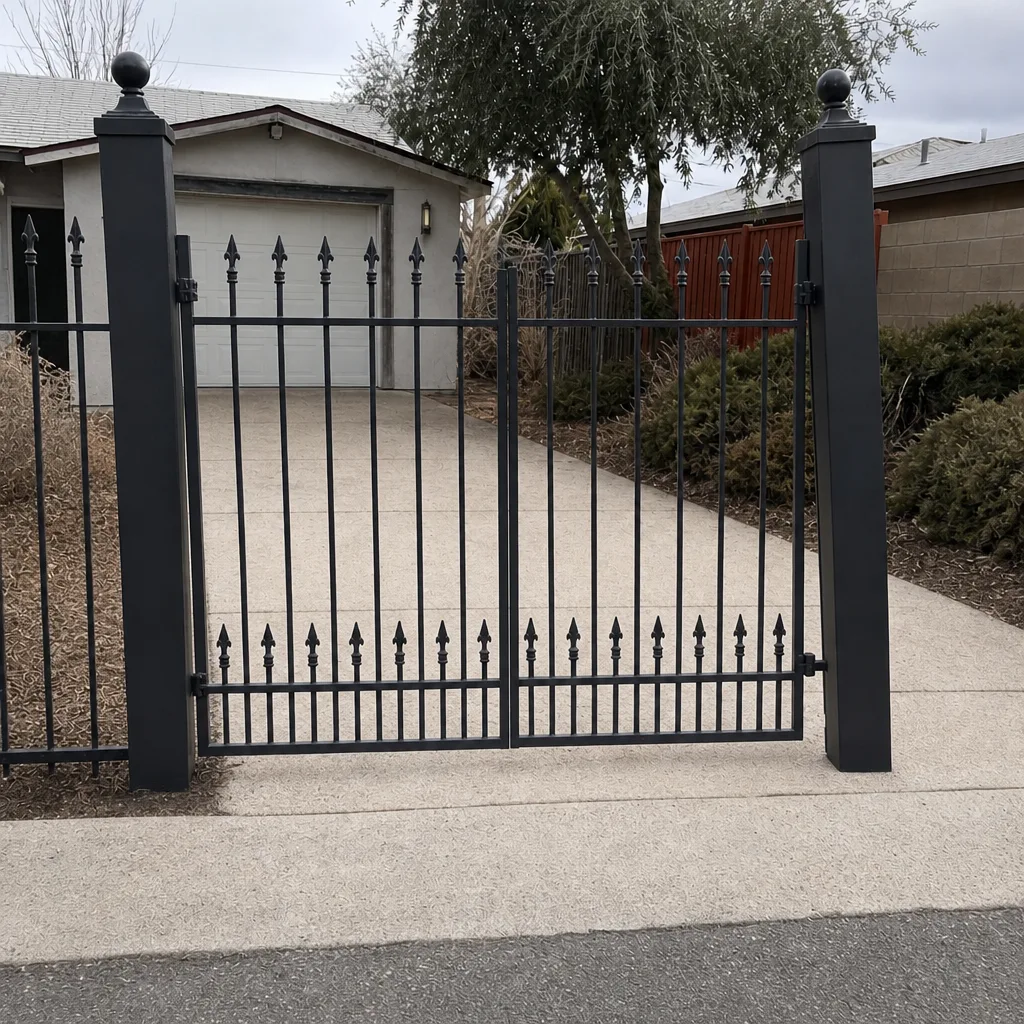 After
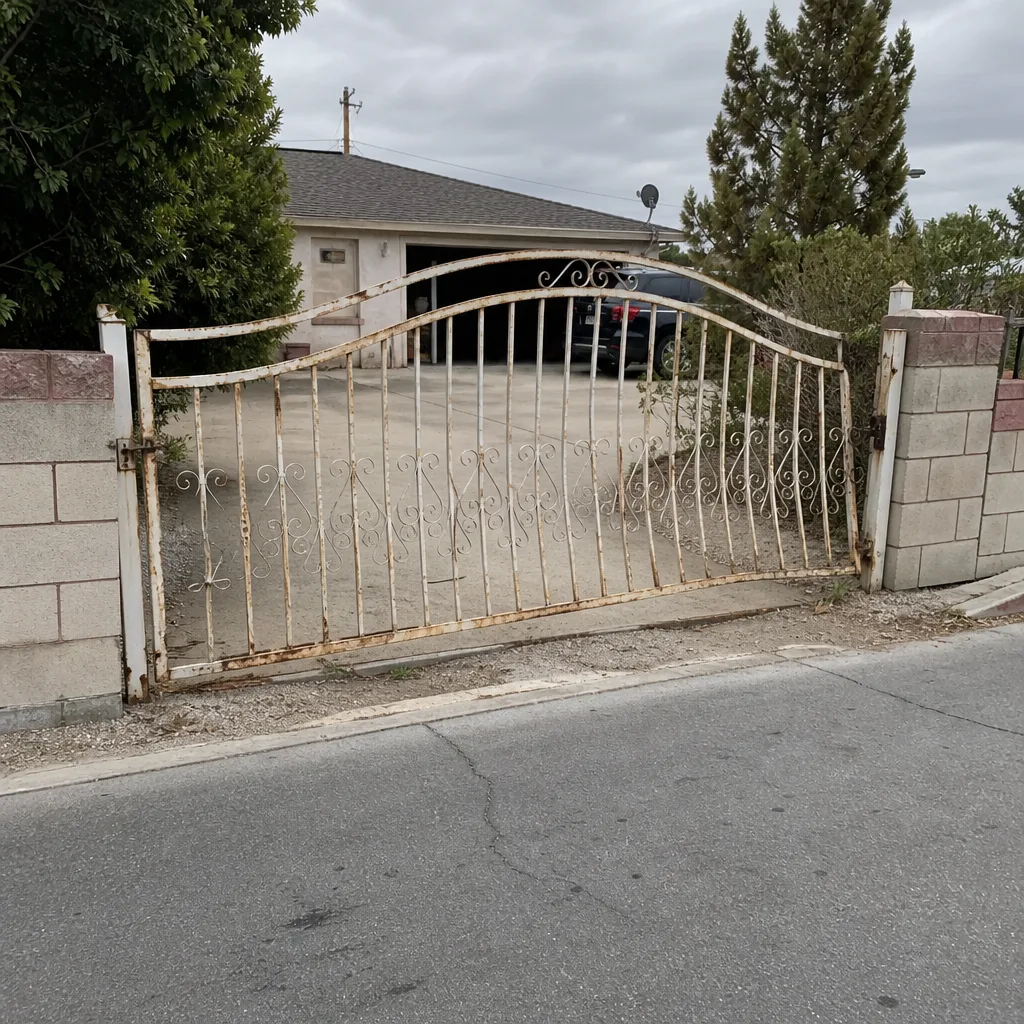 Before
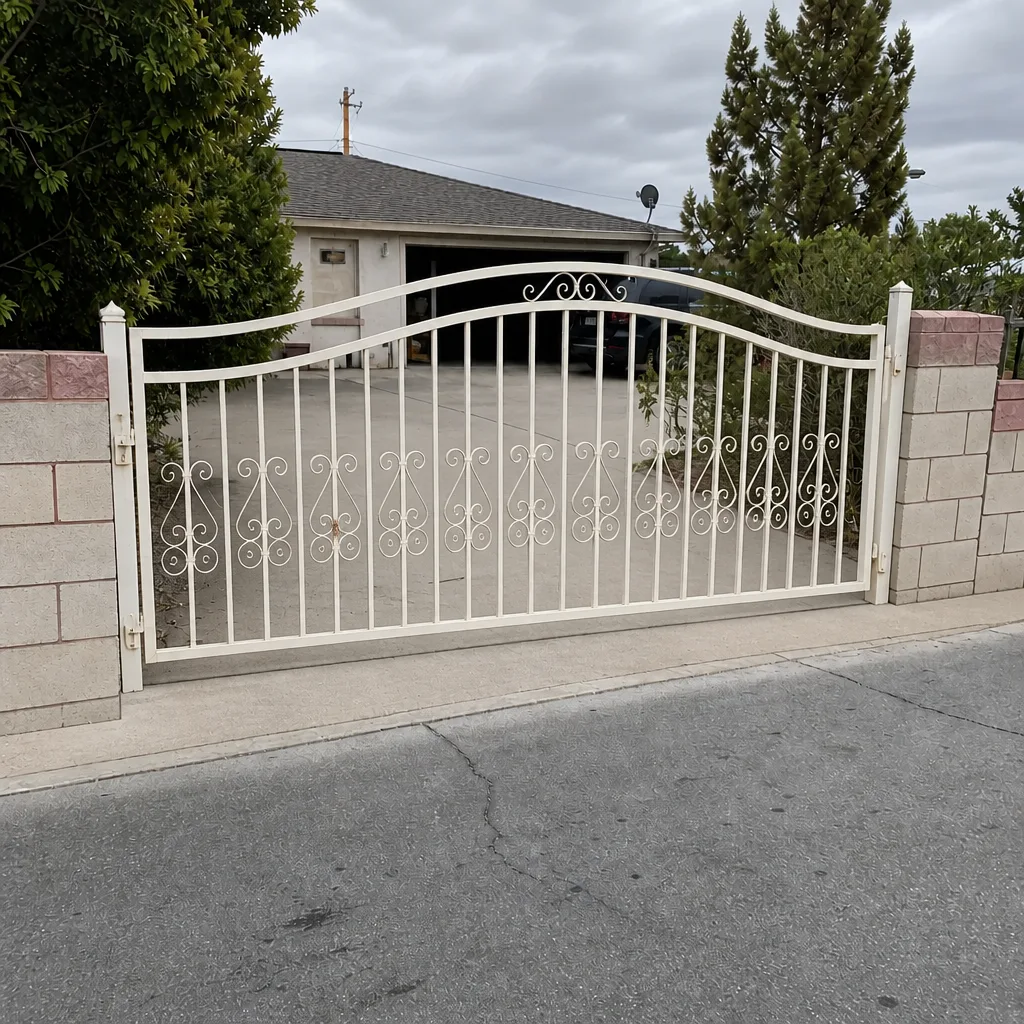 After
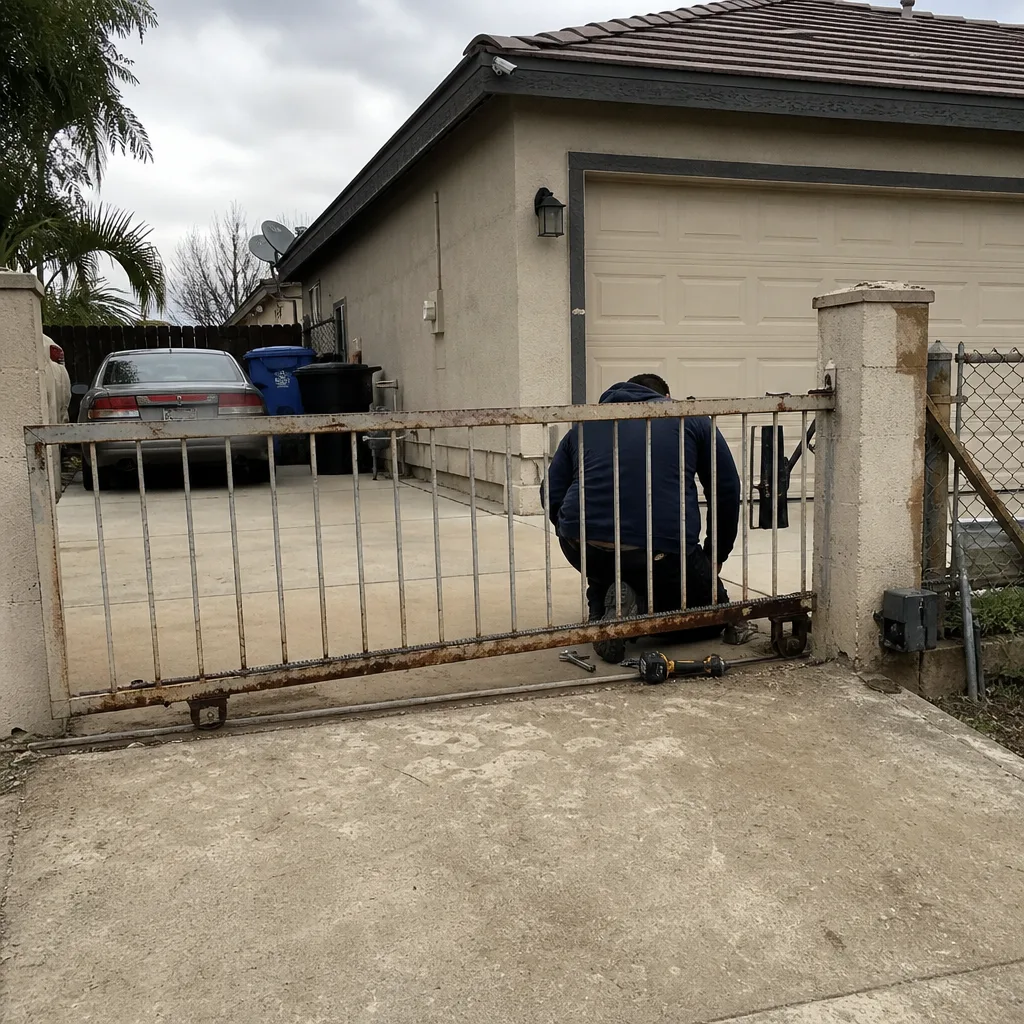 Before
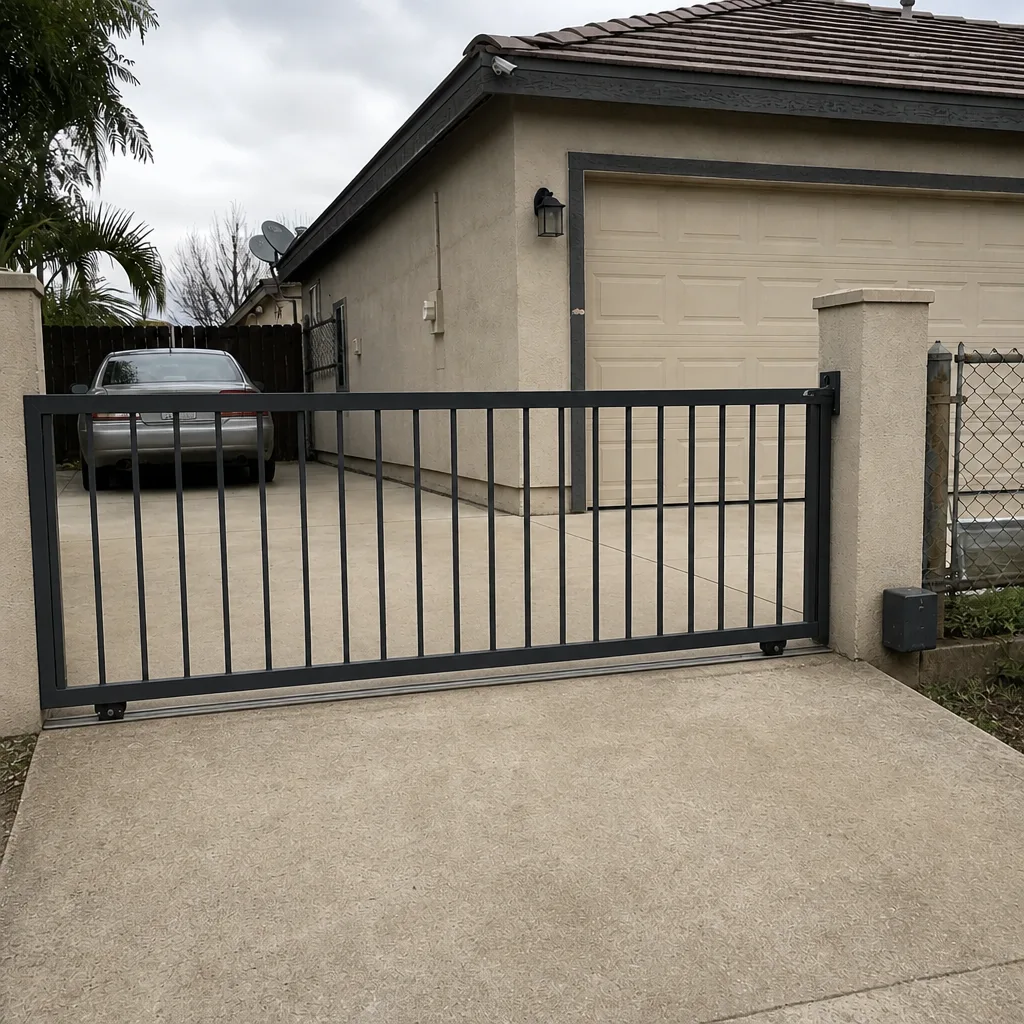 After
How Do Gate Access Control Systems Work in Spring Valley, NV?
A gate access control system works as a chain of four parts: a credential reader (keypad, fob, or loop detector) sends a signal to a control board, the control board decides whether to open, and it tells the operator motor to move the gate leaf. When a Spring Valley gate won’t open, the reader is almost never the problem. Most calls we get start with “my keypad is broken,” and most of the time the keypad is fine. The control board cooked itself during one of our 115°F stretches and is now sending garbage downstream. If you’d rather skip the guesswork, call (888) 300-3906 and we’ll diagnose it on site.
The Signal Chain, Link by Link
Every gate access system in Spring Valley follows the same path. Credential in, logic check, motor fire, gate moves. Understanding which link does what tells you which one failed.
- Credential input. A keypad, a remote fob, a card reader, or an in-ground loop detector recognizes your car and tells the board someone wants in.
- Control board logic. The board receives that signal, checks it against its programming, and issues an open command. This is the brain, and in the desert it’s the part that dies first.
- Operator motor. The board tells the motor to swing or slide the gate. If the board is healthy and the motor is tired, you’ll hear the gate try and stall.
- Gate leaf. The gate itself moves on its hinges or track. Worn hinges or a sagging swing arm can make an electrical problem look mechanical, or the reverse.
On a healthy system, that whole conversation happens in under two seconds. When it stalls, you’re usually looking at a board that’s confused, a loop detector that’s detuned, or a wiring fault somewhere in between.
Why Spring Valley’s Heat, Not User Error, Breaks the Chain First
Most of the Spring Valley subdivisions built during the 1990s and 2000s boom were installed with builder-grade control boards that were never rated for sustained ambient temperatures above 100°F. We get long stretches of 100°F-plus days here, and those boards sit inside a metal housing in direct sun. Inside them, capacitors and MOSFET transistors take the abuse. They fail on a heat cycle, not a freeze cycle. In a cold climate, the first thing to go is usually a battery or a frozen hinge. Here, it’s the electronics, and it happens silently until the day the gate stops responding.
That’s what makes this a Spring Valley problem as much as a hardware problem. Whole tracts of gates are hitting their 20-plus-year wear-out cycle at the same time. Hinge welds fatigue, swing arms sag, and the original operator board fails, all within a few months of each other on the same street. It isn’t your fault and it isn’t bad luck. It’s the calendar.
Three Different Failures, Three Different Fixes
This is the part most repair guides skip: not every “gate won’t open” call is the same problem. Getting the diagnosis right before anyone orders a part is the whole game.
| Failure | What you’ll notice | Typical fix | Ballpark cost |
|---|---|---|---|
| Control board failure | Keypad lights up but the gate ignores it; erratic open/close cycles | Replace the board | $350-$650 |
| Loop detector detuned | Gate opens and closes on its own, or won’t close when your car leaves | Recalibrate the loop | $95-$200 |
| Wiring fault at pilaster conduit | Intermittent operation, worse after a monsoon storm | Splice and seal the connection | $125-$275 |
Those ranges are real for Spring Valley and the surrounding county. A brand-new board isn’t cheap, but it’s nothing next to a diagnosis-free parts swap that changes the wrong component twice. We meter the wiring, test the loop, and read the board before we quote anything. If the board is the culprit, we tell you plainly.
The Guest-Access Relay Most Repair Guides Never Mention
Here’s something specific to Spring Valley’s HOA-governed communities. Many of the shared-entry gates off the main corridors have a second relay wired to a guest call box so visitors can ring a homeowner and get buzzed in. That relay is a separate circuit from the main control board, and it fails separately. When a homeowner calls to say “the gate works for my clicker but the pizza guy can’t get in,” the problem is usually that guest relay, not the keypad and not the main board. Most generic how-it-works pages treat the system as a single box. It isn’t. On an HOA wall, it’s two circuits sharing one housing.
And because Spring Valley has no city building department, gate permits and inspections run through Clark County, while HOA architectural rules (not municipal code) drive gate height, style, and color. That means when an access control job touches the wall or pilaster, you’re working with two sets of rules, and a replacement gate has to match the tract.
When a Sagging Gate Is Really a Wall Problem
A lot of the wrought-iron and vinyl gates here sit on masonry pilasters and block walls rather than wood posts. So when a gate starts dragging, the fix may not be a hinge at all. A straighter gate at the hinge post tells you where to start, and if the post itself has moved, a new hinge alone won’t hold it. Fix the panel without the post and you’ll fix it twice. We look at the anchoring, the wall-mount, and the operator board together, because on these Spring Valley installs the gate and the HOA wall are one structural unit.
Our technicians have up to 25 years of experience with exactly this kind of work, and we diagnose with a meter rather than swapping components until something works. We service the major brands you’ll find on these gates, including LiftMaster, FAAC, Elite, and Mighty Mule, so parts and programming aren’t guesswork. For the full rundown of what we handle on access control specifically, see Gate Access Control in Spring Valley.
What the 90-Day Done Right Promise Means on a Board Job
If we install a control board and it fails within 90 days, it comes out and goes back in on our dime. That’s the whole promise, in writing, on every job. No hedging, no fine print about “normal wear.” It’s the reason we’d rather meter the system and find the real fault than sell you a part you don’t need.
Standing offers, no haggling required: $40 off any repair over $200, no trip charge inside the county, a free second opinion on any written estimate you’ve already got, and a permanent 10% discount for seniors and veterans. If someone quoted you one price on the phone and planned to change it at the door, you already know why you’re reading this page. We quote up front and honor it.
- Before you call, check: does the keypad light up? Does the gate move at all, or just stall? Does it act up worse after a hot afternoon or a monsoon rain? Those three answers save diagnosis time.
- Don’t test the operator with your hands. A gate under motor load can crush fingers or worse. Leave the mechanical and electrical testing to someone trained to do it safely.
- Write down what you see. “Opens on its own at 3 p.m.” points straight at a detuned loop; “keypad dead but clicker works” points at the reader circuit.
FAQs
A gate that opens on its own is usually a loop detector that’s gone out of tune, often because the asphalt around it expanded in the heat. Recalibration is a quick fix and runs roughly $95-$200. If it only happens on the hottest afternoons, that’s the loop talking. Call (888) 300-3906 and we’ll confirm it on site.
Repairing the board is almost always cheaper when the motor and gate hardware are still sound. A board replacement typically lands between $350 and $650, while a full operator swap costs considerably more. We check the motor and hinges first so you’re not paying for an operator you didn’t need.
Same-day service is often possible in Spring Valley, and a live person answers the phone around the clock. Call (888) 300-3906 and we’ll tell you the soonest window we can get there, with upfront pricing before we start.
If some codes work and others don’t, the keypad is fine and the programming or the guest-access relay is the issue. That second relay is common on HOA gates here, and it fails on its own circuit. A quick diagnostic tells you which one it is before anyone replaces a reader.
Get It Diagnosed Before You Buy a Part
If you’d rather have it looked at, Gatewood Fence & Gate Spring Valley offers a no-pressure assessment in Spring Valley. We meter the system, find the real failure, and quote it plainly before we touch anything. Call (888) 300-3906 for a free estimate. You’ll get a live person, a straight answer, and the 90-Day Done Right Promise on the work.
Written by the team at Gatewood Fence & Gate Spring Valley, serving Spring Valley, NV.