
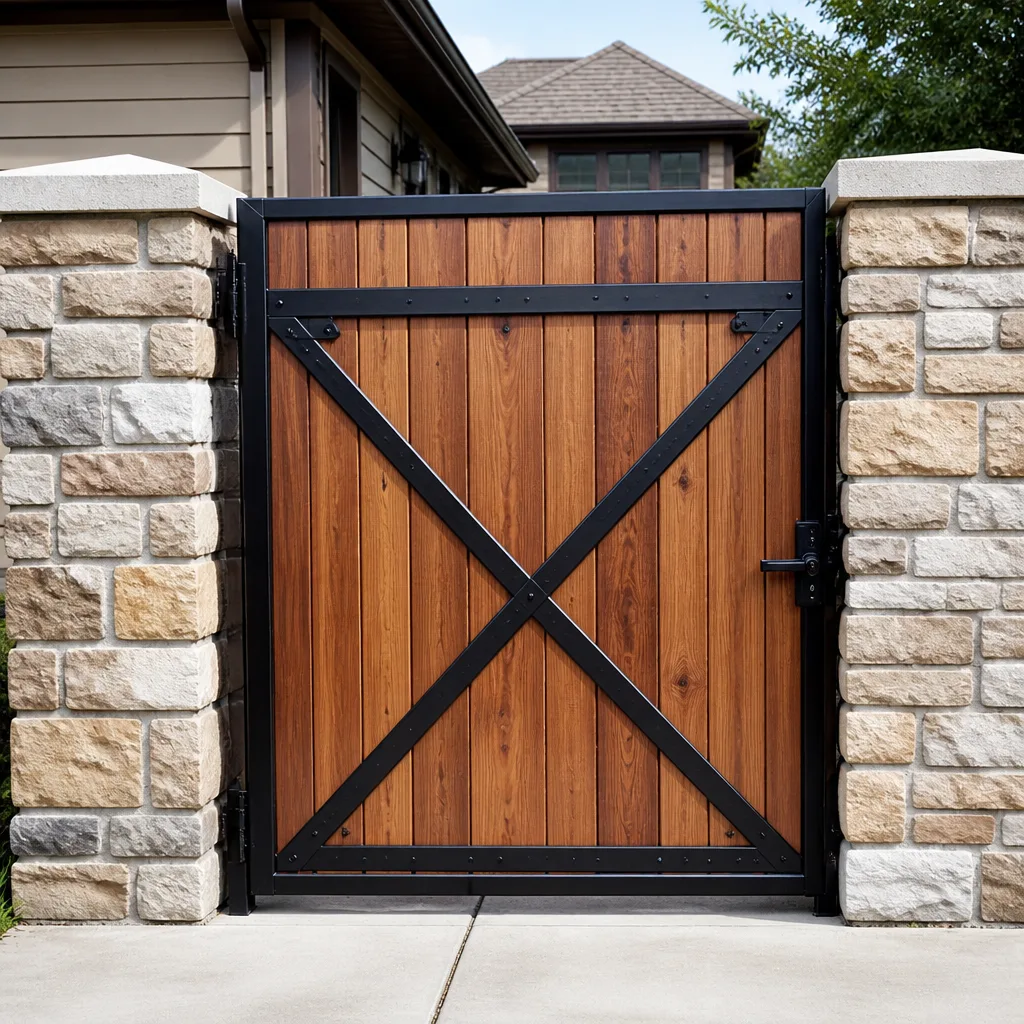
 Wood & steel frame
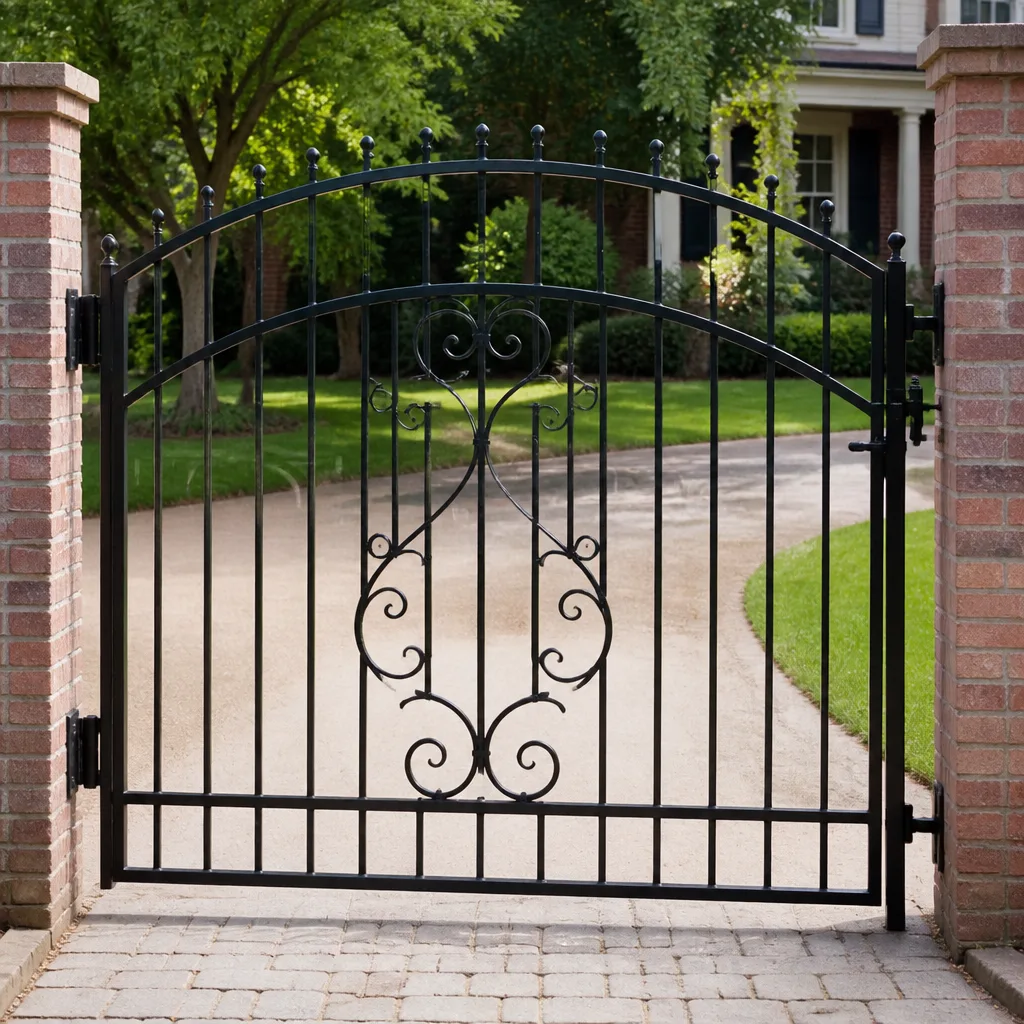 Wrought iron
 Farm & ranch
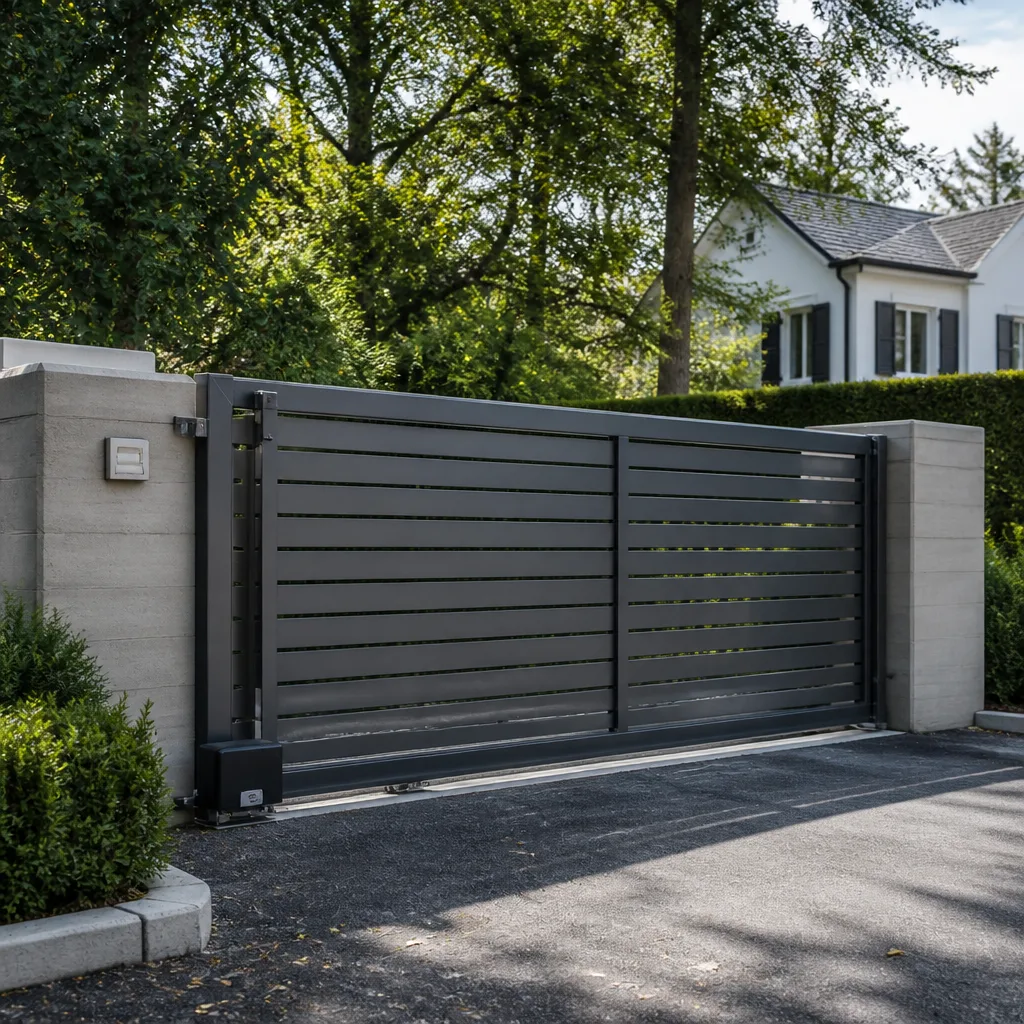 Sliding driveway gates
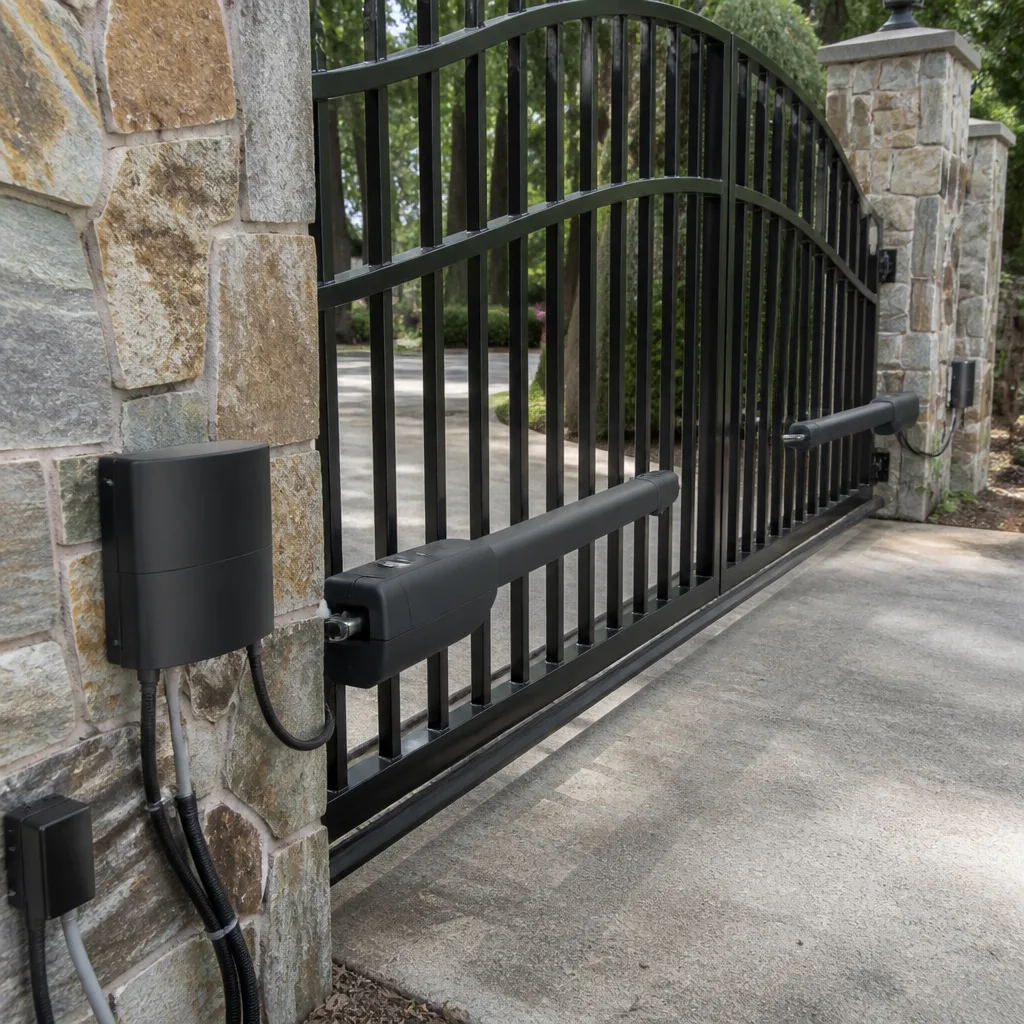 LiftMaster operators
Free on-site gate assessment - hinges, posts, and your LiftMaster or Nice gate operator checked before anything is quoted
The assessment is free and the quote is the invoice.
Get your free estimateStyles & brands we work with
- Wrought iron
- Wood & steel frame
- Farm & ranch
- Sliding driveway gates
- LiftMaster operators
See the difference
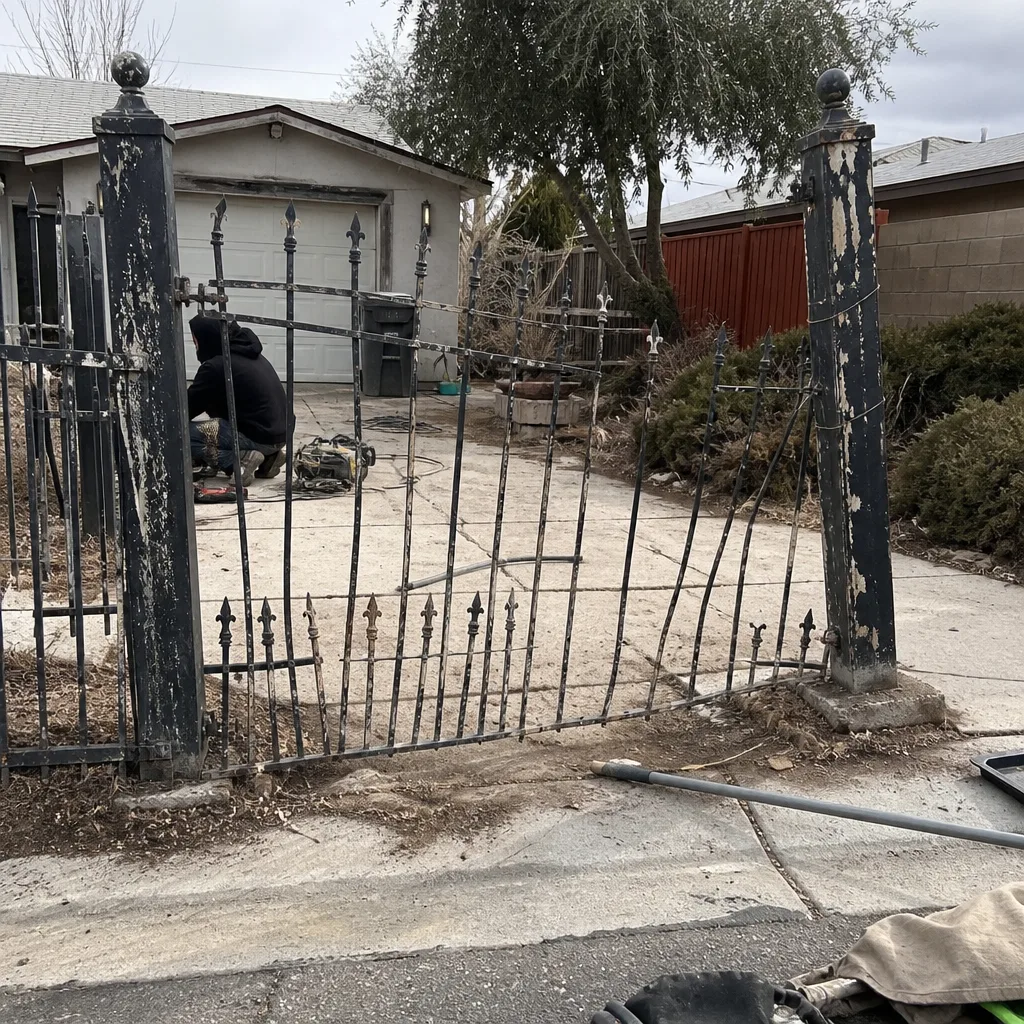 Before
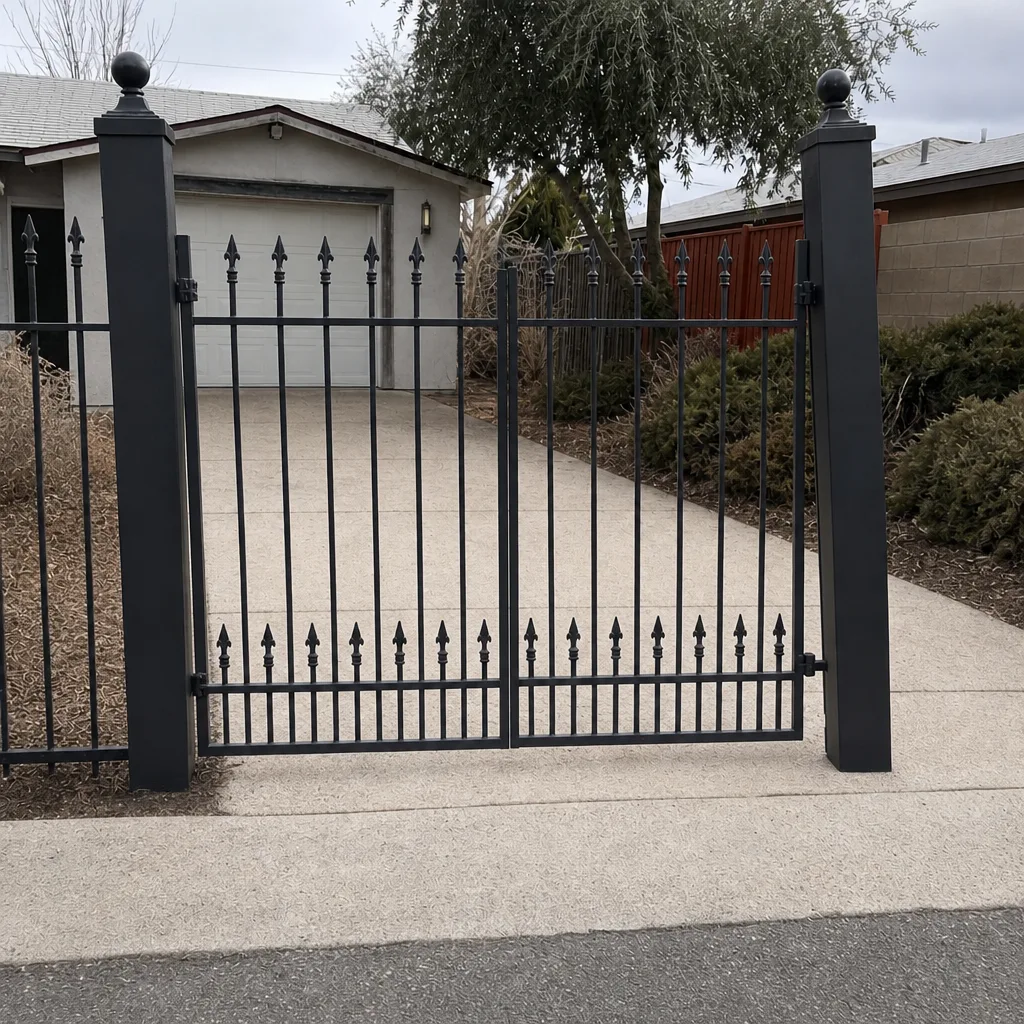 After
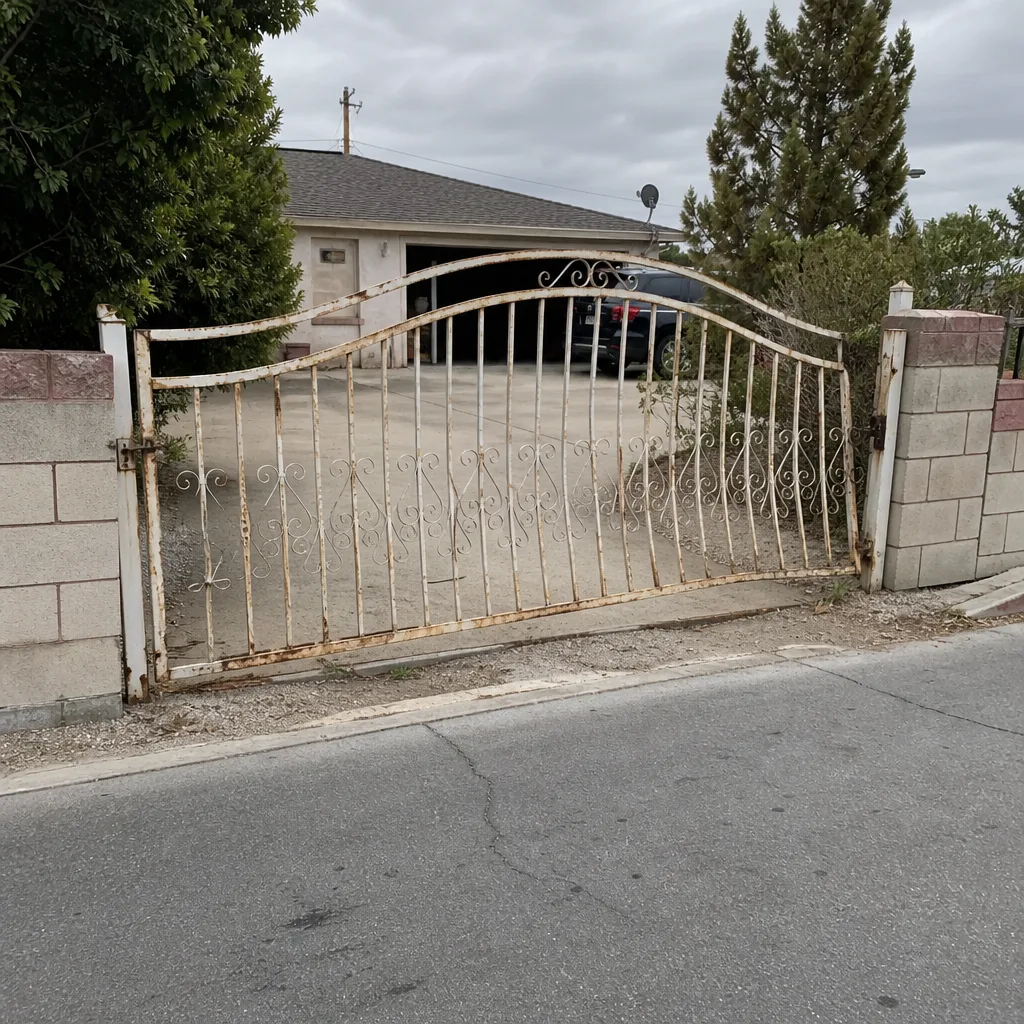 Before
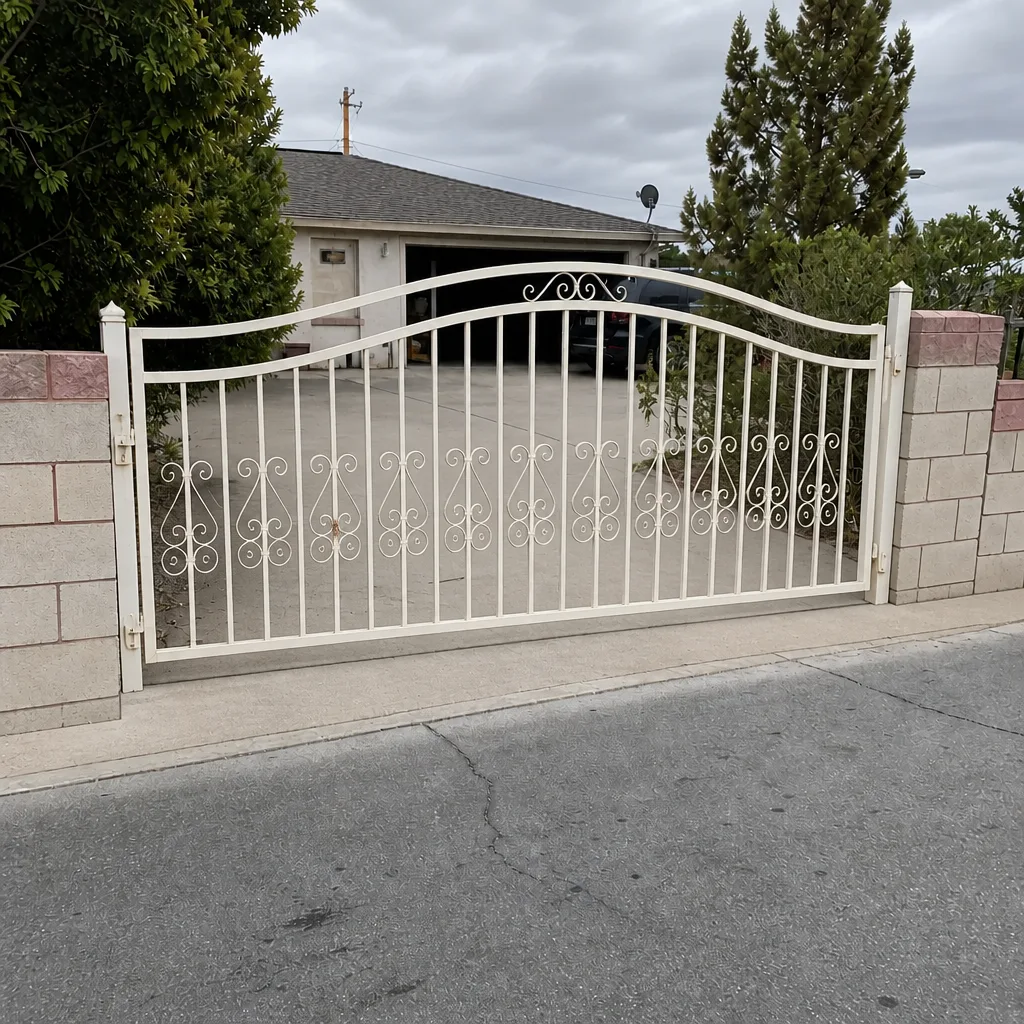 After
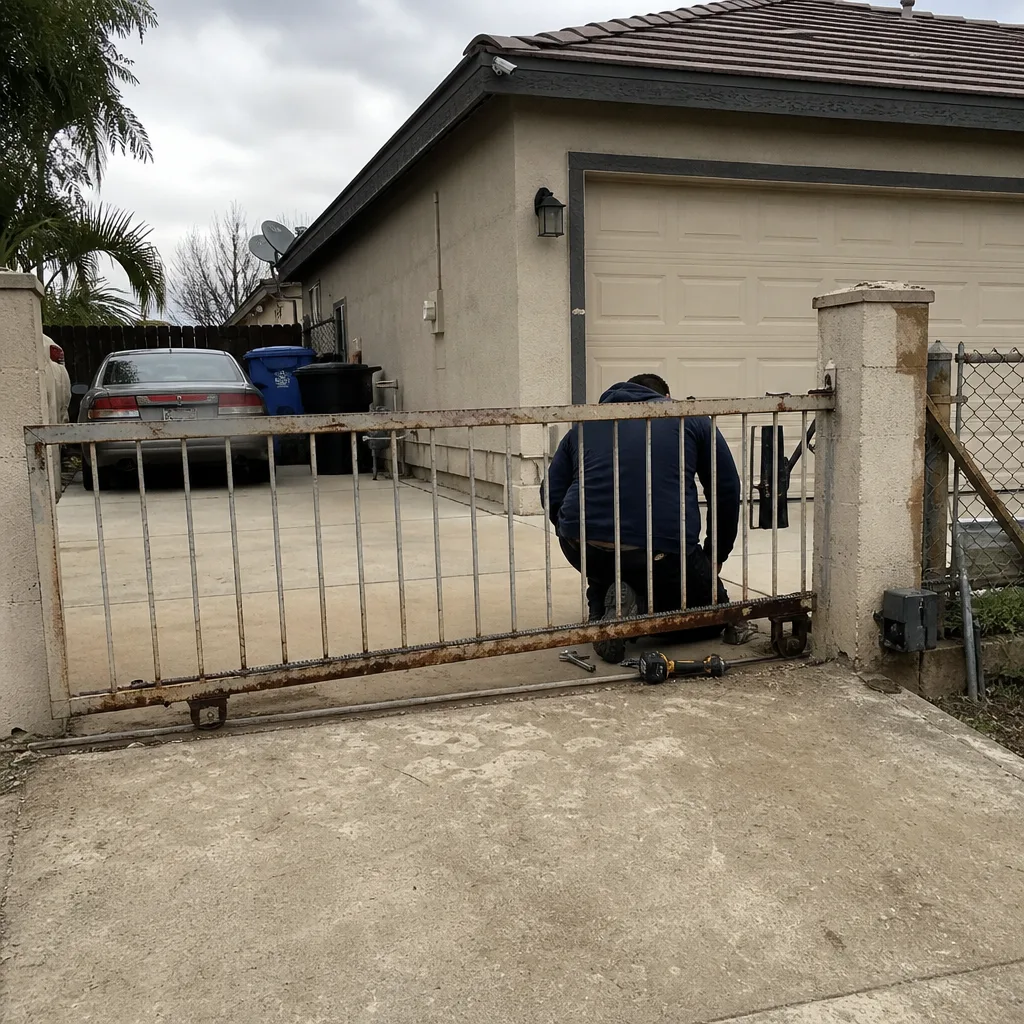 Before
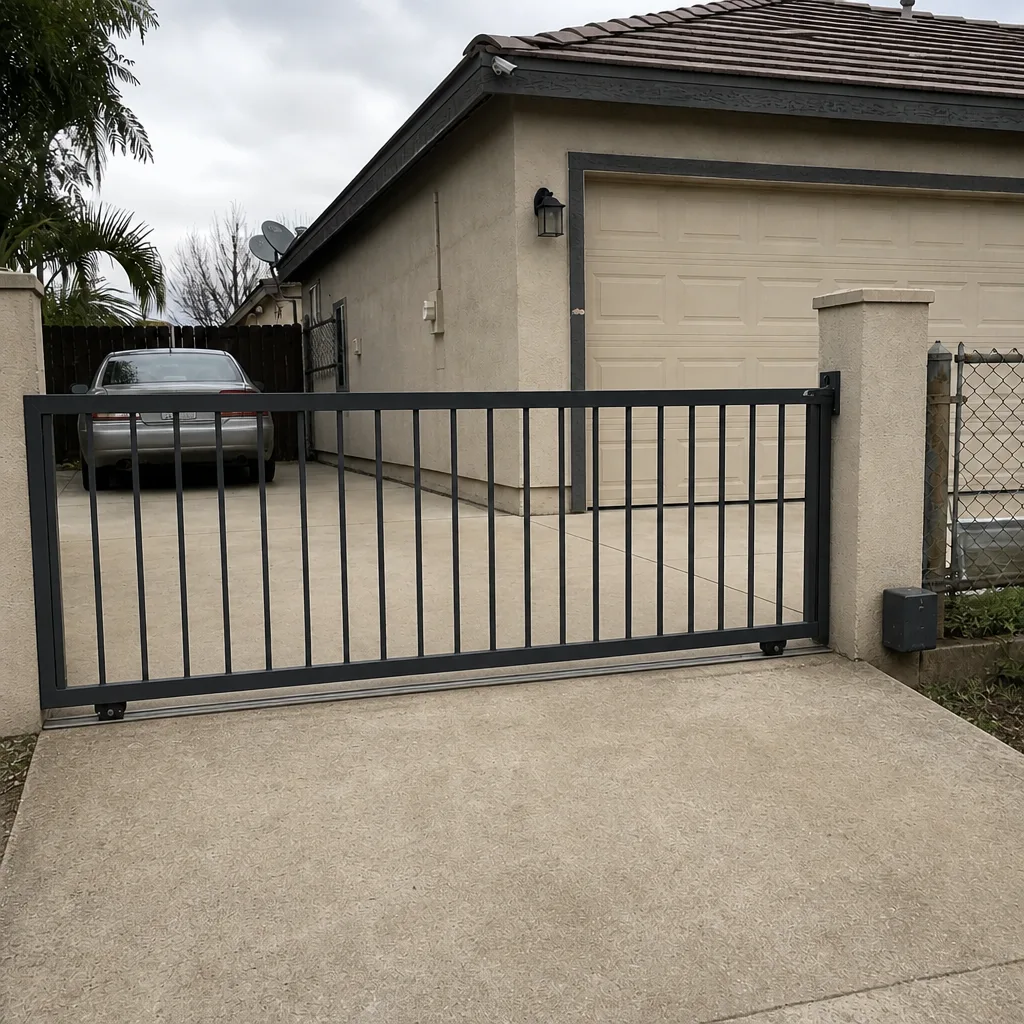 After
Driveway Gate Maintenance in Spring Valley, NV: The Desert Heat-and-UV Checklist
Driveway gate maintenance in Spring Valley means lubricating hinges and arm pivots with high-temp grease rated above 300°F, cleaning sensor eyes and keypad membranes twice a year, and inspecting hinge anchor bolts in the masonry pilaster once annually. Most maintenance guides were written for freeze-thaw climates. Here, your gate bakes at 115°F in direct sun for months, so the schedule, the products and the warning signs are all different. If something already feels wrong, call (888) 300-3906 and we’ll take a look.
Why Spring Valley Gates Fail on a Heat Cycle, Not a Freeze Cycle
Walk down almost any street in a Spring Valley tract subdivision and you’ll see the same picture: a decorative wrought-iron driveway gate hung on a block-wall pilaster, original builder hardware, operator box bolted to the wall beside it. These homes went up in the 1980s-2000s boom, which means the original swing operators, hinge welds and plastic keypads are all hitting their 20-plus-year wear-out window at the same time. We see whole tracts where three or four neighbors are chasing the same sagging gate at once.
The climate does the rest. Rain and ice aren’t your enemy here. Heat and UV are. Sun bakes the operator control board, fades and cracks the powder coat on iron, and turns white lithium grease into a thin brown runnel by June. Dust from monsoon storms packs into tracks and around sensor eyes. So the maintenance calendar has to be built around desert heat, not frost.
The Spring Valley Seasonal Calendar: Two Anchors, Not Four Seasons
Forget the four-season checklist. In Spring Valley, two dates matter: the May pre-summer pass and the September post-monsoon pass. Everything else is spot-checking.
Pre-summer (May): before the 100°F days arrive
- Lubricate the hinge pins and operator arm pivot with high-temp NLGI 2 grease rated above 300°F. Standard white lithium melts and runs once the driveway surface hits 140°F in July. Get the right product in before summer.
- Inspect and clean the sensor eyes. Dust on the photo-eye causes phantom reversals all summer long. A cotton swab and a few seconds is the whole job.
- Test the thermal cutout function. Between May and September, an operator with a failing thermal cutout will trip and lock out during the hottest part of the day. Better to find out in May than on a 112°F afternoon in July.
- Check the UV-exposed keypad membrane. Bubble, blister or chalky haze on the membrane means the keypad is on borrowed time. On a DoorKing or Elite keypad, replacement is cheaper than the service call after it quits.
Post-monsoon (September): after the dust and downpours
- Clean loop detector slots and track channels of grit. Monsoon dust plus a rare flash-flood rinse leaves fine sand packed into every track slot. Blow it out and wipe the channels.
- Check the hinge weld stress points for hairline cracking. A gate that has been swinging on the same weld since 2002 will show its first crack at the stress point, not the middle of the panel.
- Test the safety reversal function again. Any sensor disturbance from dust, a leaf, or a wobbling photo-eye bracket can leave the reversal feature sluggish. Confirm it stops and backs off when it sees an obstruction.
Use the Right Lubricant for Desert Heat (This One Matters)
This is where most DIY maintenance goes wrong in Spring Valley. White lithium grease is the default recommendation on national sites, and in this climate it’s the wrong answer. It melts, runs off the pin, and collects dust as it goes. Use a high-temp NLGI 2 grease on hinge pins and arm pivots – that grade holds up above 300°F and keeps a film on the metal through summer. On tracks and rollers where dust accumulation is the real problem, use a dry PTFE lubricant. It leaves a thin dry film that doesn’t attract grit the way oil-based products do. After a monsoon, oil-based lubes become sandpaper. Dry PTFE just sheds the dust.
| Maintenance task | Product | Typical local cost |
|---|---|---|
| Hinge pin & arm pivot lube | High-temp NLGI 2 grease | $12-$25 per tube |
| Tracks & rollers | Dry PTFE spray | $10-$20 per can |
| Sensor eye cleaning (professional) | Labour only | $75-$150 |
| Hinge weld inspection & touch-up weld | On-site welding | $145-$325 |
| Keypad membrane replacement | Brand-specific part | $120-$280 |
| Pilaster anchor bolt re-torque | Labour + hardware | $85-$175 |
The Pilaster Inspection Homeowners Skip (and Shouldn’t)
Almost every Spring Valley driveway gate hangs on a masonry pilaster, not a wood post. That changes what you inspect. Once a year, check the hinge anchor bolts in the block pilaster – the constant torque of open-and-close cycles works them loose over time, and a loose anchor lets the gate twist in the mount before you feel it as a sag. Then look at the pilaster face right where the hinge plate meets the block. Mortar cracking there is a gate problem showing itself on the wall first. Fix the panel without the post and you’ll fix it twice. Pilaster and wall-mount repairs need a trained eye, so if you see cracking or the bolts have backed out more than a thread or two, it’s time to bring someone in rather than keep tightening.
The HOA Finish Reality on Spring Valley Iron Gates
Clark County’s desert sun breaks down paint and clear-coat on wrought iron faster than manufacturers’ timelines suggest. That matters here for a specific reason: HOA architectural rules – not municipal code – usually dictate gate style, height and color in Spring Valley. A bare spot that surface-rusts before monsoon season becomes an HOA violation and a repair bill at your expense. Walk the gate with a can of matching touch-up paint once a spring, and hit any spot where the iron shows through. Touch-up before the rains is cheaper than refinishing after them. Because Spring Valley is unincorporated, gate permits and inspections run through Clark County rather than a city department, so any structural or replacement work goes through county channels.
When Maintenance Crosses Into Repair Territory
Here’s an honest signal: if a gate needs the same lubrication more than twice in a season, it has a wear problem, not a maintenance problem. A hinge that won’t hold grease has usually lost its weld or its bushing. Catching that before the hinge weld fails is exactly what our free second opinion on any written estimate exists for. The failure mode we see most in Spring Valley is a post-1997 swing operator that starts reversing intermittently in August – usually a thermal cutout tripping or a control board that UV has cooked. That’s an operator repair, not a lubrication issue, and no amount of grease will fix it.
Key Takeaways
- Two maintenance dates matter in Spring Valley: May pre-summer and September post-monsoon.
- Use high-temp NLGI 2 grease on hinges and arm pivots – white lithium melts and runs here.
- Use dry PTFE on tracks and rollers so monsoon grit doesn’t stick.
- Check pilaster anchor bolts and mortar annually – the wall shows gate problems first.
- If a gate needs lubrication more than twice a season, it’s a repair, not upkeep.
When maintenance tips stop being enough, our Gate Repair page walks through what a proper diagnostic looks like. Gatewood Fence & Gate Spring Valley handles this kind of work in Spring Valley with on-site welding and a 90-Day Done Right Promise in writing on every job.
FAQs
Twice a year is the baseline in Spring Valley – once in May before summer heat, once in September after monsoon season. If your gate needs the same lubrication more than twice a season, the hinge or weld has a wear problem that no grease will solve. Call (888) 300-3906 for an assessment – estimates are free.
Use a high-temp NLGI 2 grease rated above 300°F on hinge pins and arm pivots. Standard white lithium grease melts and runs off once Spring Valley summer heat hits the driveway. For tracks and rollers where dust packs in, use a dry PTFE lubricant instead of an oil-based product.
Often, yes – a thermal cutout tripping or a heat-stressed control board is a common cause in Spring Valley once temperatures stay above 100°F. Clean the sensor eyes first, then test the reversal function. If it still acts up, call (888) 300-3906 for a same-week diagnostic.
Routine lubrication, sensor cleaning and touch-up paint are safe to do yourself. But hinge weld inspection, pilaster anchor and mortar checks, and anything involving the operator’s electrical board or high-tension spring mechanism should go to a trained professional – those can cause serious injury if handled wrong. Call (888) 300-3906 for anything past basic upkeep.
If you’d rather have it looked at, Gatewood Fence & Gate Spring Valley offers a no-pressure assessment in Spring Valley – call (888) 300-3906. Our technicians have up to 25 years of experience, and we service LiftMaster, FAAC, BFT, Linear, Viking, Ghost Controls, DoorKing, Elite and Mighty Mule operators, with 10% off for seniors and veterans, $40 off repairs over $200, and no trip charge inside the county.
Written by the team at Gatewood Fence & Gate Spring Valley, serving Spring Valley, NV.