
Last updated November 18, 2026
 Wrought iron
 Wood & steel frame
 Farm & ranch
 Sliding driveway gates
 LiftMaster operators
Free on-site gate assessment - hinges, posts, and your LiftMaster or Nice gate operator checked before anything is quoted
The assessment is free and the quote is the invoice.
Get your free estimateGate Access Control Maintenance Schedule: What to Do and When
Most gate access control failures we get called out for in Spring Valley aren’t random. They follow a decay pattern you can see coming if you know what to look for. The real culprit isn’t the summer heat people blame it on. It’s a skipped battery check in October, right before the first real cold snap hits and the system starts pulling more current than a tired battery can deliver. That’s when keypads go dead and card readers stop reading, usually at 11 p.m. on a Sunday. What follows is the actual calendar we work from on gates around here, not a manufacturer’s pamphlet.
Quick Answer
Gate access control systems in Spring Valley need a monthly 90-second visual inspection, a battery check every October and again in early spring, professional calibration of readers and sensors once a year, and a full seasonal walkthrough four times a year to match the Mojave temperature swings. The single most important date on the calendar is the October battery check, before temperatures drop and current draw rises.
Styles & brands we work with
- Wrought iron
- Wood & steel frame
- Farm & ranch
- Sliding driveway gates
- LiftMaster operators
Table of Contents
- Why the Mojave Heat Cycle Drives a Four-Season Schedule
- The Monthly 90-Second Inspection That Catches 80% of Problems
- Battery Replacement Windows for Spring Valley’s Temperature Swings
- The Seasonal Calendar: What to Do Each Quarter
- What You Can Test Yourself vs. What Needs a Professional
- How to Log Maintenance So a Technician Can Actually Diagnose Your System
- Common Mistakes to Avoid
- When to Call a Professional
Why the Mojave Heat Cycle Drives a Four-Season Schedule
A once-a-year checkup is a schedule built for a climate that doesn’t exist here. In Spring Valley, your access control system lives through a heat cycle that runs from brutal summer highs to desert nights that can drop thirty degrees or more. Components expand and contract with that swing, and the damage tends to show up at the transitions, not in the middle of a season.
Manufacturers publish maintenance intervals based on average conditions. That average doesn’t describe Spring Valley. A keypad housing that bakes at 110 degrees for weeks will have dried-out gaskets and a baked circuit board by the time October arrives. A sealed lead-acid battery living in that same housing loses capacity faster than the label promises.
So we work in four seasons, not one annual visit:
- Spring: dust and wind-blown grit have been building up on sensors and photo-eyes all winter. This is the cleaning and alignment window, before the heat sets in.
- Summer: watch heat-sensitive components. Keypad displays fade, circuit boards slow down, and lubricants thin out on moving parts.
- Fall: the battery window. Current draw rises as nights cool, and a weak battery fails without warning.
- Winter: cold-morning failures. Anything marginal in October shows up here as a gate that won’t open at 6 a.m.
If you want the repair side covered when something does fail, our Gate Repair in Spring Valley page walks through the common failure points.
The Monthly 90-Second Inspection That Catches 80% of Problems
This is the routine I run on my own yard every month, and it takes about ninety seconds. No tools, no meter, no climbing. Just a walk-around with your eyes open. In our experience, four out of five access control failures were visible as a small warning weeks before they became a lockout.
- Look at the keypad or reader housing. Any cracking, discoloration, or moisture fogging inside the faceplate is a heads-up. In Spring Valley the sun does this to cheap housings within a couple of summers.
- Press a known code and count the seconds. If the gate responds noticeably slower than it did last month, something is dragging. Write it down.
- Watch the gate travel the full open and close cycle. Listen for a grind, a hitch, or a change in the motor’s hum. A gate that closes on its own or stalls mid-travel is telling you where it’s failing.
- Check the safety sensors before you walk away. Wave a hand through the beam and confirm the gate reverses. If it doesn’t, stop using the automatic cycle until it’s fixed.
- Eyeball the hinges and the post. A gate sags in the hinge post, not in the middle, and that is where we start. Rust weeping from a hinge tells you more than a gate that still swings.
That’s it. Ninety seconds once a month catches the slow stuff before it turns into a Sunday night surprise.
Battery Replacement Windows for Spring Valley’s Temperature Swings
Battery guidance written for a mild climate will get you locked out here. Spring Valley’s temperature swings are hard on sealed batteries, and the standard “replace every two to three years” advice ignores the fact that heat shortens battery life from both ends: it cooks the battery in summer and then demands more current from it when the cold mornings arrive.
Here’s the window we actually use:
- Check in early October, replace before Halloween if the reading is weak. This is the single most important battery date on the calendar. Cooler nights mean the system draws more current, and a battery that limped through summer will fail right when you need it.
- Check again in early spring. A battery that survived the winter may still be marginal going into the heat. A quick load test tells you whether it will last the summer.
- Replace, don’t top off, once a battery tests weak. Recharging a tired sealed battery in a hot climate buys you weeks, not months.
- Match the battery to the operator. Backup batteries in systems from LiftMaster and FAAC aren’t interchangeable, and a wrong-spec battery will fail early no matter how fresh it is.
If your gate runs on a solar-charged operator, battery health is doubly important. A solar panel that’s dusty or shaded in the winter charges less, and the battery has to carry more. That’s a conversation worth having with someone who services the brand you own. Our Gate Motor & Opener in Spring Valley page covers operator-side maintenance, including the battery and charging side.
The Seasonal Calendar: What to Do Each Quarter
Beyond the monthly walk-around, four times a year you do the deeper pass. This is the calendar we hand our customers, and it lines up with how the seasons actually hit Spring Valley gates.
- Spring (March-April): clean and align. Clear dust and grit from the readers, keypads, and safety photo-eyes. Confirm the sensors are aimed and the beam isn’t blocked by a weed or a shifting post. Check that the gate still latches square.
- Summer (June-July): heat watch. Look for fading keypad displays and sluggish readers. Lubricate hinges and moving parts with heat-appropriate lubricant. Confirm ventilation around any control box that sits in direct sun.
- Fall (September-October): the battery pass. Load-test every backup battery. This is the window that matters most, and skipping it is the number one reason keypads and card readers fail here. Also check the operator for any change in travel speed.
- Winter (December-January): cold-morning test. Run the gate first thing in the morning when it’s coldest. Anything marginal will show up here. Check the welds and hinge posts after any freeze-thaw, and confirm the safety reverse still works when the gate is cold.
Do this four times a year and you’ll catch nearly every failure while it’s still a cheap fix. Skip the fall pass and you’re gambling on a lockout.
What You Can Test Yourself vs. What Needs a Professional
Not everything belongs in a homeowner’s hands. The line is pretty clear: you can test and observe, but you don’t calibrate or open the control box.
Safe for you to test or check:
- Press a code and confirm the gate opens and closes.
- Wave a hand through the safety beam and confirm the gate reverses.
- Look for cracks, rust, moisture, and fading on housings and keypads.
- Listen to the motor and watch the gate travel for hitches.
- Note the date and what you observed in a log.
Needs a professional:
- Reader and sensor calibration. Card readers, keypads, and photo-eyes need proper alignment that a homeowner can’t verify by eye. Nobody here should be opening a control box or handling low-voltage wiring without training.
- Battery load testing and replacement inside the operator, especially on LiftMaster and FAAC systems where a wrong-spec battery causes repeated failures.
- Safety-device diagnosis. If the gate won’t reverse, that’s a stop-and-call situation. A gate that won’t reverse is a genuine safety hazard, not a nuisance.
- Any welding or structural work on the gate or hinge post. High-tension springs, welded hinge posts, and gate-framing repairs are dangerous and belong to a trained pro. We weld on site so the gate stays in your driveway rather than going on a truck.
If you need a gate hung or a new access system installed, that’s a measured, scheduled job, not a same-day repair. Our Gate Installation in Spring Valley page covers what goes into that.
How to Log Maintenance So a Technician Can Actually Diagnose Your System
This is the part almost nobody does, and it’s the part that saves real time when something goes wrong. A maintenance log turns a mysterious failure into a solvable one. When a tech walks up and you can hand him a record of when the battery was last tested and what the gate was doing last month, diagnosis gets a whole lot faster.
Keep it simple. A notebook, a spreadsheet, or a note on the fridge all work. Log:
- Date of every monthly visual check, even if nothing was wrong.
- What you observed in plain language: “gate slower on open,” “keypad display faded,” “heard a grind on close.”
- Battery test results and the replacement date.
- Any code changes or new card assignments, so a lost card doesn’t turn into a full reprogram.
- Who did the work and what was done, including the brand of any part.
The log matters more than it sounds. Different systems behave differently. An Elite system and a Mighty Mule system both have their own quirks, and knowing which one you’re running lets a tech bring the right part the first time. If you keep a written record of what your Spring Valley gate has been doing, you’re handing the person who shows up the history he needs to fix it right the first time.
Common Mistakes to Avoid
- Skipping the October battery check. This is the biggest one we see, and the reason keypads and card readers die right when the cool weather arrives. A tired battery plus colder mornings plus higher current draw equals a lockout.
- Treating maintenance as a once-a-year event. Spring Valley’s heat cycle needs a four-season schedule. A single annual visit misses the transitions where failures actually happen.
- Greasing hinges with the wrong lubricant. Summer heat thins some lubricants right out and they collect grit. Use what the operator and hinge are rated for, not whatever’s in the garage.
- Ignoring a slow or sluggish gate. In our experience a gate that’s started dragging is telling you where it’s failing. Slow response is a diagnosis, not a personality quirk.
- Putting off a won’t-reverse safety gate. A gate that doesn’t reverse is a genuine safety hazard. Don’t wait for a convenient time.
- Letting a gate that’s sagging keep swinging. A sag shows up in the hinge post, and fixing the panel without the post means you’ll fix it twice. Welding and post repairs aren’t a homeowner job.
- No log. If you can’t tell a technician when the battery was last tested or what the gate did last month, diagnosis starts from zero. A notebook is the cheapest diagnostic tool you own.
When to Call a Professional
Some things are a 90-second check. Some things are a phone call. Call us when a keypad or reader stops responding after a battery check, when the safety reverse doesn’t work, when the gate stalls or won’t close on its own, or when you see rust and sag at the hinge post. Call us if a gate you depend on starts locking people out or staying open when it shouldn’t. And call if you’ve lost track of your maintenance history and want someone to put eyes on the whole system. Gatewood Fence & Gate Spring Valley offers free estimates in Spring Valley; call (888) 300-3906 to get a second opinion or a written price before anything starts.
A note on the safety side, because it bears repeating: gate operators combine high-tension springs, powered mechanisms, and low-voltage control wiring. A homeowner should absolutely test and observe. But opening a control box, replacing a spring, or welding a hinge post is a trained-professional job, and it’s not worth an injury to save a service call.
See the difference
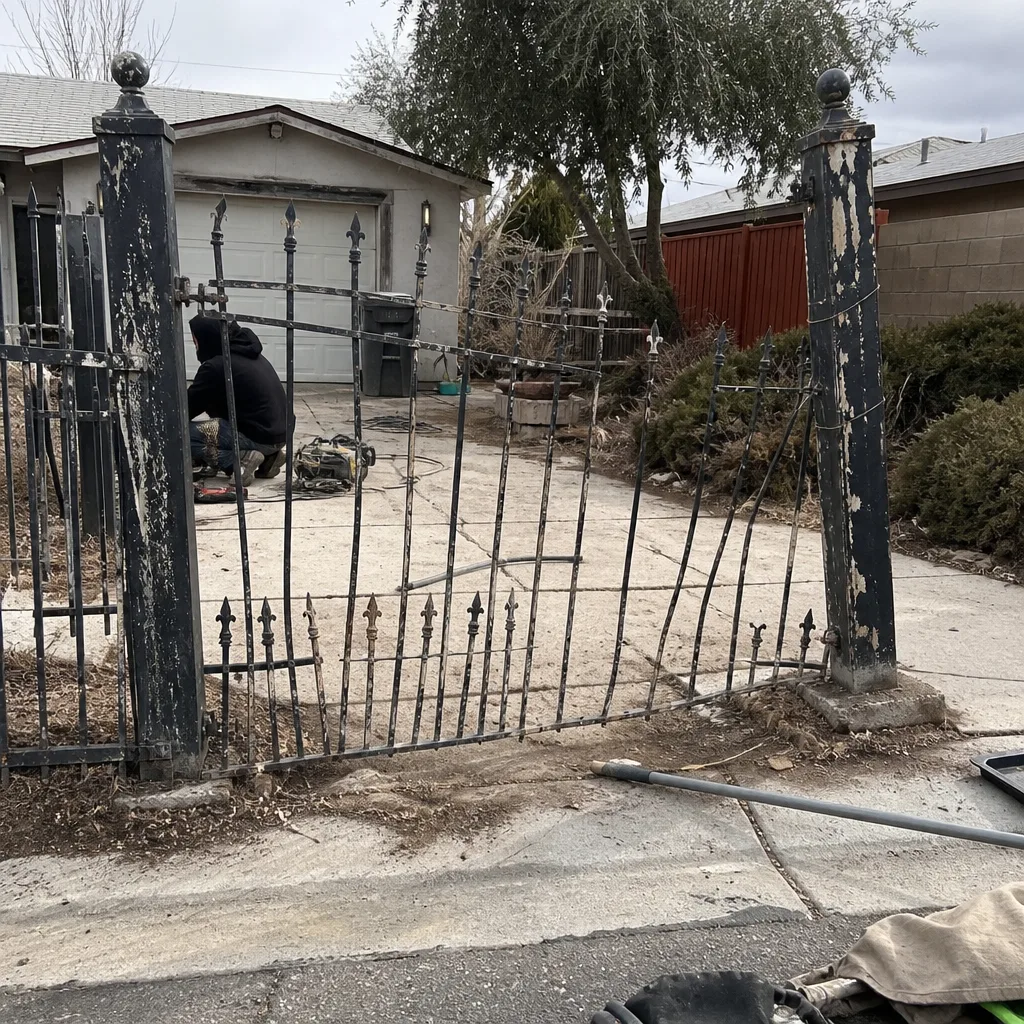 Before
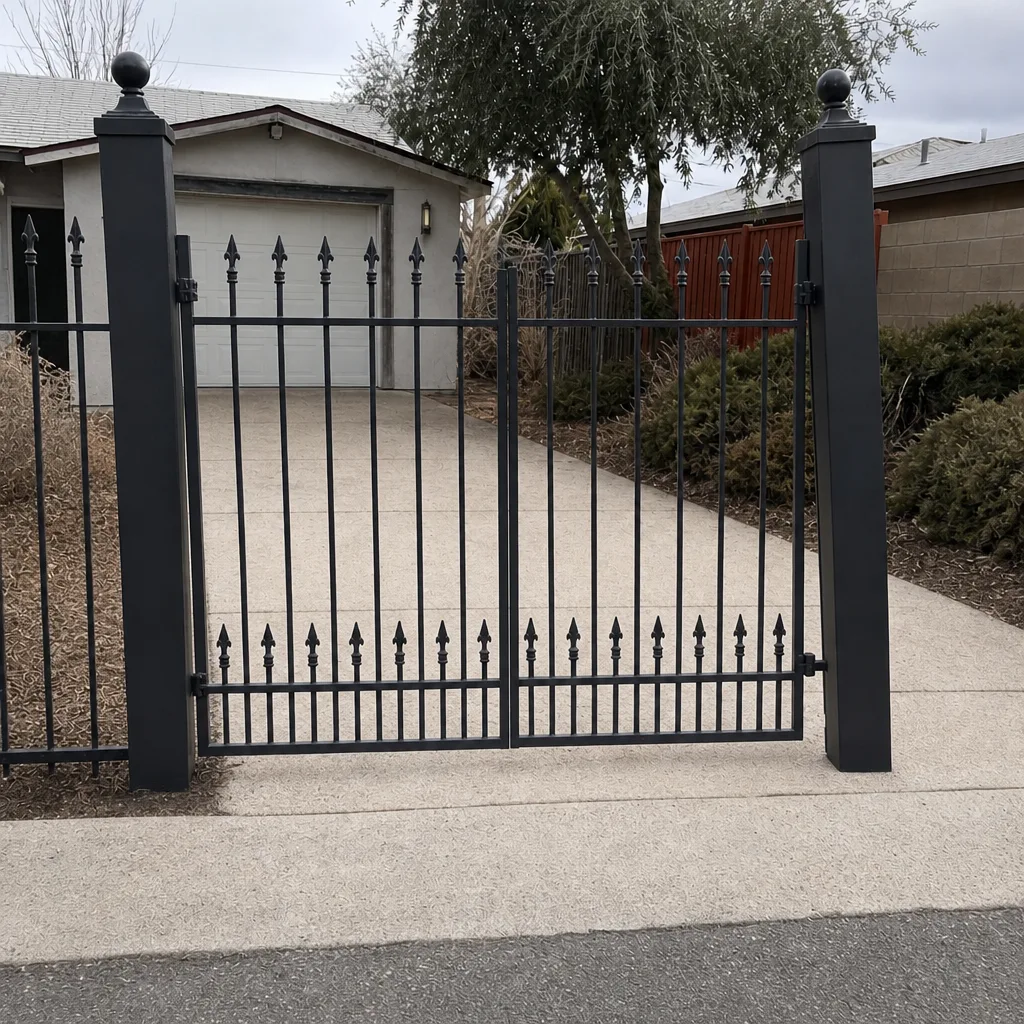 After
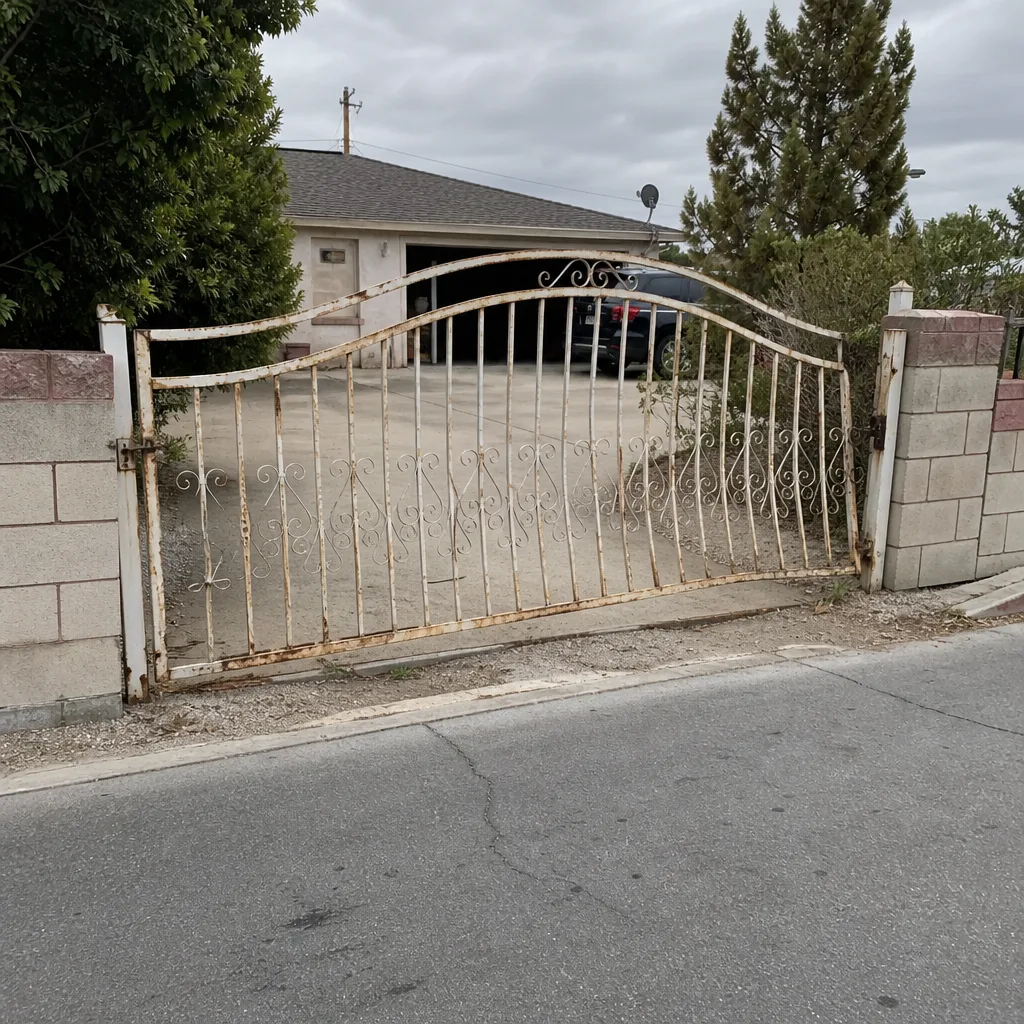 Before
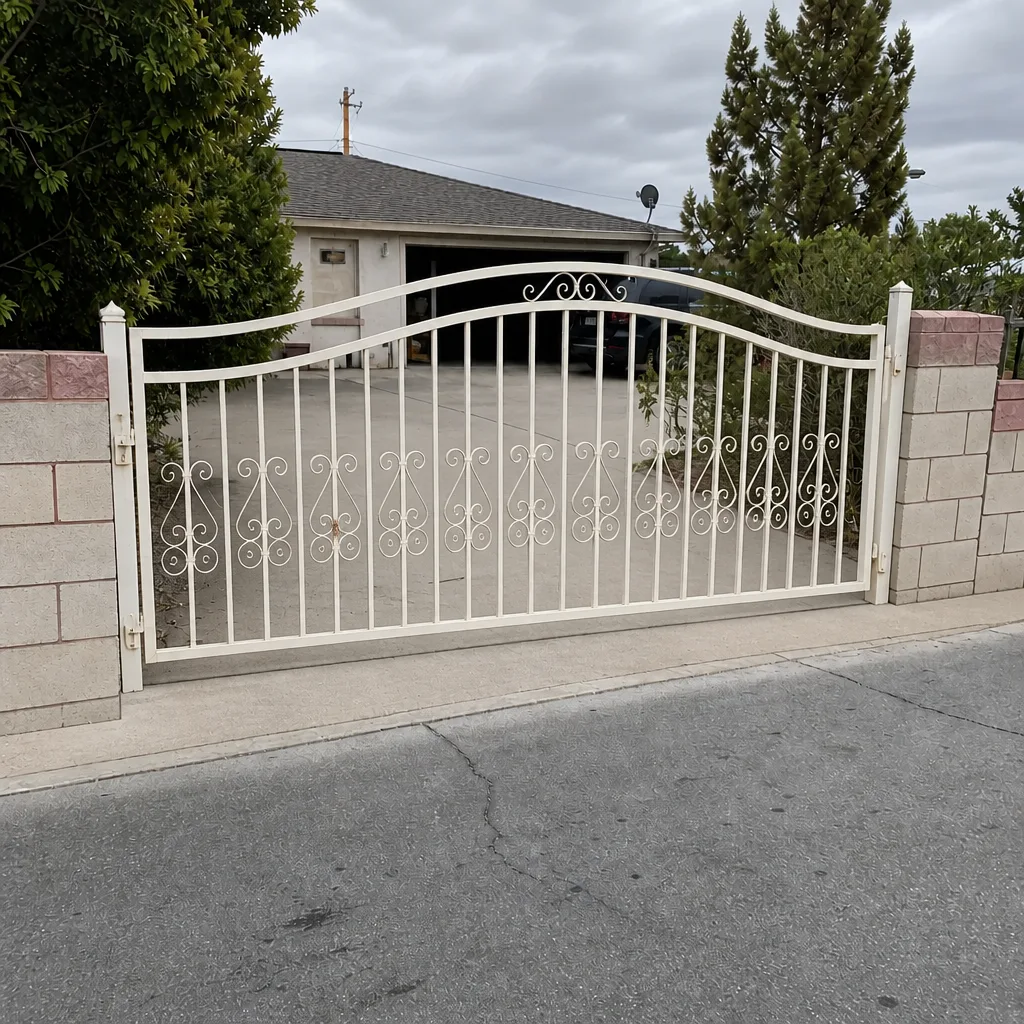 After
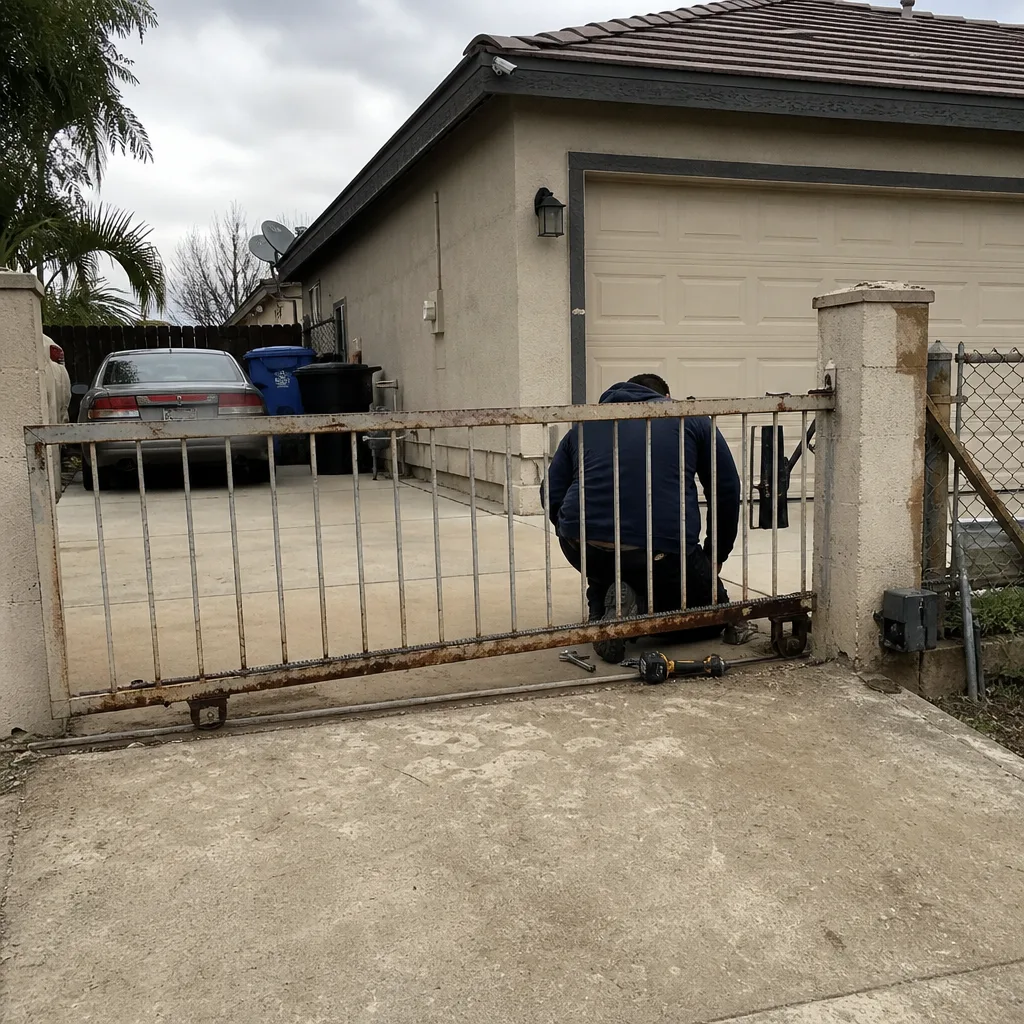 Before
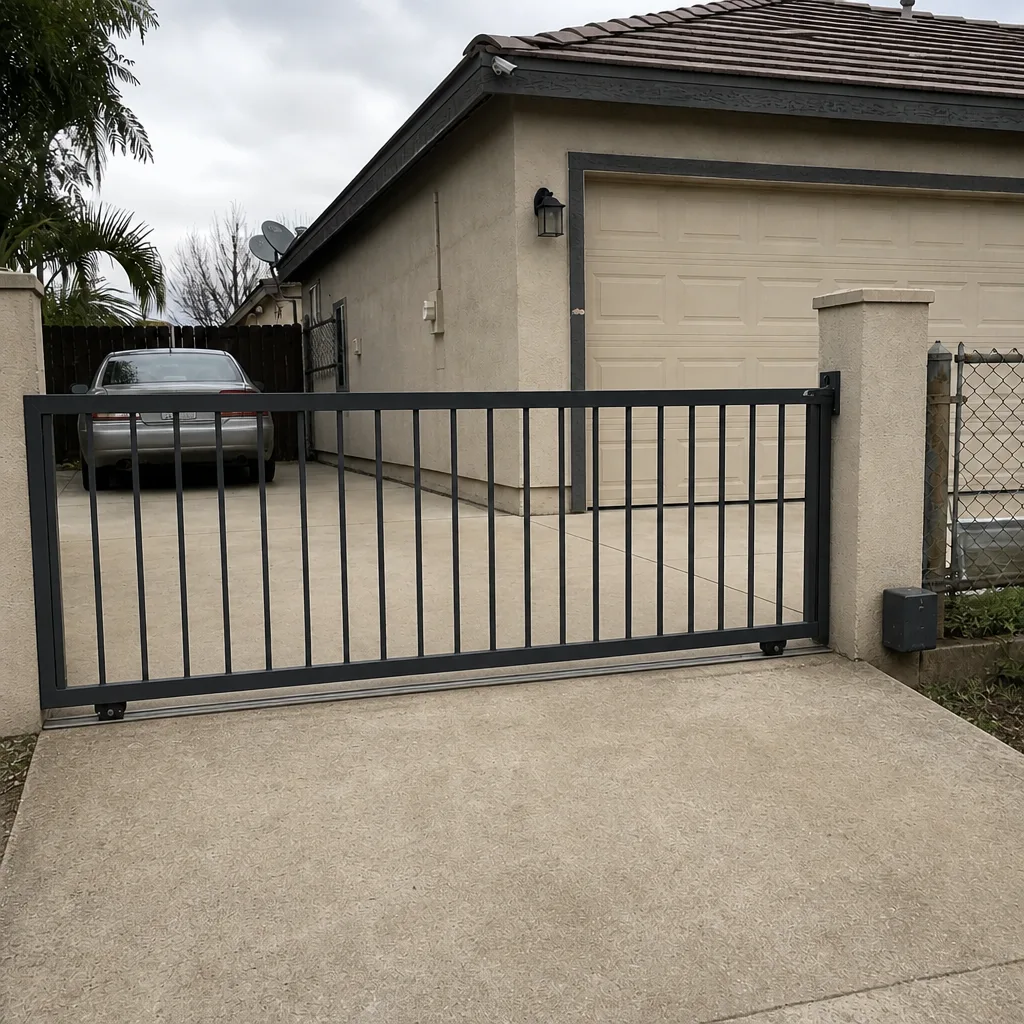 After
Frequently Asked Questions
Do a 90-second visual check monthly, a battery check in early October and again in early spring, and a full seasonal pass four times a year. That four-season schedule matches Spring Valley’s temperature swings and catches failures before they become lockouts.
Test it in early October and replace it before Halloween if the reading is weak, then test again in early spring. In Spring Valley’s heat cycle a battery often needs replacing sooner than the generic two-to-three-year guidance suggests. Call (888) 300-3906 for a battery test and exact quote – estimates are free.
Yes. You can press a code to confirm the gate opens and closes, wave a hand through the safety beam to confirm it reverses, and visually check for cracks or moisture. What you should not do is open the control box, recalibrate readers, or touch the wiring; that needs a trained professional.
Because the system draws more current on cooler mornings, and a neglected battery can’t deliver it. A battery that limped through summer fails right when temperatures drop. That’s why the October battery check is the most important date on the calendar.
No. Welding a hinge post and handling high-tension springs are dangerous and belong to a trained pro. A gate sags in the hinge post, not the middle, and fixing the panel without the post means fixing it twice. Call us and we’ll weld on site so the gate stays put.
Your maintenance log helps most: the last battery test date, what the gate was doing last month, and which brand operator you run, whether it’s LiftMaster or FAAC. That history lets a tech bring the right part the first time. Call (888) 300-3906 for an exact quote – estimates are free.
The Bottom Line
Access control failures aren’t random. They follow a pattern, and the calendar beats the pattern. Do a ninety-second check monthly, hit the battery pass every October and spring, run the full four-season walkthrough, and keep a log a technician can actually use. Spring Valley’s heat cycle is what makes all four seasons matter rather than one annual visit. Skip the October battery check and you’ll likely get a lockout when the cool weather arrives. The name is on the shop, and the shop is down the road to prove it. If you’d rather have it done for you, that’s what we’re here for.
Call Gatewood Fence & Gate Spring Valley at (888) 300-3906 for a free estimate on access control maintenance, repair, or a second opinion on any written estimate. We answer the phone with a live person around the clock, and every job carries the 90-Day Done Right Promise in writing. Start at the Gatewood Fence & Gate Spring Valley home page if you want to see where everything lives.
Written by the team at Gatewood Fence & Gate Spring Valley.